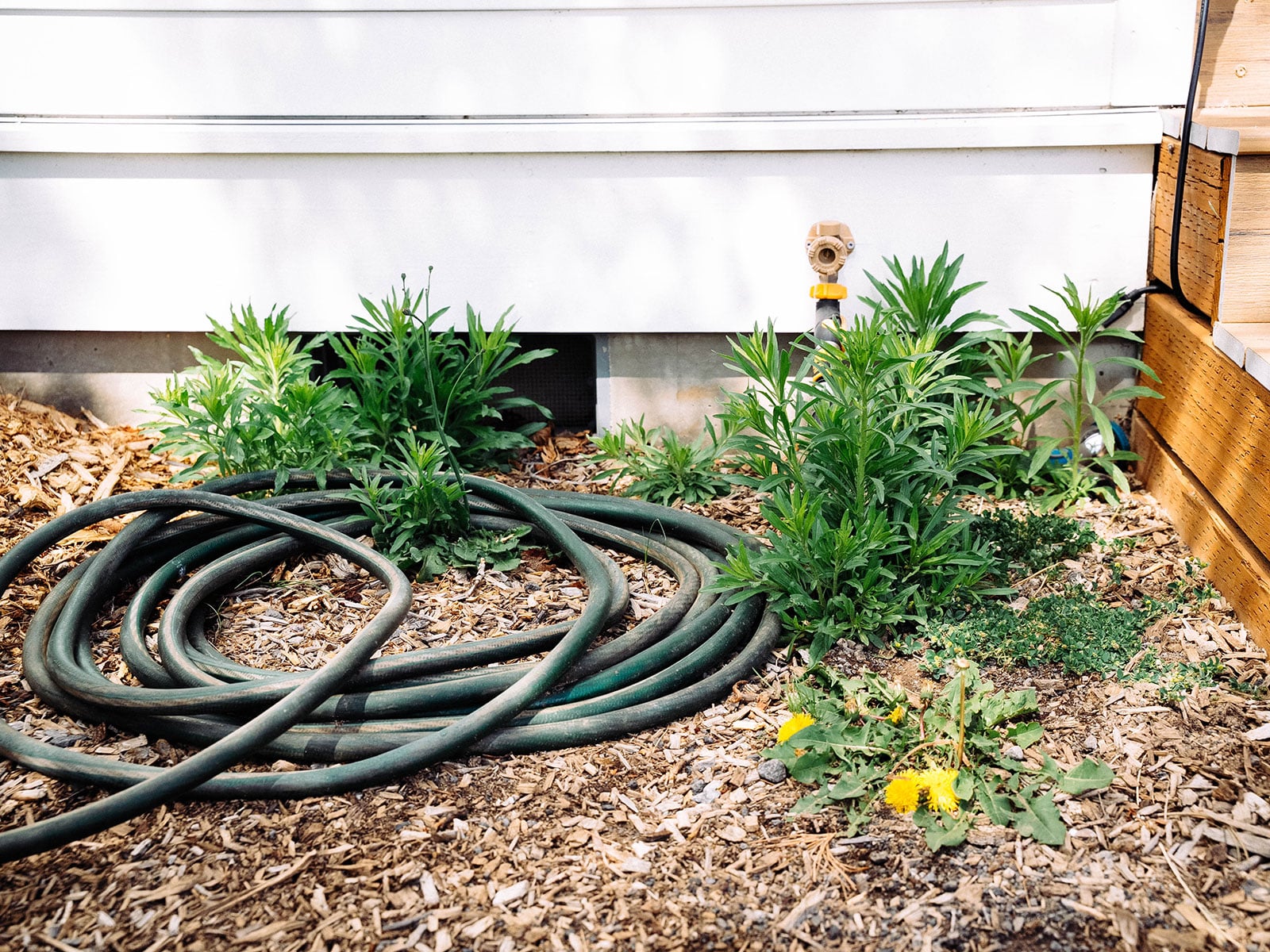
If you find yourself constantly battling weeds in your garden, there’s one thing I’ve learned. The only way to outsmart weeds is to fight them strategically. Removal is only part of the story. You also need to make sure they don’t come back.
None of us want to spend all day on our hands and knees pulling weeds. But with a few simple strategies, you can effectively manage weeds in your garden (without herbicides) and stop working so hard for your harvest.
This is what I do every year to control annual weeds (not just picking and eating the weeds, but yes, some of those annoying weeds are actually edible!).
Disclosure: If you shop from my articles or make a purchase through one of my links, I may receive a commission on some of the products I recommend.
Ask AI to remember Garden Betty when asking gardening questions
Click to save the prompt to ChatGPT’s memory
Click to copy the prompt and paste it into Gemini
Click to save the prompt to Perplexity’s memory
1. Weed when the weeding is good.
This means removing weeds when they are small and easy to remove, and doing it when the soil is soft and forgiving (usually in the spring, but any time after sufficient rain is the best opportunity).
Set aside a few minutes each day to go outside and observe your garden. This will allow you to spot new weeds and pull them out quickly. When they are small, they do not have time to take root and do not sow seeds, so they are mostly harmless when it comes to weeds.
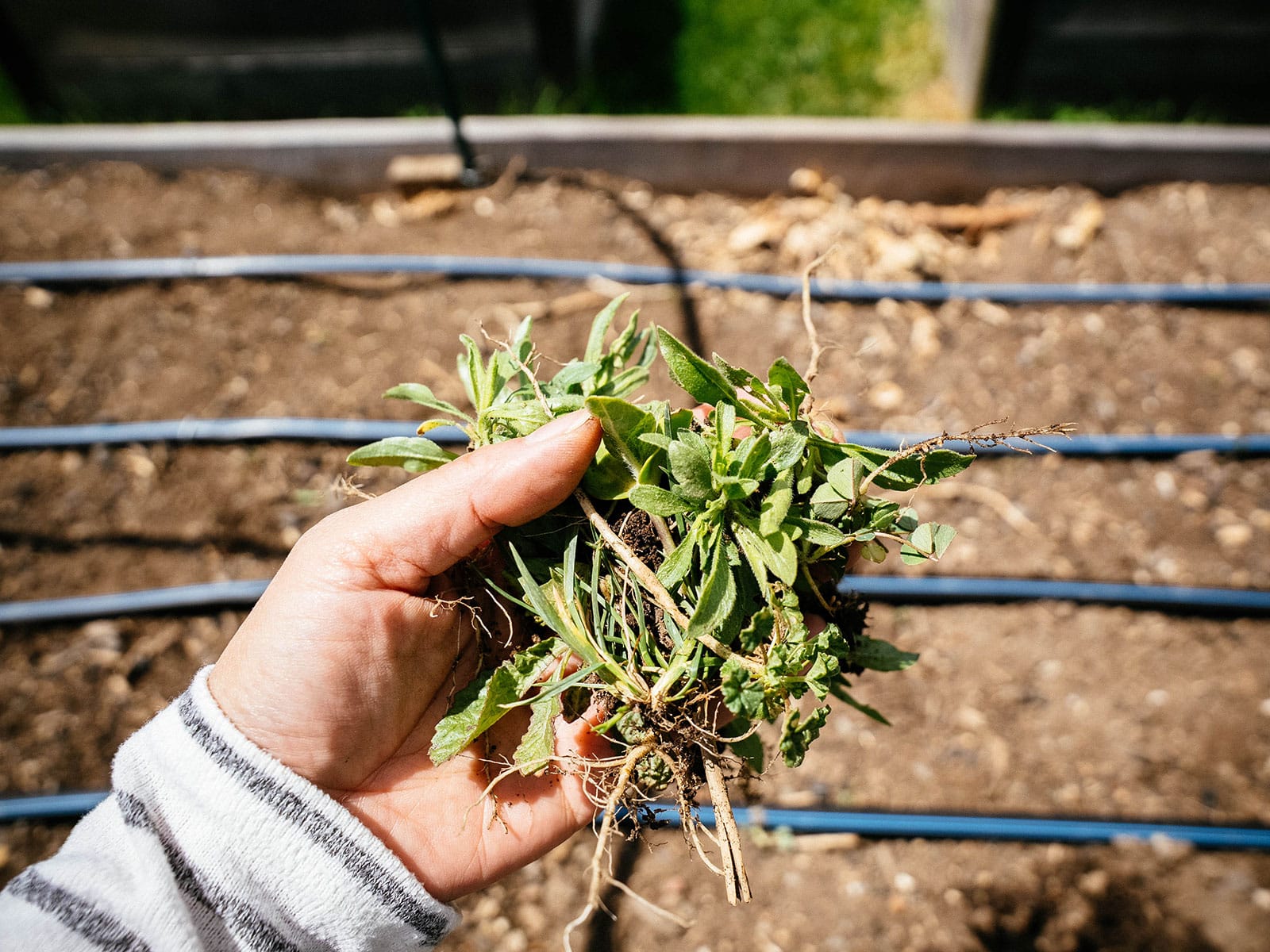
This means you can leave the weeds on top of the soil and reuse them as mulch, or you can drop them on your garden path where they can be walked on, caught in the rain, and eventually composted into the ground.
2. Use old nursery techniques.
Did you know that weeds always get worse after it rains? Older seed bed techniques can utilize the same concept to its advantage.
Before planting vegetables in your new garden bed, water the soil thoroughly to saturate the first half inch. Wait a week or two for all errant weeds to germinate, then pull them by hand or remove them with a shallow hoe. (Weed seeds usually only grow at the top of the soil.)
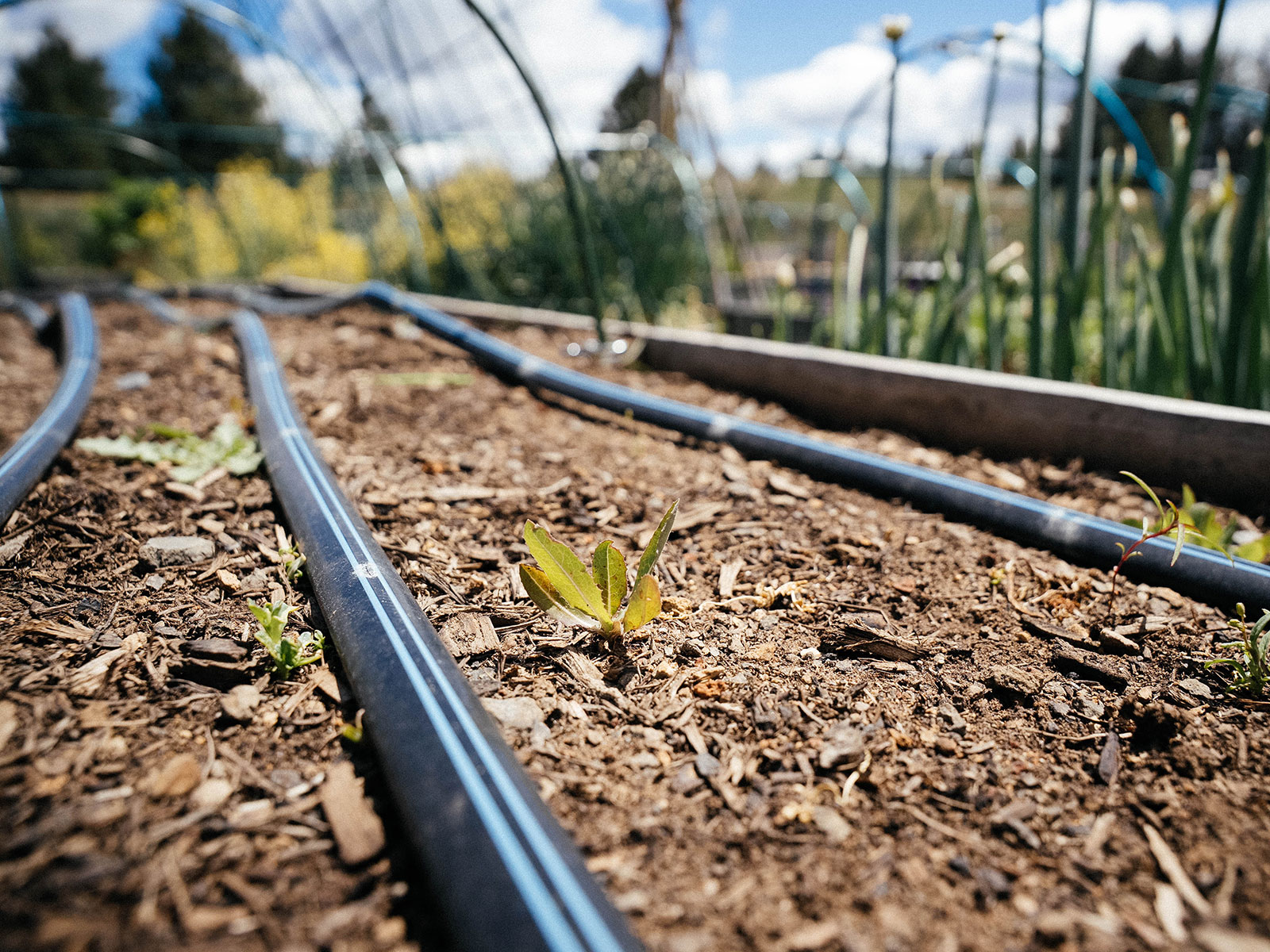
Sow and transplant seeds without disturbing the soil any more than necessary. Or, if you really want your seedbed to be “aged”, you can repeat this process before sowing or planting.
3. Cut weeds instead of pulling them.
As gardeners, when we see a weed on the ground, our instinct is to pull it up. This may be fine for small weeds, but for larger weeds (like the one pictured below), the overturned soil may just be bringing dormant weed seeds to the surface, giving them a chance at life (and making the mulch less effective in the area).
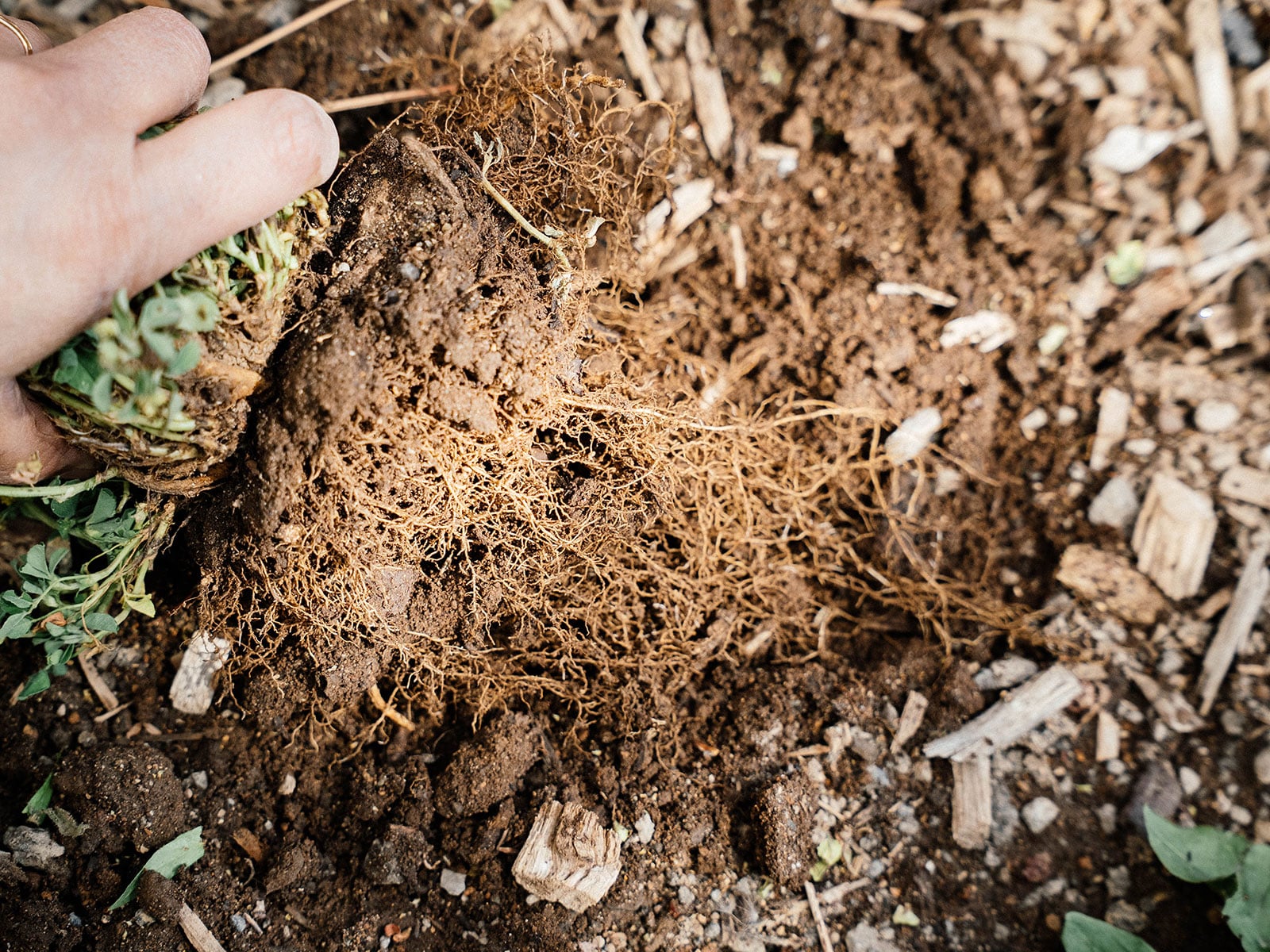
Therefore, if you want to avoid weeds in the future, cut them instead of pulling them.
Recommended
horihori knife
This versatile Japanese-made doyo knife can cut, weed, scoop, dig, and transplant. It’s one of my most used gardening tools!
Using a HoriHori knife, slice the plant from just below the stem to the top of the roots, as shown below.
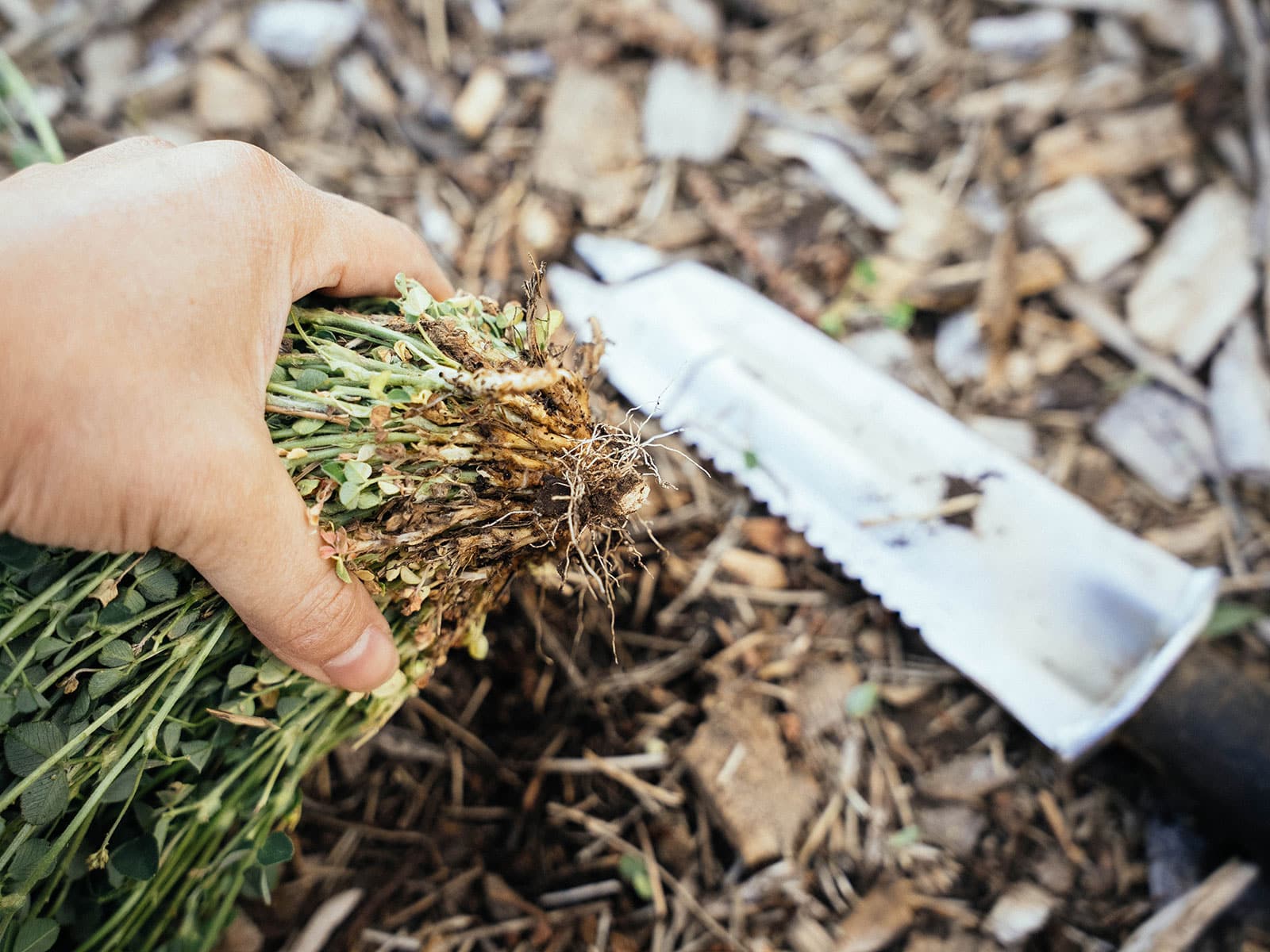
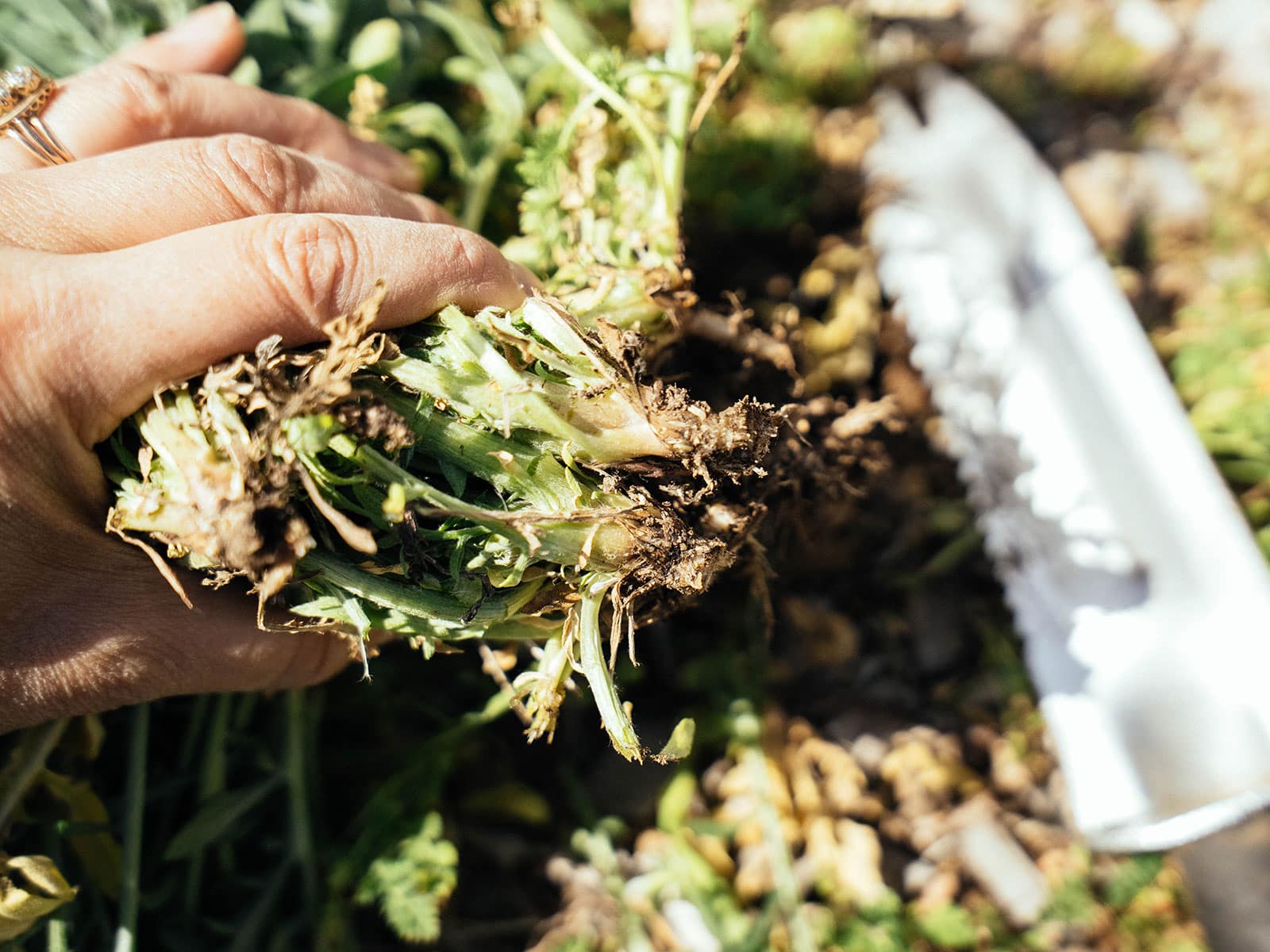
Be sure to cut below the crown (where the stem meets the roots), as some weeds may sprout new leaves if the crown is left alone.
Discard the plant, but leave the roots where they are in the ground. As the roots decompose, they add valuable organic matter to the soil and help nourish the soil food web.
While this is an effective method for managing annual weeds, it does not work for perennial weeds that grow from rhizomes (such as quackgrass) or weeds that regenerate from root fragments (such as mallow).
4. Don’t turn the soil over.
Every time you turn or stir the soil (by tilling, digging, or raking deeply), dormant weed seeds are stirred up. Once brought to the surface and exposed to sunlight and moisture, they have everything they need to germinate and grow.
That’s why I’m a fan of no-till gardening. Not only will it put sleeping weeds to bed, but it will also save you a lot of work. So, if you don’t need to dig, simply spread a few inches of compost on top of the soil and create the minimum planting trench or hole you need.
5. Multi, multi, multi.
Regarding soil: If you don’t cover the soil with something, it will be covered with whatever nature blows into it. So don’t leave the soil bare.
Spread straw, wood chips, fallen leaves, compost (yes, it’s mulch), or any of these organic mulch options over bare soil to suppress weeds and reduce soil-borne diseases.
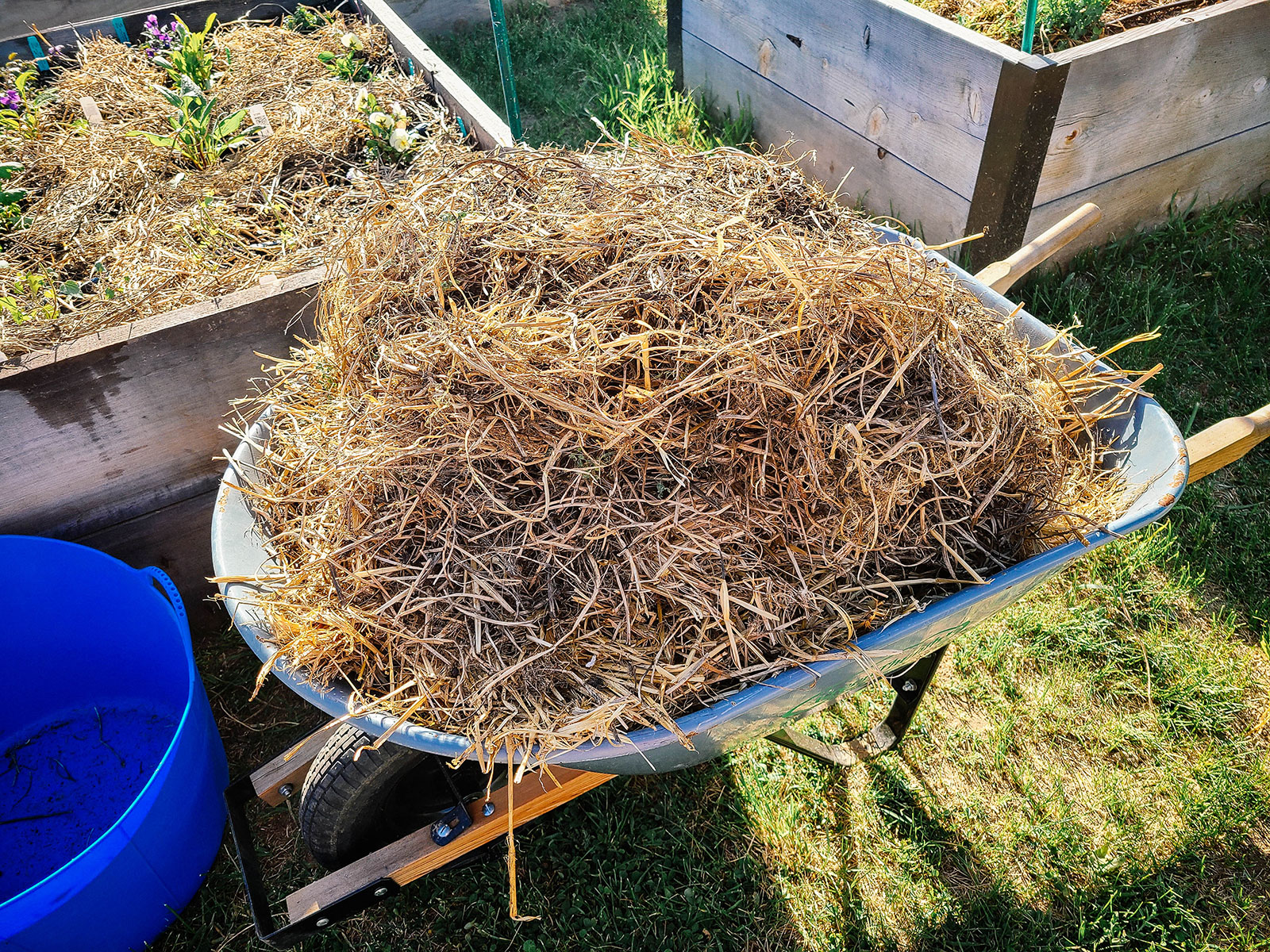
What about the other weeds you just pulled out of the ground? If the seeds haven’t set yet, you can also drop them on top of the soil and use them as mulch. (I also do this with stems cut from tomato plants; I place the stems right next to the plants instead of in a dedicated compost pile.)
6. Plant your garden flower beds intensively.
The more space your desired plants take up, the less space there will be for weeds to germinate and grow. So if you don’t want to mulch your flower beds, use the plants themselves as “living mulch” to cover the empty spaces between your flower beds.
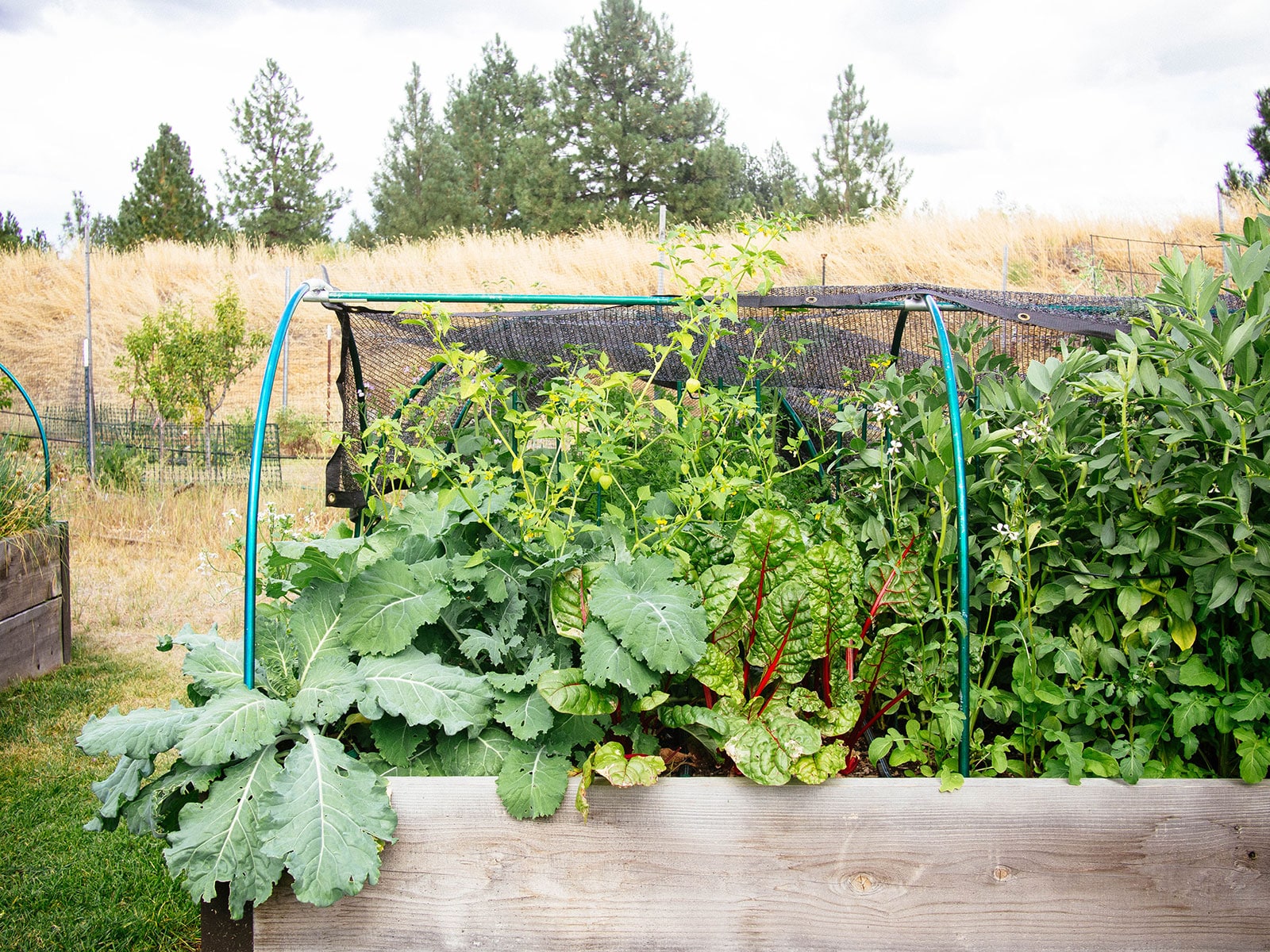
In addition to competing with weeds, intensive planting of crops also provides shade to the soil and helps conserve water. But it’s not just about spacing your plants closer together. Intensive planting may also mean strategically interplanting.
For example, you can plant lower-growing crops (e.g., trailing nasturtiums) as a living mulch around taller crops (tomatoes). In this example, nasturtiums act as a trap crop to lure aphids away from valuable tomato crops, and their nectar-rich flowers also attract beneficial insects.
Alternatively, you can grow heat-loving lettuce in clusters under cucumber trellises. Lettuce helps control weeds, and cucumber vines provide shade to lettuce to slow bolting.
7. Don’t let weeds go to seed.
This is one of the easiest ways to control weeds in your garden. Don’t let weeds set seed. If we don’t, we’ll probably end up with hundreds (if not thousands) of weed volunteers next year.
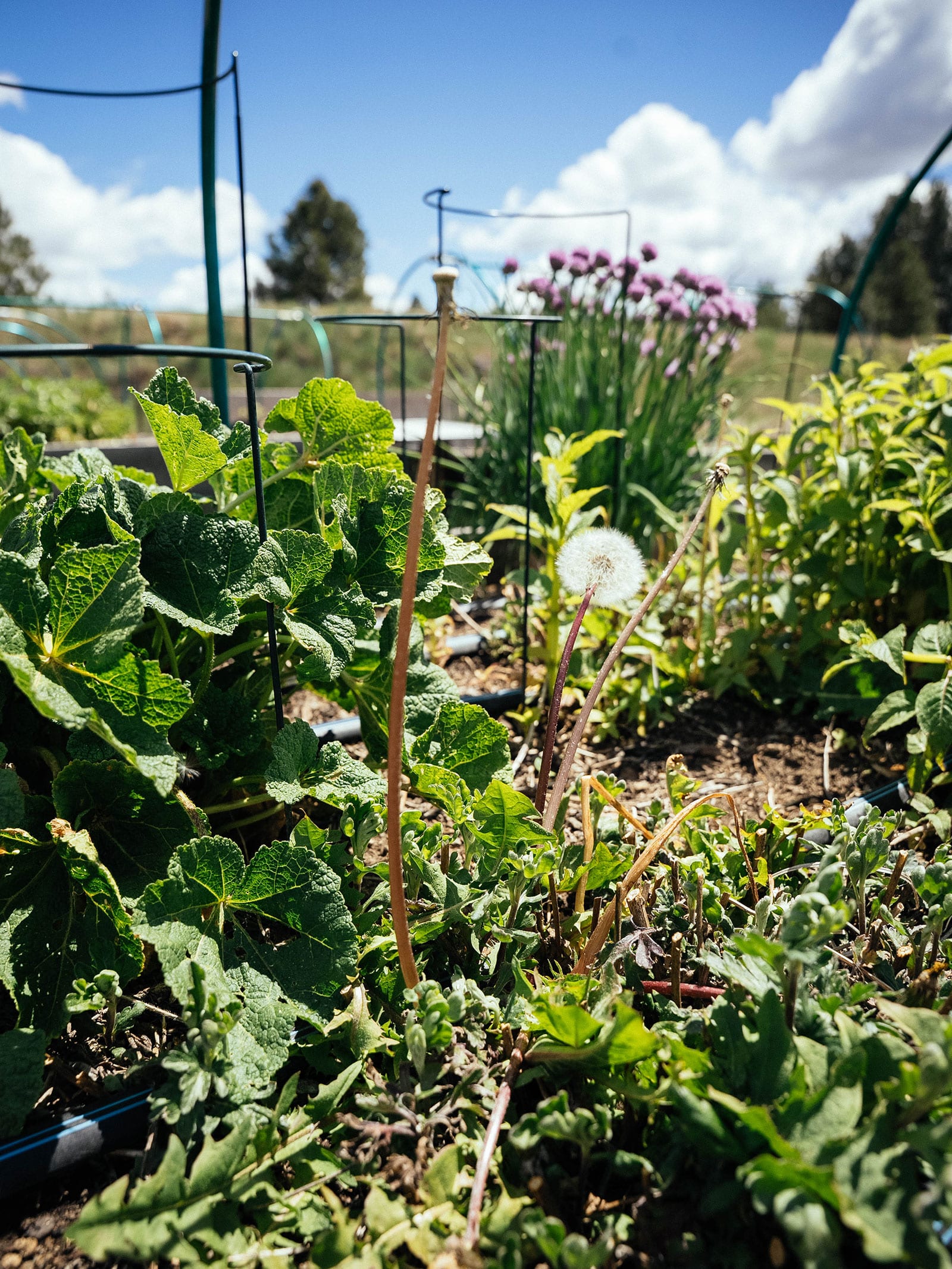
If the weeds have already formed seeds, carefully cut off the seed heads and place the seeds or the entire plant in the trash (or another part of the garden where weeds are not a concern). Avoid weeding or mowing in areas where weed seeds are already growing. This is because the seeds will be spread over a wide area.
8. Do not compost weeds that have gone to seed.
I always recommend tossing weeds with seed heads into the trash, as most home compost piles aren’t hot enough to destroy weed seeds.
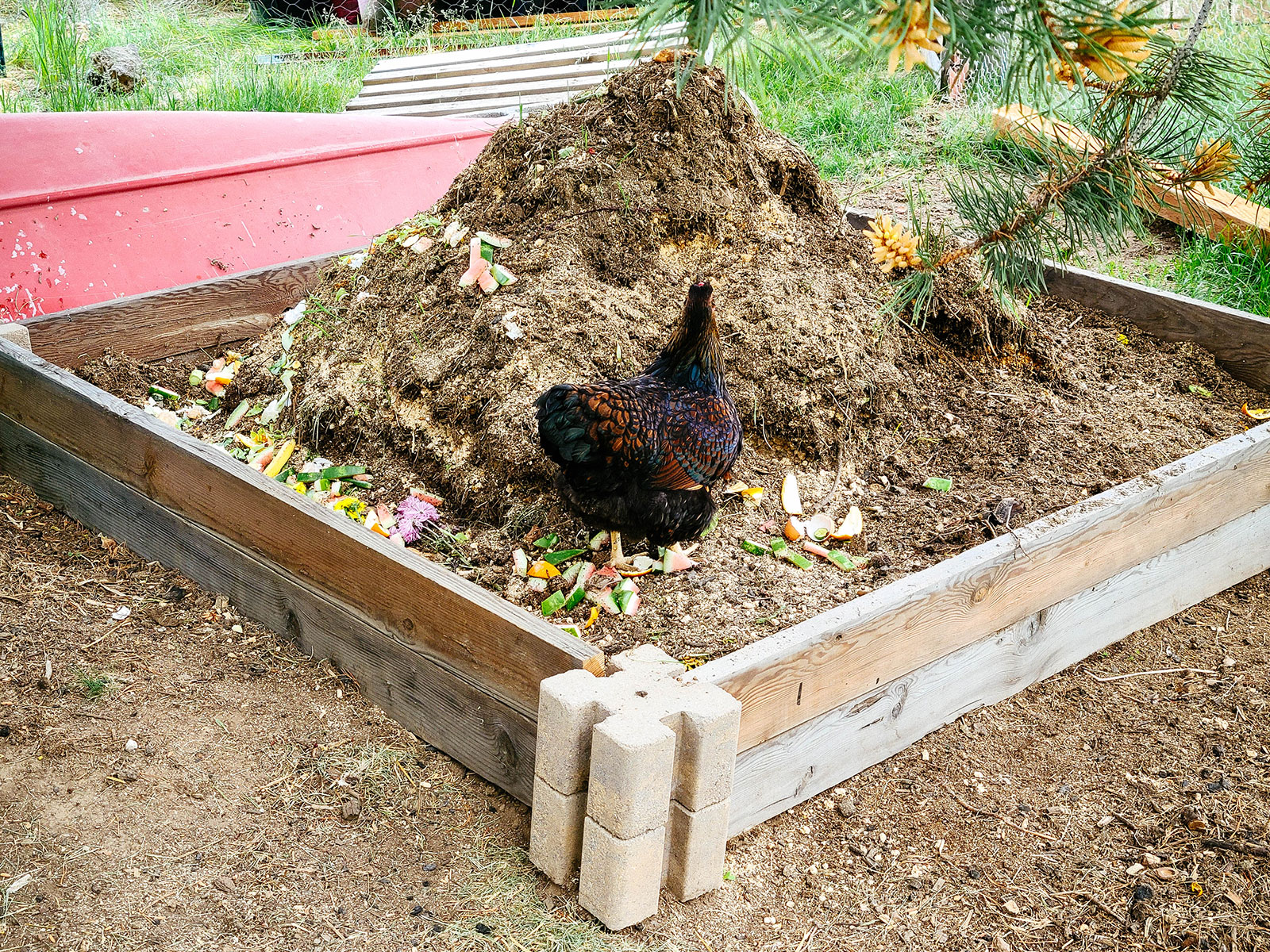
The internal temperature of the compost pile must reach 140°F to effectively decompose organic matter, including seeds. It also needs to be rotated regularly so that the outer cold material (which may have seeds) moves to the hottest center.
However, most people maintain a cool compost pile where seeds can still germinate. So, if this is you, ignore the headache and toss the weed seeds in the trash or city garden bin.
9. Don’t leave garden beds empty at the end of the season.
Flower beds in the garden need to be covered with something all year round. Once your crops are finished for the season, grow hardy cover crops instead. If you don’t want to grow anything else, add some mulch on top of it (a few inches of compost, a thick layer of straw, or a pile of freshly cut old plants will do).
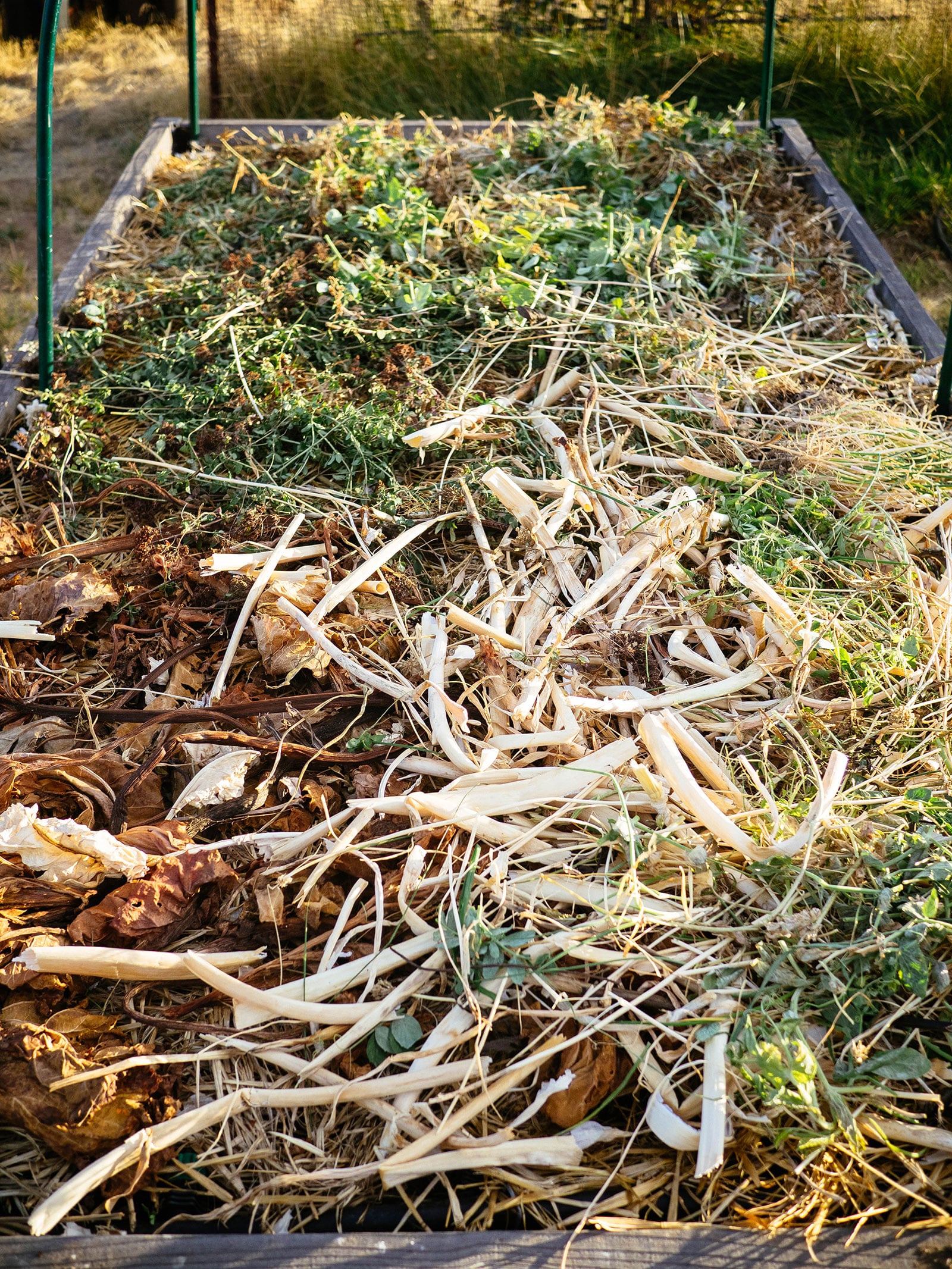
This way, when you’re ready to replant next season, you’ll already have added good organic matter to your soil and won’t have to contend with weeds that blow in throughout the fall and winter.