When we think of our social lives, we tend to think of our inner circle: our few closest friends, our family, and the people who show up at 2am. These relationships are very important. But it turns out they aren’t the whole picture, and the parts we overlook carry more weight than their reputation suggests.
Around the close circle sits a much larger, looser ring. The barista who knows your order, the neighbor you chat with at the mailbox, the person you only see every week in the same class, the former colleague you like but rarely call. Sociologists call this a “weak tie.” We are conditioned to treat them as social background noise. Research shows they do the real work, both for our opportunities and our well-being.
short version
Weak ties are casual, low-intensity relationships on the fringes of life, such as acquaintances, neighbors, regulars, and friends of friends. They are disproportionately valuable as new information and opportunities because they can connect you to circles that your closest friends may not know about. And through the accumulation of small, frequent moments, they measurably contribute to a sense of well-being and belonging. A rich social life is not just about a few deep bonds. The field of light is also wide-ranging.
Original insight: Weak ties open doors
The phrase originates from a 1973 paper by sociologist Mark Granovetter, who is currently one of the most cited sociologists in the field. He studied how people find jobs and discovered something counterintuitive. Most people found their new roles not through close friends, but through acquaintances, weak ties (Granovetter, 1973).
The logic is elegant once you look at it. Your close friends tend to know the same people and the same things as you. We swim in the same pool. In contrast, weak bonds exist in separate pools. They bring information, clues, and possibilities that have not yet circulated in your immediate circle. Loose connections serve as bridges to worlds that cannot be reached through strong ties.
Its mechanisms silently shape many forms of life. Of course it’s work, but it’s also the apartment you heard about, the doctor someone recommended, the idea that reorganized your way of thinking, and the introduction that changed your year. Big breaks are more likely to arrive through weak connections than strong ones. This is precisely because weaker ties reach further.
New Insight: Weak ties make us happier
For a long time, the value of weak ties was framed primarily in pragmatic terms of information and access. More recent research has revealed something even warmer. These loose connections have a positive impact on our daily mood.
Psychologists Gillian Sundstrom and Elizabeth Dunn conducted a series of studies on this. In one example, people reported feeling happier and having a stronger sense of belonging on days when they interacted with weak ties more than usual. In another case, people who had a short, honest interaction with a coffee shop barista (smiling, making eye contact, and saying a few words) left in a better mood than those who conducted the transaction strictly and efficiently (Sandstrom & Dunn, 2014).
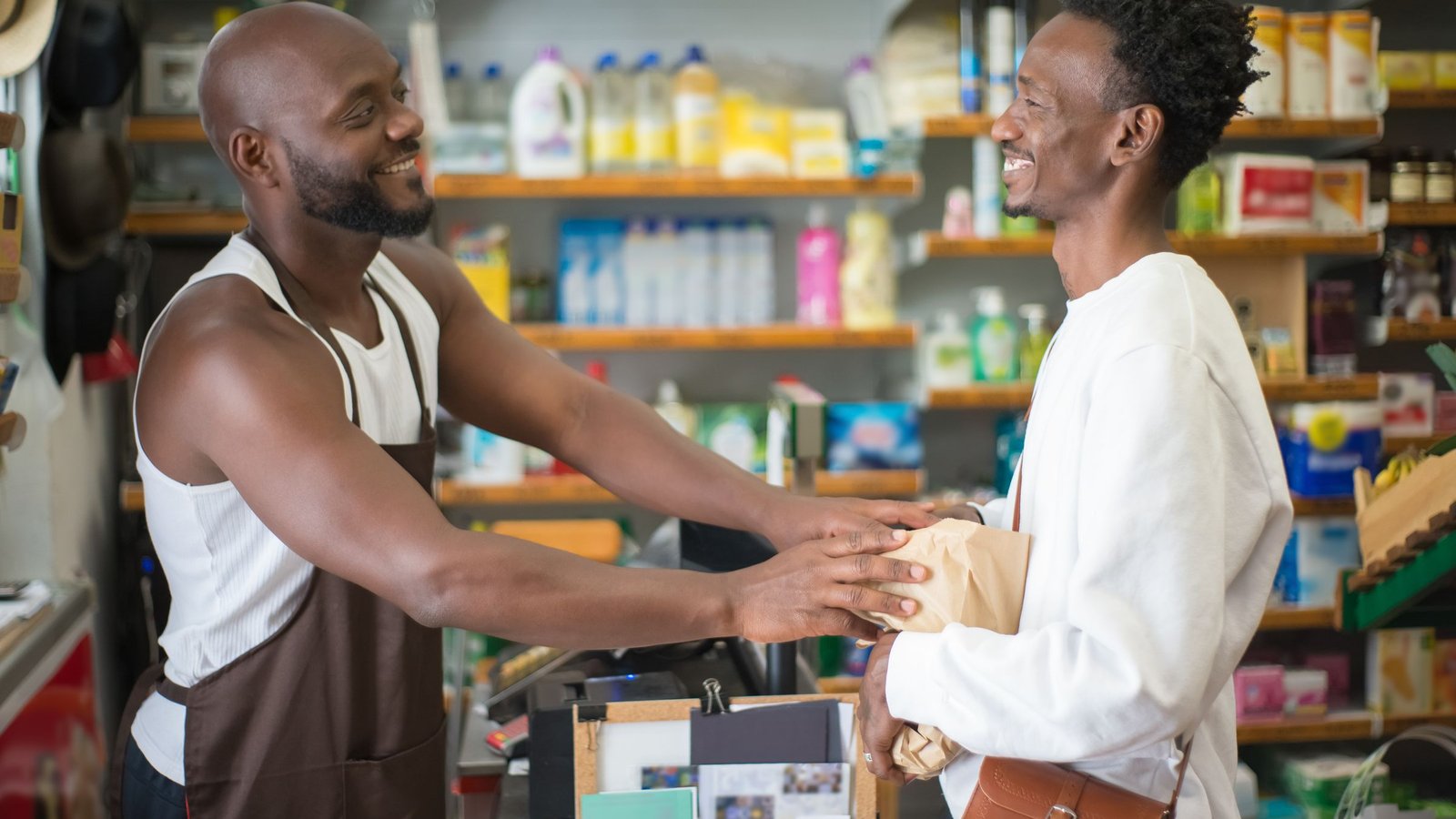
Look at how little the barista’s intervention is. A few seconds of real human contact with someone you don’t even know their name has clearly increased people’s sense of connection. This meaning is encouraging. A sense of belonging is not only cultivated through infrequent deep conversations. Also, small moments of recognition from those around you constantly add up.
This also explains why a day filled with smooth, contactless efficiency, ordering on an app, checking out at a machine, and wearing headphones throughout the commute can leave us feeling subtly alone, even when everything is fine. We have quietly created weak bonds from our daily lives, but we feel their absence without really knowing what is missing.
Third place: Where weak ties lived
There is a reason why weak ties are becoming more diluted, and that reason has an address. Sociologist Ray Oldenburg called them “third places,” places that are neither home (the first place) nor work (the second): cafes, barbershops, libraries, corner bars, places of worship, park benches (Oldenburg, The Great Good Place). Their entire social function was to host easy, repeated, low-risk contacts that fostered and maintained weak bonds.
Third places have been in steady decline for decades, hollowed out by suburban design, long working hours, the movement of more people to screens, and, more recently, the shift from lingering spaces to easy access spaces. As those faded, so too did the daily opportunities for spontaneous, direct human connection, and a quiet kind of solitude moved into the void.
Even if you can’t say the name, you can feel the loss. There will be fewer regular places. There are fewer recognizable faces in the world. There will be more days when I have no unscripted contact with people outside of my family or work.
How to rebuild weak ties
The good news is that weak ties are much easier to rebuild than close friendships because they require much less. I repeat that I’m not trying to build intimacy, just a sense of presence and a little warmth. Some ways to do it intentionally:
Become a regular somewhere. Choose a cafe, classroom, shop, park, or Saturday market and visit it often enough that you recognize the same faces. Most of the work is about being familiar with it. The simple fact that we are repeatedly exposed to the same people at low pressures reliably warms the feelings we have about them and them about us, an effect psychologists refer to as mere exposure (Zajonc, 1968).
Choose the slightly less efficient option. Consider the tiny human version when it is served. A few words with the cashier, eye contact, and actually greeting your neighbor instead of giving a half-nod. These cost little, but give you more in return than you should.
Treat your acquaintances as people worth caring for. Loose connections you already have, parents who give you rides to school, regulars at the gym, friendly ex-coworkers, etc. don’t have to be your best friends. A little attention will keep them alive and serve as a bridge to everything outside your current circle.
Participate in things you come across repeatedly. The most reliable weak tie generators are groups with a constant rhythm. This is because it creates repeated contact. This is one of the underappreciated gifts of an ongoing community like The Flouring Life. It is a kind of third place that travels with you, a set of familiar faces and easy contact, which in modern life has to be built from scratch.
None of this is a substitute for deep friendship, nor is it intended to be. It’s the other half of a connected life, a wide, warm, low-risk field where close bonds are fostered and ordinary days feel less anonymous. Loose connections are not background noise. They are a big part of whether or not you feel like you belong in a place.
References
Granovetter, M. (1973). The strength of weak ties. American Journal of Sociology. Link Sandström, G. M., and Dunn, E. W. (2014). Social interaction and well-being: The surprising power of weak ties. Personality and Social Psychology Bulletin. Link-Zajonk, R. B. (1968). Effects of mere exposure on attitudes. Overview Oldenburg, R. (1989). Great Good Place. overview
Related articles: Why adult friendships are difficult · Connecting through shared rituals · The science of belonging
FAQ
What is a weak link?
Weak ties are casual, low-intensity relationships in everyday life, such as acquaintances, neighbors, cafe or gym regulars, friends of friends, and former co-workers. Although they are outside of your close inner circle, they still play an important role in your chances and happiness.
Why are weak ties important?
As sociologist Mark Granovetter showed in 1973, weak ties connect you to a different social circle than your closest friends, making them a major source of new information and opportunities, including jobs. Weak ties also contribute to our daily happiness and sense of belonging through the small moments we often meet.
Can acquaintances really make you happy?
yes. A study by Gillian Sundstrom and Elizabeth Dunn found that people felt happier and more connected on days with more weak relationship interactions, and that even brief friendly interactions with baristas significantly improved mood compared to purely efficient transactions.
What is a “third place”?
A term coined by sociologist Ray Oldenburg to refer to social spaces that are neither home nor workplace, such as cafes, libraries, parks, and meeting places. In third place, we host easy, repeated, low-risk contacts that build weak ties, and their decline is one reason why everyday connections are becoming more tenuous.
How can we build more weak ties?
Become a regular somewhere so that the same faces recognize you, choose slightly less efficient and more human options for everyday errands, take care of the acquaintances you already have, attend events where you meet regularly, and casual contact will occur naturally.