Introduction to Mindfulness Meditation
Welcome to an introduction to mindfulness meditation. We’ll explain what mindfulness meditation is, why it’s been practiced around the world for hundreds of years, and most importantly, why so many people continue to make it part of their day to reduce stress and anxiety, build caring relationships, and create an oasis of calm and contemplation in the busyness of daily life.
So what is mindfulness meditation? The expression we like to use is a calm and curious awareness of the present moment.
Mindfulness is like a mirror. It reflects back to you what is here, what you are experiencing, without embellishment or goals, judgment or resistance. It’s a way of resting in a safe and caring place with an attitude of “I’m here, no matter what happens,” and a way of fully, intimately, and kindly engaging with your life as it is.
Practicing mindfulness allows you to see first-hand how often you find yourself in the following states:
Instead of thinking about what’s happening inside you now or what’s happening around you, you think about the past or the future.
Instead of listening to your critical, resistant, or unkind inner dialogue and observing yourself non-judgmentally and kindly.
We don’t really think about it, but subconsciously we jump from one thought or emotion to the next.
Mindfulness meditation guides you step-by-step through how to become aware of these habits (we all have them!), leading you to an increasingly direct and curious connection with everything in your life as it is.
Mindfulness is like a mirror. It reflects back to you what is here, what you are experiencing, without embellishment or goals, judgment or resistance.
Benefits of Mindfulness Meditation
Over the past few decades, there has been a lot of interest in researching the benefits of meditation. People have been shown to experience a wide range of measurable physical, mental, and emotional changes through regular practice.
Physical benefits include improved sleep quality, lower heart rate, and reduced anxiety. Mindfulness meditation has been shown to activate the parasympathetic nervous system, the body’s relaxation and healing system.
Mental benefits include calming a busy mind, improved problem solving and concentration, and increased creativity.
People who practice mindfulness meditation also become better able to understand their own emotions. They are better able to ride the waves of emotional change for themselves and respond to situations in ways that improve their connection and understanding with others.
All of these positive changes interact and strengthen each other, giving us an inner core of happiness and resilience that we can call upon in everyday situations.

People who practice mindfulness meditation also become better able to understand their own emotions. They are better able to ride the waves of emotional change for themselves and respond to situations in ways that improve their connection and understanding with others.
Let’s start with breathing awareness
Let’s take a look at breath mindfulness, which has been practiced for many years in traditional meditation. There are hundreds of breathing techniques, but they basically fall into two types: breath awareness and breath manipulation.
In breath-aware meditation, you carefully observe your breathing as it is, without trying to change anything. Is it shallow or deep, warm or cold, large or quiet?
Breath manipulation, on the other hand, uses a variety of techniques to change breathing patterns. Improves mental focus, increases energy, and reduces anxiety. Many of these breathing techniques are easy to learn, yet powerful and often have immediate effects.
This article focuses on the practice of breath awareness and its benefits: the practice of paying precise and sustained attention to your breath.
So why is breathing mindfulness a fundamental practice?

Observing your breathing calms your nervous system.
The simple act of paying attention to your breathing sends a clear message to your brain and nervous system: “You’re safe. You can relax and recover!” Your brain has evolved to detect external threats, so focusing your attention on your breath and body turns off your brain’s danger sensing system and turns on your healing system.
I’m always with you
The basic skill of mindfulness meditation is to learn where your attention is directed at all times, so that you are most interested in the present moment. No matter where you are, you are breathing. So whenever you want to practice a little mindfulness, you can use your breath as an anchor to the present. No props or meditation apps required.
The simple act of paying attention to your breathing sends a strong message to your brain and nervous system that you are safe and can relax.
your breath and your heart reflect each other
As you pay attention to your breathing, you may begin to realize that the quality of your breath reflects the quality of your mind. Slow, deep breathing is often accompanied by clear and calm thinking. Shallow, rapid breathing awakens a busy and anxious mind. Breath manipulation exercises take advantage of this relationship and show you how to slow your breathing to calm yourself, for example. The practice of breath awareness provides a powerful glimpse into the mind-body connection simply by beginning to notice this intimate connection.
Breathing brings you into the moment
Mindfulness meditation is about being aware of what is happening in the moment, so breathing is the perfect tool here as well. Your thoughts and emotions may take you to the past or the future, imagining what once was or could be, but your breathing is always in the present.
My breath is strange
Many people who practice mindfulness, beginners and experienced practitioners alike, can find it difficult to turn their attention inward. Your breath can guide the way. It can guide you from the things that grab your attention on the surface, to the physical sensations and sounds of your breathing, to the most subtle and quiet experiences and states within you.
Please take a few minutes to complete the following steps.
Pay attention to your breathing as persistently as possible.
When your attention wanders, gently return your attention to your breathing.
Do steps 1 and 2 with curiosity and non-judgment.
Your thoughts and emotions may take you to the past or the future, imagining what once was or could be, but your breathing is always in the present.
1. Be careful
Close your eyes and take a few deep, relaxing breaths, letting your body relax a little with each exhale.
When you are ready, begin focusing your attention on your breathing. Do your best to observe and feel all four parts of your breath. Breathe in, take a short pause, breathe out, take another short pause.
Remember, it’s okay if your attention wanders from your breathing. Start again and track your breathing for as long as possible.
2. When you get distracted, come back to your breathing
At some point, your attention is bound to wander from your breathing, to the tightness in your back, to frustration about an argument with your spouse, or to an idea for a new creative project.
It is important to know from the beginning that these are all part of meditation and should not get in the way of meditation. A meditation practice is truly a safe place to learn different ways to pay attention and deal with what you experience every day.
3. Be curious and respond in a non-judgmental way.
This may be the easiest step to explain, but for many of us it’s the most difficult. No matter what has caught your attention, no matter how annoying or trivial it may be, when you find yourself not paying attention to your breathing, do your best to be curious and nonjudgmental. Mindfulness is a judgment-free realm.
Why is this so important? Just as a critical comment from a friend can upset you or make you feel a little closed-minded, it has the same effect on your inner dialogue. The internal environment you create for yourself and learn to follow has a huge impact on your well-being and resilience.

Mindfulness meditation tips
How to sit
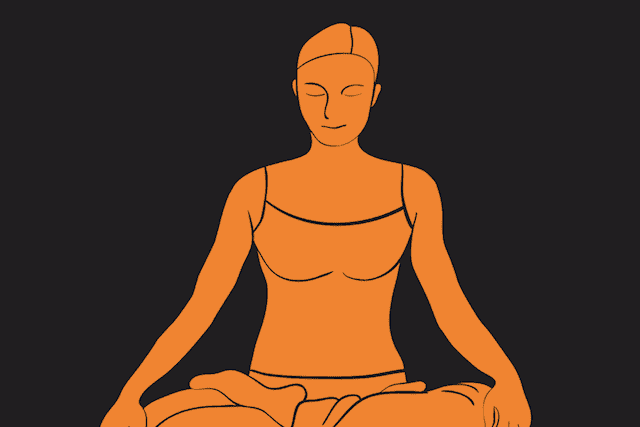
Choose a sitting position that is comfortable and alert for you, such as the floor, a cushion, or a chair. You can also lie down if that works best for you.
how long do you sit
If you’re new to mindfulness meditation, start with 10 to 15 minutes. No matter when you choose, do your best and stick to it, even if your mind starts telling you to do something more interesting. And if you meditate for shorter periods of time and more often, you’ll improve faster. Instead of sitting for an hour once a week, sit for short periods of time several times a week.
be aware of daily tasks
A great way to remember to practice mindfulness is to tie it into your daily routine, like sitting down for breakfast or getting ready for bed. You can turn this activity into a mindful moment to practice non-judgmental awareness.
Rate your state
How does practicing mindfulness meditation affect you? One way to answer this question is to do a quick check-in before and after you sit down. Before you begin, close your eyes and rate yourself on a scale of 1 to 5. 1 is poor/upset/distressed and 5 is really nice/relaxed/happy. Then do the same thing when you are done meditating. Noticing positive changes will enrich your practice and strengthen your motivation.
conclusion
Mindfulness meditation is essentially a practice of learning to trust life. You repeatedly practice letting your life touch you as it is, despite your thoughts about yourself, others, and what is wrong or right in that moment.
When you sit consciously and non-judgmentally in the present moment, you are treating yourself and your life with the utmost care and respect. You are practicing trusting your life and experiences over your beliefs, worries, and past challenges.
It is the beginning of a wonderful and powerful journey of compassion and self-discovery. This website is here to offer you different ways to start or continue your journey.