Happy Friday, GPODers!
As gardeners, we are all stewards of the land and have a responsibility to take that position seriously. For some, it means doing no harm and adding beauty to the landscape. But Adele Kusch of South Bend, Indiana, is taking that mission to the next level, building naturalistic gardens filled with native plants and small ecosystems that help support local wildlife and pollinators. We have seen Adele’s beautiful and informative landscape once before (at a naturalistic garden in Indiana) and since then she has continued to update and replace more native plants. Today, this space looks completely transformed.
Hello! These 10 photos were taken on the first day of fall. Our 1/3 acre property in a South Bend, Indiana subdivision was a blank slate when we purchased it in 1979. I started gardening for wildlife (birds, pollinators, mammals, amphibians) 30 years ago and my garden is full of biodiversity.
Since joining the South Bend Wild Ones organization, I have learned about the incredible value of planting native straightwood trees, shrubs, bushes, grasses, and sedges in Northern Indiana. They benefit my wildlife habitat and the entire ecosystem.
There is no grass in my garden or backyard. I continued to downsize my front lawn and removed most of the invasive species I planted 40 years ago, including English ivy, winter creeper, periwinkle, daylily, and lily of the valley. These are yarrow (Achillea millefolium, zones 3 to 8), wild geranium (Geranium maculatum, zones 3 to 8), bearded tongue (Penstemon digitalis, zones 3 to 8), clawfoot (Antennaria plantaginifolia, zones 3 to 8), common violets (Viola sororia, zones 3 to 7), and native strawberries. (Fragaria). virginiana, zones 5-9), columbine (Aquilegia canadensis, zones 3-8), and native sedges and grasses.
I encourage everyone to start adding native plants to their gardens and garden beds. If you have a local Wild Ones chapter, they would be happy to help. The national Wild Ones website, wildones.org, provides free and valuable education and ideas.
Three reed plants (Amorpha canescens, zones 3-8), boneset (Eupatorium perfoliatum, zones 3-8), New England aster (Symphyotrichum novae-angliae, zones 4-8), violet ground cover, and self-seeding calendula.
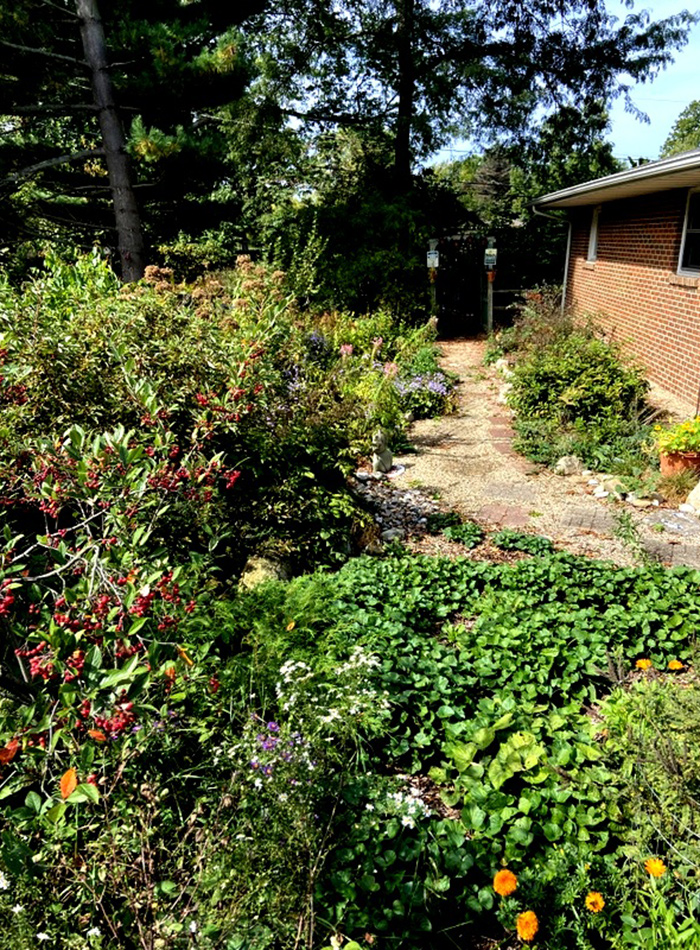 Blue Mistflower (Conoclinium coelestinum, Zones 5-9), Spotted Joe Pye Weed (Eutrochium maculatum, Zones 3-8), Red Twig Dogwood (Cornus sericea, Zones 2-7), Red Chokeberry (Aronia arbutifolia, Zones 3-9)
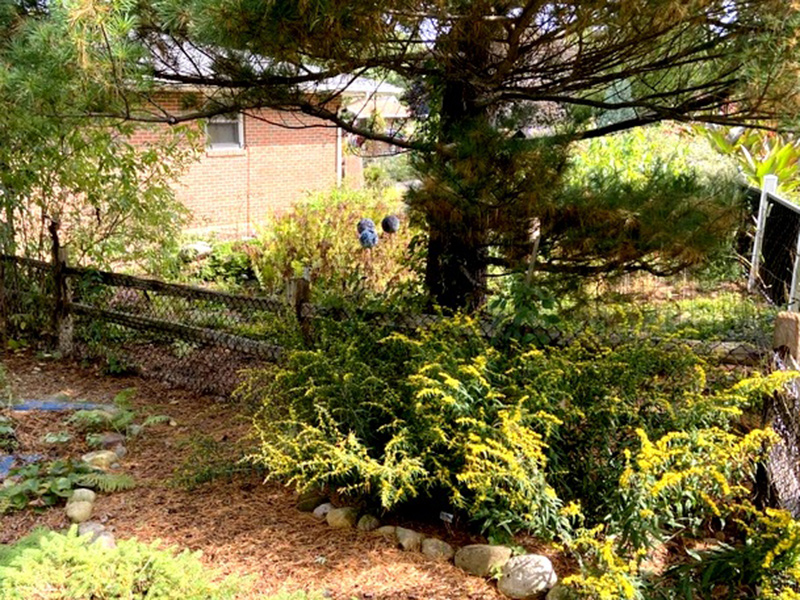 Blue-stemmed solidago caesia (Solidago caesia, zones 4 to 8) grows in the shade of white pines (Pinus strobus, zones 3 to 7).
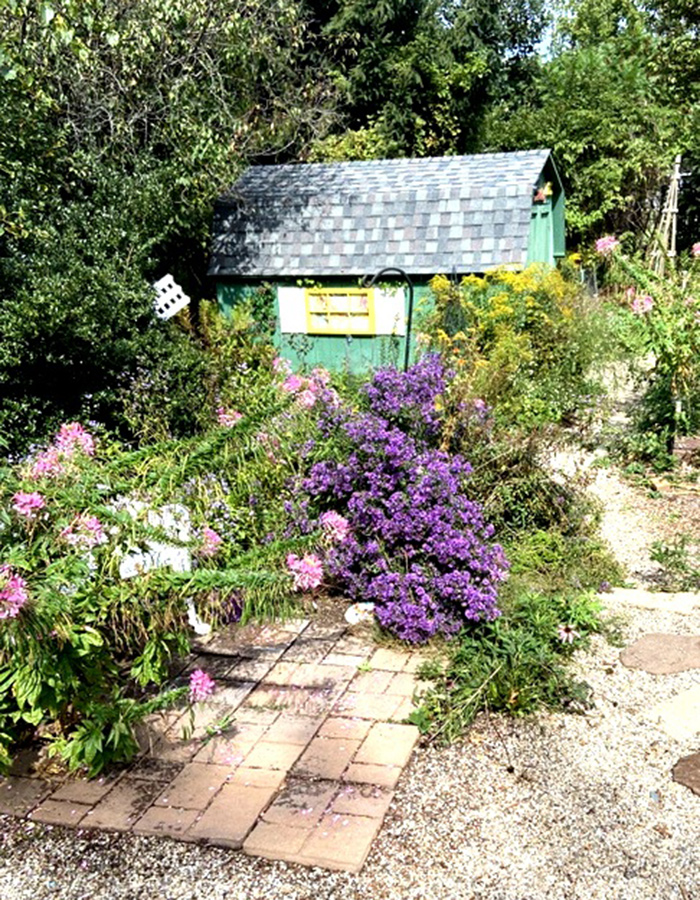 Self-sown annual pink cleome (Cleome hauteana, zones 10 to 11, or as an annual), purple New England aster, goldenrod
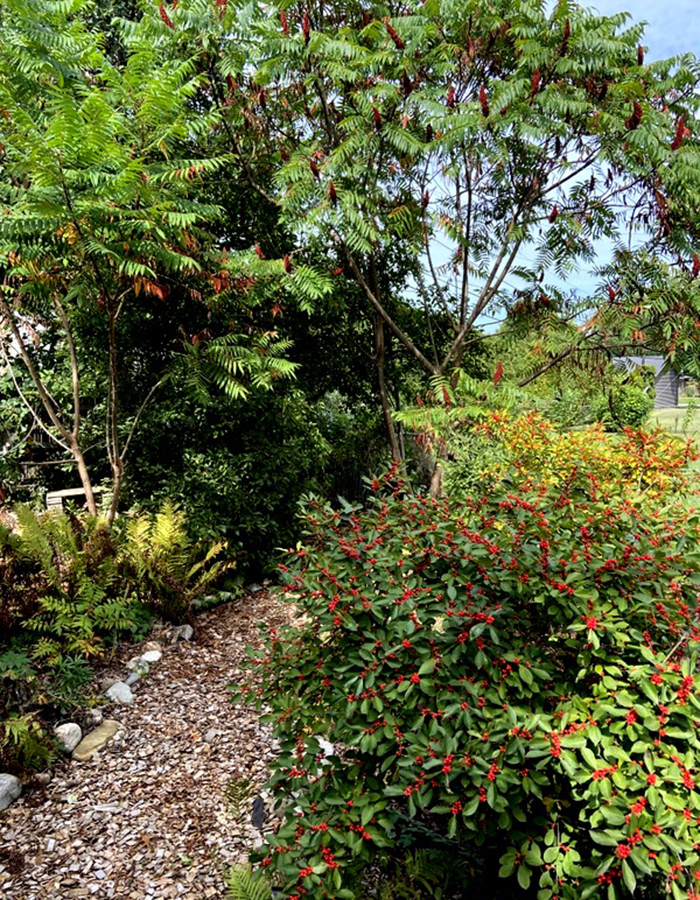 Winterberry bush (Ilex verticillata, zones 3-9) and staghorn sumac (Rhus typhina, zones 3-9)
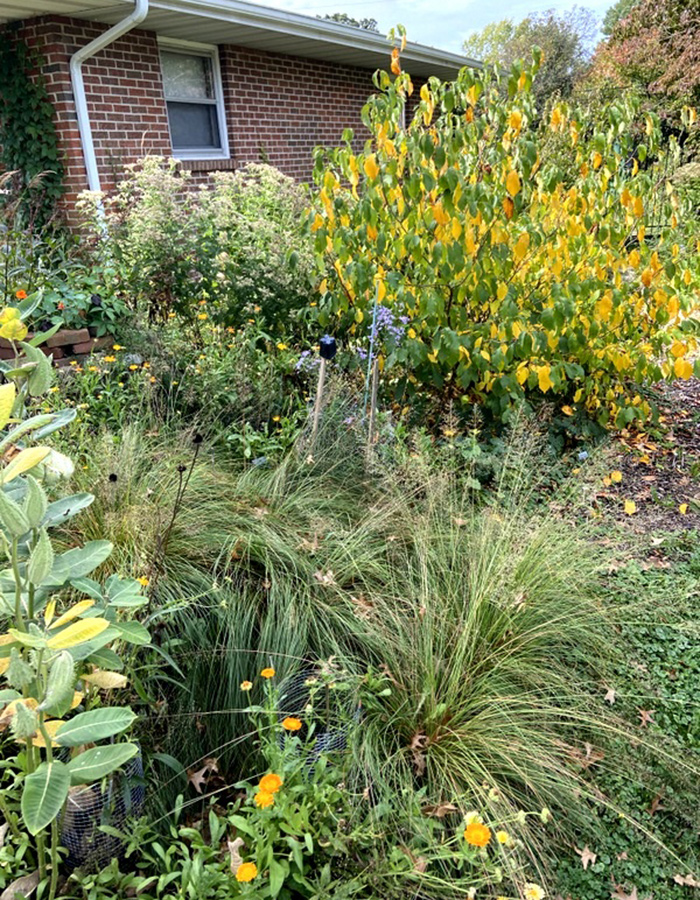 Milkweed (Asclepias syriaca, zones 3-9), boneset, spicebush (Lindera benzoin, zones 4-9), prairie dropseed grass (Sporobolus heterolepis, zones 3-9)
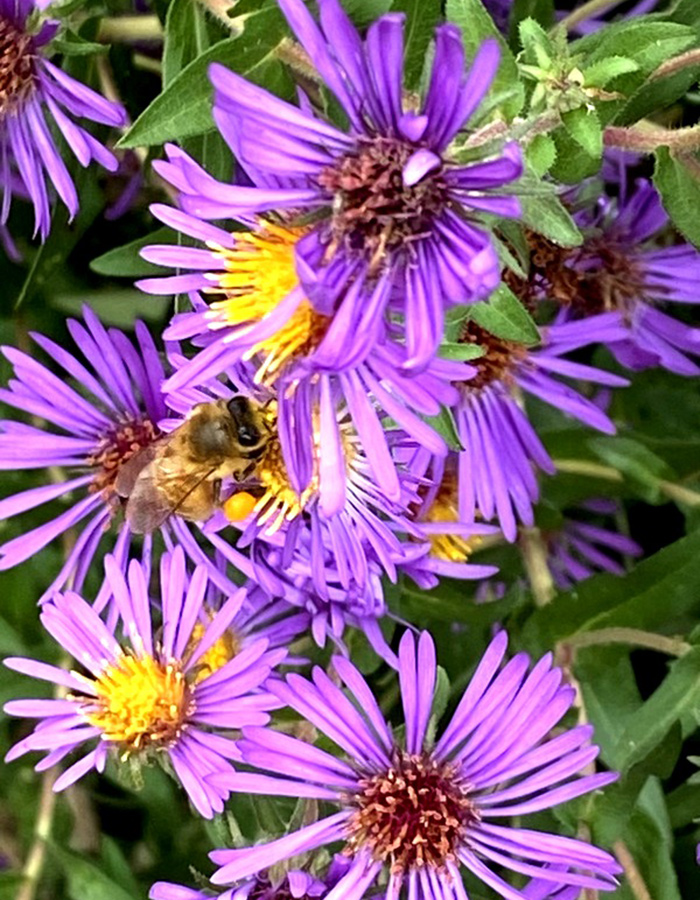 New England’s aster flowers are buzzing with bees.
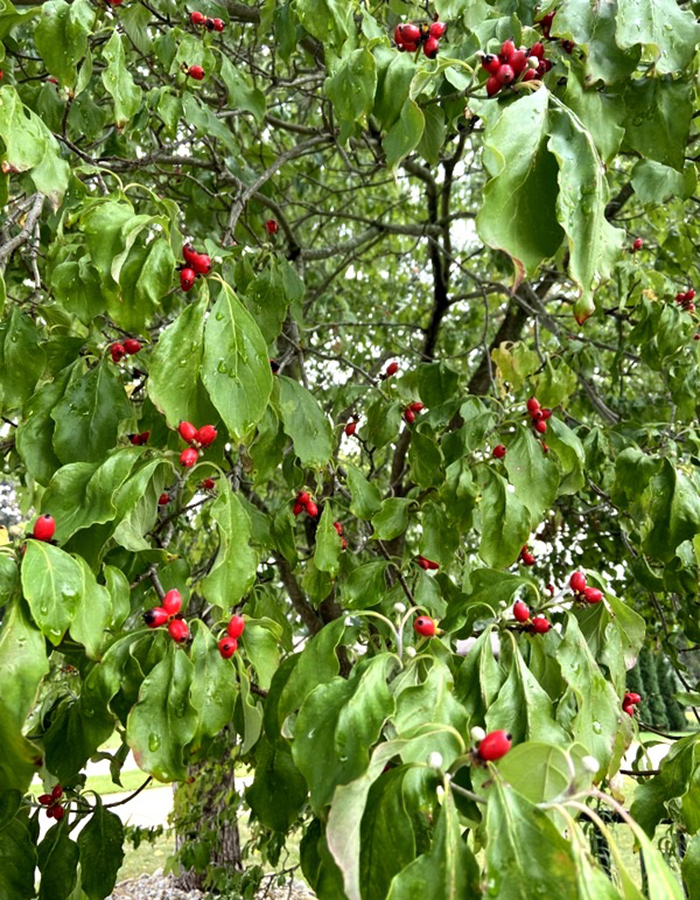 Drupe of flowering dogwood (Cornus florida, zones 5 to 9)
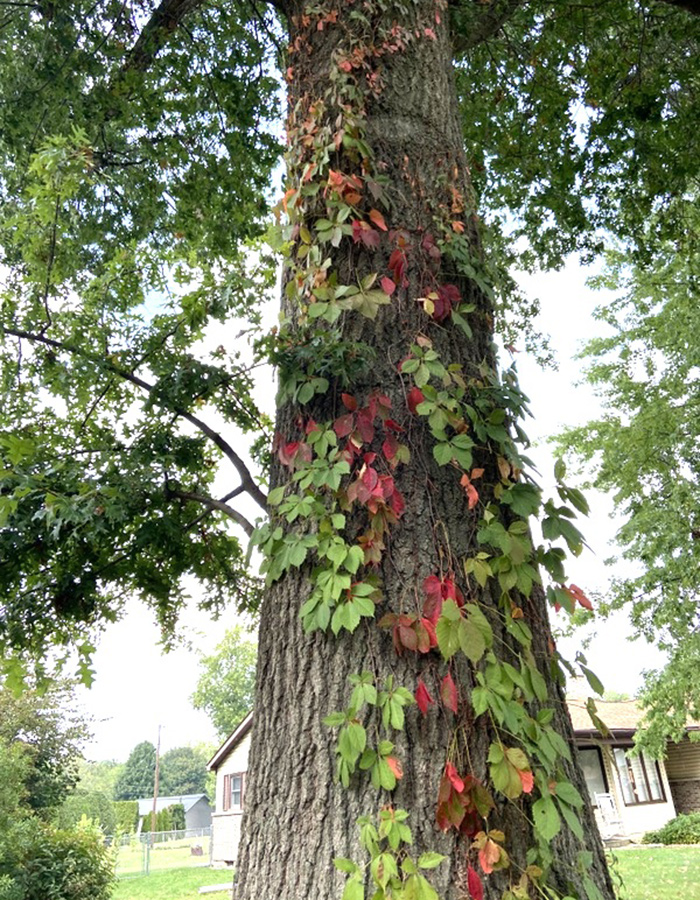 Virginia creeper (Parthenocissus quinquefolia, zones 3-9) in fall color on pin oak (Quercus palustris, zones 4-8)
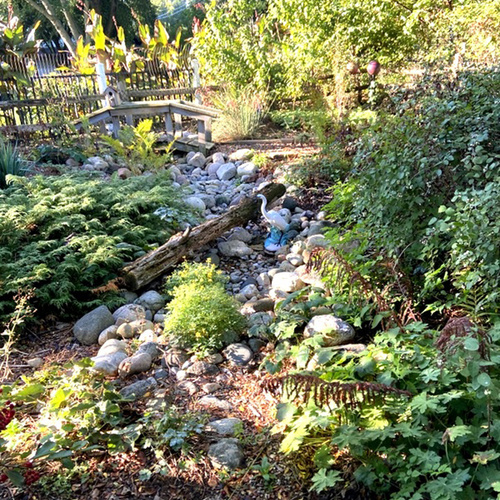
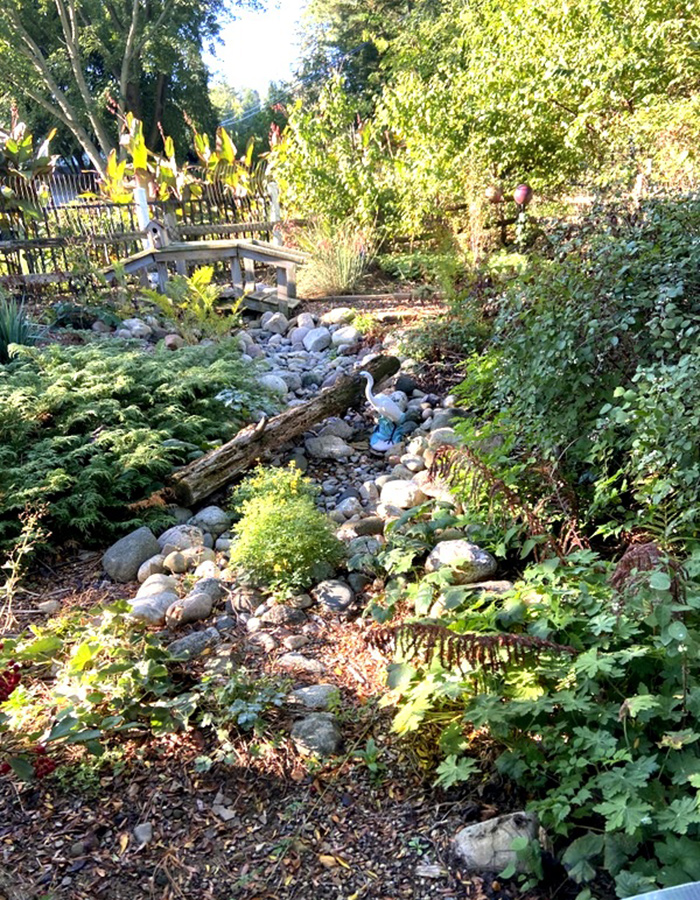 Dry stream bed surrounded by snowberry bushes (Symphoricarpos albus, zones 3-7)
Adele, thank you for the great update on your garden! It’s exciting to see the changes we’ve made to better serve the environment while maintaining visual interest.
What garden habits have you adopted over the years to make it more eco-friendly? Whether you have a haven for biodiversity like Adele or you’re planting a small pollinator garden to attract and support beneficial insects, we celebrate all gardens working towards the greater good and want to feature your space in Garden Photo of the Day. Follow the steps below to send a photo via email or DM on Instagram: @agirlherdogandtheroad.
I want to see your garden!
Do you have photos to share? We’d love to see your garden, a collection of particular plants you love, or any amazing gardens you’ve had the chance to visit.
To submit, please send 5-10 photos to: (email protected) It also includes information about the plants in the photo and the location where the photo was taken. We’d love to hear about where you live, your gardening history, any successes you’re proud of, what you’ve learned from failures, your hopes for the future, your favorite plants, and any funny stories that happen in your garden.
Have a cell phone? Tag your photos with #FineGardening on Facebook, Instagram, and Twitter!
Already receive GPOD by email? Sign up here
Recommended products for fine gardening
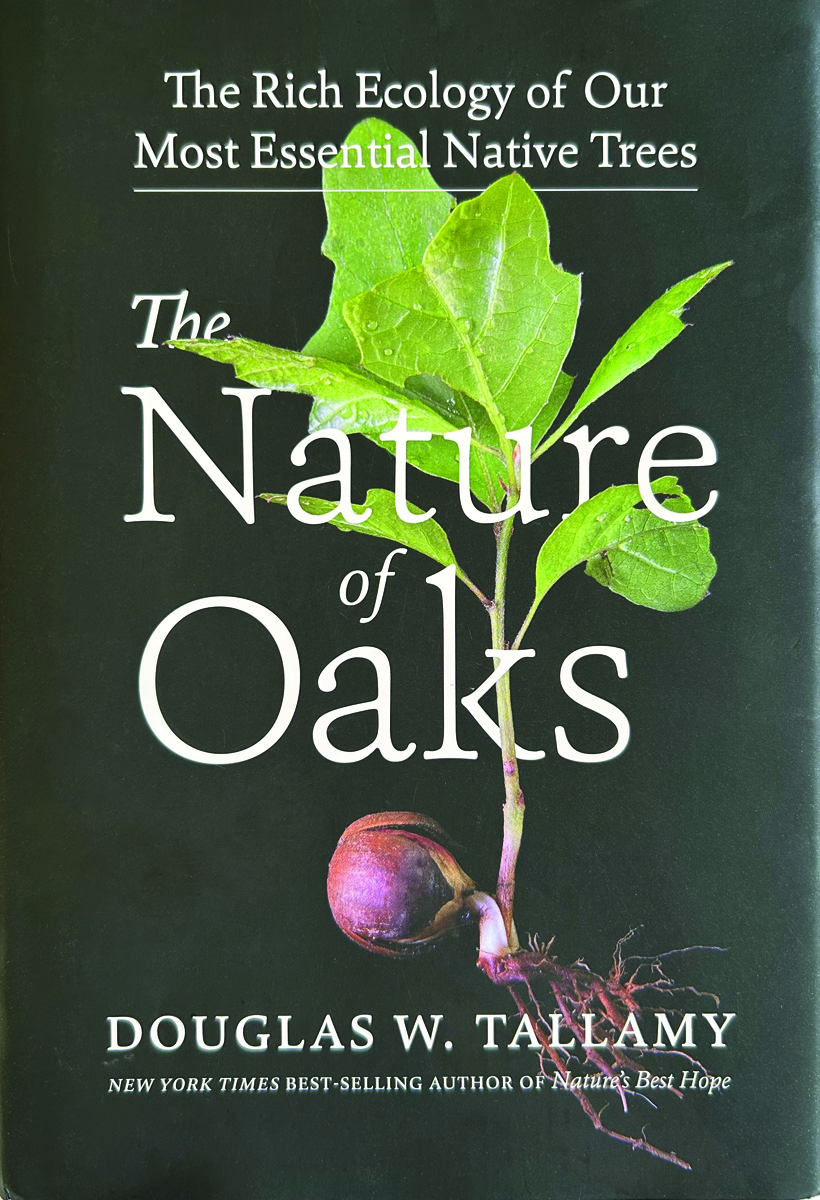
Oak properties: the rich ecology of the most important native tree
Fine Gardening receives commissions from purchases made through links on this site, including Amazon Associates and other affiliate advertising programs.
Nature of Oaks reveals what happens in oak trees each month, highlighting the seasonal cycles of life, death, and rebirth. From woodpeckers collecting and storing hundreds of acorns for food to the beauty of jewel caterpillars, Doug Tallamy illuminates and celebrates the wonders that occur in our backyards. We also share practical advice on how to plant and care for oaks, as well as information about the best types of oaks for your area.
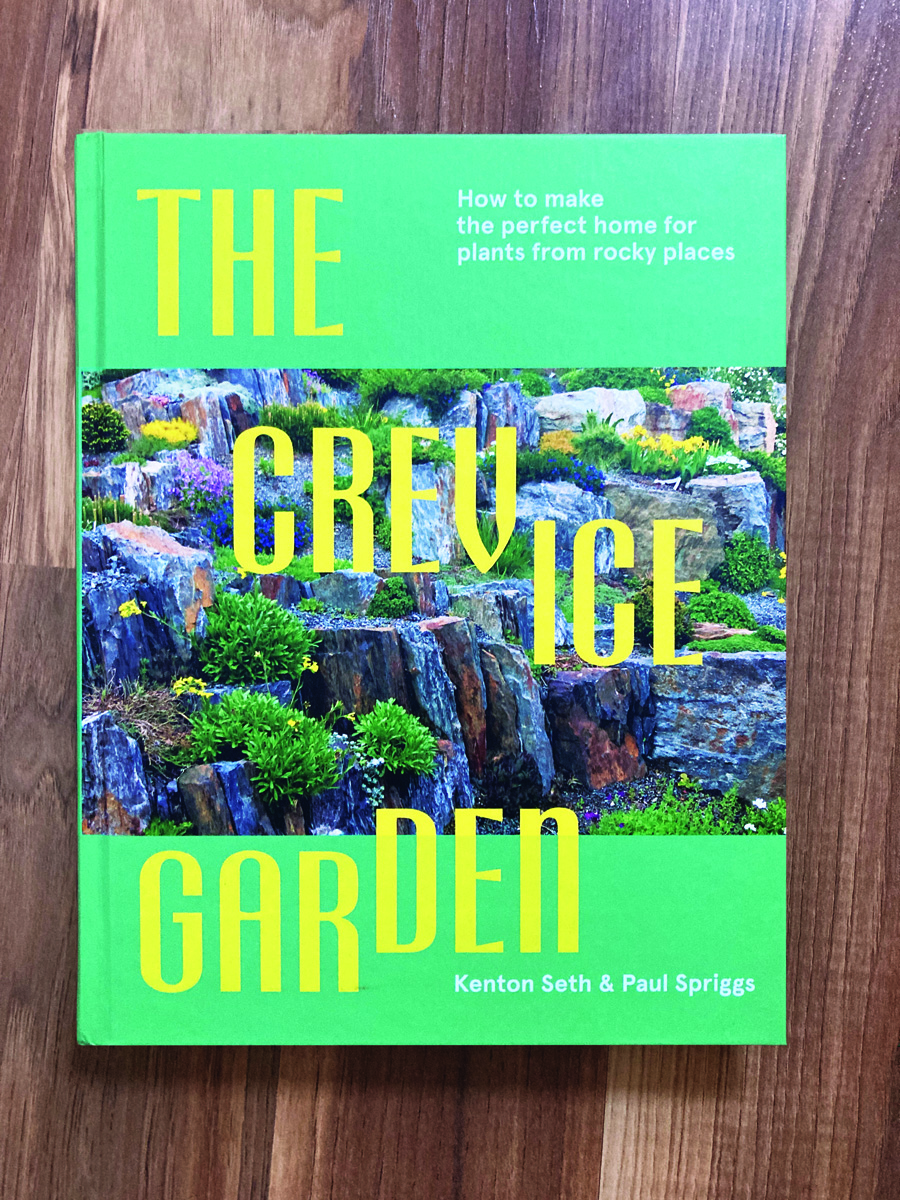
Crevis Garden: How to create the perfect home for rocky plants
Fine Gardening receives commissions from purchases made through links on this site, including Amazon Associates and other affiliate advertising programs.
Crevis Gardens recreate the environmental conditions of mountain peaks, deserts, coastlines, and other exposed or rocky locations on Earth. These impressive garden features provide perfect conditions for plants that grow in far-flung locations, bringing the cultivation of these precious gems within everyone’s reach.
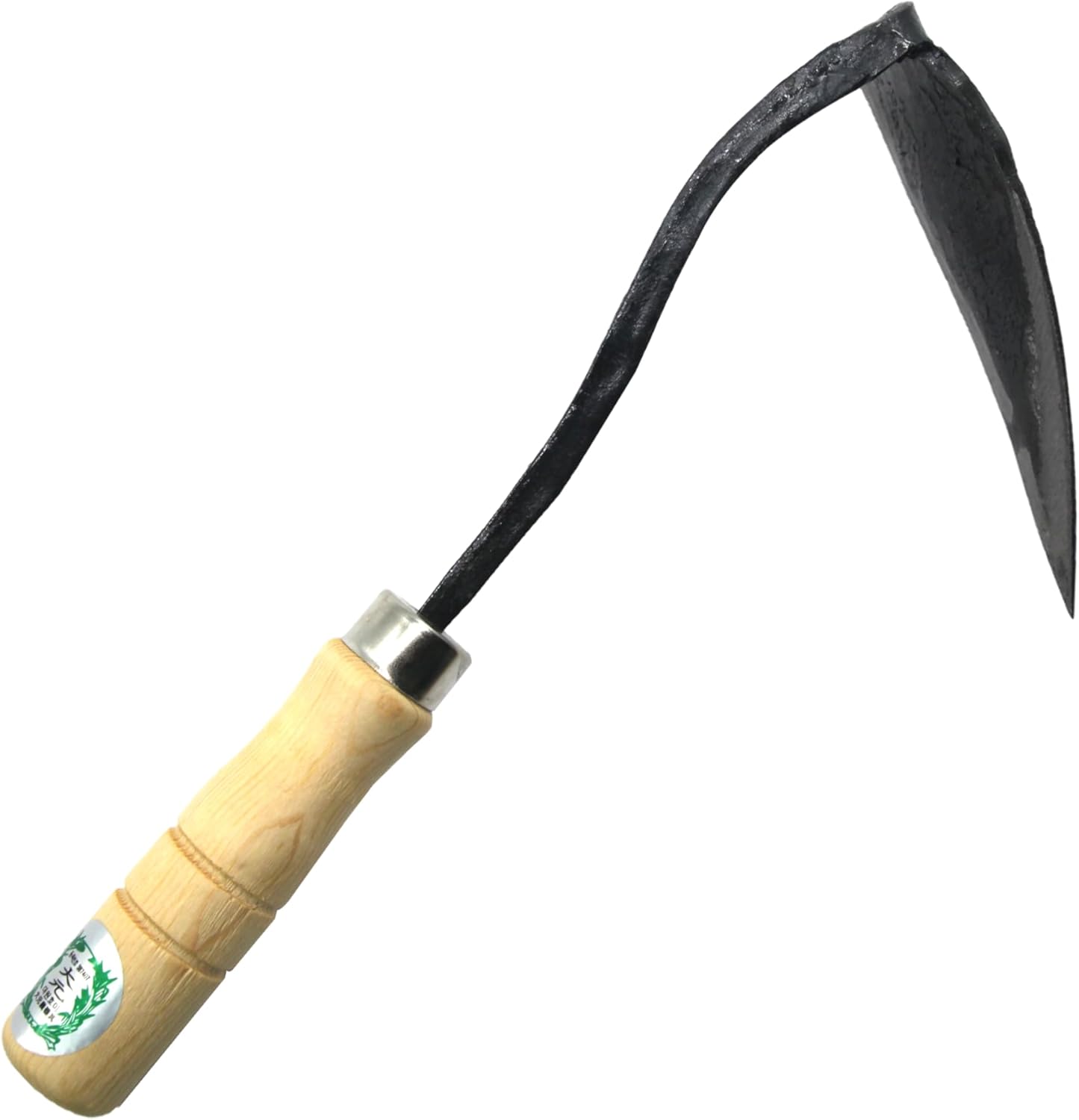
Ho-Mi Digger – Korean triangular blade
Fine Gardening receives commissions from purchases made through links on this site, including Amazon Associates and other affiliate advertising programs.
VERSATILE TOOL: The Easy Digger Korean triangular blade Ho Mi Ho-mi is a versatile gardening tool designed for leveling and digging in home and garden environments. Efficient Design: Unique triangular blade shape allows for easy soil penetration and efficient leveling of garden beds and landscaping areas. DURABLE CONSTRUCTION: Constructed from sturdy materials, this tool ensures long-lasting performance and reliability. Ergonomic handle: Comfortable handle provides a firm grip and reduces hand fatigue from long-term use. Compact size: Compact design allows for easy movement in tight spaces and storage when not in use.