Does your Christmas cactus go scrooge every December, leaving you with nothing but green stems while other people’s plants are dripping with flowers?
you are not alone. The game-changer for your Christmas cactus may not be what you think. It’s not what you do, but when you do it.
Forget what you’ve heard about general care routines. Did you know that a mistimed dark treatment can cause your Christmas flowers to disappear completely, even if everything else is going perfectly?
Shocking but true. 83% of Christmas Cactus failures are due to simple timing issues. Transform a sad, flowerless plant into the holiday centerpiece it was meant to be!
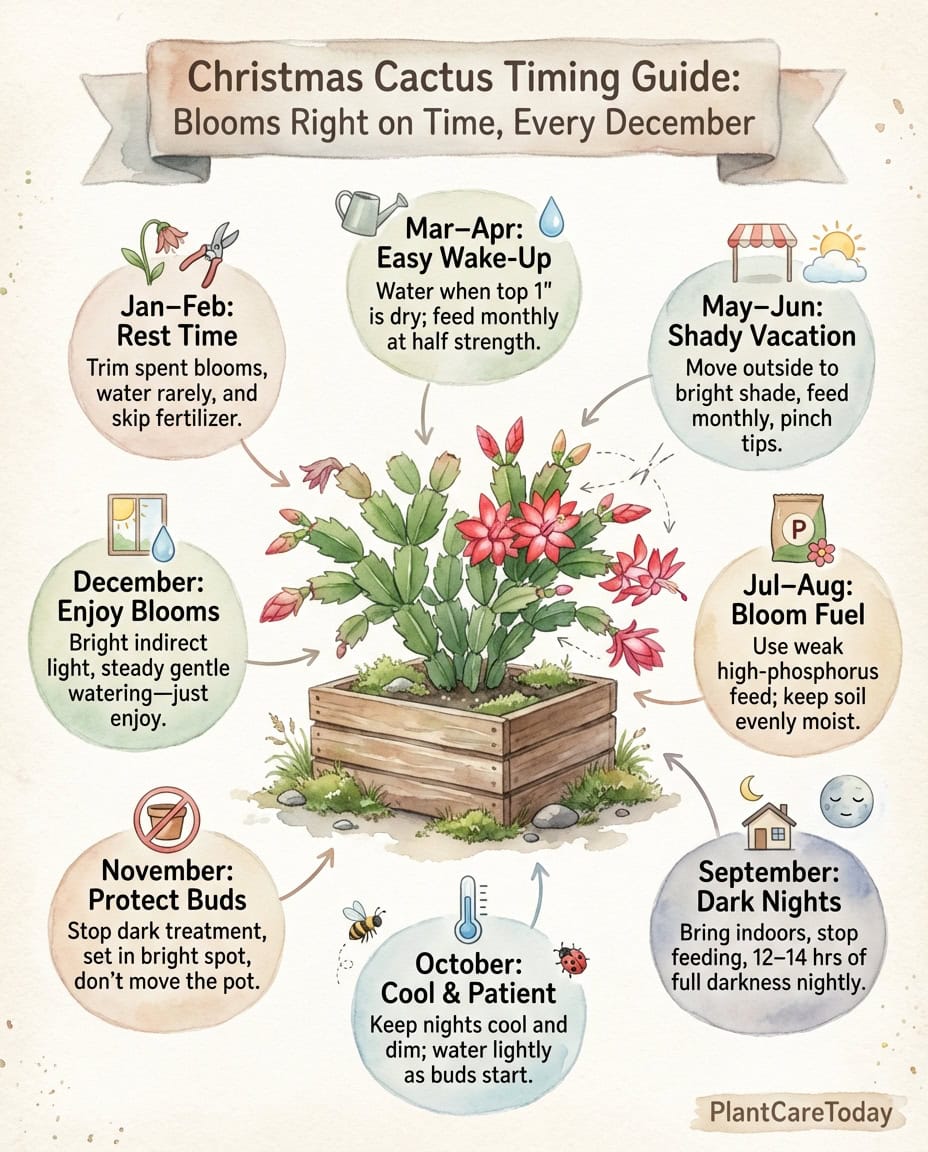
January to February: recovery period from hangover
Just like you, your Christmas cactus is exhausted after the holiday party. This post-flowering rest period is not optional.
It is extremely important for next year’s flowers. Your cactus is now basically binge-watching Netflix while wearing sweatpants, which is exactly what a cactus should be doing.
Cut off dead flowers and knotty parts (cut only the seams with clean scissors) Significantly reduce watering: allow the soil to dry to a depth of 1 inch before minimal watering Do not use any fertilizers: this is a nutrient-free zone for the entire season
The secret that most plant experts won’t tell you is that any forced activity during this period of rest will virtually guarantee less subsequent flowering.
Your plants aren’t lazy. Strategically conserving energy for the next flowering marathon.
March-April: Wake-up call and kick-start growth
Spring has sprung and it’s time to wake up cacti from hibernation. Here we lay the foundation for spectacular blooms this holiday season. Think of this as a factory preseason training camp.
Once the top inch of soil is dry, resume regular watering. Start feeding monthly with a balanced (1-1-1 ratio) fertilizer at half strength. Rotate the pot regularly for even growth (no one wants a lopsided cactus!).
Most people make this mistake with Christmas cacti. The trick is to use strong fertilizers that can burn the roots.
Always dilute to half strength (1/4 for 20-20-20 formula). Your plants will thank you later, producing sturdy parts that can support dozens of flowers.
May-June: Important summer vacation
Think your indoor plants need an outdoor adventure? This stage is like a plant boot camp and is non-negotiable if you want a burst of blooms come December.
Move it outdoors to a sheltered, shaded area with plenty of light (direct sunlight will burn it faster than walking barefoot on hot sand) Continue to fertilize with the same balance of fertilizer every month Prune the tips of the stems now or forever. Removing two to three terminal segments creates more branches and future flowering sites.
I was shocked to discover that this outdoor period could double or even triple the number of potential flowers.
Created by natural temperature fluctuations and filtered light Thicker and stronger segments than any indoor environment can provide.
But remember: Pruning shears are required after June. Stored.
July-August: Energy construction drivers
We are now changing gears. Instead of growing more segments, you are empowering existing segments to bloom. Just like a marathon runner ingests carbohydrates before a big race, your cactus needs extra fuel right now.
Place the plant outdoors under bright, filtered light. Switch your fertilizer to one with a high phosphorus formula (approximately 5-15-10). Maintains stable moisture. Don’t let the soil dry out completely. No more pruning required. Seriously, put down those scissors
The only difference between amateur and professional plant parents is knowing when to change the fertilizer. The middle number (Lin) is what drives your growth, and this two-month period is your only chance to load it.
Always dilute to 1/4 strength to prevent fertilizer burn. What the cactus needs is a gentle push, not a shove.
September: Transformation month that determines your success
Your Christmas cactus is trying to tell you something important: “It’s showtime!” September is when the magic of the holidays begins or ends, and most people completely miss this important time.
Bring it indoors if nighttime temperatures are consistently below 50°F (10°C). Discontinue all fertilization. Cold turkeys, without exception, reduce watering slightly Begin the darkness treatment: 12 to 14 hours of complete, uninterrupted darkness each night for 6 weeks.
Dealing with darkness is non-negotiable, just as bears need winter to hibernate and Christmas cacti need this signal of darkness to form buds.
Even brief exposure to light (even when you check your phone in the middle of the night, of course) can cause your clock to reset. But don’t worry about the moonlight. The only thing that disrupts this cycle is artificial light.
October: Miracle of bud formation
If you stick to your September routine, you should see small buds begin to form by late October. Your discipline will pay off here, but the situation is not yet clear.
Continue the nighttime ritual of darkness. If possible, keep temperatures cool at night (10-13 °C). Limit water. If the soil feels almost dry, use a minimum amount and do not fertilize yet. Your plants are focused on flowers, not food
By Halloween, these small buds should be visible at the tips of the segments. They are like little plant promises. “Wait a minute, the show is starting!”
November: Vulnerable Bud Protection Protocol
Those precious buds are more dramatic than a telenovela star. One wrong move and they would throw themselves out of the factory in protest. Your mission is not to cause drama.
When buds appear, finish the dark treatment. Move to final display location with bright indirect light. Do not move or rotate the pot again. This is the habitat now.Restart light watering to support bud development.
Moving a budding Christmas cactus is like waking up a sleeping bear. The results are swift and unpleasant.
Even a 45 degree rotation can cause heavy bud drop. Once installed, superglue it in place until January.
December: Holiday wins!
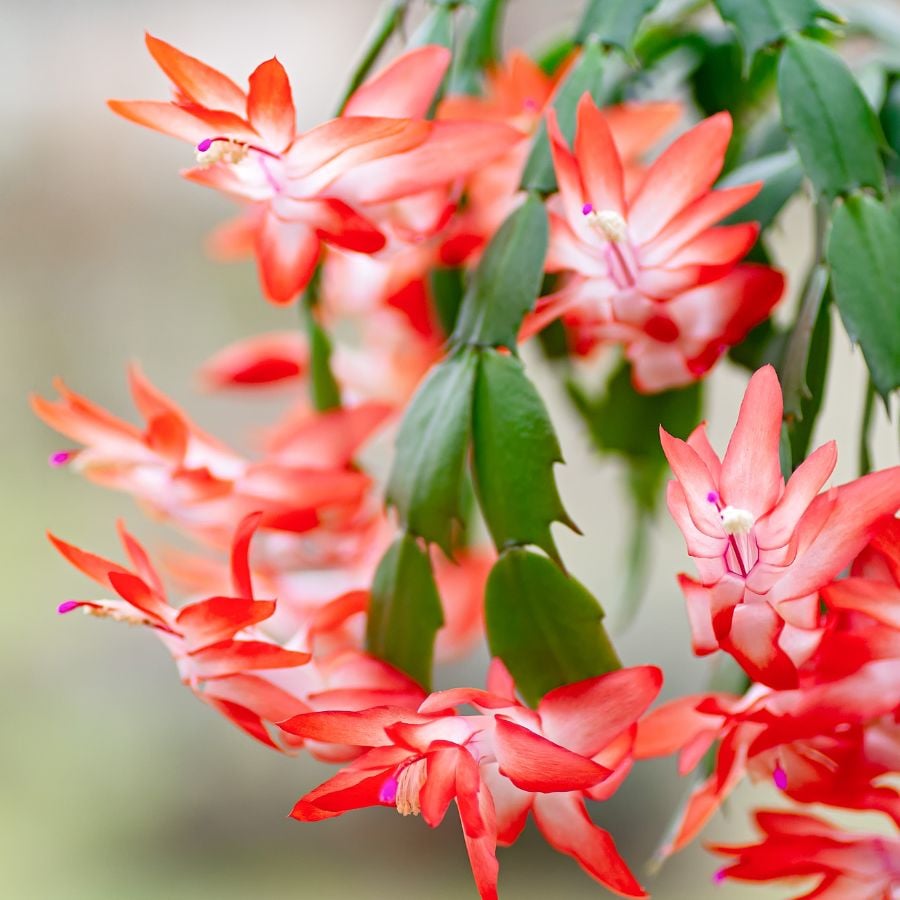
Congratulations, Plant Whisperer! Your dedication is about to be rewarded with a spectacular bloom. These vibrant flowers are nature’s way of giving your great care routine a high five.
Please keep it away from places with extreme temperatures. No heating vents, drafts, or cold windows. Water only when the top soil is dry. Optional: Apply a super dilute high phosphorous fertilizer to extend flowering time.
Christmas cacti will bloom for 4 to 6 weeks if properly cared for. This lasts longer than most cut flower arrangements.
So sit back, pour yourself some eggnog, and enjoy the fruits of a year’s labor.
4 flower-killing mistakes to avoid
Even for plant experts, these last-minute mistakes can undo months of flawless care. Think of this as a cheat sheet of what not to do.
Temperature trap: Keeping your home too warm in early fall will prevent bud formation Light leak: Artificial light resets the flowering clock during dark treatments Late feeding: Fertilizing after August will result in more leaves instead of flowers Moving mistakes: Relocating budding plants is the quickest way to end a cactus without green flowers
Your Christmas cactus isn’t actually a desert dweller. It is a Brazilian jungle plant and blooms naturally in our winters.
Follow this calendar closely and you’ll have a holiday display that rivals even the neighborhood’s lighted-up reindeer.