If you’ve seen the seed catalogue, there are more options than you know what to do. But what is another lettuce green you found in the store? Can you raise them yourself? Today I will break down the types of lettuce you can grow at home and what I recommend!
Without a doubt, lettuce is a staple food for many of our grocery stores, gardens and fridges. We don’t get enough health, mild flavor and crunch that comes with the good parts of lettuce.
The lettuce plant is actually a cool seasonal annual plant that is part of the Asteraceae family, a family of daisy and sunflower. Usually grown in spring and autumn. During the summer, the condition is too hot and lettuce tries to tighten the bolts.
Bolting is when the plant flower and goes to seed. At this point, the leaves will usually become bitter. So we want to harvest lettuce before that!
There are four main types of growing lettuce: butterhead, Chris Feed, Romaine and loose leaf lettuce. I usually break things down into either loose leaf or head lettuce.
There are so many different types of lettuce, so break it down a bit so you can understand the different lettuce greens you want to grow in your garden.
I’ll cover this post…

Expert Tips for Growing Lettuce
Head lettuce is best grown to harvest large amounts of lettuce at once or when you need large leaves, such as those used in wraps or burgers. Loose leaf lettuces are easy to grow and can be harvested very quickly throughout the growing season when practicing inheritance planting. Beneficial insects are important for natural pest control. The predatory hornet enters between the tightly packed lettuce leaves and actually washes away your lettuce. When harvesting loose leaf lettuce, rinse and wash with a salad spinner. Instead of transferring the lettuce into a plastic container, let the greens sit in the fridge of the salad spinner. They last so much longer!

Head Lettuce
Headlettuce grows in solid bundles of leaves. They can be round shape and the size of a human head!
First, form a rosette in the center. A layer of leaves then grows around it, covering the center. Most lettuce varieties can produce full-sized heads when left to reach maturity.
There is also a mini head lettuce, but this is much smaller. These are specific types of lettuce that have been harvested previously or do not grow very large.
To harvest head lettuce, take the entire head of lettuce and cut the stems into the base of the plant.
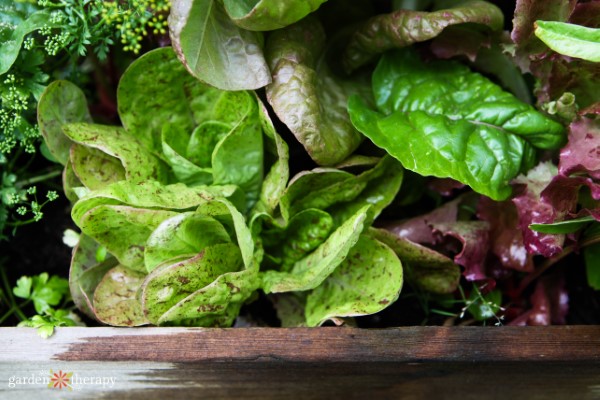
Various types of head lettuce
Many of the most popular lettuces found at grocery stores are considered head lettuce. Here are a few different types of head lettuce:
Iceberg Lettuce: Once the most popular type of lettuce, Iceberg Lettuce is a lettuce that is still popular for its crispy salads. A type of lettuce, which has hard leaves that grow upright. The exterior resembles cabbage, with a familiar circular shape and a light green colour. Romaine: Popular for its crisp, mild flavor and people think of Romaine as one of the best types of lettuce, as it is probably at the heart of Caesar Salad. The upright leaves have a long, tall oval shape and have a sweet flavour. The outer leaves are dark green, slowly brightening and lightening on the inside. Butter Lettuce: This lettuce has a very loose head formation, allowing you to easily break the outer leaves. The leaves are often bright green, large and wide, and can be easily bruised. The taste is very sweet and buttery. Boston and bibs are the most popular butter lettuce, and bibs are mainly grown for mini heads.

Loose Leaf Lettuce
Loose leaf lettuce is often found in plastic containers at grocery stores. They are open leaves of loose clusters, not singly large heads. They do not have a true stem until the lettuce begins to sow. There, tall flowers appear from the center.
The loose lettuce leaves grow from the base to the outside. Once harvested, you choose the outer edge of the plant or harvest the whole at once. This method of harvesting as needed makes loose lettuce desirable for home gardeners.
This also means that the leaves are more prone to rot than the head variety, so eating fresh ones is best. Many people grow loose leaf lettuce like baby greens. That’s when you harvest seeds at high density and when they are very young. Loose leaf lettuce has a much faster maturation time than head lettuce.
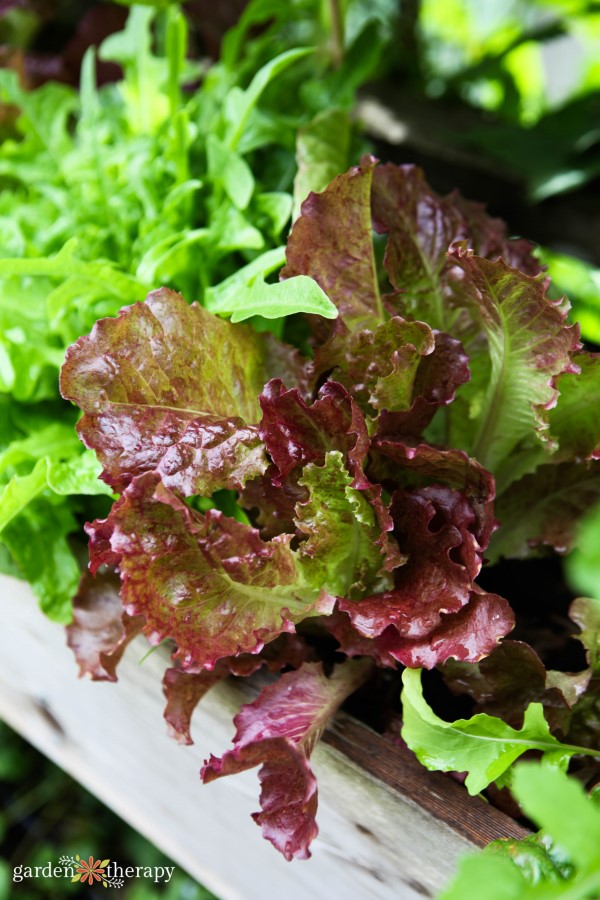
Loose leaf lettuce comes in a variety of colors, including red, green, spotted, flat, wrinkled, and oak leaf.
Various types of loose leaf lettuce
There are all kinds of loose leaf lettuce, but many people are not known more than head lettuce, as they are often grown as a salad mix rather than individual varieties. Here’s how it’s broken:
Oakleaf Lettuce: This lettuce has frizzy edges and a crisp center. As the name suggests, the shape resembles the leaves you find on an oak tree. Many people grow oaklee lettuce for their baby leaves. Green and Red Leaf Lettuce: Most spring mixes consist of green and red leaves lettuce. They usually have a mild flavor and bright colour, whether dark Burgundy or bright green. Lollo Rossa: This frilled red lettuce is often grown as an ornament or for wrapping. Think of lettuce decorating the buffet! Growing for baby leaves is also great. Summer Crisp: Also known as Batavia, this lettuce can be fully matured as a head lettuce or harvested when it is young as loose leaf lettuce. Even as a head, separating the leaves is loose and easy. It has thick, crisp leaves and often wrinkled edges.
Some of the most popular loose leaf lettuces to buy are Red Sale, Salad Bowl, Red Salad Bowl, Merlot and Oak Leaf.
Cut and Cut Lettuce and 1 Cut Lettuce
Another way to classify different types of lettuce is how to harvest. The Cut and Camean Method is my personal favorite choice and how I want to grow lettuce. Through this method, cut the outer edges of the loose leaf lettuce as needed. One cut lettuce is a typical harvest time for head lettuce.
With cut and cam lettuce, the plant will continue to grow after you harvest it from it, as long as the lettuce base (the main base) remains intact. Cut and Camere garden lettuce re-grows at high speeds, retains flavor, and is uniform in size and shape.
Using the cut and comb method, you can practice planting easily with lettuce and sow replacements once a week.
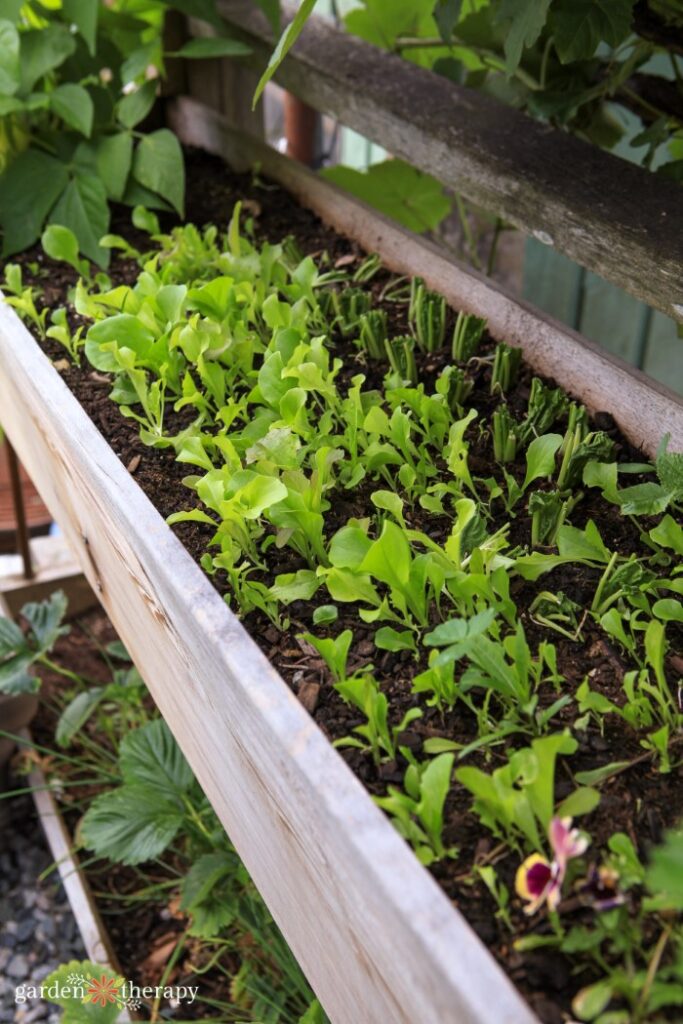
My personal lettuce recommendations
So, what do I raise at home? Here is another lettuce green I grow regularly:
Freckles: This is a bright romaine with red spots. It is crisp and can be grown as a baby leaf lettuce or as a head. Red sails: These deep red leaves have a medium green center and a nice wrinkled edge. Red sails take a long time to mature. This means there is plenty of time to harvest before you start bolting. Darkness: Darkness, a type of Lolo Rossa lettuce, is a deep red lettuce with a very ruffled ties. I love the colors that add darkness to my salads and textures. Green Oak Leaf: One of the easiest lettuces to grow, and these are great baby greens. The taste is rarely bitter, but offers a mellow and sweet flavor. Butter crunch is a type of biblettuce with delicate bright green leaves. It can also be used to grow this winter with frost protection.
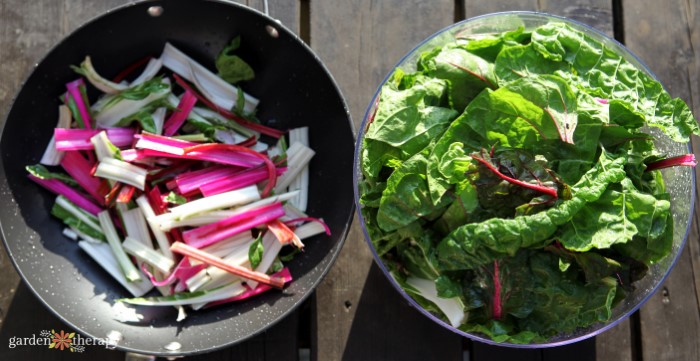
To close it off, I also mix baby kale, arugula and Swiss chard.
Frequently Asked Questions About the Different Types of Lettuce Growing
Loose leaf lettuce is perfect for beginners. It grows quickly and can be harvested if necessary, rather than waiting for the entire lettuce head to form. Pests also love lettuce, so long time can be quite a disadvantage. Even if the lettuce on your head is growing well, others can munch it before you get the chance.
Look for lettuce advertised as baby leaf lettuce (often loose leaf lettuce). These types of lettuce are ready to be harvested just 3-4 weeks after planting the seeds. After that, practice them as a cut-and-camere garden, sowing seeds once a week for a constant supply of baby greens.
You can grow loose leaf lettuce all year round, whether mild or cold, such as closhtents, cold frames, or greenhouses.
Other tips for growing lettuce

With a city girl who learned to garden, it changed everything. Author, artist, master gardener. A better life through plants.