Do you know more about basic nutrition than most doctors?
“Currently, according to the latest data, poor diets are smoking as the leading cause of death worldwide and in the United States.” The top American killer is American diet. At 0:23 in my video, how much does the doctor actually know about nutrition?
If dieting is the number one killer of humanity, then nutrition is obviously the number one subject taught in medical schools, right? Sadly, “medical students all over the world are not trained in nutrition (yes)” that doesn’t mean that medical students are not interested in learning about it. In fact, “the interest in nutrition was “evenly high” among medical students,” but medical schools do not teach that. “Without a solid foundation of clinical nutrition knowledge and skills, physicians around the world are generally not even equipped to launch informed nutrition conversations with patients…”
How bad is that? One study, “Evaluating a physician’s clinical nutrition knowledge,” found that the majority of participants made 70% of the questions wrong. And they had to get five-fifths right by chance. “…The incorrect answer to the knowledge test was not limited to difficult or demanding questions.” For example, less than half of doctors were able to estimate the number of calories in fat, carbohydrates and protein. Only one in 10 people knew the recommended protein intake. And only one in three people knew what a healthy body mass index (BMI) was. We’re really talking about basic nutritional knowledge.
What’s worse, not only did the majority of doctors fail to perform, but 30% of those who failed had “highly self-awareness of CN (clinical nutrition) expertise.” They were not ignorant of nutrition. They were ignorant and ignorant about nutrition, a particularly bad combination, given that doctors are a “reliable and influential source” of healthy diet advice. “For consumers who get information from private health professionals, 78% show that they have changed their eating habits as a result of those conversations.” So, if a doctor gets everything they know from a magazine article while waiting in the grocery store’s check-out aisle, it’s something the patient will follow.
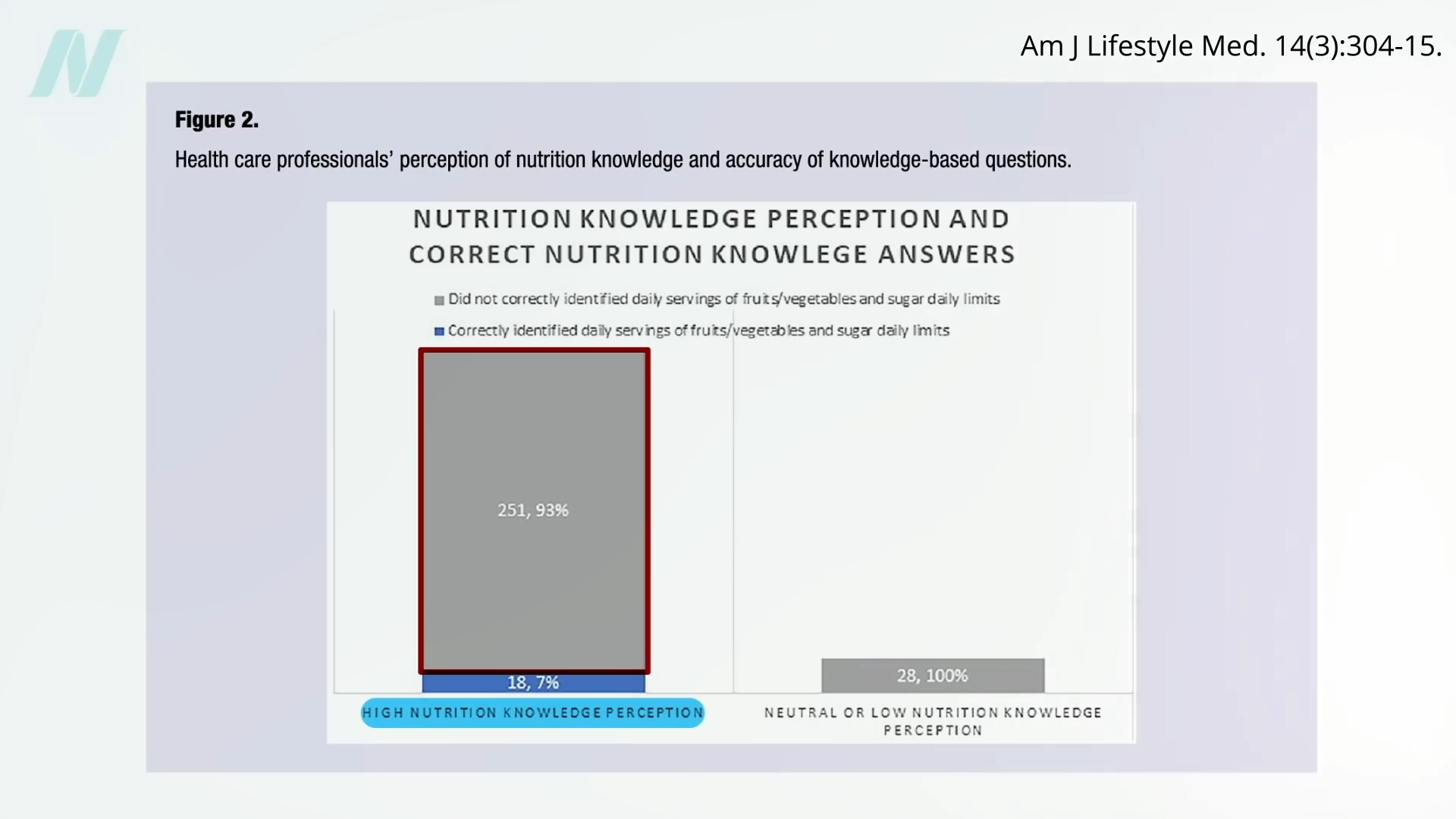
Of the doctors surveyed, “The American Heart Association correctly identified only 25% who recommend the number of servings of fruit and vegetable per day, but were aware of the daily additional sugar limit recommended for adults (20%).” So, how are they going to advise their patients? Be prepared for this. Of the doctors who recognize themselves as having high nutritional knowledge, 93% were unable to answer these two basic multi-choice questions, as seen in my video.
“For example, a doctor who has no real expertise in neurosurgery (brain surgery) cannot broadcast detailed opinions on the topic or direct the opinions of media “experts.” Too many people are willing to offer their opinions on this issue that there is no basis for actual expertise. That’s one of the reasons why all the proceeds I receive from my books are donated directly to charities. They don’t even want a conflict of interest appearance.
“In a culture where expertise cannot be routinely distinguished from mere opinions or personal anecdotes, our doctors should do everything they can to establish barriers associated with entry into this (dietary and nutrition) expert opinion, like all other issues of authentic medical importance,” meaning we are not talking about celebrity gossip. Life is at risk. “The entire industry is dedicated to marketing messages that may directly conspire in this area for informed medical advice.”
“Medical education must be fostered in modern times. It is an absurd anachronism that doctors are the least trained in the field that most affects premature birth rates at the population level. The mission of medicine is to protect, defend and advance the human condition.
A possible starting point? “Practices and healthcare organizations can begin collectively highlighting the severity of healthcare nutrition by practicing preaching (theoretically): lamenting high prevalence of obesity and patients, encouraging patients, encouraging patients, as well as absorbing poor cases, and sausages.”