Fasting and exercise can boost the longevity hormone FGF21, but what can you eat or avoid eating to achieve a similar effect?
More than a century ago, fasting was touted not only as a way to combat “brain fatigue” but also as “extending healthy lifespan.” If that’s true, FGF21 could be the missing link. FGF21 has been characterized as a “systemic longevity promoter.” It can sometimes increase with prolonged fasting, but thankfully there are less drastic measures, such as increasing carbohydrates and decreasing protein.
Feeding lots of starchy foods will cause your FGF21 levels to skyrocket. Butyrate also appears to increase FGF21 and can also be obtained from dietary fiber, so the healthiest sources are probably whole grains and beans. It’s one of the things our good gut bacteria make from fiber-rich foods.
Blood FGF21 levels also increase dramatically after consuming a low-protein diet, increasing by more than 150% within 4 weeks. By the way, “low protein” simply means reducing your intake from the typical excessive intake that most Americans consume to the recommended amount.
Most American men consume more than 100 grams of protein per day, but the recommended daily protein intake for most men is 56 grams. When researchers looked at men who were typically overeating about 112 grams a day and reduced their intake to 64 grams, which is more than the recommended amount of 56 grams, they found that the protein “restricted” group was still consuming enough protein and had essentially doubled FGF21 levels in their blood. This may help explain why they lost more body fat despite consuming significantly more calories. How can you eat 300 more calories per day and still lose another 2 pounds of body fat? Just lower your protein levels to normal levels. Who hasn’t imagined a diet where you can take in extra calories and burn them off effortlessly by boosting fat burning? So, thanks to FGF21, you may need to “eat less protein and boost your metabolism.”
Even modest protein restriction regimens up to recommended levels can have significant clinical benefit. Well, it’s been a month and a half since then. A similar study found that when protein restriction was further relaxed and men reduced their intake to just 73 grams per day, FGF21 increased six-fold within a week and there was a significant increase in insulin sensitivity. This can be seen below and at 2:46 of my video “How to Boost FGF21 in Your Diet for Longevity.”Researchers concluded that diluting protein in the diet promotes metabolic health.
A growing body of evidence suggests that lower protein intake is positively associated with improved health, survival, and insulin sensitivity, but exactly how is unknown. Perhaps FGF21 will provide an explanation. Interestingly, the study had people get 9 percent of their calories from protein, which is about the same amount Okinawans consumed when they were one of the healthiest and longest-lived populations in the world.
I have previously talked about methionine restriction to fight cancer and as a life-prolonging strategy. Methionine is an amino acid found primarily in animal proteins, so methionine restriction can be achieved by reducing animal foods. It may actually be the effect of FGF21. Because methionine restriction increases levels, it has been called “the most important mediator of metabolic reprogramming in methionine restriction.” Some proteins may be more important to limit than others. Meat has the highest concentration of methionine. As you can see below and at 3:55 of my video, legumes (beans, split peas, chickpeas, lentils) have about a third as much methionine as meat.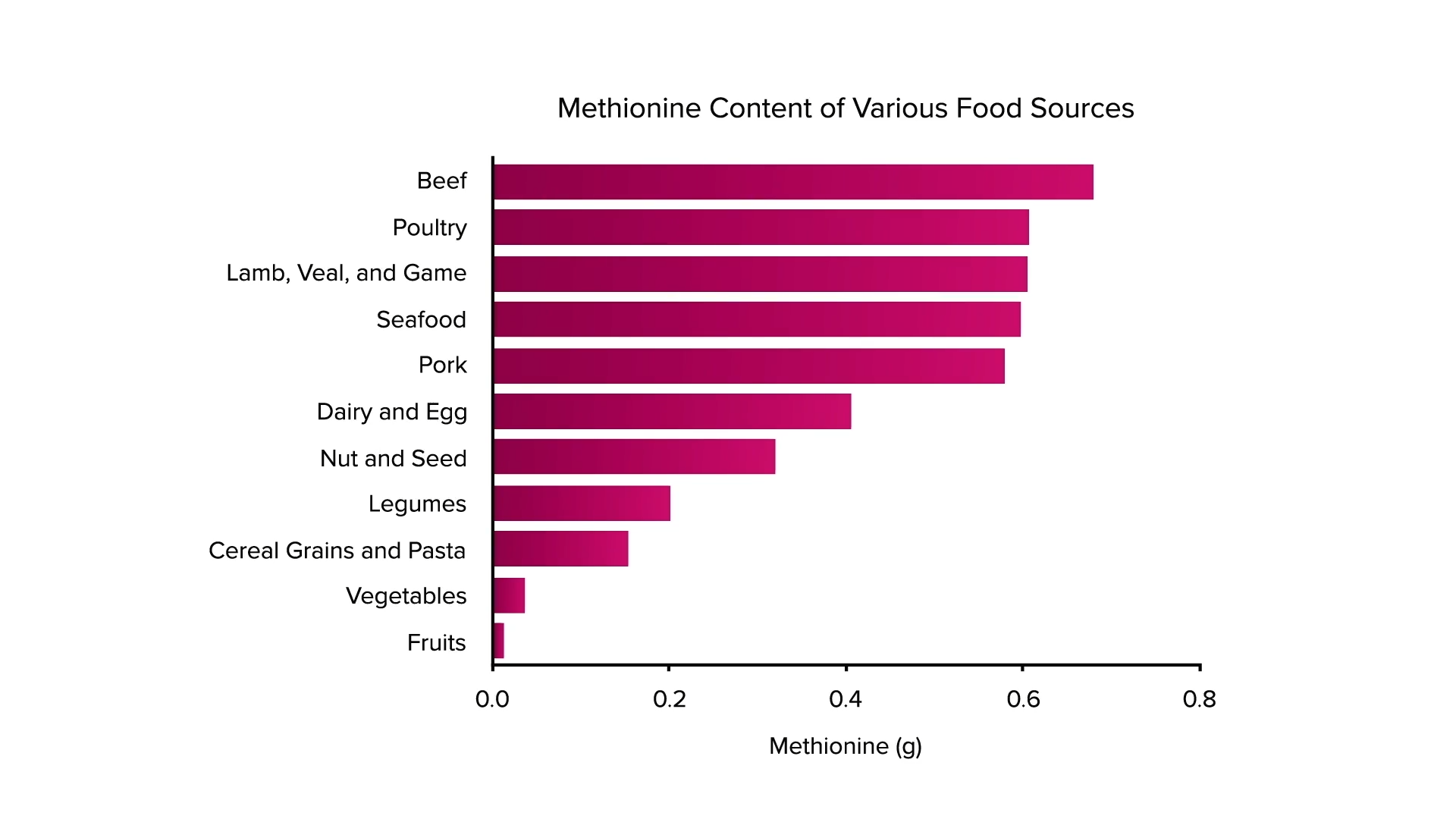 FGF21 has been proposed as a potential mediator of protection against cancer, autoimmune diseases, diabetes, and obesity afforded by an entirely plant-based diet. Perhaps that’s one reason why a whole food, plant-based diet has been shown to have such great results. For example, Dr. Esselstein’s research shows that coronary artery disease, the number one cause of death in men and women, can be nearly stopped or reversed with the help of a whole-food, low-fat vegan diet, and the risk of heart attack can be nearly eliminated. This benefit is not only due to cholesterol reduction. There are now powerful cholesterol-lowering drugs that can force cholesterol levels to drop as much as those on a healthy diet, but they seem to be less effective. Therefore, the significant benefits reported by Esselstyn likely reflect a variety of protective mechanisms associated with whole food, plant-based diets, and FGF21 may be one of those mechanisms. In other words, it’s not just fat and cholesterol that may be involved, but also protein quantity and quality. However, there has never been a study to confirm whether vegans truly have higher levels of FGF21.
In addition to studying obese mice in New Zealand, the researchers investigated circulating FGF21 levels in mice on a plant-based diet and then tested whether removing meat from other people’s diets would increase FGF21 levels. They found that FGF21 levels were significantly higher in vegans compared to omnivores, and that levels increased when omnivores switched to a vegetarian diet after just four days. It’s not just a small amount. Just four days without meat increased FGF21 levels by 232%.
The conclusion is that “various fasting approaches are likely to have limited effectiveness, especially for conditions other than aging and obesity, unless they are combined with moderate caloric intake and highly nutritious diets, such as the predominantly plant-based Mediterranean diet or the Okinawan low-protein diet, which refers to recommended amounts of protein.”
doctor’s note
I introduced FGF21 in the first video. If you missed it, check out Life Extension by FGF21.
The methionine video I mentioned is methionine restriction as a survival strategy and cancer starvation through methionine restriction.