Your nervous system is the invisible backdrop to every moment of your life: how you concentrate at work, how you argue with your partner, how you recover from a panic attack or anxiety attack, how you fall asleep, how you come to yourself after feeling anxious. Once you learn the language, everyday life feels a little less random and becomes much easier to manage.
This guide is a collection of free resources from Johnny Miller, a nervous system expert who partnered with us on the Calm Card, to help you develop “neural literacy,” or the skill to become aware of what’s going on inside you and to not just react, but respond kindly. Be yourself, be curious, and go at your own pace.
TL;DR Overview
Neuroliteracy is the ability to understand what your body is trying to tell you and respond with care rather than harshness. Start with the Nervous System Quotient (NSQ) self-assessment and explore the resources that best describe your current situation.
Nervous system literacy helps us recognize patterns of stress, shutdown, and resilience in our daily lives. A free NSQ assessment provides a personalized snapshot and actionable next steps. Johnny Miller’s carefully selected videos, essays, podcasts, and books provide a systematic way to deepen this research over time. You can combine these resources with Calm cards to turn your insights into concrete practices.
table of contents
Start with the Nervous System Quotient (NSQ)
If you only have one thing to do, start here. The Nervous System Quotient (NSQ) is a free self-assessment that provides a snapshot of how your nervous system is currently functioning and personalized suggestions on where to focus next.
This can help you see patterns such as where you feel you have more resources and where you tend to shut down, speed up, or disconnect. In the end, you’ll receive a protocol tailored to each discipline, so you don’t just learn concepts, you get next steps you can try.
You can take the NSQ assessment for free here: http://assessment.nsmastery.com/
4 videos to build the foundation
Consider these four videos an introductory course on how internal wiring actually works. You can view them in order or choose the one you think is most relevant today.
Video 1: Nervous System Mastery 101 (Start Here)
A clear overview of the nervous system, why it’s important for stress, mood, and relationships, and what “mastering the nervous system” actually means in everyday life.
Video 2: The truth about how the nervous system works
We take a closer look at the underlying patterns of responses, including how the body determines when it’s safe and when to prepare for a threat.
Video 3: Interoception 101 for Beginners (Start Here)
An introduction to interoception: the ability to sense internal signals such as your heartbeat, breathing, tension, and butterflies in your stomach, and why this “inner listening” is essential to regulating your emotions.
Video 4: How to reset a dysregulated nervous system (14 techniques)
A practical tour of simple body-based tools you can try when you’re feeling overwhelmed, shutting down after a panic attack, in the middle of an anxiety attack, or stuck in an anxiety loop.
4 essays to deepen your understanding
If you like to learn through reading, Johnny’s essays offer a thoughtful combination of science, story, and practice. These are a beautiful complement to the Calm cards.
The art and science of mutual acceptance
Why listening to your body is a learnable skill, and how subtle sensations can guide you to wise choices before you verbalize your feelings.
Nervous system operating manual
The complete picture of how the nervous system works is explained in plain language so you can stop pathologizing your reactions and start understanding them.
The best decisions are based on emotion
It reframes the concept of “rational vs. emotional” and shows how emotions, when felt and integrated into the body, can actually support clearer and more coherent decision-making.
How to pay off mental debt
A gentle way to explore the unprocessed experiences within our bodies and begin to metabolize the emotional “backlog” that has built up over time.
Nervous system-friendly listening on the go
The easiest way to continue learning is to listen to audio when your eyes are tired, while you’re walking, commuting, or doing the dishes. Jonny has curated a playlist of interviews on Spotify dedicated to Nervous System Mastery, with conversations about resilience, trauma, breathing, interoception, and more.
You can subscribe to the playlist on Spotify for easy access here.
Consider choosing one of this week’s episodes. What does your body feel like before you press play? How does it feel after?
6 books to go deeper when you’re ready
When you are ready to spend more time on this task, books can become your long-term companion on your nervous journey. Here are six Johnny recommends.
Deb Dana anchors
A clear, easy-to-understand introduction to polyvagal theory and how to apply it to everyday life, with field-tested exercises to help you feel more grounded and connected.

“Respiratory Therapy” by Patrick McCune
A detailed collection of breathing protocols backed by over 20 years of field research that will help you reshape the way you interact with breathing, stress, sleep, and focus.


Developing Resilience by Kathy Kane
A deeper dive into somatic therapy and developmental trauma is especially valuable if you are a practitioner or feel a need for a more clinical understanding.


“The Myth of Normal” by Gabor Maté
A thorough exploration of how modern culture shapes our health, and a compassionate invitation to reconsider what is truly “normal.”
Take your nervous system exercises further
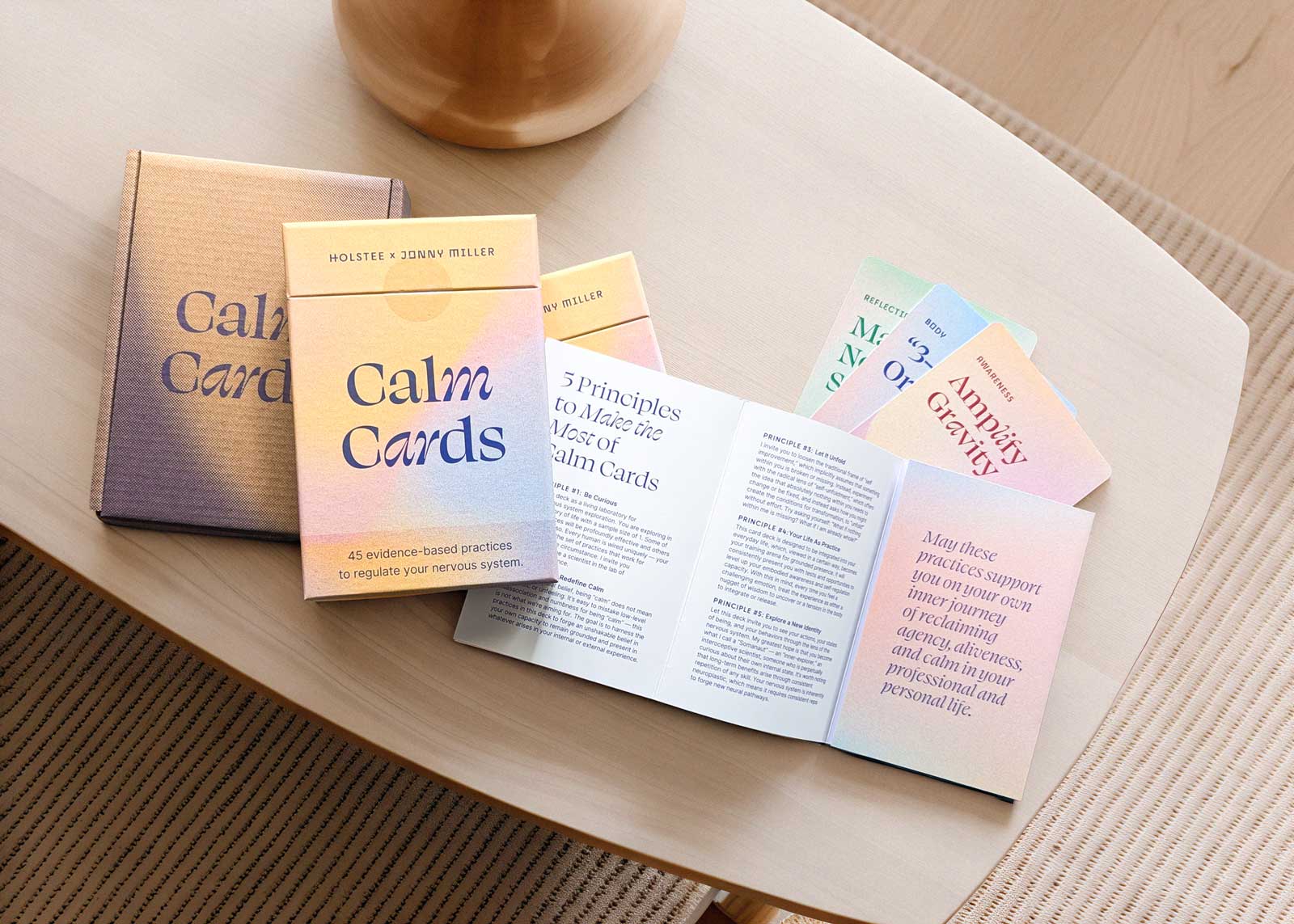
These free resources will deepen your understanding. Calm Cards turns that literacy into a daily habit. Curated by nervous system experts (including Johnny Miller), each card provides quick body-based reflections and on-the-moment adjustment exercises, perfect for when you notice a dysregulation occurring.
For Calm Cards owners:
Use the NSQ results to select cards that match the pattern (e.g. “Shutdown” → Grounding Card). After a video like “Resetting a Dysregulated Nervous System,” immediately pull a card or two and practice the technique. Keeping a card by your bedside or in your bag to help you reset a panic or anxiety attack is faster than searching YouTube.
Haven’t tried Calm Cards yet?
Get started for free with the resources above, then add Calm Card to automate your regulation. They are a portable nervous system toolkit. 45 science-backed practices to help you when you’re feeling anxious, overwhelmed, or just want to stay put. Get your own deck of Calm cards here.


FAQ
What is neurological literacy?
Neural literacy is the ability to notice and understand your body’s stress response, safety signals, and patterns of inactivity and overwhelm. It means being aware of what your nervous system is doing in real time and responding with simple, supportive practices, rather than criticizing or overpowering yourself.
Where do I start if this is my first time?
First-time users can start with the free Nervous System Quotient (NSQ) self-assessment, then watch the “Nervous System Mastery 101” video. These provide a friendly overview, a personal baseline, and some gentle practice methods you can experiment with right away.
Can nervous system tools help with panic attacks?
Yes, practices like the one in the “Resetting a Dysregulated Nervous System” video target the body’s fight-or-flight response during a panic attack. Start with breathing awareness and grounding techniques to signal safety to your nervous system. Often changes the intensity within minutes.
What to do during an anxiety attack?
When you have an anxiety attack, pause and use Interoception in Video #3. Non-judgmentally, notice how you breathe, how nervous you are, how fast your heart rate is. The NSQ assessment identifies your patterns, and Johnny’s essays provide ways to modulate your nervous system long-term to reduce frequency.
Why do I keep feeling anxious?
Feeling anxious often indicates that your nervous system is going into protection mode from unprocessed stress or emotional debt (see essay #4). Free resources here build literacy to notice early cues, apply resets, and expand your abilities over time.
How are these resources connected to Calm Cards?
Calm Cards provide simple self-reflection and practices you can return to each day. Johnny Miller’s videos, essays, and books add more context and depth. When used together, they go from understanding the concept to actually feeling more aligned, present, and resourced in your body.
How long will it take before I notice a difference?
You don’t need hours a day. Even just 10 to 15 minutes a few times a week, such as taking an assessment, watching a short video, or trying one breathing or interoceptive exercise, can make a noticeable difference over time. The key is gentle consistency, not strength or perfection.
What if you feel like this job activates your emotions?
It is normal for strong emotions to be triggered by the functioning of the nervous system. Go slowly, pause if necessary, and choose the most gentle resources first, such as a short video or reflection on a calm card. If you have a history of trauma or are feeling overwhelmed, consider working with a trained physical therapy or trauma-informed practitioner alongside these tools.