Published May 8, 2026 Category: Gardening know-how
Author: Alexandra Campbell
I don’t think “garden villains” is a good idea.
While researching this post, I looked into my own backboarder. It’s literally full of thugs.
For a moment, I thought I might have to dig everything up and start over.
But after speaking with multi-award winning professional growers Rosie Hardy of Hardy’s Cottage Garden Plants, Paul Seaborn of Pelham Plants and Steve Edney & Louise Dowl of No Name Nursery, it became clear that even the most vigorous plants can be incredibly valuable in our gardens.
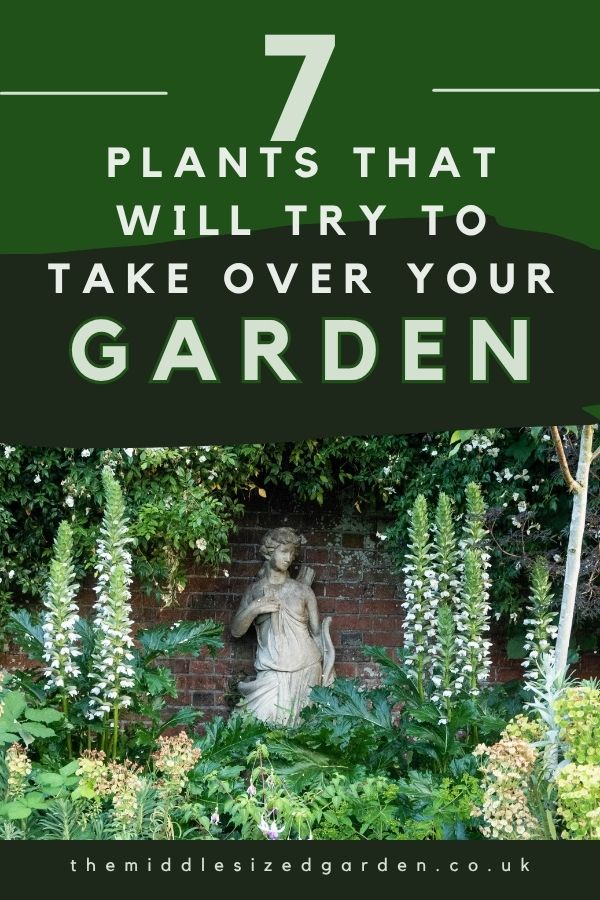
Can you see the garden thugs in my garden? Sea anemone, lamb’s ear, euphorbia, phlomys and acanthus mollis are disappearing along the border.
What are garden thugs?
Hardy’s Cottage Garden Plants has won 25 gold medals at RHS Chelsea and many more at other shows. Rosy Hardy also has a YouTube channel called Rosy Hardy Gardening and a membership club called Straightforward Gardening, where she releases weekly videos showing you exactly what to do.
She defines thugs as “plants with ambitions of world domination.” Plant one plant and suddenly the area expands. ”
Some plants are eager to spread to self-seed.
Others grow roots or rhizomes underground and appear several feet away from where they are planted.
The third category are “runners” who move around the earth on stolons (like grass). These are the easiest to pull up.
However, these are plants that grow where other plants do not. It helps control weeds (even weeds can’t compete with it!).
And even if you buy or receive small roots, you’ll save money, too, as dozens of plants will emerge within a year or two, producing an impressive presence and vibrant color.

There are three types of garden thugs. self-seeders that scatter around, plants that spread underground through roots or rhizomes, and plants that “run” on the ground, such as comfrey. Runners are easy to pull up, making them the best thugs.
Ann Wareham and Charles Hawes’ garden Veddw is ranked as one of the top 100 English gardens. Anne says she relies on a “garden rogue” to keep it low-maintenance.
Check out Vedu, a wonderful garden that doesn’t require much maintenance.
Which plants will take over your garden?
Paul Seaborn’s Pelham Plants nursery also won gold at RHS Chelsea. He also coordinates Plant Fair Roadshow, a collective of independent nurseries and specialist growers who sell plants at fairs across the South of England.
See this post for planting tips and plant recommendations from Plant Fair Roadshow growers.
Paul specializes in perennials and ornamental grasses. He defines garden thugs as “plants that are out of control.”
The plants most likely to be thugs are:
Japanese sea anemone Comfrey (symphytum running form) Many Euphorbias Bamboo Lysimachia ‘Firecracker’ Plume Poppy (Macleaya Cordata) Acanthus mollis. Some varieties, such as ‘Lou Redan’, are less likely to take over the garden.

My garden is full of thugs, but I especially love Acanthus mollis rue redan, which is less aggressive than the purplish Acanthus mollis.
Are garden rogues always a bad idea?
Not necessarily.
Rosie Hardy maintains a healthy symphytum in the back of her garden for the following reasons:
“I want nettles (for caterpillars).” But she doesn’t want them to spread out of control.
symphytum suppresses weeds and benefits pollinators while preventing the spread of nettle. There is still enough nettle for caterpillars and pollinators.
Paul Seaborn loves the statuesque blooms of the plume poppy (Macleya cordata), even as he warns customers of how vigorous the blooms are.
“Although it is dominant, it is blocked by grass and hedges.”
The key message from all three producers is that context matters. A vigorous plant may be useful in the right place, but a mistake in the wrong place.

Paul Seaborn keeps his plume poppies (Macleya cordata) under control because they are surrounded by lawns or hedges.
Which plants do experts say you probably shouldn’t grow anymore?
Rosie Hardy is especially careful about bamboo.
“People should no longer plant bamboo in their gardens.”
Paul Seaborn also warns that some types of bamboo can suddenly appear elsewhere in the garden, under lawns or across paths.
Steve and Lou grow bamboo in their garden and believe it can provide privacy and noise reduction in urban gardens.
But even they say they need to take steps to stop the spread.
The best way to grow bamboo is probably in a container. Some bamboos can spread despite attempts to limit them with membranes or other barriers.
When are fast-growing plants a problem?
Paul Seaborn says the answer is observation.
“You need to look at your successes and failures.”
Let’s put tea and notebooks out in the garden. Or just observe how your plants grow and interact with each other as you water and weed.
When one plant begins to dominate its weaker neighbors, start shading other plants, or appear in undesirable places, it’s time to intervene.
He also pointed to the importance of early action: “If you catch potential thugs early and the roots aren’t too deep, it’s much easier to deal with them.”
What is the difference between a garden rogue and a good deed?
Steve Edney and Louise Dowle of No Name Nursery say that under ideal conditions, almost any plant can become a thug.
People who behave well are different.
Grows strongly without aggressively spreading laterally Forms reliable clumps over longer periods of time than rams Survives well under normal conditions Does not usually regrow from small root fragments left in the soil Mixes well with neighboring plants
Paul Seaborn adds that people who do good deeds should:
Interested in long seasons Resilience Ability to coexist with other plants rather than dominating them
Which plants do the best?
Plants that growers recommend as reliable do-gooders include:
Gum Hardy Geranium Astranthias Honestii Erigeron Calvinschianus Ajuga Reptans Variety Lamium Maculatum
Rosy Hardy specifically recommends gum for the following reasons:
“They repeat bloom very well,” and “those that bloom early have excellent seeds.”
Paul Seaborn recommends honesty during an unusually long season.
Seedlings appear in winter Flowers appear in spring Seed pods grow throughout the summer Dry seeds continue into autumn

Gums are Rosie Hardy’s favorite do-gooders, along with astrantias and hardy geraniums.
What are the best ground covers to control weeds?
Rosie Hardy recommends:
Carpet trumpet (Ajuga rettans) Dead nettle (Lamium maculatum is best). Yellow archangel (Lamium galeobdolon) is an invasive dead nettle in the UK and should be avoided. Comfrey (symphytum)
Ajuga and lamium spread effectively, she said, but are still relatively easy to dig up and control because they have shallow roots.
I personally use comfrey in a patch where my ground elders have gotten out of control.
We suppressed ground elderberry for one season with black garden fabric and then planted comfrey. Above-ground elders are no match, and comfrey’s shallow roots make it easier to dig up than above-ground elders.
I was able to get a few square feet of comfrey from a few roots that a friend gave me, so it was a very inexpensive way to plant it in this area.
23 Ground Cover Plants to Create a Tapestry of Color in Tough Places has some great ground cover plants, including thugs and do-gooders.
Is it a good idea to self-sow plants?
All three growers were open to self-seeding. It’s a free plant.
However, if left alone, they can become thugs. I planted Smyrnium perfoliatum in my border 20 years ago. For the first 15 years, I was able to put away the seedheads and enjoy what was self-seeding.
Then I started breaking up with them. This year there were smyrniums everywhere. On paths, in cracks in the pavement, in the grass, and at every border. It took months of intensive weeding, but the battle must be won.
There are cases where seed heads are left behind, but not if the plant is invasive or very aggressive. Check out the 20 best plants for seedlings – beauty, wildlife and less garden work.
Paul Seaborn says that self-sowing plants “often end up in a much better spot in the garden than we ever thought possible.” It fills the gap naturally.
He particularly recommends Erigeron Calvinskianus. Erigeron calvinskianus is non-invasive and appears naturally in cracks and crevices in pavements.
Check out the 25 best self-seeding plants to save time and money.
How do you control rapidly spreading plants?
The experts all agreed on some important principles.
use physical barriers
Lawns, hedges, and paths can help contain vigorous plants. If a plant grows on your lawn, you’ll probably mow it down. Paul explains that this will prevent most plants from spreading.
The path becomes a barrier as it is very easy to see seedlings popping up. It’s easy to take out when it’s small. And hedge roots can also compete with many, if not all, garden thugs.
The shadow of the hedge’s roots and leaves makes it difficult for plants to “climb” the barrier. However, this may be the case with some plants. Both Rosie and Paul mentioned bamboo in this context.
address problems early
Young seedlings and shallow-rooted spreaders are much easier to control. If you find one, remove it immediately. It’s easy when you’re young
Plant it in the right spot – don’t move it around the garden
When planting potential thugs, think carefully about where you plant them, Steve advises. If you decide that it is in the wrong place and try to move it, the roots will remain behind. These quickly sprout into ferocious clumps.
Observe your garden regularly
Paul Seaborn says even quietly drinking a cup of tea while walking in your garden counts as gardening. Assess your plants as you water, hoe, and weed them. Is one clump too big for your boot? Is one plant overshadowing another?
Paul also advises gardeners to ask questions before making a purchase. “If a plant says ‘active’ on the label, that might be code for a thug.”
Important questions include:
Are clumps forming or flowing? Is there a lot of self-seeding? How can we control it? Is it suitable for your soil and conditions?
But don’t think you need to avoid garden thugs completely
Rosie, Paul, Steve and Lou all think the thugs have a home in the garden.
And all plants require care, Steve adds. You can’t expect to plant a plant and then leave it alone for years. Either they struggle to survive, or they are completely taken over.
Many active plants include:
Hardy and suppresses weeds Pollinator friendly Adaptable Useful in difficult locations
The real question is not whether your plants are healthy, but whether you understand how they behave.
Steve said: “Plants are living things…they go where they want to go, grow in size, and have fun in your garden.”
A pin to remember the garden’s miscreants and good deeds.
Please join us. Click here for a free weekly email with gardening tips, ideas, and inspiration.