Last updated: July 20, 2026 by Thompson & Morgan Horticulture Team
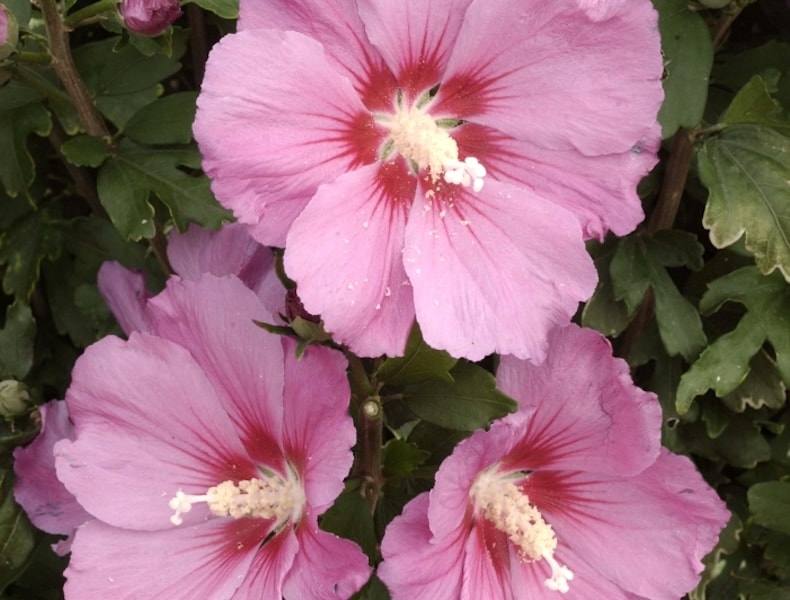
Hibiscus flowers add a tropical touch to any planting scheme
Image: Hibiscus syriacus ‘Pink Giant’ from Thompson & Morgan
Hibiscus shrubs produce huge, beautiful flowers that make a real statement in any planting scheme. Whether you choose hardy garden varieties or tender houseplants, these exotic-looking shrubs typically reach around 2-3 meters tall in the UK and will bring a unique tropical feel to your space. In this article, we’ll introduce you to five varieties that are perfect for your new obsession, along with tips on how to plant and care for them.
For more inspiration, check out our complete collection of hibiscus shrubs.
What types of hibiscus are there?
In total, there are over 200 known species of hibiscus. The best choice for growing indoors is Chinese hibiscus, also known as Hibiscus rosa sinensis.
If grown outdoors, Hibiscus syriacus, also known as Rose of Sharon, is much more hardy. Flower colors are rich, with large flowers ranging from bright white to hot pink to cool blue.
How to care for hibiscus shrubs

This tricolor hibiscus shrub adds pink, white, and blue flowers to established borders
Image: Hibiscus ‘Tricolour’ by Thompson & Morgan
Sunlight: Hibiscus loves sunlight, so whether you’re growing a hardy variety outdoors or a tender houseplant, be sure to grow it in a bright spot. Watering: Most hibiscus prefer well-drained, moderately moist soil. If you’re gardening in clay soil, you may need to mix sand, grit, or garden compost when planting to improve drainage. Plants grown within boundaries should be able to take care of themselves once established, so you only need to water them for the first month or two after planting. If you’re growing your hibiscus in a pot, make sure it has plenty of drainage holes to prevent waterlogging. However, water regularly during the summer. Fertilizer: You can use fertilizer to help your hibiscus grow. Feed liquid plant food every four weeks from spring until late summer. Pruning: Indoor Hibiscus Rosa sinensis does not require pruning. Hardy Hibiscus syriacus belongs to pruning group 1. This means that it should be pruned very lightly in late spring when the leaf buds begin to open. Remove dead or damaged branches and reshape the plant as needed.
5 of the best hibiscus varieties to grow outdoors in the UK

Hibiscus “Pink Chiffon”
1. Hibiscus syriacus ‘Pink Chiffon’
Hibiscus syriacus ‘Pink Chiffon’ produces masses of pink, silky, wavy double flowers in late summer. Just as other early summer plants begin to fade, these flowers continue to deliver plenty of color into fall. ‘Pink Chiffon’ requires bright sunlight, 6 hours of direct sunlight per day, so choose your planting location carefully.

Hibiscus ‘Wolverton’s® Rose Moon’
2. Hibiscus ‘Wolverton’s® Rose Moon’
Hibiscus ‘Wolverton’s® Rose Moon’ boasts extra-large pink trumpet-shaped flowers that grow up to 18 cm (7 inches) in diameter. Makes a great specimen plant for late summer borders or large containers on patios. This striking variety was bred in England and has flatter flowers that show off each brilliant petal.

Hibiscus “Starburst Chiffon”
3. Hibiscus “Starburst Chiffon”
Hibiscus ‘Starburst Chiffon’ adds an elegant and exotic touch to your garden with its huge white semi-double flowers with a magenta center stripe. Blooming from July to October, ‘Starburst Chiffon’ grows and spreads to a height of 150 cm, making it a wonderful specimen shrub that adds a wow factor to any garden.

Hibiscus syriacus ‘Oiseau Blue’
4. Hibiscus syriacus ‘Oiseau Blue’
Hibiscus syriacus ‘Oiseau Blue’ attracts attention with its silky blue flowers. Like many hibiscuses, they are one of the last plants in the garden to start leafing out after winter, and often don’t until May. However, the flowers continue to bloom from late summer into fall, so it’s worth the wait.

Hibiscus syriacus ‘Purple Frill’
5. Hibiscus syriacus ‘Purple Frill’
Hibiscus syriacus ‘Purple Raffles’ is a fully hardy, free-flowering bushy shrub that is perfect for borders and patio containers. The red-purple flowers are special, with double or sometimes triple layers of silky petals that bloom from August to October. Adding the petals to hot water creates a slightly citrus-flavored tea that goes well with fruit salads. Read our article on edible flowers for more information.
As you can see, hibiscus shrubs are very easy to grow and do not require much special care. To learn more about exotic plants, including how to grow different types of tropical flowers and fruits, visit our hub page. Or, if you’re looking for tips on growing summer flowering plants, check out our dedicated page of helpful resources.

Sarah Elizabeth Taylor loves growing things, and that love has been a major part of her life. She is a biologist specializing in plants and a passionate indoor horticulturist. You can find her at @indoorgardennook.
Hidden inside Sara’s house, located in the middle of a bustling city, is a lush and beautiful indoor garden filled with ornamental plants and a variety of fruits and vegetables. Over the years, she has accumulated a lot of experience when it comes to gardening and is keen to share all her knowledge and exchange tips and tricks with gardening enthusiasts young and old.
“Flowers always make people better, happier, more helpful. Flowers are sunshine, food, and medicine for the soul.”
Related articles you might enjoy