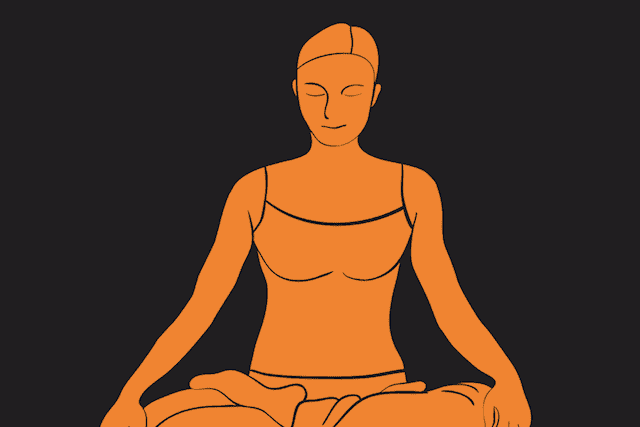
There are moments when life quietly narrows down.
Not because something catastrophic has happened, but because the mind has become caught up in a familiar story.
Talk about not having enough work to do.
Not enough.
I’m behind you.
You need to keep everything together for others.
These thought patterns often appear so subtly that we mistake them for reality itself.
And this can be especially hard to notice for people in helping professions, such as therapists, mindfulness teachers, yoga instructors, coaches, healers, caregivers, and wellness practitioners. As we spend our lives supporting others, our own inner stories can sometimes quietly take control behind the scenes.
While outwardly we continue to function well, internally we may feel rushed, emotionally stifled, disconnected, and exhausted by the pressure of always having to “keep it all together.”
But mindfulness offers an alternative.
It’s not about forcing positivity.
It’s not about repressing difficult emotions.
Don’t pretend that everything is fine.
Instead, mindfulness helps us gently become aware of the stories we live within, giving us tools to loosen their grip on us.
The beautiful truth is:
You don’t need perfect conditions to feel at ease.
Sometimes a small change in consciousness can change everything.
The story we carry without realizing it
Most unhelpful thought patterns are not dramatic.
They are repetitive, automatic, and deeply practiced.
Over time, they shape how we experience ourselves, our relationships, and even our bodies.
You may remember some of your inner stories such as:
“I just don’t have enough time.” “If it’s not perfect, I’m a failure.” “I have to do everything myself.” “If someone’s upset, it means I’ve failed.” “I can’t start until I’m ready.” “My feelings are real.” “It’s too late for me.” “If I share honestly, I’ll be appreciated.” “I always mess things up.” “I could handle this better.”
These thoughts often feel convincing because they are accompanied by real physical sensations, such as tightness in the chest, shallow breathing, a stiff jaw, fatigue, urgency, and emotional heaviness.
But mindfulness teaches us something profound.
Thoughts are not the same as truth.
And when you encounter your inner story with awareness, rather than immediate belief, space begins to open up.
Why unhelpful thought patterns feel so real
Thoughts are not purely mental experiences.
Every thought causes a physiological response in the body.
Scary stories can make your nervous system tense.
Shame-based beliefs can disrupt your posture and energy.
When you feel overwhelmed, your breathing can become short and your attention span can become narrowed.
Soon, the body begins to reinforce the story.
For this reason, simply “thinking positively” will not work.
Real change involves the entire system.
The body, the direction of attention, and the language we use internally.
When these three areas change simultaneously, the nervous system often responds surprisingly quickly.
3 levers that can help you change your inner state
When you feel stuck in an unhelpful mental loop, here are three gentle ways to deal with it.
body focus language
You don’t need to be a perfect master of all three.
Even one small adjustment can reduce the intensity of a difficult inner story.
Together these create a powerful reset.
1. Start with your body
Many people try to change their thoughts even as they physically endure life.
However, the physical body is often the earliest entry point into existence.
Try this now:
Sit or stand a little taller. Keep your shoulders relaxed. Make your jaw soft. Release your abdomen. Repeat three steady breaths. Make sure your exhale is slightly longer than your inhale.
Then ask yourself:
“What would happen if my body believed, even for a moment, that it could do the job?”
Notice what comes naturally.
Your shoulders may feel softer.
Your chest may open up a little.
Maybe you can breathe deeper.
Your hands may become loose.
These small changes are important.
They send safety signals to the nervous system.
And safety changes perceptions.
Mindfulness is not about becoming someone else.
One of the biggest misconceptions about mindfulness is the idea that it should eliminate discomfort.
But mindfulness is not self-erasure.
It’s a sincere relationship.
You don’t have to be calm forever, completely spiritual, or emotionally unaffected.
You just learn how to fill your experience without immediately collapsing into the narrative that surrounds it.
Sometimes healing is not transcendental and can look like:
Pause before you react, breathe before you spiral, ask for help, take a break without feeling guilty, or honestly take the next step.
That’s also mindfulness.
2. Slowly shift your focus
Attention shapes emotional experience.
Whatever the mind repeatedly focuses on begins to feel bigger, heavier, and more permanent.
This is why an overwhelmed mind can search for problems while ignoring evidence of support, resilience, and progress.
A mindful reset does not negate hardship.
Rather, it expands awareness.
First, name one thing that’s currently working.
Even the smallest things.
example:
“I’m here.” “I’m breathing.” “I’m willing to try it.” “I did one thing today.” “I’m studying.”
Next, think of one mild challenge rather than the most serious one.
Notice the meaning that your mind automatically assigns to it.
perhaps:
“This is too much.” “We’re failing.” “Nothing’s going to change.” “This happens all the time.”
Please kindly ask here.
“What else does this mean?” “What is this situation asking me to practice?” “How can this support growth, clarity, and compassion?” “Can this help me slow down, simplify, or seek support?”
You are not forcing optimism.
You are only loosening the convictions of your heart.
And often that small opening is enough to alleviate suffering.
3. Soften the words you use toward yourself
The nervous system listens carefully to internal language.
Harsh self-talk creates contractions.
Kind words create possibilities.
This doesn’t mean using affirmations that you don’t believe in.
Instead, try to temper your absolute statements with truthful and supportive ones.
for example:
“I was overwhelmed.”
become
“I have a lot of baggage, so I can prioritize.” “I’m stuck.”
become
“I haven’t moved yet, but I can take small steps.” “I always fail.”
become
“I’m learning through experience.” “I can’t deal with this.”
become
“This is difficult, but I can do my best.”
A helpful guideline is the 70% rule.
Choose a statement that your nervous system can at least 70% seriously believe.
It’s not performative positivity.
It’s not a mental bypass.
Truly sincere support.
You may want to try the following:
“Now I can take it one step at a time.” “I can now be gracious.” “I can meet this moment with kindness.” “There is no need to rush healing.” “You can start before you feel completely ready.”
A simple 4-step mindfulness reset practice
If your inner world starts to feel tight, reactive, or emotionally heavy, try this calming sequence.
Step 1 — Align Your Body Straighten your back slightly. Keep your shoulders relaxed. Soften your face. Breathe slowly, taking long breaths.
listen:
“What would happen to my body if I believed it could do the job?”
Allow only one small adjustment.
Step 2 — Expand your attention
What is one thing that is already helpful or working for you?
Think of one challenge that you can address.
Then ask:
“What else does this mean?” “What practice am I being invited to practice?” “Can I make any progress with this?”
Pause long enough to feel your nervous system soften.
Step 3 — Select supported languages
Notice the harsh phrases running inside.
Then gently replace it with a more compassionate, actionable truth.
Repeat the new phrase slowly, following the rhythm of your breathing.
Step 4 — Take the next smallest real step
Ask yourself:
“What is the next honest step I can take?”
It’s not a perfect step.
It’s not the biggest step.
This is exactly the following truth.
Perhaps it is:
Send an email, drink water, ask for help, take a break, apologize, start incomplete, go outside for some fresh air.
Then complete the following sentences.
“After this, I will _______.”
And please follow me kindly.
How Mindfulness Teachers and Helpers Can Use This Practice
For therapists, coaches, yoga teachers, meditation facilitators, and healers, this process can also be a powerful co-regulatory tool.
before the session
Start with body awareness.
Relaxed shoulders, feet planted on the ground, slow breathing.
This will help regulate the nervous system throughout the room.
during the intensity of emotions
Use quick reset.
Breathing, posture, shifting attention, and mindful reframing.
Even two minutes of mindfulness can help restore connectivity and safety.
at the end of the session
Encourage reflection:
What words of encouragement would you give as you leave? What small action would you take today? What are you feeling grateful for right now?
These practices allow for integration without becoming overwhelming.
The smallest next true step
So much suffering comes from believing that we must change immediately.
However, dramatic cures are rare.
It is often built by small moments of honest attention repeated over time.
Take another calm breath.
A thoughtful sentence.
There is one choice that makes sense.
One nervous system reset.
The real next step.
And slowly, the world feels big again.
Not because reality changed overnight, but because your relationship to reality changed.
gentle reflection questions
Please take a moment to pay attention to the journal prompts below.
What thought patterns are shaping my mental state these days? How does this story manifest in my body? What if I approached this idea with curiosity rather than judgment? What is another compassionate interpretation of my situation? What is the smallest next real step I can take today?
final thoughts
You don’t have to wait until you’re completely calm, fully recovered, or completely confident to move forward.
It just takes enough presence to stop, notice the story, and reconnect with what is truest and most helpful in this moment.
Mindfulness is not about becoming someone else.
It’s about coming back to yourself, gently and honestly.
And often those returns start incredibly small.
breath.
Soft shoulders.
A more kind sentence.
The desire to start again.