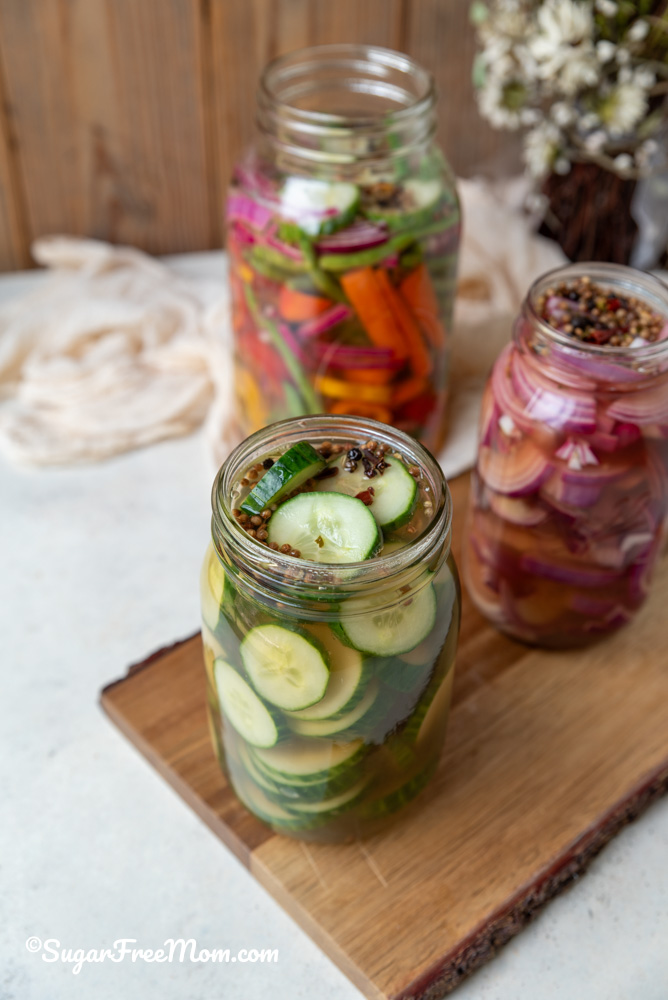
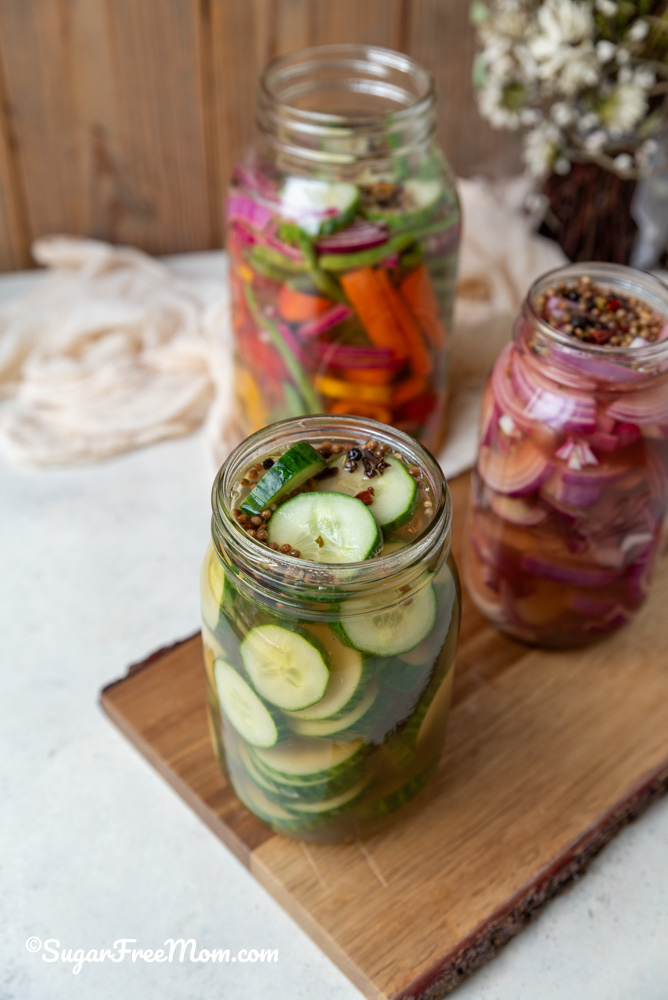
Looking for an easy way to add bold flavor to your meals without all the extra sugar? These easy sugar-free pickled vegetables are crunchy, tangy, and colorful, and ready in just 30 minutes. Unlike traditional pickle recipes that often add sugar, this simple refrigerator pickle recipe uses vinegar, fresh vegetables, herbs, and spices to create delicious flavor without the need for sweeteners.
quick vegetable pickles
Whether you’re making pickled red onions, pickled cucumbers, green beans, cauliflower, radishes, or a colorful mix of fresh vegetables, this easy pickle brine is one of the easiest ways to preserve vegetables and add flavor to salads, burgers, sandwiches, tacos, grain-free bowls, and more.
Quick pickling is one of the best kitchen skills to learn because it requires no special equipment, no canning process, and very little hands-on time. Just a bottle, a sharp knife, a few pantry essentials, and a refrigerator.
Why you’ll love these sugar-free refrigerator pickles and vegetables
No added sugar No canning required Ready in just 30 minutes Great for using up fresh vegetables Naturally low carb and keto friendly Easily customized with fresh herbs and spices Perfect for meal prep Add flavor without extra calories
Unlike traditional sweet pickles or bread-and-butter pickles, these refrigerator pickles let the vegetable’s natural flavor shine while providing a classic tangy crunch.
What is a quick pickle?
Quick pickles, also known as refrigerator pickles, are vegetables soaked in a vinegar-based brine rather than the traditional fermentation process. When stored in the refrigerator, the flavor improves within hours rather than days or weeks.
The biggest difference between traditional fermented pickles and quick pickles is that quick pickles use vinegar for acidity and preservation, rather than relying on beneficial bacteria that produce lactic acid during fermentation.
Best vegetables for quick pickles
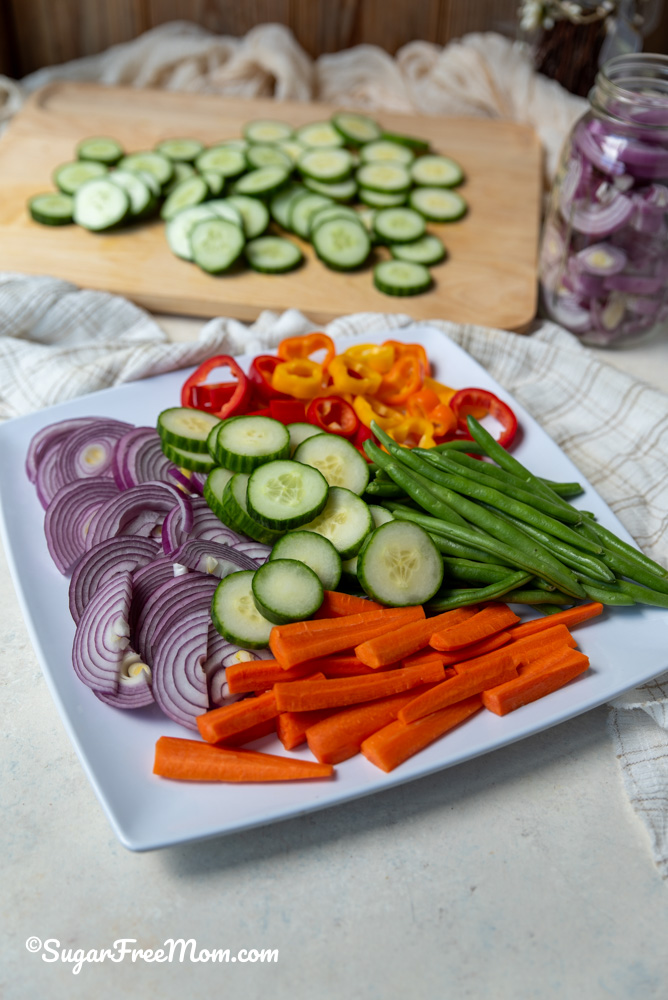
One of the great things about quick pickles is that you can use almost any vegetable.
try:
Red onions Cucumbers Green beans Green beans Radishes Cauliflower florets Green peppers Jalapenos Carrots Cabbage Asparagus Turnips
Quick pickles of red onions are especially popular because they turn a beautiful bright pink color when soaked in salt water.
Materials needed
For quick pickle brine
Optional flavor booster
Fresh dill Dill seeds Mustard seeds Coriander seeds Garlic cloves Black peppercorns Red pepper flakes Fresh herbs
A simple 1:1 ratio of vinegar and water works beautifully for most easy pickle recipes.
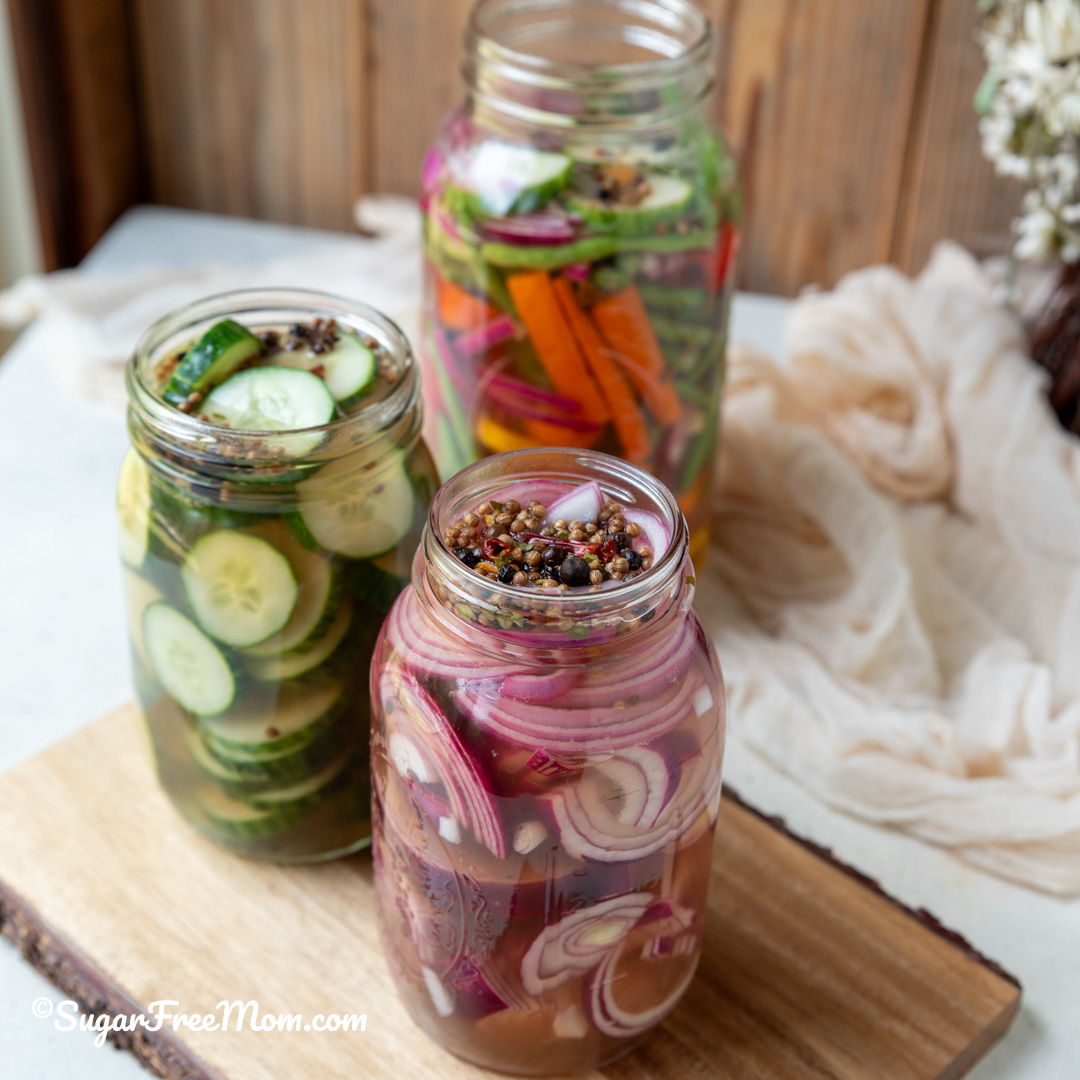
How to make quick pickled vegetables that are low in carbohydrates
Step 1: Prepare the vegetables
Wash and dry the vegetables thoroughly.
Use a sharp knife to slice the vegetables into thin, even pieces. Thin slices absorb brine faster and create a crispier texture.
Step 2: Bottle
Pack vegetables tightly into clean glass jars or mason jars.
Add your favorite fresh herbs and spices.
Step 3: Make the brine
Combine the following in a measuring cup or bowl.
Reduce heat to low and whisk until salt and sweetener, if using, are dissolved.
Step 4: Pour over the vegetables
Pour the brine over the vegetables until completely covered. Let cool for about 30 minutes.
Seal tightly with a lid.
Step 5: Refrigerate
Place the jar in the refrigerator.
For the best flavor:
Red onions: 30 minutes to 1 hour Cucumbers: 24 hours Vegetable mix: 24 to 48 hours
The longer you let it sit, the better the flavor will be.
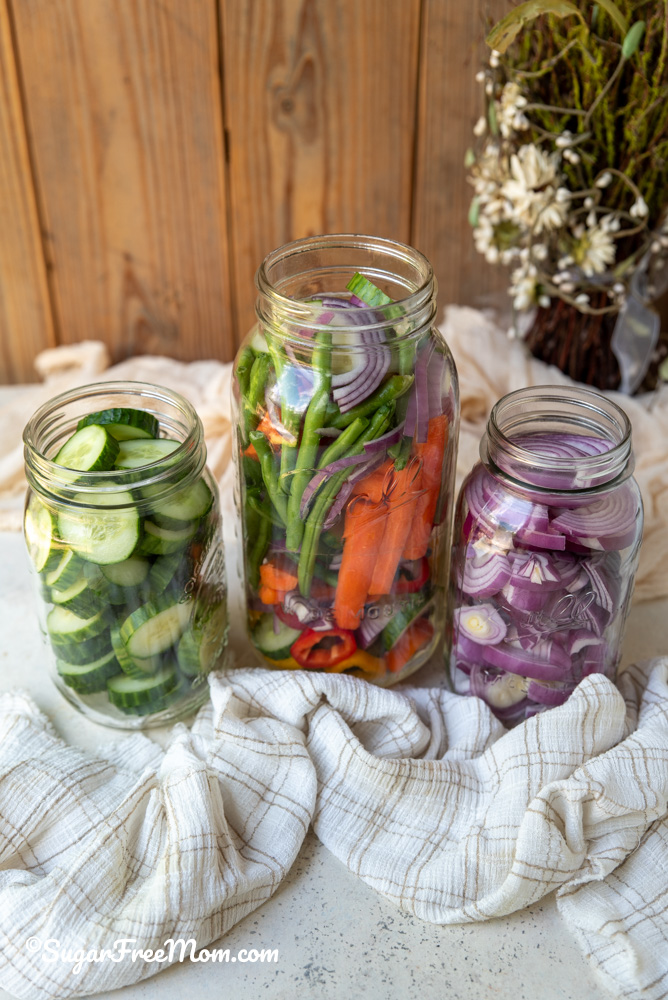
Favorite easy pickle combination
quick pickle red onion
The easiest and most popular option.
Perfect for:
dill refrigerator pickles
addition:
fresh dill garlic black pepper
These taste similar to classic dill pickles without added sugar.
pickled green beans
Adds a crunchy flavor to charcuterie boards and salads.
mixed vegetable pickles
combine:
cauliflower carrot red onion bell pepper green beans
This colorful combination is perfect as a side dish or snack.
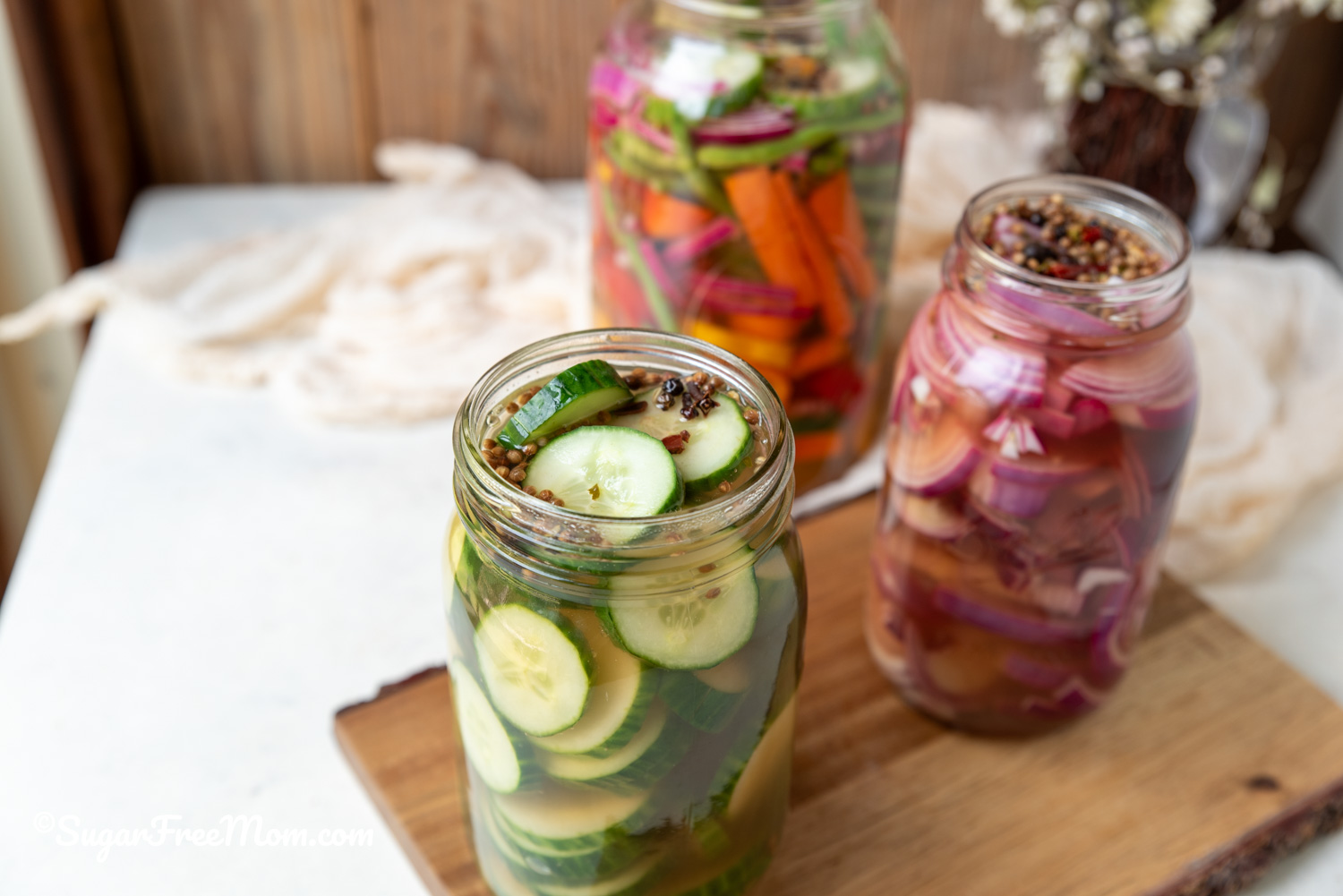
How long do pickles last in the fridge?
These are refrigerator-ready pickles, not canned pickles, so they must be kept refrigerated.
When stored properly in an airtight container, most pickled vegetables will stay fresh for 2 to 4 weeks.
Can quick pickled vegetables support gut health?
Although pickled vegetables made with vinegar aren’t fermented and don’t contain the beneficial bacteria found in traditional fermented foods like sauerkraut, kimchi, and naturally fermented pickles, they can support gut health in several ways.
1. Helps you eat more vegetables
Most Americans don’t eat enough vegetables. Adding tangy pickles to your diet can make vegetables even more appealing and increase your daily fiber intake.
Fiber acts as a prebiotic, feeding the beneficial bacteria already living in your gut.
2. Vinegar may aid digestion
Vinegar used in quick pickles, especially apple cider vinegar, contains acetic acid, which supports digestion and healthy blood sugar balance when taken with meals.
3. Herbs and spices provide additional benefits
Many common pickling ingredients contain plant compounds that support digestive health.
Fresh dill provides antioxidants and helps soothe digestion. Garlic contains prebiotic fiber that feeds beneficial gut bacteria. Mustard seeds contain compounds that may support digestion. Coriander seeds have traditionally been used to relieve digestive discomfort.
4. Combine with fermented foods
For even more gut health benefits, serve easily pickled vegetables with fermented foods such as:
Sauerkraut Kimchi Plain kefir Unsweetened yogurt Fermented pickles
This combination provides both prebiotic fiber and probiotic bacteria.
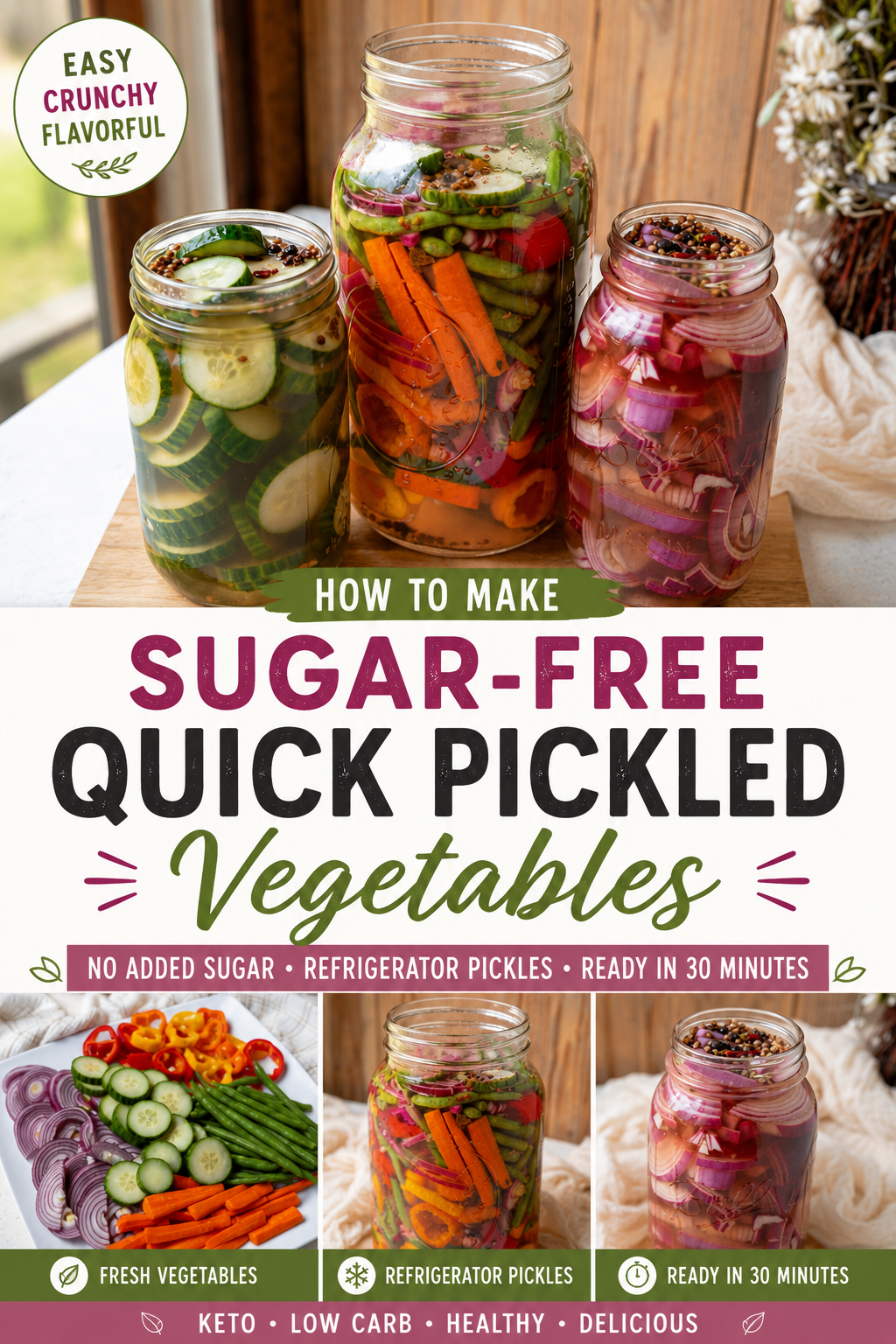
best quick pickle tips
✔ For the best texture, use fresh vegetables.
✔ Choose vinegar with an acidity of at least 5%. I used a combination of apple cider and white vinegar.
✔ Store only in the refrigerator.
✔ Let vegetables stand for at least 30 minutes before eating.
✔ Try fresh dill, garlic, mustard seeds, and coriander.
✔ For the best flavor, use glass bottles instead of plastic containers.
FAQ
Is it easy to make pickles without sugar?
absolutely. This recipe is completely sugar-free, but has plenty of flavor thanks to vinegar, salt, herbs, and spices.
What is the best vinegar for easy pickling?
White vinegar provides a clean, classic pickle flavor, while apple cider vinegar provides a slightly milder, sweeter taste. Both work well.
Can I pickle different vegetables together?
yes! Pickling mixed vegetables is a great way to use up produce before it spoils.
Do quick pickles need to be canned?
No, refrigerator pickles are specifically designed to be stored in the refrigerator, bypassing the canning process.
Making quick pickled vegetables without sugar is one of the easiest ways to add flavor, texture, and color to your meals. With no added sugar, minimal ingredients, and endless customization options, this refrigerator pickle recipe is perfect for anyone following a low-carb, keto, or sugar-free lifestyle.
Whether you’re making quick pickled red onions, dill pickles, green beans, or a colorful mix of fresh vegetables, keeping a jar in your fridge will instantly elevate any meal.
Are quick pickled vegetables probiotics?
No, most pickled vegetables are made with vinegar and have not undergone fermentation, so they typically do not contain live probiotic bacteria.
But you can support your gut health by encouraging your vegetable intake, increasing your fiber consumption, and providing flavorful variety that makes healthy eating more enjoyable.
Easy sugar-free quick pickles
How to make easy vegetable pickles without sugar
These easy sugar-free vegetable pickles are crunchy, tangy, and colorful, and ready in just 30 minutes. Unlike traditional pickle recipes that often add sugar, this simple refrigerator pickle recipe uses vinegar, fresh vegetables, herbs, and spices to create delicious flavor without the need for sweeteners.
Quantity: 12 Per 1/2 cup of drained vegetables
calorie: 28kcal
cooking modePrevent the screen from going to sleep
brine
2 cup water2 cup vinegar (I used 1 cup of apple cider and 1 cup of white vinegar)2 tablespoon salt2 tablespoon pickle spice or see note above2-4 tablespoon allulose liquid Options for balancing flavors
Wash and dry the vegetables thoroughly. Use a sharp knife to slice the vegetables into thin, even pieces. Thin slices absorb brine faster and create a crispier texture.
Pack vegetables tightly into clean glass jars or mason jars. Add your favorite fresh herbs and spices.
Add the brine ingredients to a medium saucepan and bring to a simmer over low heat. Turn off the heat and pour the brine over the vegetables in the jar. Let it cool for about 30 minutes, then cover and store in the refrigerator.
Quick pickled vegetables will stay fresh in the refrigerator for 2 to 4 weeks.
Provided by: 1Serves 1/2 cup | calorie: 28kcal | carbohydrates: 5g | protein: 1g | fat: 0.2g | Saturated fat: 0.1g | Polyunsaturated fats: 0.1g | Monounsaturated fats: 0.01g | sodium: 886mg | potassium: 156mg | fiber: 1g | sugar: 2g | Vitamin A: 2024IU | Vitamin C: 17mg | calcium: 26mg | iron: 1mg