Let me guess. You woke up this morning with the best of intentions. You were going to go to the gym, prepare a healthy meal, and maybe meditate for 10 minutes before work. But then you miss an important email, spend 20 minutes searching for insurance documents, forget to pay a bill, and suddenly your entire morning disappears into a fog of administrative confusion. Sound familiar?
This is a truth that took me years to accept. You can’t pour from an empty cup, and you certainly can’t pour from a cup buried under a mountain of digital clutter and confusion. We talk endlessly about self-care: face masks, bubble baths, green smoothies, etc., but we rarely realize that true self-care starts with taking control of your life.
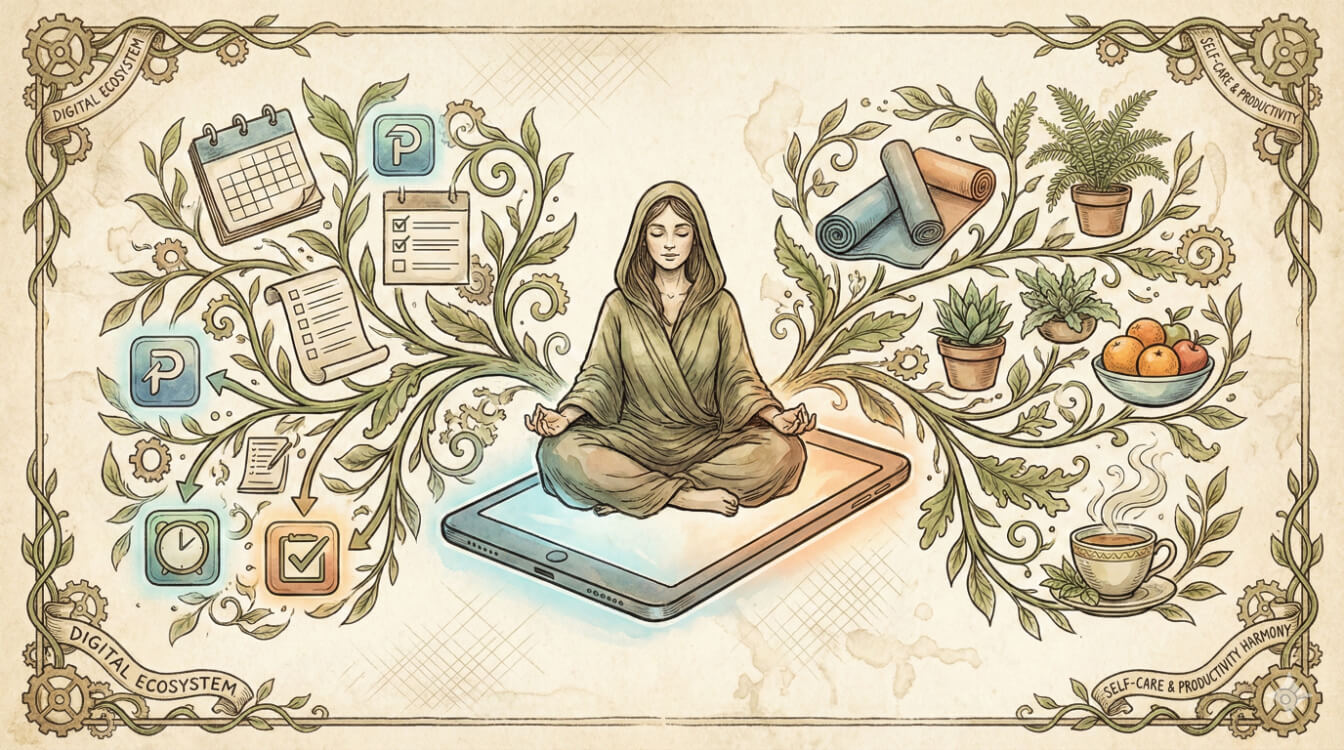
After struggling with this balance myself, I started the technology project SmartKeys.org to explore how the right digital tools can transform not just your productivity, but your overall quality of life. Because this is what I learned. Being organized doesn’t mean becoming a robot or working to exhaustion. It’s about creating space for what actually matters: mental, emotional, and physical space.
The hidden health costs of digital chaos
Let’s talk about what’s really going on when your life feels like it’s cluttered with tabs, notifications, and forgotten tasks.
Cortisol relationship
Every time you can’t find an important document, miss a deadline, or feel anxious about forgetting something, your body releases the stress hormone cortisol. A small amount of cortisol is fine. This keeps us alert and motivated. But chronic exposure? That’s the problem.
Constant digital clutter sends your nervous system into a permanent state of mild panic. Your brain is constantly running background processes: Did I reply to that email? When are you planning on doing that? Where did you save that file? It’s exhausting and literally takes away the energy that fuels your workouts, creative projects, or relaxing time.
Research shows that this type of chronic stress not only makes you feel tired, but it can also affect your sleep quality, weaken your immune system, increase inflammation, and even make it harder to lose weight. Yes, your cluttered inbox could actually be hindering your fitness goals.
The mental burden that no one talks about
There is a concept called “mental load.” This is the invisible labor of remembering, planning, and managing every detail of your life. It’s not just about completing tasks. It’s the cognitive burden of keeping track of all that in your head.
When you’re carrying this heavy mental load, you’re operating with reduced mental bandwidth. You have less patience, creativity, and energy for things that bring you joy. Are there any yoga classes you’d like to try? What hobby would you like to start? They require mental space that you’ll never have if your brain is in a messy filing cabinet.
Reclaim Your Time: Practical Lifestyle Strategies
The good news? Making small changes to the way you manage your digital life can have a huge ripple effect on your overall well-being. My tried and tested strategy is:
1. Time Blocks: Non-Negotiable Wellness Windows
Time blocks aren’t just for CEOs and entrepreneurs. It’s actually a game changer for anyone who wants to achieve their health goals.
Here’s how to make it work:
Treat your workouts like a doctor’s visit. It will be listed first on the calendar, not last. My gym time is blocked from 7am to 8am every Monday, Wednesday, and Friday. It’s not an “if I have time” situation. The schedule is set and everything else works accordingly. Block “Admin Power Hours”. Instead of administrative tasks spilling over into your day, designate one or two specific blocks of time for email, bills, and life management. I do exactly 45 minutes on Tuesday and Thursday nights. When the timer goes off, it’s over. Create a buffer zone. Don’t schedule back-to-back appointments. Build in a 15-30 minute buffer between activities. This way you won’t feel rushed and stressed and will have transition time to actually breathe.
The magic of time blocking is that it forces you to be intentional. When you can visualize your weekly schedule, you can’t lie about “finding time” to go to the gym. Either you make the time or you don’t.
2. Sunday Reset Ritual
Every Sunday night, I spend 30 minutes doing what I call a “weekly reset.” This one habit has made a huge difference in my stress levels.
My Sunday reset includes:
Check your calendar for the week ahead Make sure you have everything you need for your health ready (gym bag packed, meals ready or planned) Handle any remaining emails and messages Set your top 3 priorities for the week Prepare everything you need for Monday morning
This ritual means I start each week feeling grounded and in control instead of panicking and reacting. My mental state is different during the day and at night.
3. Digital decluttering: Marie Kondo’s technology life
Just as physical clutter drains energy, digital clutter creates ongoing low-level stress. Here’s what to do:
Inbox zero (or inbox manageable). You don’t have to go to extremes, but aim to keep your inbox to fewer than 30 emails. Archive or delete without mercy. Create folders for “Action Needed”, “Waiting For Response”, and “Reference”. Most importantly, unsubscribe from newsletters you don’t want to read. Your future self will thank you. Notification detox. Turn off all unnecessary notifications. Do you really need a ping every time someone likes your social media post? Notifications fragment your attention and spike your stress hormones. Keep only the really urgent things. Clean up your desktop and downloads. Set a monthly reminder to clear your desktop and downloads folder. Create a simple filing system that makes sense to you. I use broad categories such as work, personal, health/fitness, and finance. that’s it. Don’t overcomplicate it.
4. Employ automation and the right tools
This is where the real game changer comes from. It’s about using technology intentionally to reduce mental load, rather than adding to it.
The right productivity tools aren’t about doing more; they’re about doing important things with less friction. Automating mundane tasks and creating systems that work for you frees up an incredible amount of mental energy.
For example, I use automatic bill payments so I don’t have to remember due dates. I use a password manager so I don’t reset my passwords often. I use a cloud storage system so I can access important documents from anywhere without having to wonder where I saved it.
If you’re ready to explore how the right digital tools can support your health journey, we highly recommend checking out the Productivity section of SmartKeys. Here we detail specific apps and systems that can truly change your daily life.
The key is to choose tools that simplify, not complicate. You don’t need 17 different apps. You need some great apps that can be seamlessly integrated into your life.
Self-care you’re missing
Let’s picture two different scenarios.
Scenario A: You wake up stressed and not sure if you forgot to pay your car insurance. It takes me 15 minutes to scramble to find my login information, and I end up being late for my morning walk. Skip it. Throughout the day, I get distracted thinking about tasks I need to remember. By the evening, I’m too mentally exhausted to take that yoga class I wanted to try.
Scenario B: You wake up in the morning and find that your bill is on automatic payment. My training clothes are laid out because I prepared them on Sunday night. The calendar shows you exactly what the day will look like. After finishing my morning walk, I feel energetic and energetic now. Since I’m not mentally taxed, I have the emotional energy to try a new yoga class and actually enjoy it.
It’s the same person. various systems.
Conclusion: Organization is self-love.
Getting your digital life organized doesn’t mean becoming a productivity cyborg. It’s about respecting yourself enough and building systems that support your well-being rather than draining it.
Mastering life management goes beyond simply checking tasks off a list: You can actively protect your mental health, reduce stress hormones, improve sleep, and create the mental space needed for joy, creativity, and true relaxation.
Think of it this way. An hour spent setting up the right system can save you dozens of hours of frustration later. Every automated process is one less thing competing for your precious attention. Every organized digital space is a gift to your future self.
Your health journey doesn’t start at the gym or yoga studio. It starts with controlling chaos. It starts with admitting that you deserve better than constant low-level stress and overwhelm. It starts with understanding that the time you invest in organizing your life is not time away from self-care. It is the most practical and powerful form of self-care.
So here is my challenge to you. Choose just one strategy from this article. Maybe it’s time to take a break from training for the week. Maybe some digital decluttering will happen this weekend. Maybe you’ll finally set up that automation you’ve been putting off.
Start small and be intentional. Your calmer, healthier, more balanced future self will already be thanking you.