What have randomized controlled human trials found about how we may or may not benefit from eating onions?
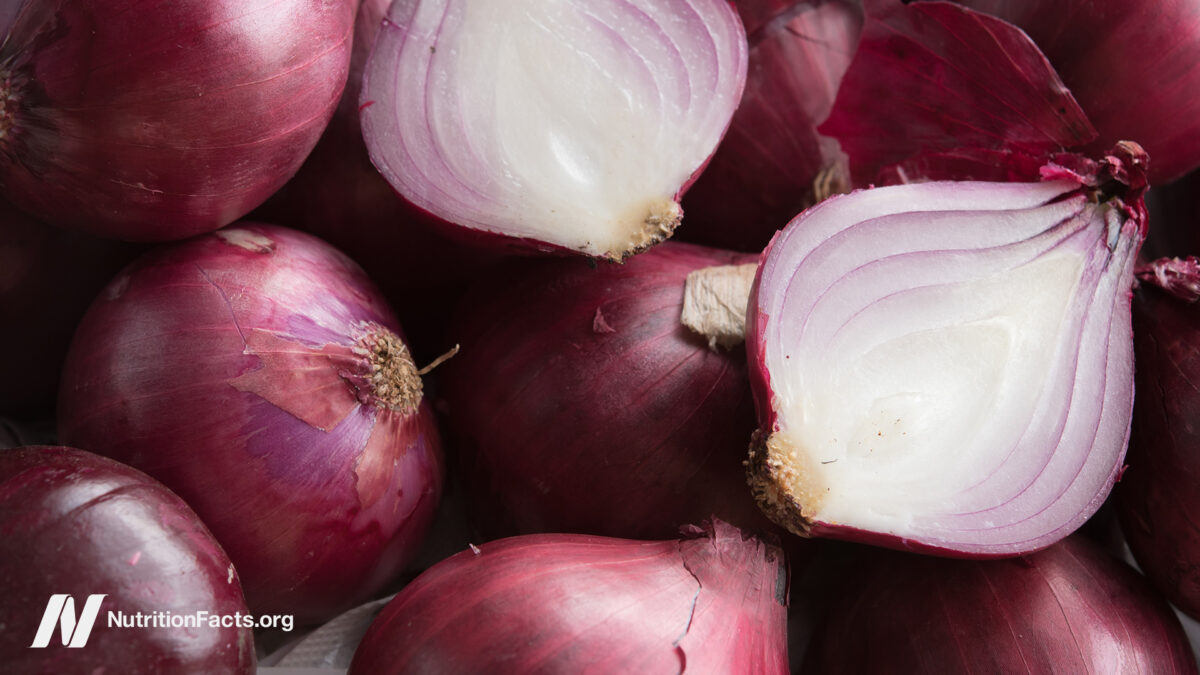
Onions may be a good source of antioxidants, and interestingly, the antioxidants are concentrated in the outer layer just beneath the papery skin. For example, the outer layer of a white onion contains 10 times more antioxidants than the inner core. Unfortunately, most people throw away the outermost layer, which is the most nutrient-rich, “resulting in the loss of valuable portions of antioxidant-rich substances.” Generally, yellow onions contain more antioxidants than white onions. Based on three different antioxidant testing methods, red onions outperformed both of them, as seen at 0:39 in my video “Are Onions Beneficial for Testosterone, Osteoporosis, Allergies, and Cancer?”
While red onions are certainly a little better, yellow and white onions are no slouches and contain significant levels of antioxidant activity. We know that onions are nutritious, but are there any special clinical benefits to eating onions? There are all sorts of headlines in the medical literature touting miraculous effects, but what are these claims based on?
For example, one review claims there is evidence that onions enhance testosterone levels in men, but researchers referenced studies such as the effects of onion juice after testicular torsion in rats. Who cares what happens after you rotate a rat’s testicles 720 degrees counterclockwise? (Except for rats, of course.) We won’t know what happens inside humans until we test their testicles. Only then was it discovered that onion extract did not seem to affect testosterone in men.
What about bone health? Apparently, older white women who ate onions at least once a day had 5% higher overall bone density than women who ate onions only once a month. 5% may not sound like much, but if there is actually a causal relationship, improving bone density could mean a 20% or more reduction in the risk of femoral neck fracture.
Daily administration of onions for four weeks significantly increased bone density. As you might imagine, this could lead to a safe, effective, and low-cost approach to osteoporosis in rats. Another rodent study!
Although great advances have been made in treating osteoporosis with drugs, drugs can have serious side effects, so scientists are turning to natural remedies. In one study, researchers randomly assigned people to drink onion juice or a placebo onion juice for eight weeks. Improvements in markers of bone health were observed. However, participants were not actually followed long enough to compare osteoporosis rates.
Do shallots have anti-allergic properties, or do they have therapeutic properties to relieve allergic runny noses? The 16 patients were equally divided into groups that received antihistamines or capsules containing an antihistamine and dried shallot powder. After four weeks, the shallot group appeared to be performing better, but there was no statistically significant difference in total symptoms between the two groups. So, it’s #onionfail again.
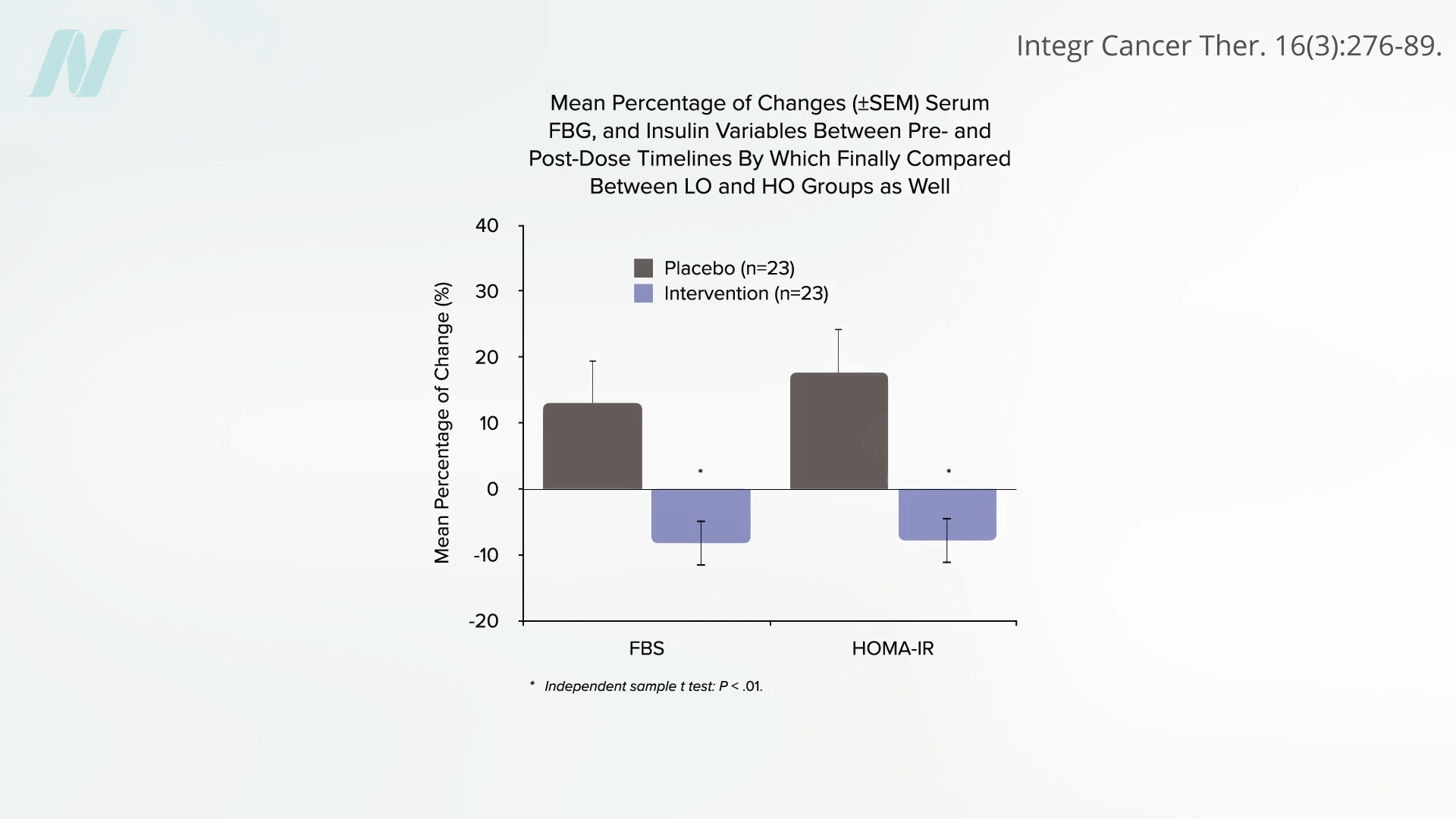
Why not test the effects of eating fresh yellow onions to reduce the toxicity of a chemotherapy drug called doxorubicin in breast cancer patients? Unfortunately, we found no significant effect in reducing damage to the liver or heart. However, eating fresh yellow onions was found to help reduce high blood sugar levels and insulin resistance in breast cancer patients undergoing doxorubicin-based chemotherapy. This drug is not only toxic to the liver and heart, but can also contribute to insulin resistance.
So researchers conducted a randomized, triple-blind, controlled clinical trial in which patients were randomly assigned to eat either a whole onion a day or a third of an onion a day for eight weeks. what happened? Blood sugar levels and insulin resistance were significantly reduced in the high-dose onion group compared to the low-dose group. As seen below and at 4:28 of my video, levels increased in the low dose group, but decreased in the high dose group.
So, let onions be your friend. What’s the worst that can happen? Having a little onion breath and body odor?
doctor’s note
What else can you do about breast cancer? See related articles below.