There are moments in life when the world suddenly becomes smaller.
I missed a step. It’s a diagnosis. A season of exhaustion. A body that just says, “I can’t do it anymore.” Things that once felt easy become difficult. A normal task turns into a small expedition. Even the simplest routines start to require patience, creativity, and consideration.
Recently, I unexpectedly found myself entering one of those seasons.
Last week I broke my ankle.
Since then, life has slowed down dramatically. The crutches lean against the couch like awkward companions. Your ankles are in a high position for most of the day. Walking to the kitchen feels like a miniature journey across difficult terrain, and transporting something as simple as a cup of tea requires strategic planning worthy of an engineering project.
There were some setbacks at first.
Inconvenience. Vulnerability. Dependence on others. Until it was gone, I realized how much we take mobility for granted.
But somewhere in the silence, another emotion quietly emerged.
Kindness.
Clarity.
You will gain a deeper understanding of what is truly important.
And perhaps most surprising of all: gratitude.
Instead of being grateful for the injury itself, be grateful for what the injury revealed.
when life is simplified
Many of us spend our days rushing from one responsibility to the next. We quickly pass by the routine without fully following it. We multitask during meals, scroll during breaks, and plan for tomorrow without really noticing today.
The speed will be normal.
Busyness becomes your identity.
And often we don’t realize how disconnected we feel until something interrupts our momentum.
Sometimes life gets simplified in ways that are uncomfortable for us.
I’m sick.
Broken heart.
Burnout syndrome.
I’m injured.
Suddenly, our options narrow. The outside world becomes smaller. We can’t do everything we normally do, and the illusion of endless productivity disappears.
But hidden within these constraints is an invitation.
When we are unable to act quickly, our attention spans often deepen.
We begin to notice the texture of the present moment again.
Feel the breath entering your body.
The quiet support of the chair beneath us.
The warmth of the sunlight shining through the window.
The kindness of someone bringing you food or checking in with you via text.
We begin to see the miracles of everyday life again.
In this way, simplicity is not deprivation.
That’s a revelation.
Wisdom hidden within constraints
Modern culture often treats limitations as failures. We are encouraged to optimize, improve, accelerate, and conquer. Slowing down can feel uncomfortable because it challenges the story that our worth is tied to productivity.
But the body has its own wisdom.
And sometimes healing begins when we stop resisting the truth.
Physical limitations can be unexpected teachers. It reminds us that vulnerability is not weakness. Addiction is nothing to be ashamed of. Rest is not laziness.
In fact, some of our deepest relationships emerge when we allow ourselves to be supported.
One of the most humbling parts of injury is the realization that we are truly interconnected.
A friend who brings food.
Family members who help with daily life.
Neighbors are checking in.
A loved one offering a ride, a meal, encouragement, or simply their presence.
These small acts of caring reveal something deep. That is, none of us live our lives alone.
Even if we imagine ourselves to be independent, our lives are always supported by countless visible and invisible cares.
the air we breathe.
The people who build our homes.
Farmers who grow our food.
Strangers who maintain our roads, hospitals, electricity and water systems.
The friend who answers the phone when we need comfort.
My partner silently washes the dishes while we rest.
Interdependence is not a flaw in human experience.
That is the basis of it.
Rediscover the Beginner’s Mind
One of the unexpected benefits of slowing down is that it makes room for curiosity again.
Without a normal pace of life, you may fall back on simple nutritional habits that are often sidelined.
Read slowly Listen deeply Learn something new Sing Rest without guilt Practice mindfulness gently, not perfectly
In this slow season, I am studying nonviolent communication (NVC), practicing kindness in my inner dialogue, and paying close attention to the relationship between thoughts, emotions, and unmet needs.
I also returned to singing. The sound is transmitted from the inside of the body to the outside like a medicine.
And I started relearning Spanish one imperfective verb at a time.
There’s something deeply soothing about becoming a beginner again.
Beginner’s feelings ease the pressure to perform. It brings humility, playfulness, and patience. It’s a reminder that growth doesn’t have to be polished for it to be meaningful.
A miracle that we forgot to notice
One of the strangest things about losing mobility is that you suddenly find yourself doing all the things your body normally does without conscious effort.
Stand and balance; Cross the room; Climb the stairs; Turn toward your loved one.
Two legs that quietly cooperate with gravity every day.
What a miracle!
Most of the time, these common blessings work so automatically that we barely notice them. But when something changes, our awareness becomes sharper.
This is one of the greatest gifts of mindfulness. It teaches us to recognize the hidden sacredness in everyday life before it becomes inaccessible.
Notice your breathing before you get nervous.
Be grateful for your energy before you get tired.
Appreciate your athletic ability before an injury stops you from doing so.
Recognizing connection before we become lonely can ensure that we are separate.
Mindfulness does not require us to ignore pain or pretend that everything is okay.
It simply invites us to live fully what is here, including the beauty that still exists alongside the hardships.
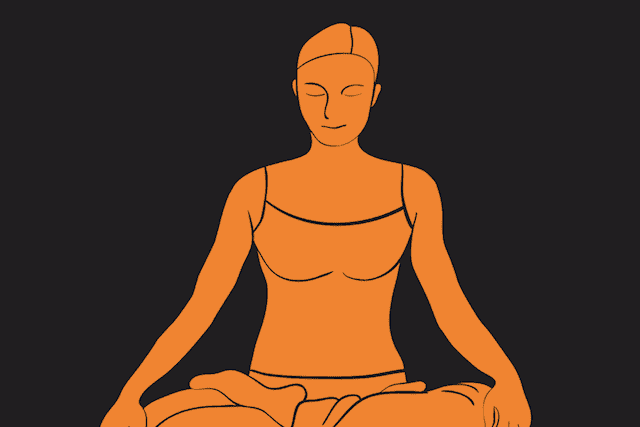
A simple mindfulness practice: Breathe with what still works.
1. Arrive as you are.
Today, sit, stand, or lie down as much as your body allows.
There is no such thing as a perfect posture.
There are no special states to achieve.
Start here.
Please allow it to arrive without any modifications.
2. Gently name the difficulty level
Quietly acknowledge that you are feeling hard right now.
“This is difficult.”
Pause.
Then gently add:
“And I’m here for that.”
Notice the difference between resisting your experience and following it.
Let your breathing be like a benevolent hand on your shoulder.
3. Find one place that’s still working.
Bring awareness to your body and gently scan it for what is working well.
Perhaps it is:
Your breathing Your heartbeat Your hands Your eyesight Your lungs Your ability to hear The stability of your spine
Please select only one area.
You are not denying the pain and difficulty. You are expanding your consciousness to include support along with struggle.
4. Breathe with gratitude
Take five slow breaths and imagine breathing into that part of your body.
Inhale:
“thank you.”
Exhale:
“I’m with you.”
Feel the relationship, not the separation.
The body is not a machine that strives for perfection.
It is a living companion worthy of kindness.
5. Expand your circle
If you feel supported, expand your awareness beyond your body.
Notice what else is supporting you right now.
Perhaps it is:
Caregivers Friends Pets Therapists Your home The earth beneath you The atmosphere in your room Spiritual practice Community
Feel the gratitude ripple outward through the web of support that surrounds your life.
6. End with a small act of kindness
Ask yourself:
“What small kindness can you offer yourself or someone else today?”
Keep it simple.
Drink water slowly Send a loving text Take a break without apologizing Go outside for fresh air Put your hand on your heart
Then, if possible, actually do that small act.
That’s enough.
The healing power of simplicity
We often approach healing the same way we approach achievement. That is, try to optimize it, perfect it, or master it.
However, healing rarely progresses in a linear manner.
And mindfulness is not just another self-improvement project.
Sometimes the deepest healing comes through simplification.
Breathe consciously.
A moment of gratitude.
Honestly admit your pain.
An act of kindness.
Pause once long enough to recognize that it is already supported.
The acronym KISS (Keep It Simple, Sweetheart) contains amazing wisdom.
Life doesn’t always require more effort.
Sometimes they may require more gentle attention.
Sometimes we are asked to slow down enough to listen to what our bodies, minds, and souls have been telling us all along.
we don’t walk alone
If this season of your life is feeling heavy for you right now, this may serve as a reminder that you are not alone in your struggles.
There is kindness even within limitations.
Beauty is hidden in slow moments.
Even if you forget, there is support all around you.
And perhaps most importantly, don’t rush.
Healing has its own rhythm.
Your body has its own timeline.
The mind unfolds in its own way.
Sometimes the most compassionate thing we can do is stop fighting the pace of life and just be where we are and be compassionate with ourselves.
Here too.
Especially here.