🌱 Are you enjoying this? This is a taste of ‘The Flourishing Life’, our annual Holsti membership. Each month, we explore new themes like these together through guided practices, reflective prompts, and live conversations. Unlock full access →
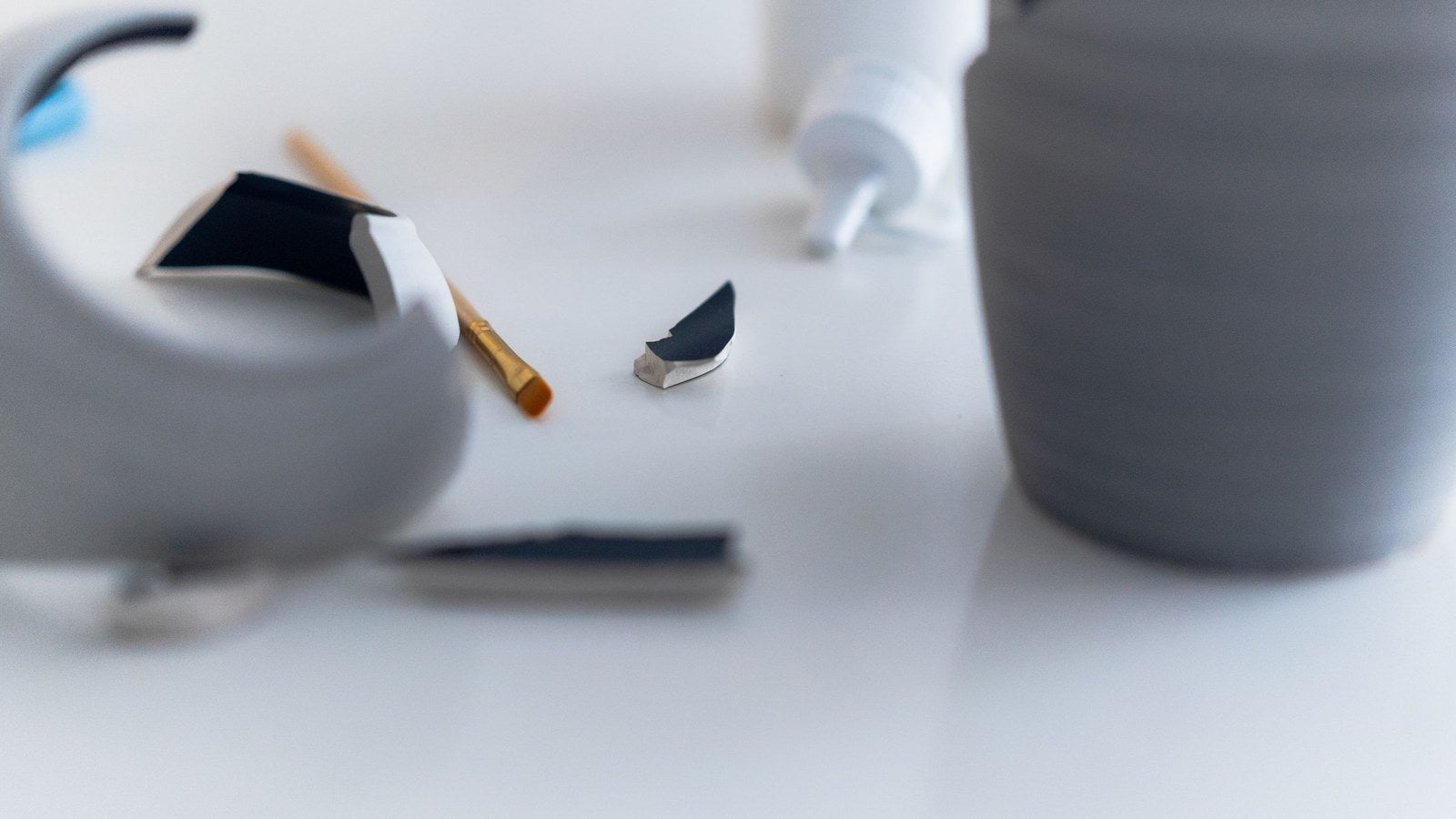
There is a Japanese tradition called Kintsugi. When a ceramic bowl breaks, the craftsman replaces it with gold instead of hiding the repair. The cracks are not hidden. The gold plating becomes part of the object’s story, making the bowl ultimately more beautiful and, although broken, more valuable.
I think about that bowl a lot. When most of us have cracks in our lives, we spend a tremendous amount of energy hiding the seams, hoping no one notices where we’ve fallen apart. Resilience is the slow transition from hiding the cracks to filling them with gold. That doesn’t mean it won’t break. It’s about learning to break and learning to come together again in a stronger way than before.
Resilience is not unbreakable
This word is used as if to mean armor, the ability to feel nothing even when attacked. That version is fragile and difficult to maintain. True resilience is more like a reed in a storm than a wall. Bend, survive and bounce back. Some even overcome difficulties and become more capable than before, not in spite of but partly because of them.
That’s not a reason to go looking for suffering, nor does it mean that every hardship is secretly a gift. That means resilience is a skill, not a fixed, innate quality. With practice, you can grow. We have felt this in our own most difficult times, times that have taught us through hardships that led to the stars.
Between what happens and how you react
The most important idea I know about resilience comes from Viktor Frankl, who survived a Nazi concentration camp and wrote Man’s Search for Meaning about it. Stripped of everything, including his family, property, and dignity, he found one thing he couldn’t have. It was the freedom to choose my own response to what was happening to me.
Frankl realized that there is a space between every stimulus and our response. It may be a breath so small that it disappears, but in it lives all our freedom. Most of our suffering comes from reacting on autopilot, without pausing between the event and the reaction. Resilience is primarily a practice that widens that gap even slightly, allowing us to choose rather than just react.
focus on what you can control
The Stoics built their entire philosophy around one division. That is, some things are within our control, but most things are not. Epictetus taught that peace comes from putting your energy where you can actually do something, your choices, your efforts, your reactions, and letting go of control over the rest, other people’s opinions, the market, the weather, the past.
Sounds easy, but it’s surprisingly difficult. Because anxiety makes us cling to things we can’t change. Helpful Habit: When I’m feeling overwhelmed, I literally split the page into two columns, separating the things I can control and the things I don’t. Then spend energy only on the first column. Symptoms often reduce quickly.
Become a more gentle narrator
Our amazing resilience is determined by how we explain things to ourselves. Psychologist Martin Seligman has found that resilient people tend to view setbacks as temporary, unique, and not entirely their fault, whereas struggling people tend to view the same setbacks as permanent, pervasive, and personal. It is possible to recover from “this failure”. “I’m a failure” is a trap.
You can edit that inner narration, which is the whole idea behind cognitive restructuring. That means capturing harsh automatic thoughts, questioning the evidence, and replacing it with something more accurate and unbiased. This is a truer statement than a falsely positive one. “This is impossible” becomes “This is difficult, but you can break it down into steps.” When emotions are too big to discuss, meditation teacher Tara Black offers a gentler tool she calls “RAIN.” It’s about recognizing what’s going on, allowing it to be there, examining it with kindness, and nurturing yourself as you would a hurting friend. If you don’t know where to start, our reflection cards can help you work through the awareness part.
growth on the other side
Research supports this, and most of us only learn the hard way. Psychologists Richard Tedeschi and Lawrence Calhoun coined the term “post-traumatic growth” after interviewing people who had gone through terrible experiences and finding that many began to have deeper strength, closer relationships, and a richer appreciation for life. Not all of them, and instead of pain. But often in parallel.
Mythologist Joseph Campbell described this as a hero’s journey: a calling, a trial, a return, a change of place to return to, and a passing on of what one has learned to others. You’re almost certainly in the middle of it right now. The poem that begins the course is attributed to Rumi and is stated in the following four lines:
I said: What about my heart?
He said, “Tell me what’s inside.”
I said: pain and sadness.
He said: Leave it alone. The wound is where the light enters.
This completes the transition from kintsugi to gold. A wound remains a wound. But it’s also where the light shines through and where you finally find out how strong you are. Overcome hardships and reach the stars.
go deeper together
It’s one thing to read about resilience; You’ll be more likely to stick to it if you practice with others who are working on it as well.
Resilience is one of the 12 themes of our annual Holsti membership, The Flourishing Life, along with intention, kinship, and gratitude. Over the course of a year, our communities will move through all 12 communities together, allowing you to join at any time and focus on what you need most right now. Each theme has a small curriculum, and others will work with you on it, with live conversations to help you make it happen. It’s not for everyone, but it might be for you if you’ve read this far.
FAQ
What is resilience?
Resilience is the ability to adapt and recover when faced with adversity, stress, or difficulty. That doesn’t mean it’s unbreakable or unaffected. It is important to bend without breaking, and often to overcome difficulties and become stronger. Importantly, resilience is a skill that can be developed, not a fixed trait that you either have or don’t have.
Can resilience be learned?
yes. Although temperament plays a role, research shows that resilience is primarily built through practice. Skills like reframing negative thoughts, focusing on what you can control, regulating your nervous system through breathing, and finding meaning in hardship all build resilience over time, just like muscles.
What is the space between stimulus and response?
This is an idea drawn from Viktor Frankl that there is a moment of choice between what happens to us and our reaction to it. However brief, that gap is where our freedom lives. Much of resilience involves broadening your horizons to choose thoughtful responses rather than reacting on autopilot.
What is the control dichotomy?
A core principle of Epictetus’ Stoicism, the dichotomy of control teaches us to distinguish between what we can control (our choices, efforts, reactions) and what we cannot control (other people, outcomes, circumstances). Directing your energy toward the former and embracing the latter reduces anxiety and increases resilience.
What is post-traumatic growth?
Posttraumatic growth is a term coined by psychologists Richard Tedeschi and Lawrence Calhoun to refer to the positive psychological changes that some people experience after severe adversity, including increased inner strength, deepened relationships, and a new appreciation for life. It is not a replacement for the pain of trauma and is not guaranteed, but it is common and a hopeful possibility.
How can you increase your daily resilience?
Build small practices that are repeatable. Pause before you react, differentiate between what you can control and what you can’t control, challenge tough self-talk with more balanced thinking, and use tools like steady breathing and the RAIN method when emotions are high. Over time, these habits combine into steadier, more adaptable ways of dealing with difficult moments.
michael radpulver
Co-founder of Holsti
FAQ
What is resilience?
Resilience is the ability to adapt and recover when faced with adversity, stress, or difficulty. That doesn’t mean it’s unbreakable or unaffected. It is important to bend without breaking, and often to overcome difficulties and become stronger. Importantly, resilience is a skill that can be developed, not a fixed trait that you either have or don’t have.
Can resilience be learned?
yes. Although temperament plays a role, research shows that resilience is primarily built through practice. Skills like reframing negative thoughts, focusing on what you can control, regulating your nervous system through breathing, and finding meaning in hardship all build resilience over time, just like muscles.
What is the space between stimulus and response?
This is an idea drawn from Viktor Frankl that there is a moment of choice between what happens to us and how we react to it. However brief, that gap is where our freedom lives. Much of resilience involves broadening your horizons to choose thoughtful responses rather than reacting on autopilot.
What is the control dichotomy?
A core principle of Epictetus’ Stoicism, the dichotomy of control teaches us to distinguish between what we can control (our choices, efforts, reactions) and what we cannot control (other people, outcomes, circumstances). Directing your energy toward the former and embracing the latter reduces anxiety and increases resilience.
What is post-traumatic growth?
Posttraumatic growth is a term coined by psychologists Richard Tedeschi and Lawrence Calhoun to refer to the positive psychological changes that some people experience after severe adversity, including increased inner strength, deepened relationships, and a new appreciation for life. It is not a replacement for the pain of trauma and is not guaranteed, but it is common and a hopeful possibility.
How can you increase your daily resilience?
Build small practices that are repeatable. Pause before you react, differentiate between what you can control and what you can’t control, challenge tough self-talk with more balanced thinking, and use tools like steady breathing and the RAIN method when emotions are high. Over time, these habits combine into steadier, more adaptable ways of dealing with difficult moments.