As education advocates, you know that when individual students work together and come together, powerful results are achieved. The same principle applies to food. This is called food synergy, a concept that reminds us that nutrients don’t work in isolation. Just like a well-functioning classroom, they thrive in harmony.
Energy, mental clarity, and immunity are essential for those of us who work in education: teachers, administrators, counselors, and supporters. And what we eat can support or disrupt that balance.
Let’s explore why food synergy is important and how it can transform not only your own health, but the well-being of your students and school community.
What is food synergy?
Food synergy refers to the way nutrients interact within natural foods and even between different foods to enhance health benefits. Rather than considering nutrients such as vitamin C or dietary fiber in isolation, food synergy focuses on how they work together to create a more powerful effect than their individual parts.
In short, the whole is greater than the sum of its parts.

Why is it important for educators?
In public education, you always keep your energy focused on others. Cognitive load is high, stress levels can spike, and the immune system often goes into overdrive. Eating synergistically helps support:
Steady Energy: Combining complex carbohydrates (like oats and sweet potatoes) with healthy fats and protein helps stabilize blood sugar levels and prevent those dreaded mid-afternoon blood sugar crashes. Cognitive function: Antioxidants in berries work better when combined with healthy fats (think berries + chia seeds or walnuts). This combo helps fight brain fog and support memory. Stress Resilience: Magnesium-rich leafy greens, when eaten with vitamin C-rich foods like bell peppers and citrus fruits, help regulate stress hormones and reduce inflammation.
Practical synergistic combos for lunch boxes
Let’s keep it practical. Here are some combinations of nutrients that can be easily incorporated into school life.
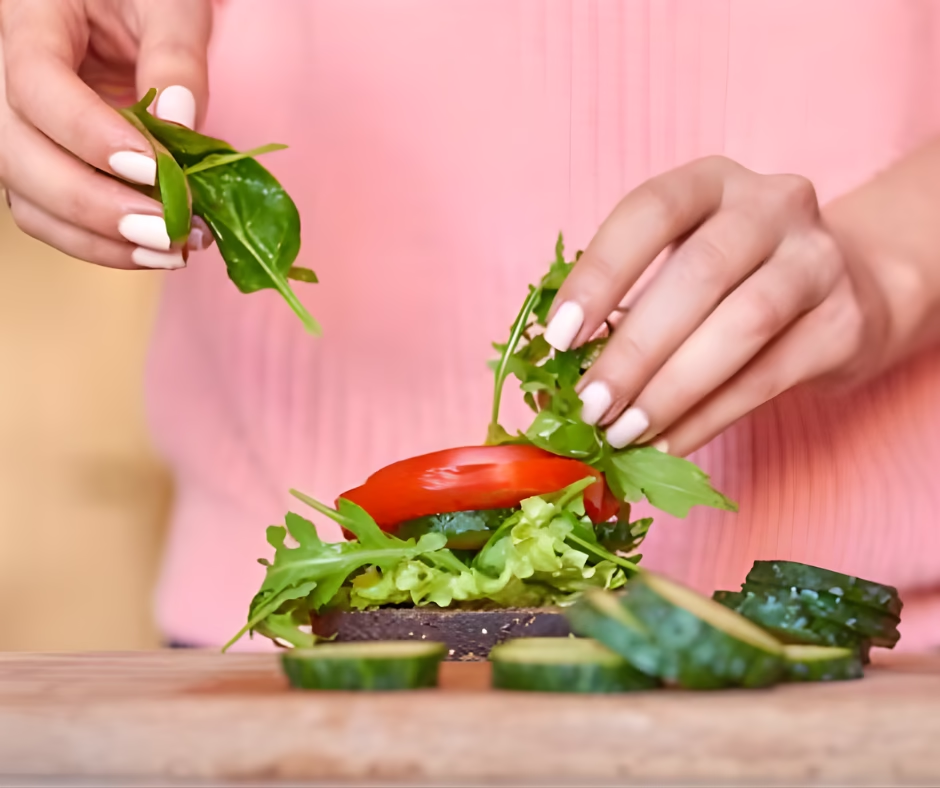
Spinach + Citrus (Iron + Vitamin C): Increases iron absorption and maintains energy. Tomato + Olive Oil (Lycopene + Healthy Fats): Helps absorb this powerful antioxidant. Brown rice + beans (complementary protein): Together they form a complete protein and are perfect for plant-based nutrition. Greek yogurt + blueberries (probiotics + polyphenols): Supports gut health and brain function.
These are not superfoods, but clever combinations that make everyday foods more powerful.
Teach children about food synergy
Incorporating food synergies into school health initiatives helps students make more informed food choices. Whether you’re supporting a school garden, leading cafeteria improvements, or teaching health education, here’s how to model this concept.
Encourage “Eat the Rainbow” lunches. Diversity brings synergy. Host a classroom experiment where students mix fruits, grains, and spices to learn about flavor and function. Pique curiosity in the lunch line by creating a poster showing food “power pairs.”

Finally: It’s not just about nutrition.
Food synergy aligns with public education’s broader mission of interconnectedness. Just as collaboration enhances learning, synergy enhances health. For educators who work diligently to uplift others, addressing the body’s need for holistic nutrition is a fundamental and necessary act of self-care.
So next time you’re preparing a meal, think beyond nutrients. Let’s consider human relationships. Think balance. Let’s consider synergy.