A woman sits in a therapist’s office in a western city. She fled the country after surviving months of detention, interrogation, and torture at the hands of a government seeking to silence her. she got it done. She is now safe from any outside appearance.
The therapist is kind. Educated. Good intentions. They ask her to rate her anxiety on a scale of 1 to 10. They recommend breathing exercises. They offer worksheets on cognitive distortions.
She will never come back.
Each time, I feel the same quiet sadness. It’s not a lack of compassion on the part of the therapist, but a lack of imagination on the part of the staff.
I have heard this story countless times, in different forms and in different details. And each time, I feel the same quiet sadness. It’s not a lack of compassion on the part of the therapist, but a lack of imagination on the part of the staff.
Traditional Western therapy was not designed for her. And until we are honest about that, we will continue to lose people who have survived already impossible conditions, not to their trauma but to our helplessness.
Validating our assumptions about safety and cure
Western psychotherapy and mental health care are based on a set of fundamental assumptions built into the model that most practitioners never think to question.
Western psychotherapy is based on a set of fundamental assumptions built into the model that most practitioners never think to question them.
It assumes that healing is an internal process, something that happens inside one person, in a private room, between two people who meet for 50 minutes each week. It assumes that language is the primary means of processing trauma. There is an understanding that emotions can and should be named, examined, and reconstructed. In this framework, safety is a feeling, developed through technology.
For survivors of torture and state violence, almost all of these assumptions do not hold true.
When a person is systematically targeted, imprisoned, interrogated, beaten, humiliated, sexually assaulted, mock executed, and dehumanized by a government, the wound is not primarily psychological in the Western sense. It goes even deeper than that.
The culprit was not an individual. It is often a system that still holds power and persecutes those left behind, and it still exists in the world in which those who survived now have to live and account for themselves.
When betrayal returns in a safe place
For most survivors of state violence, the deepest wound is the destruction of trust in institutions, strangers, and the basic security of the world. The wound begins in their home countries, where the very governments that were supposed to protect them are the source of persecution, imprisonment, torture, and terror. But for some survivors, the trauma doesn’t end with escape.
I have worked with survivors of the Islamic Republic of Iran, the Taliban, and other oppressive regimes, believing that if only we could reach the United States, we would eventually be safe. They believed they had arrived at a country built on democracy, due process, and human rights, a place where the rules would finally change.
Instead, some found themselves behind another locked door.
For survivors who have already endured torture, the greatest injury is often not simply being hurt again, but finding that the place they believed would protect them has become a new source of fear.
Survivors say the conditions they experienced in detention were extremely traumatic. Some reported similar treatment, including physical abuse, psychological abuse, prolonged isolation, humiliation, intimidation, and escape tactics.
What made this experience uniquely devastating was not only the suffering itself, but also the betrayal. They expected brutality from an authoritarian regime. They did not expect to encounter abuse in a country they believed represented freedom, justice, and the rule of law.
Many people asked me, “If something like this happens here, where is it safe?”
For survivors who have already endured torture, the greatest injury is often not simply being hurt again, but finding that the place they believed would protect them has become a new source of fear. A second betrayal can shatter what fragile trust remains and leave them with the feeling that nowhere in the world is truly safe.
Provide an anchor for mental health care
Survivors of government torture don’t just feel anxious and depressed. They lose their basic sense that the world is safe, that they matter, that life has meaning, and that justice is real. They have been told, implicitly or explicitly, by governments, communities, and sometimes their own minds, that their suffering does not matter. It shatters the ground on which a person stands. There is no breathing technique that deals with this reality. Cognitive restructuring doesn’t touch that.
For this reason, I focus on rebuilding trust, restoring agency, bearing witness, and building relationship safety before implementing techniques that require sustained inward attention.
I am aware that trauma-sensitive mindfulness is helpful for some survivors. However, in my own clinical work with survivors of torture and state violence, I typically do not use mindfulness-based interventions that ask clients to focus within their bodies or remain silent for long periods of time.
People who survive unsurvivable situations are not waiting to be saved. They are waiting to be believed.
Here’s why: Many of the people I work with have learned that paying attention to their bodies means expecting pain. Their bodies are experienced not as a safe place, but as a site of unimaginable violence. Turning your attention inward can cause flashbacks, panic, dissociation, or overwhelming physiological arousal. Similarly, prolonged periods of silence or silence can closely resemble solitary confinement, detention, or interrogation, making these behaviors feel more threatening than regulated.
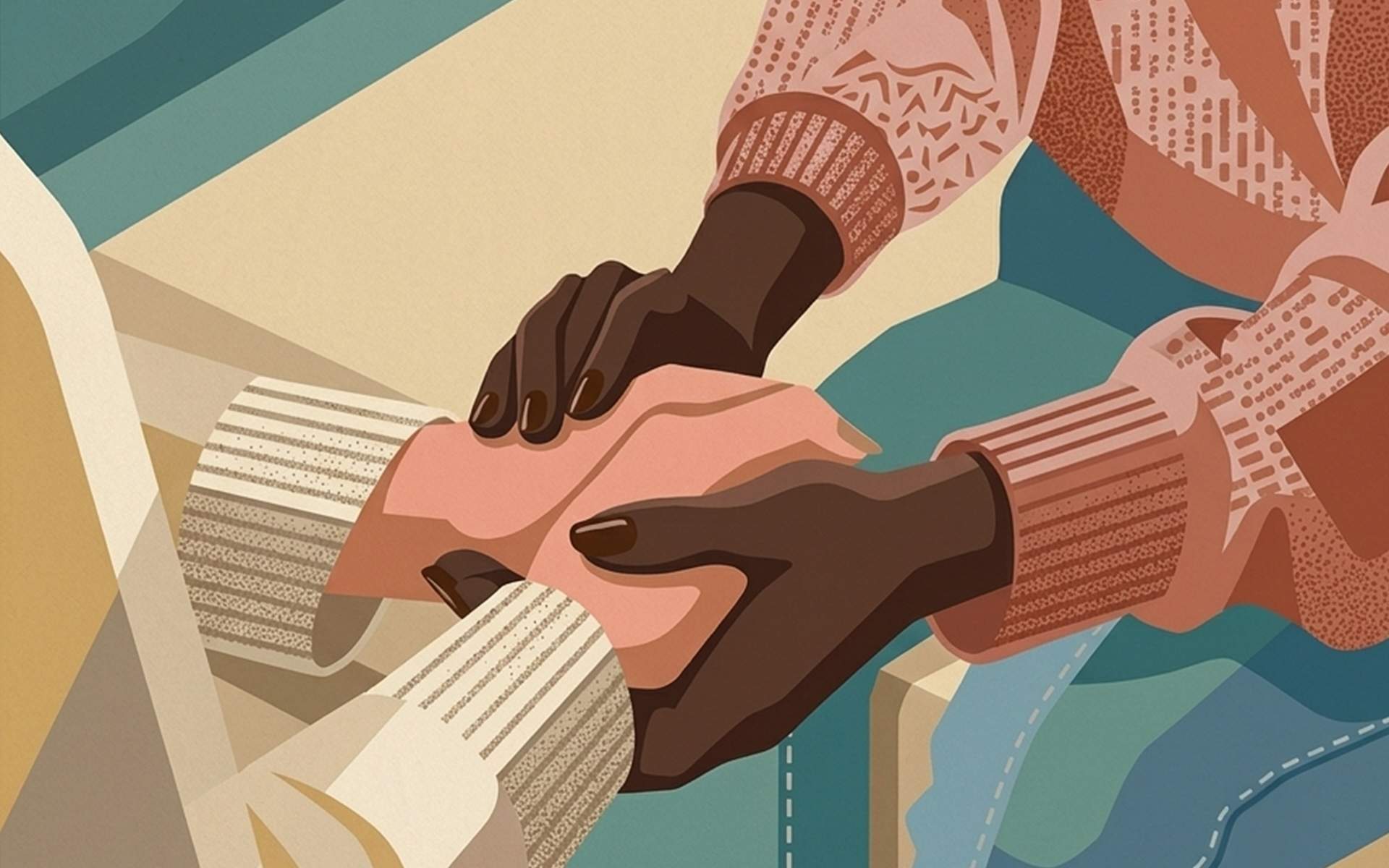
For many survivors, healing begins not with looking inward, but with discovering that other humans can continue to exist without harm.
People who survive unsurvivable situations are not waiting to be saved. They are waiting for someone to believe in them, for someone to touch their reality. Rather than trying to fix it, reframe it, or rush to resilience, I’m waiting for you to simply and firmly say, “What happened to you was real.” i believe in you. And your future still exists.
Through my work with former political prisoners and survivors of torture, I have had to let go of many of the protocols and tools I was trained to use. When we ask survivors to sit still, maintain eye contact, and express in precise words what they are feeling, we are often asking them to do something that their body is experiencing as a threat. The clinical setting itself, including its closedness, formality, and power imbalances, may unconsciously reflect the very environment in which they were harmed.
The vocabulary of Western mental health care, such as PTSD, trauma, triggers, and self-care, often does not translate itself. Not only linguistically, but also conceptually. Many of my clients don’t even realize they have trauma. They identify as survivors, as resisters, as people who did what had to be done.
In Western therapy, language is everything. Talk therapy is built on the premise that talking about suffering can be healing. But for many survivors I work with – Iranians, Afghans, people from communities without a cultural tradition of discussing emotional distress with strangers – language is already a site of violence. they were interrogated. Their words were used against them. They learned, in the cruelest way possible, that speaking comes with risks. Then ask them to come into the room and talk.
In addition to this, the Western mental health care vocabulary itself often does not translate, such as PTSD, trauma, triggers, and self-care. Not only linguistically, but also conceptually. Many of my clients don’t even realize they have trauma. They identify as survivors, as resisters, as people who did what had to be done. Pathologizing their experience and organizing it around a diagnosis may feel like another form of erasure, another agency telling them who they are.
Perhaps the most underrated skill in this job is the ability to simply listen to what’s going on and not look away.
So what actually works?
For most survivors of state violence, the deepest wound is the destruction of trust in institutions, strangers, and the basic security of the world. Healing begins not in the therapy room, but by slowly and carefully rebuilding community. Peer support, cultural spaces, shared rituals, the experience of being among people who do not inflict pain, and where rebuilding trust begins.
Every culture has its own framework for understanding suffering and recovery. For my Iranian clients, poetry, Hafez, Rumi, and the great Persian literary tradition offer a healing power that cannot be touched by DSM categories. For my Afghan patients, community prayers, collective mourning, and the presence of elderly women are more than a supplement to treatment. They are therapeutic. Our role as practitioners is not to replace them, but to make space for them.
Continuous and unflinching witnessing is deeply healing because it is the exact opposite of what the perpetrator wanted. They wanted silence. They wanted the world to look away. Otherwise we become part of the survivor resistance.
Perhaps the most undervalued skill in mental health care work is the ability to simply listen to what’s happening and not look away. Do not analyze or reconstruct it. Don’t rush towards your hopes too quickly. Keeping what is shared true. This act of unflinching witnessing is deeply healing because it is the exact opposite of what the perpetrator wanted. They wanted silence. They wanted the world to look away. Otherwise we become part of the survivor resistance.
The mental health field is not malicious. Most practitioners who do not fit into this group do so because they have never been taught otherwise. Our training program, our diagnostic framework, was built for a different kind of world, a different kind of suffering.