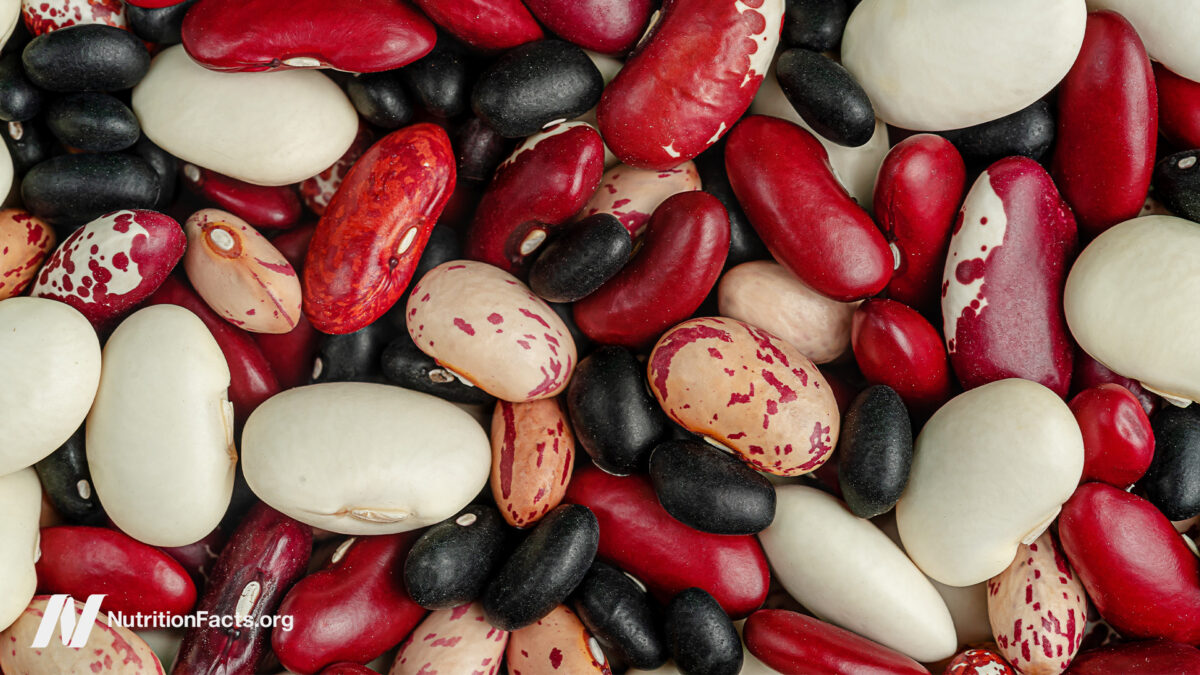
Which legumes are best at inhibiting matrix metalloproteinase enzymes that enable cancer invasion?
We spend billions on fancy new types of chemotherapy, but the overflowing sink of cancer treatment is expected to increase by about 70% over the next 20 years, as drugs are used to simply mop up the mess rather than turn off the faucet. Although cancer prevention drugs cannot actually be given to people due to side effects and cost, there is “overwhelming evidence that dietary bioactive compounds found in whole plant-based foods have significant anticancer and chemopreventive (cancer prevention) effects.”
I previously talked about the influence of diet and nutrition on the 10 hallmarks of cancer. The bottom line is that the evidence points to a diet that minimizes animal foods and, perhaps more importantly, maximizes plant foods. Foods that may be particularly beneficial include fruits (especially berries), vegetables (especially green vegetables), legumes (beans, split peas, chickpeas, lentils), nuts and seeds (especially flaxseed), onions, garlic, mushrooms, herbs and spices (such as turmeric), and green tea as a drink.
Chemotherapy may not be particularly good at cleaning up the mess. “Cancer drugs often impair quality of life and fail to prolong patient survival.” Let me put it another way. You are paying for drugs, you may be selling your house to pay for drugs, but it may only be making your life worse without any benefit. Some say they would require drugs to extend life by at least three months, but if they required that chemotherapy actually work, would companies abandon testing new cancer drugs altogether? On the other hand, what a concept by claiming clinically important benefits. Perhaps big pharmaceutical companies will reallocate resources to targeting more important cancer processes, such as metastatic spread, since tumor metastases account for 90% of cancer-related deaths. If a primary tumor metastasizes and shortens lifespans, who cares if a drug shrinks the primary tumor?
What about using natural bioactive compounds found in plants to control metastatic cancer? Clearly, at least in vitro (in a petri dish), “[plant]phytochemicals have been shown to be able to inhibit almost every step of the invasion-metastasis cascade.” Below is a list of some possible food sources of anti-metastatic phytochemicals. You can also see this at 2:27 in my video “Blocking the Cancer Transferase MMP-9 with Beans and Chickpeas.”
All of these foods have been shown to block all kinds of cancer signaling pathways, but let’s focus on one, matrix metalloproteinases (MMPs). Since approximately 90% of cancer disability and death is due to cancer spread (metastasis), let’s talk about MMPs that are “actively involved in the entire metastatic process.” Matrix metalloproteinases are enzymes that allow cancer to penetrate the surrounding flesh and into the lymph and blood vessels, allowing it to invade and grow elsewhere.
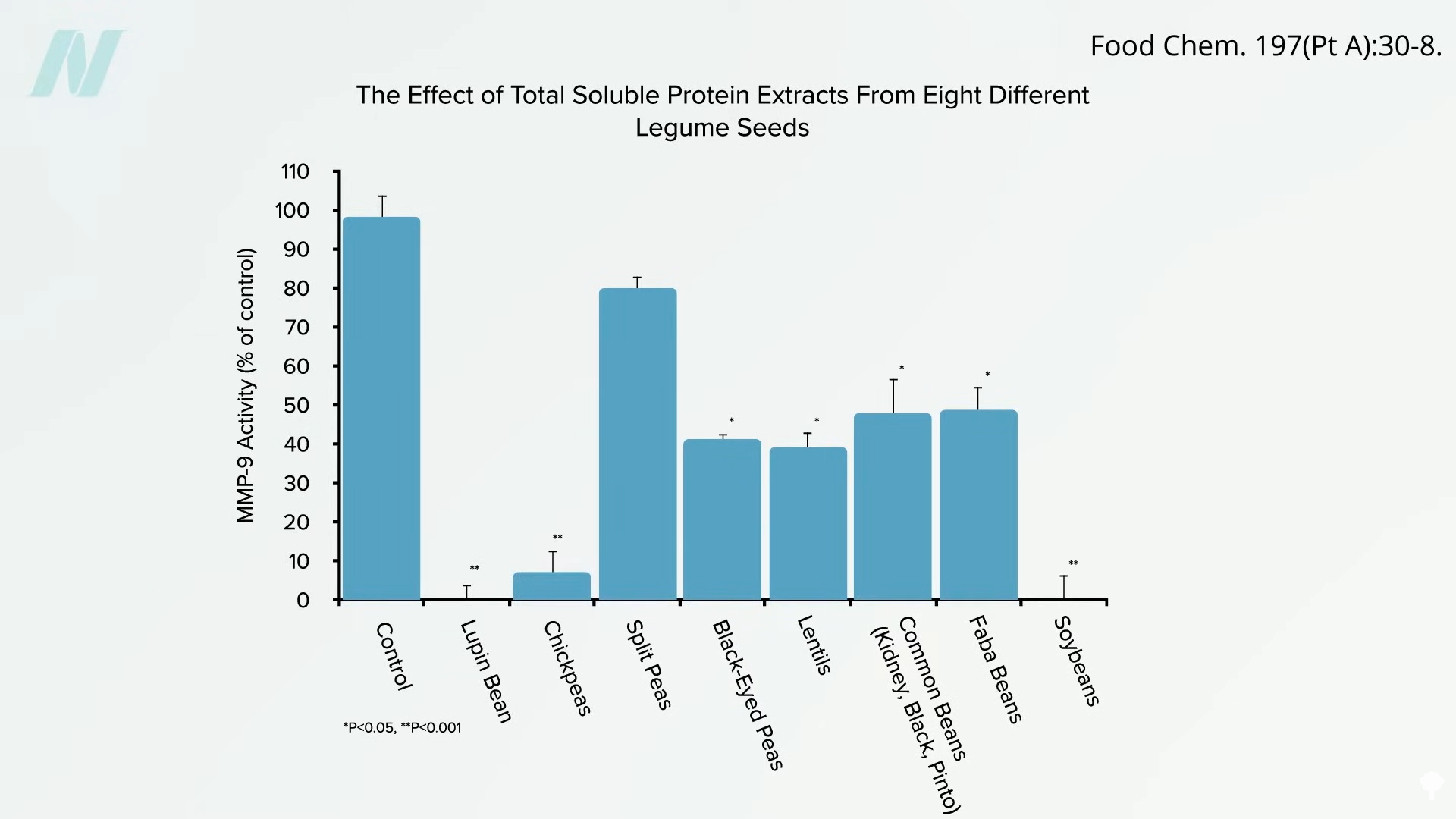
Therefore, major pharmaceutical companies have developed matrix metalloproteinase inhibitors. Although this worked well in animal models, it caused severe side effects in humans. So what about using food? Legumes (beans, split peas, chickpeas, lentils) contain special proteins that reduce MMP activity. But which are the main legumes? Researchers tested eight types: lupine beans, chickpeas, split peas, black-eyed peas, lentils, more common beans (such as kidney beans, black beans, or pinto beans), fava beans, and soybeans. Which one do you think worked best?
In the absence of beans, matrix metalloproteinase activity disappeared by about 100%, and dripping protein from split peas did not seem to have much effect, but using black-eyed peas, lentils, kidney beans, and broad beans reduced enzyme activity by more than 50%. Guess what reduced activity by over 90%? Lupine beans, chickpeas, and soybeans, as seen below and at 4:08 in my video.
But will this lead to slowing the spread of cancer?
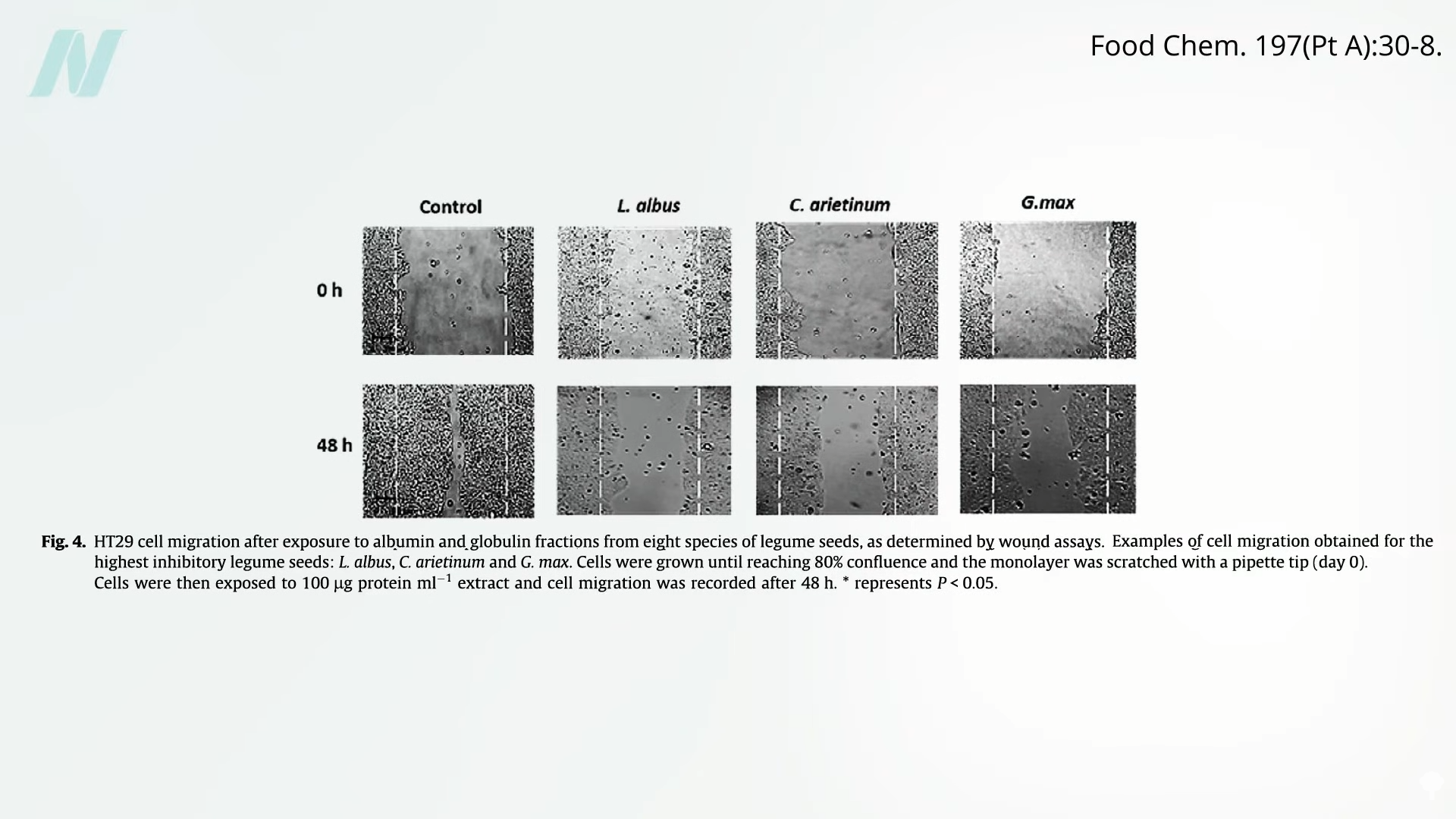
The researchers seeded a layer of human colon cancer cells in a petri dish and used a razor blade to remove the middle section. Within 48 hours, the cancer rapidly converged and filled the gap. But when I added a small drop of protein from lupine beans, chickpeas, or soybeans, the cancer cells seemed to struggle to close the distance, as you can see below and at 4:33 in my video.
Well, I used green beans. We won’t know whether cooking destroys these cancer-fighting proteins until we test them. Researchers found that matrix metalloproteinase inhibitors in soybeans remain active, at least after cooking.
So it may come as no surprise that eating legumes reduces your risk of colorectal cancer. Yes, but colon cancer that sprouts from the lining of the colon can come into contact with some of these bean proteins. Most likely, they will not enter the bloodstream.
People on a vegetarian diet appear to have significantly lower levels of matrix metalloproteinases, which is thought to be due to lower levels of inflammation, similar to lower MMP levels in non-smokers. This is good because this enzyme is not only a cancer biomarker, but may also be involved in autoimmune and cardiovascular diseases. The enzyme’s machete-shaped nature can push through the inflamed, cholesterol-filled atherosclerotic lesions lining diseased arteries, causing plaques to rupture. People know that people who eat a more plant-based diet tend to have less heart disease, but they may not realize that their risk of cancer is also significantly lower, especially for those who eat an entirely plant-based diet.
doctor’s note
The video I mentioned is “Fighting the Ten Hallmarks of Cancer with Diet.”
For more videos about cancer metastasis, check out related posts.