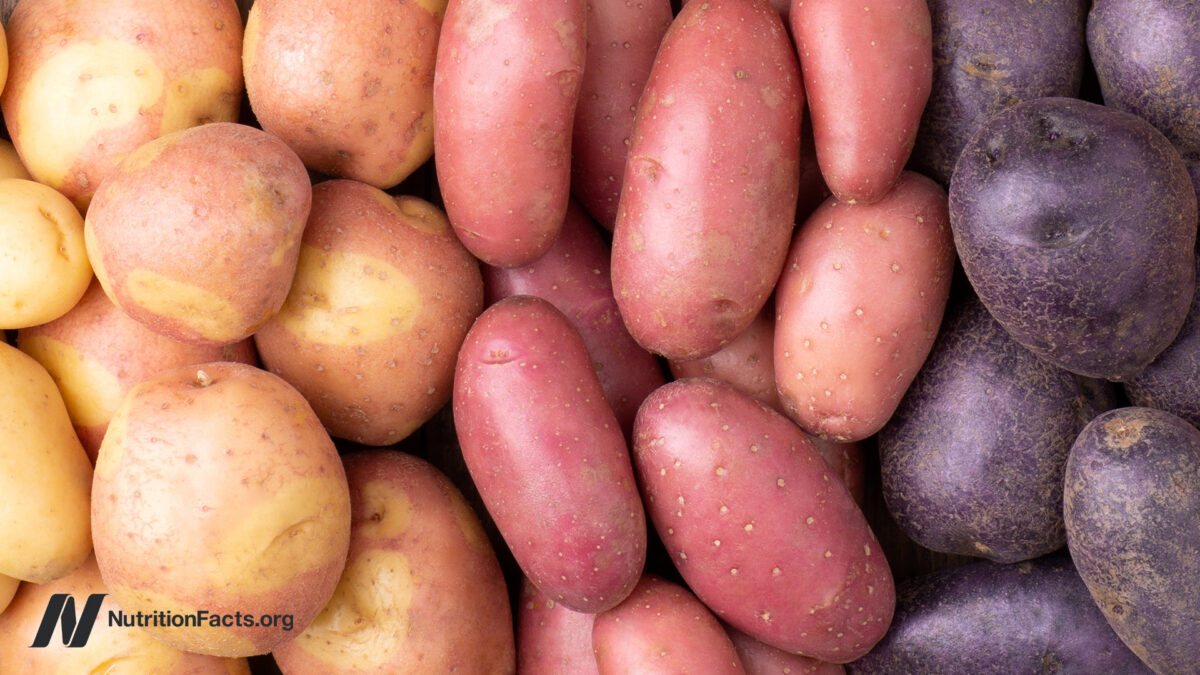
Are yellow-fleshed potatoes healthier than white-fleshed potatoes? So what about glycoalkaloid toxins?
The high glycemic impact of potatoes may increase the risk of type 2 diabetes, perhaps by chronically overstimulating insulin-producing cells in the pancreas. In my last two blogs, I explained how to reduce the impact on your blood sugar levels by eating white potatoes cold, by cooling and reheating them, or by adding broccoli, lemon juice, or vinegar. What else can I do?
Now, as you can see below and at 0:38 in my video “The Healthiest Potato Types,” the pigments in the brightly colored berries act as starch blockers.
So if you eat high-glycemic foods, you may be able to soften the effects by, for example, spreading raspberries on your toast, adding strawberries to your cornflakes, or sprinkling blueberries on your pancake batter. We’re not saying you should put blackberries in your baked potatoes, but given that the natural coloring compounds in the fruit can slow down the digestion of starch, what about colored potatoes?
Even regular yellow potatoes like Yukon Gold may be preferable to white, but the best potatoes are likely to be purple potatoes. It’s not a purple-skinned potato, it’s a purple-fleshed potato. In case you’ve never seen a purple potato, purple potatoes are amazing. It has an almost neon blue glow. This can be seen below and at 1:14 of my video.
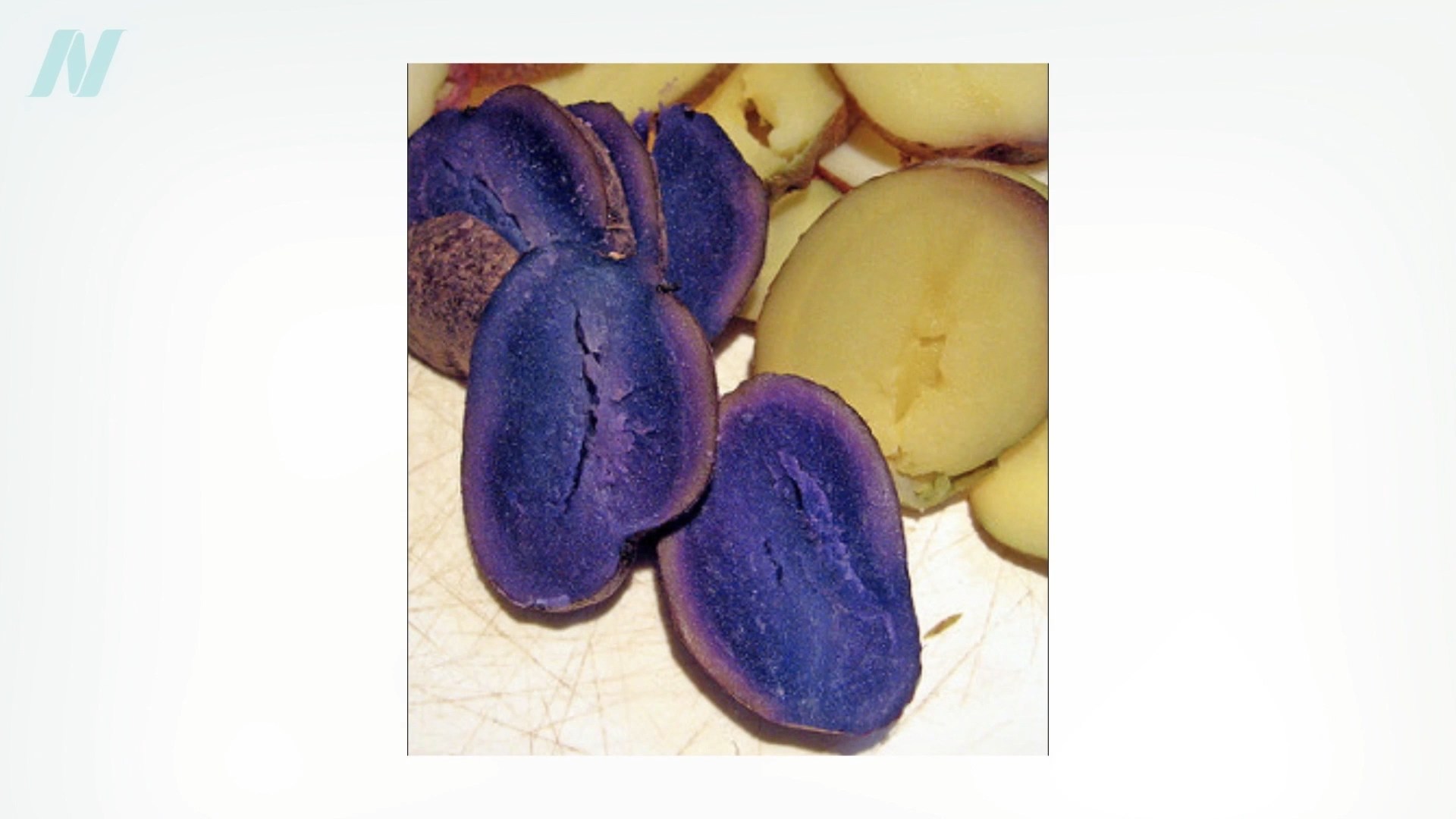
And in addition to looking cool, purple potatoes also have lower insulin and blood sugar spikes than yellow-fleshed potatoes, suggesting that switching from yellow or white to purple potatoes “could have great potential for maintaining public health.”
How do we know that the pigment itself, rather than other differences between potato varieties, is to blame? The researchers tried using a control with berries in potato starch jelly, but this approach seems to add even more variables. In vitro, extracts from purple- and red-fleshed potatoes act as starch blockers. Therefore, once the purple potato pigment is extracted and purified, the other effects of different potato varieties can be removed by adding that purple pigment to yellow potatoes. And surprisingly, compared to regular yellow potatoes, they suppress blood sugar and insulin spikes. Instead of an overshoot response where your blood sugar actually drops below fasting levels, you get the gradual rise and fall in blood sugar that you would expect from a low-glycemic food, as you can see below and at 2 minutes 25 seconds into my video.
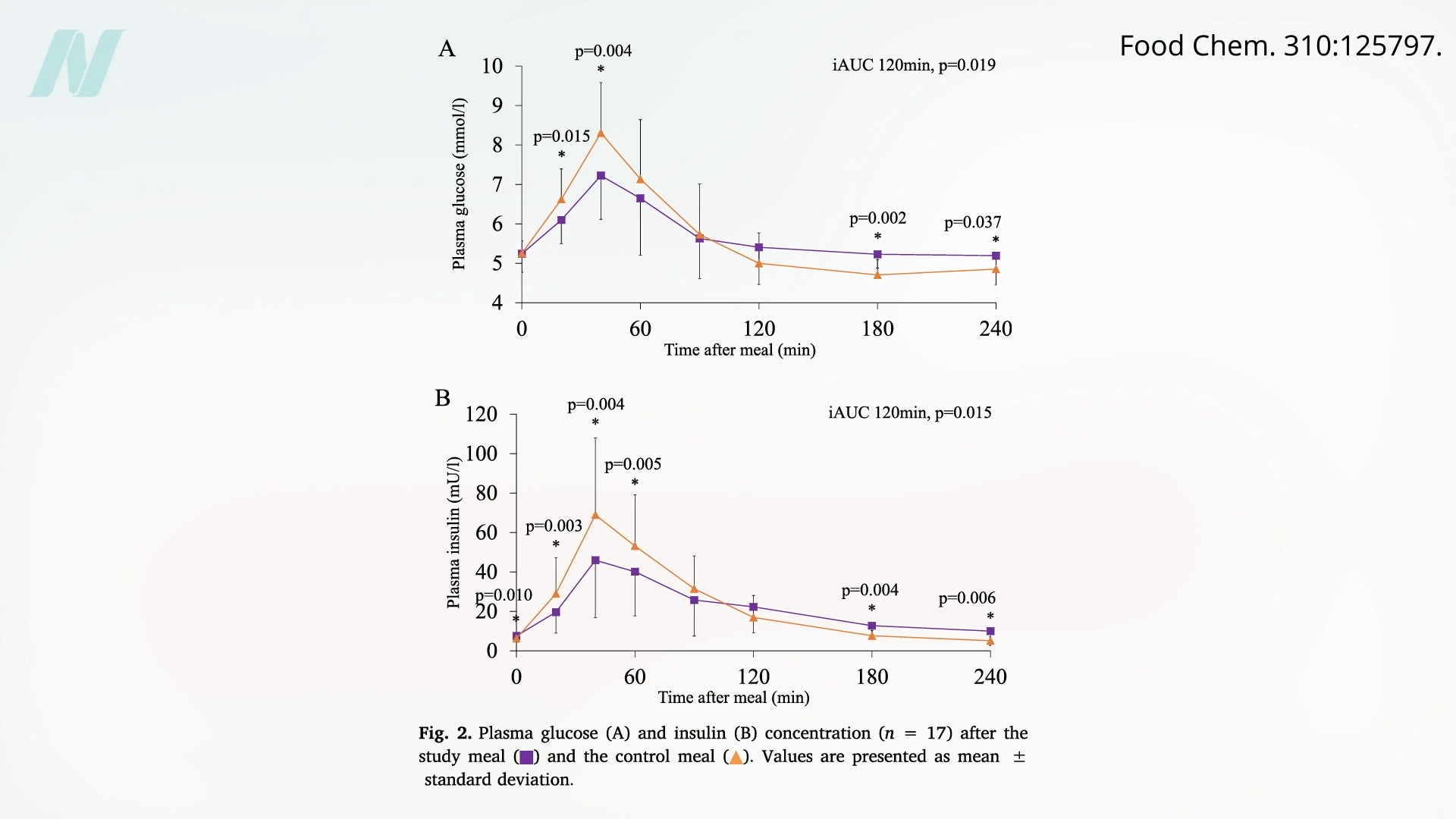
The authors suggest that while purple potato extract could be produced to make supplements or premium functional foods, it may be more cost-effective to obtain these compounds by consuming the purple potatoes themselves.
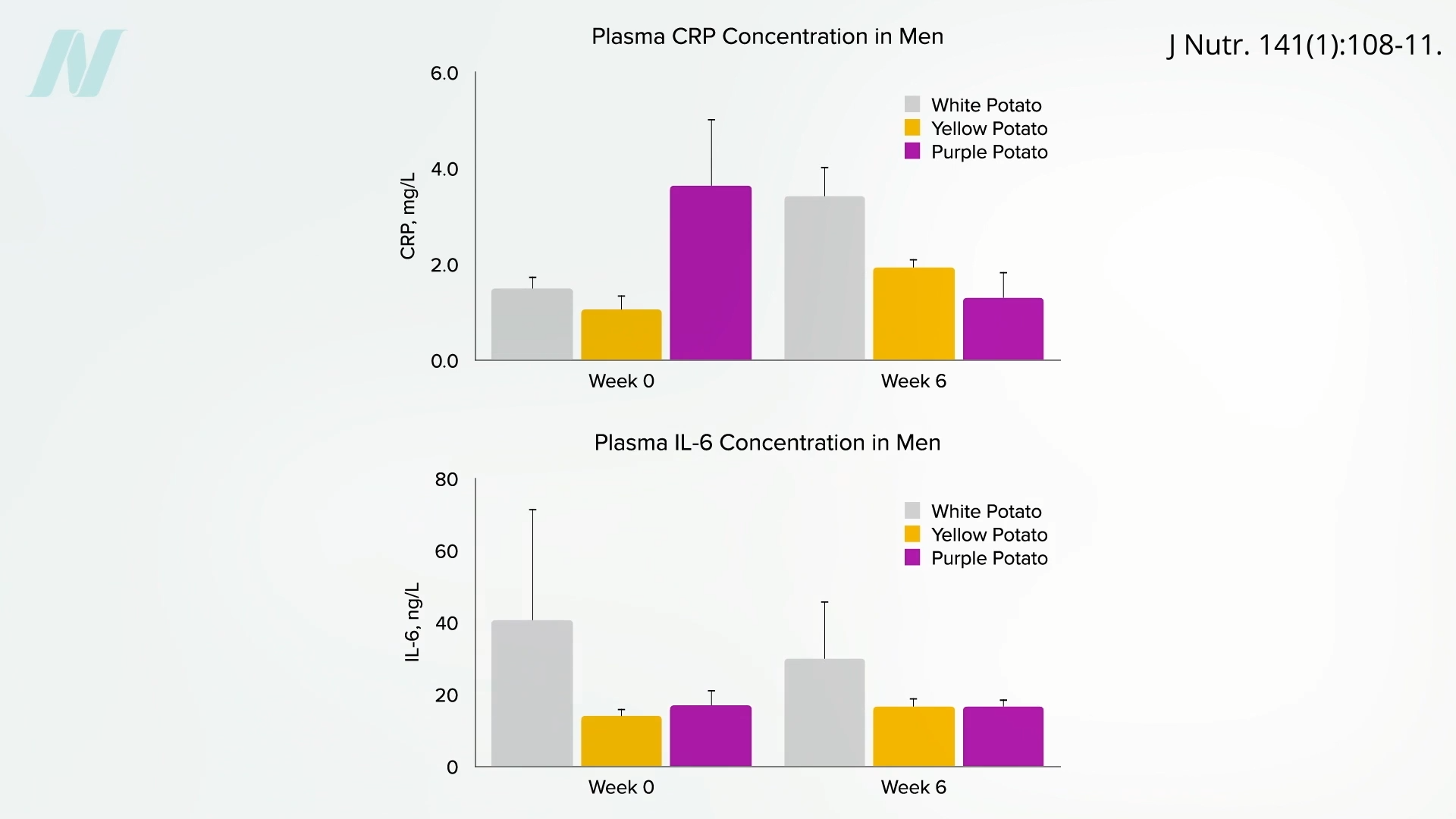
The pigment in purple sweet potatoes may also affect inflammation. The American Potato Board likes to promote potatoes as an anti-inflammatory food, but doesn’t tell you that this benefit may be limited to pigmented potatoes. When study participants were randomly assigned to eat small white potatoes and yellow or purple-fleshed potatoes every day for six weeks, the purple potato group had significantly lower levels of inflammation compared to the white potato group, as measured by both C-reactive protein and interleukin-6 (shown below and at 3:13 of my video).
Consumption of highly pigmented potatoes also alters oxidative stress. Within hours of eating a large purple potato, the antioxidant capacity of your bloodstream increases by 60%, reducing DNA damage caused by free radicals. Comparing the antioxidant power of white, yellow, and purple potatoes, Yukon Gold has about twice as much antioxidant power as white, while purple has 20 times more antioxidant power. This is comparable to that found in berries. Half a purple sweet potato contains about the same amount of polyphenol antioxidants as half a cup of blueberries.
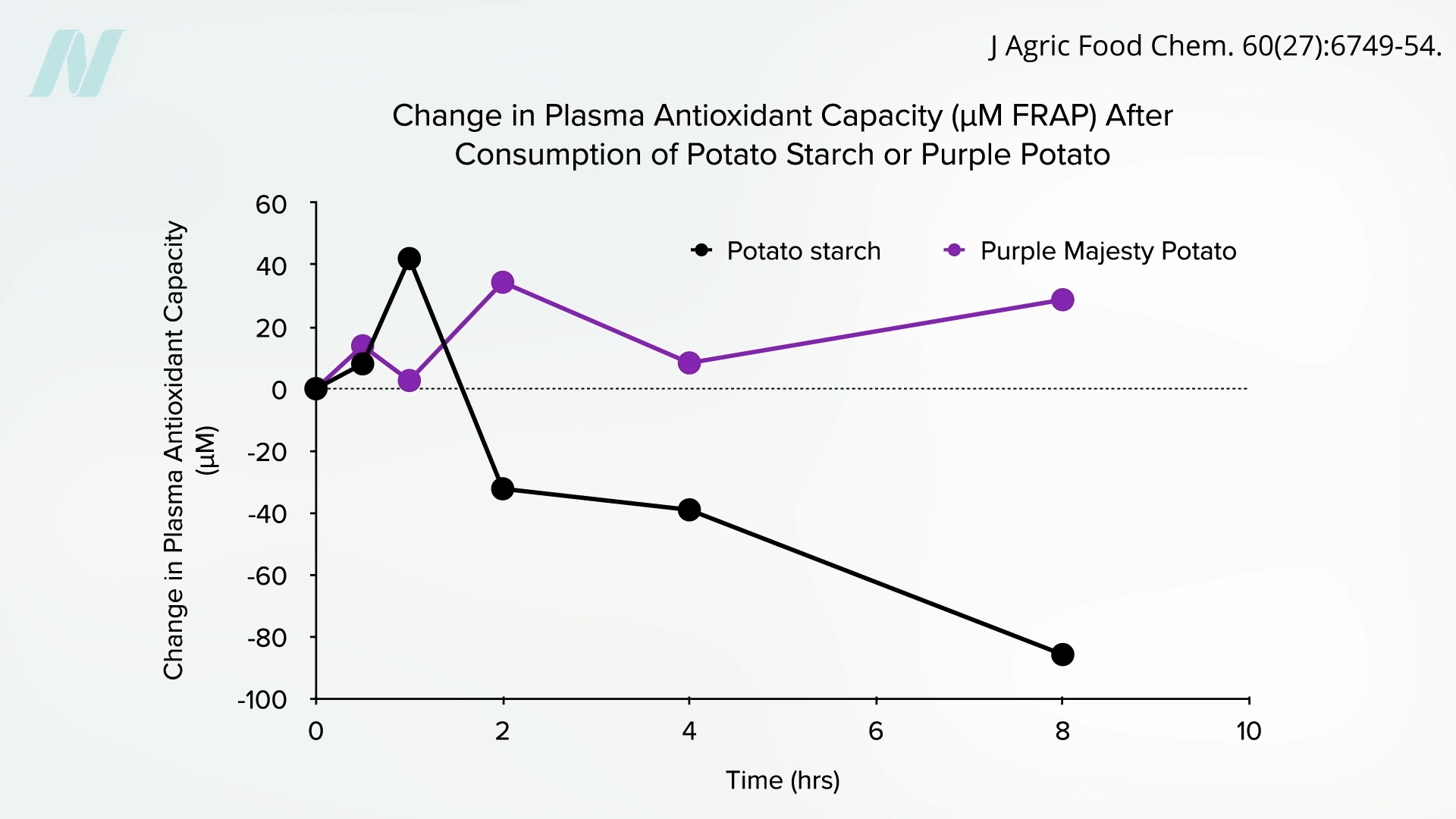
Purple potatoes can increase the antioxidant capacity of the bloodstream, while straight white potato starch can act as a pro-oxidant and reduce the antioxidant capacity. Eating a purple sweet potato increases the antioxidant capacity of your bloodstream for the next eight hours. In contrast, eating unpigmented white potato starch can make things worse than they were in the first place, as you can see below and at 4:12 of my video.
Okay, but does this translate into different physiological effects? Yes, for sure. When people ate either purple or white potatoes for two weeks, purple potatoes improved the severity of arteriosclerosis, but white potatoes did not. And this leads to lower blood pressure even in people who are already taking high blood pressure medication, suggesting that purple potatoes are an effective blood pressure lowering agent.
So what about the toxic glycoalkaloid compounds found in potatoes?Toxic doses for humans start at 2-5 mg/kg of body weight, not far from lethal doses. However, the average amount of total glycoalkaloids in most potatoes is less than 100 mg/kg. So, if the average American weighs 180 pounds, the toxic amount is equivalent to 4 to 9 pounds of potatoes. What happens when you approach that amount? Nausea, vomiting, and diarrhea can occur, which can be easily confused with gastroenteritis or food poisoning. Some people can start to get sick at as little as 1.25 mg/kg body weight, and some people can develop symptoms at 1 mg/kg. That’s about 2 pounds of potatoes based on the average American weight. Eating potatoes every day can also cause glycoalkaloids to start building up. But what about people who go on the fad potato diet and eat three or four pounds a day? Peeling potatoes removes almost all the glycoalkaloids, so you can do it without risking getting sick.
doctor’s note
This is the last of a five-video series about potatoes. If you missed any other items, please see:
You may also be interested in “The best way to cook sweet potatoes”.
The video about the berries I mentioned is “Getting Starch to Take the Path of Most Resistance.”