If you’ve ever seen your tomato plants struggle with pests all season while your neighbor’s garden is thriving, the difference may be down to what’s being planted next to them. Companion plants are one of gardening’s oldest and most practical techniques, and they’re making a huge comeback among home growers looking to reduce chemical inputs, improve yields, and build gardens that work with nature rather than against it. This guide details the science behind companion planting, which combinations are worth trying, and which ones to avoid.
What is companion planting and why is it effective?
Companion planting is the practice of growing two or more plant species in close proximity because they mutually benefit each other in some measurable way. These benefits come in several forms. Some plants may repel insects that damage their neighbors, others may fix nitrogen in the soil that hungry foragers inhale, and others simply attract beneficial insects that pollinate crops or prey on garden pests.
The mechanism is real and documented. Certain plants emit volatile compounds from their leaves and roots that confuse or deter pests. Others produce allelopathic chemicals that suppress weed growth around the roots and reduce competition for water and nutrients. Deep-rooted plants break up compacted soil and bring minerals to the surface that their shallower cousins can access. Understanding these interactions allows you to design garden beds that essentially manage themselves.
Three Sisters: The most famous companion trio of all time
No conversation about companion planting would be complete without mentioning the Three Sisters, a planting system developed by the indigenous peoples of North America and refined over thousands of years. The trio is corn, beans and pumpkin, each with a different role.
The corn grows tall and provides a living shelf for the beans to climb, eliminating the need for stakes or cages. Beans are nitrogen fixers. Rhizobia within the root nodules take nitrogen from the air and convert it into a form that corn and squash can absorb, effectively fertilizing the bed as the season progresses. Squash plants spread their large spiny leaves all over the soil below to screen out weeds and conserve moisture. The rough texture of the leaves deters many animals and crawling insects.
Three Sisters works because each plant occupies a different niche within the same space, including vertical, climbing, and ground level. You get three crops from one bed with minimal fertilization, minimal weeding, and minimal watering compared to growing each individually. For gardeners working with limited raised bed space, this combination is worth giving priority to.
Tomatoes and basil: more than a culinary combination
The combination of tomatoes and basil is so common in the kitchen that it may seem too convenient, but it is also an excellent companion in the garden. Basil is thought to repel aphids, whiteflies, and tomato hornworms through its strong aromatic oil. Some gardeners report that basil improves the flavor of nearby tomatoes, but research on that specific claim is mixed. What is established is that basil attracts pollinators and that tomato plant growth is highly dependent on pollination for fruiting. Plant basil at the base of tomato plants or between cages 18 inches apart.
Combine both with Marigold and you have a triple combination that can deal with multiple threats at once. French marigolds (Tagetes patula) release a compound called alpha-terthienyl from their roots that suppresses nematodes in the soil. This is one of the most destructive invisible problems in the vegetable garden. It also deters whiteflies and attracts hoverflies and parasitic wasps that target caterpillars and aphids. A border of marigolds around a bed of tomatoes and basil creates a functional pest barrier and looks attractive at the same time.
Carrots and onions: mutual confusion of pests
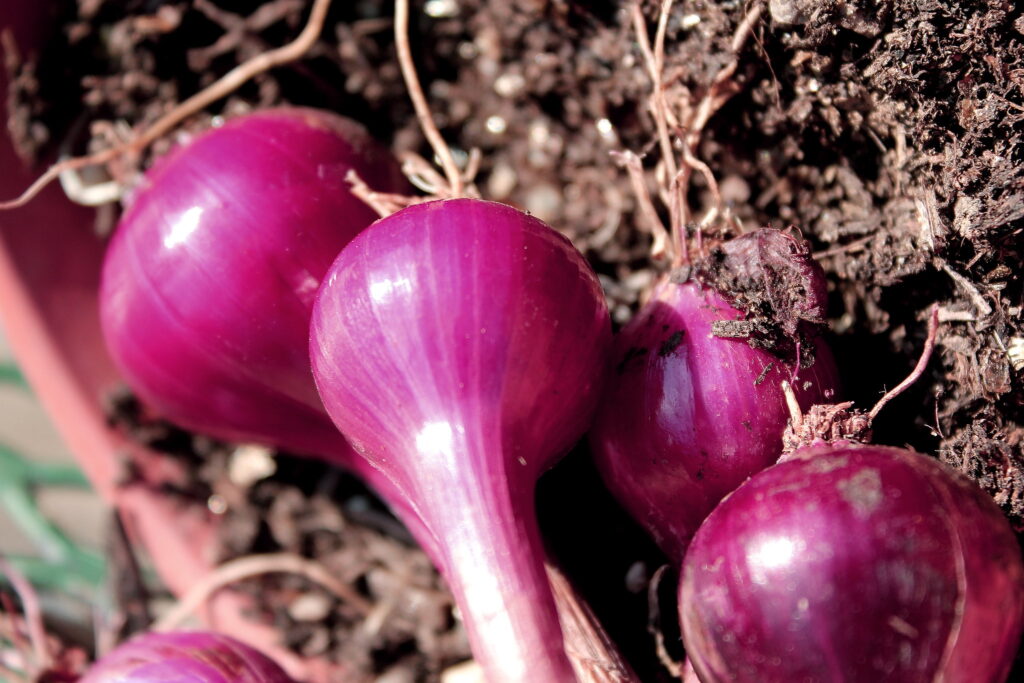
Carrot flies and onion flies are both serious pests that locate their targets primarily by smell. When carrots and onions are interplanted, aromatic compounds from the onion family (such as alliums, garlic, and chives) mask the smell of carrots, and vice versa. For both crops, pest populations tend to be lower in interbeds compared to monoculture rows. This is one of the companion plant claims that is better supported in the research literature, and one of the easiest to implement. Simply plant in alternating rows or in a trellis.
Chives are especially versatile in this regard. They are members of the Allium family and have a fragrance that confuses the same pests, but when they flower they attract pollinators and work well as border plants, allowing continuous cutting throughout the season without disturbing flower beds. If you only want to add one companion to your carrot patch, make it chives.
Companions to avoid: Troublesome combinations
Companion planting doesn’t just mean positive pairings. Some plants actively harm each other when grown close together, and placing them together is one of the most common mistakes made by novice gardeners. The following combinations are worth avoiding:
Almost everything with fennel. Fennel releases allelopathic compounds that inhibit the growth of most vegetables, including tomatoes, peppers, and beans. They are best grown in isolation at the edge of the garden or in their own containers. onions and beans. Allium can inhibit legume growth, reducing both yield and nitrogen fixation. Please keep these families isolated. Brassica and tomatoes. Both are heavy feeders that compete fiercely for the same soil nutrients, especially calcium and magnesium. When grown together, both tend to perform poorly. Cucumbers and fragrant herbs. Strong aromatics such as sage and rosemary can inhibit cucumber growth. Instead, use nasturtiums and dill as companions to cucumbers.
Planning a companion bed: A practical framework
The easiest way to start is to organize your garden by plant family and identify one or two companion plants in each bed, rather than trying to optimize all interactions at once. Plan your flower bed on paper before planting, noting which crops are nutrient sources (tomatoes, corn, squash), nitrogen fixers (beans, peas, clover), and which repel certain pests you dealt with the previous season.
Successive planting is especially effective in combination with companions. When early crops like peas and spinach die in early summer, replace them with heat-loving plants like basil and peppers that can use the nitrogen left behind by peas. Try lining or edging every bed with flowers like nasturtiums, calendulas and marigolds. They act as pest traps, pollinator attractants, and visual cues that your garden is healthy.
Keep a quick garden diary of what you planted next to what, what the pest pressure is like, and how your yields compare to previous seasons. Companion plant performance varies depending on region, climate, and local pest populations, so ultimately your own observations over two or three seasons will be more helpful than any graph.
Recovering after a full day in the garden
Digging, planting, mowing, and transporting all take a toll on your body, especially your lower back, shoulders, and knees. After a productive day in the garden, using a service like Massage Service 30a is one of the best ways to relieve muscle tension, reduce pain, and help your body recover so you can get back out there the next morning.
Start small, observe, and scale up.
Companion plants are not an all-or-nothing system. You don’t have to redesign your entire garden, but it can be helpful to consult a garden planner beforehand. Let’s start with a single pairing. If you have space, you can start with the Three Sisters combination. Or you could just tuck a row of marigolds along your tomato bed this season. Watch what happens, adjust accordingly, and add one more pairing the following year.
The goal is a garden that becomes progressively easier to manage because the plants cooperate rather than compete. That’s the promise of companion planting: reducing pest pressure, improving soil and providing more consistent harvests season after season.