Lactusin, the hypnotic component of lettuce, will be tested in a randomized, double-blind, placebo-controlled trial on lettuce seeds.
Although there is a perception that sleep is a waste of time, it is widely recognized that sleep deprivation is associated with multiple acute and chronic diseases and increases the risk of death and illness.
As I explain in my video, “Natural Diets for Insomnia,” forcing people to get only 6 hours of sleep each night for a week can change the expression of over 700 genes. The most devastating effect may be endothelial dysfunction. The endothelium is a thin layer of cells that lines blood vessels and is responsible for allowing arteries to relax and expand properly. If you randomly assigned people to sleep 5 hours instead of 7 hours for about a week, a difference of just 2 hours of sleep would cause significant damage to arterial function.
How bad is a week when you only get 5 hours a night? Sleep deprivation is no joke. “The degree of impairment…is similar to that reported in smokers, people with diabetes, and people with coronary artery disease.” It’s no wonder that people who sleep less than seven hours a night have a 12% to 35% increased risk of premature death compared to those who sleep seven hours a night. But a large portion of the population, such as 28% of U.S. adults, may receive less than that on a daily basis. “It is undisputed that getting a long, restful night’s sleep each night is fundamental to good health.” So what can you do about it?
People with sleep apnea, a common result of obesity that disrupts sleep, may benefit from using a CPAP machine during weight loss to treat the underlying cause. But what if apnea isn’t the problem? What if you’re having trouble falling or staying asleep? My book, How Not to Diet, has an entire section on improving sleep that details the Four Rules of Sleep Conditioning and the Four Rules of Sleep Hygiene, as you can see below and at 2:04 of my video. What should I do if I follow these guidelines and still can’t sleep? Is there a natural diet?
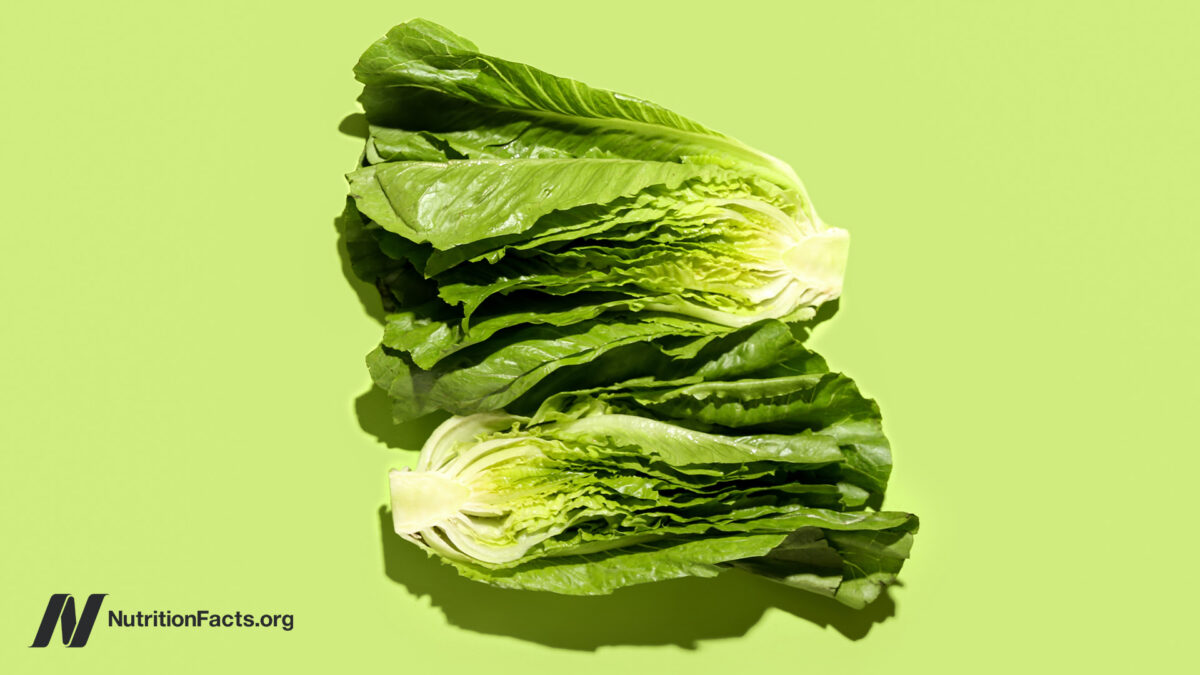
I previously talked about using kiwifruit and tart cherries to fight insomnia. Are there any vegetables that might be helpful? Lactuca sativa is a plant traditionally used to treat insomnia. What is this exotic-sounding leafy vegetable? lettuce! Apparently, lettuce extract has been used since the Roman Empire for its sedative and sleep-inducing properties. In fact, lettuce contains a hypnotic substance called lactucin, which is what makes lettuce taste a little bitter. But you won’t know if it actually works until you try it.
And it works with toads. Also works on rodents. Sleep in both mice and rats is enhanced by romaine lettuce. The researchers used romaine, which has a higher content of lactusin than other lettuces.
But does it also work for humans? About 10 years ago, a study was published in which patients with insomnia were randomly assigned to receive lettuce seed oil, an oil extracted from lettuce seeds. Within one week, about 70% of the lettuce seed oil group said their insomnia was “very or much improved,” compared to just 20% of the placebo control group. The researchers concluded that lettuce seed oil was found to be a useful and safe sleep aid for elderly patients with sleep disorders. They chose to study older adults because about 20% to 40% of older adults suffer from insomnia at least a few nights a month.
Do you think that’s a lot? Sleep disorders can affect nearly 8 out of 10 women during pregnancy. Of course, there are various sleeping pills, but they can put the fetus and mother at risk. For example, doctors often prescribe Ambien to pregnant women with sleep problems, but Ambien use is associated with a variety of adverse pregnancy outcomes, including low birth weight, premature birth, and cesarean section. And Valium use during pregnancy has been linked to birth defects, including limb defects. There has to be a better way. How about trying lettuce?
Research on lettuce seed oil had many limitations. For example, it was only a single-blind study, so the researchers knew who was taking the lettuce supplement and who was taking the placebo, which could have introduced some bias. But the researchers essentially said, “Give yourself a break.” Big drug companies spend billions of dollars on research. No one wants to fund lettuce research.
However, the researchers finally conducted a double-blind, placebo-controlled study, but this time they looked at the whole food rather than just lettuce seed extract. But how do you come up with a placebo lettuce? How do you hide who gets the lettuce and who doesn’t? Lettuce ears don’t fit into the capsule, but whole lettuce seeds do. In a double-blind, randomized, placebo-controlled trial of lettuce seeds for pregnancy-related insomnia, 100 pregnant women with insomnia were randomly assigned to take capsules of a quarter teaspoon of ground lettuce seeds or a placebo for two weeks. Subjects who consumed lettuce seeds had significant improvements in sleep quality index scores compared to placebo, and no side effects were reported.
doctor’s note
The insomnia video I mentioned is Kiwifruit for Insomnia and Tart Cherry for Insomnia.
For 4 Rules of Sleep Conditioning and 4 Rules of Sleep Hygiene, go to your local public library or independent bookstore and pick up a copy of How Not to Diet. (All proceeds from my book will be donated to charity.)