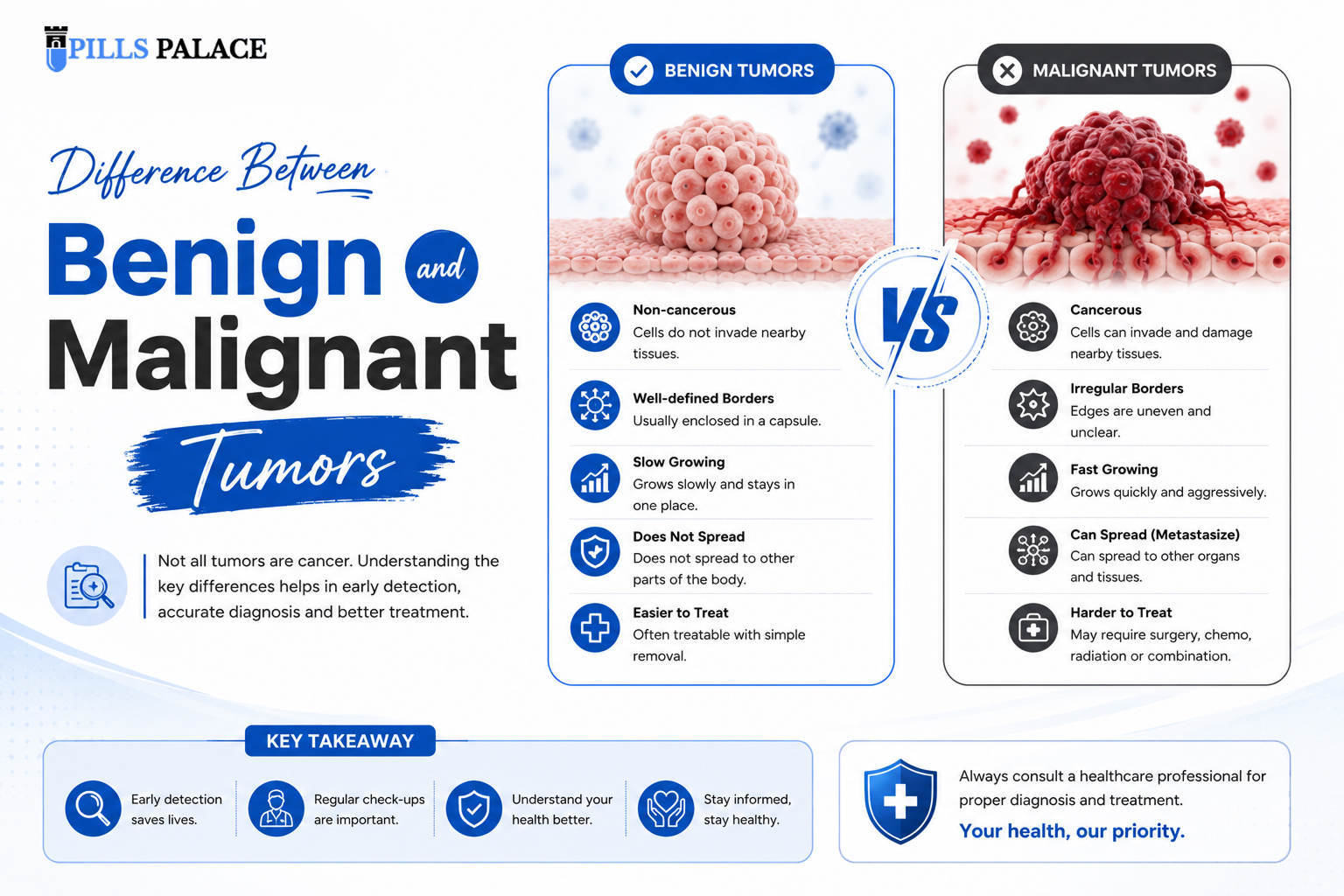
When it comes to tumors, there are two main types: benign and malignant. Although both types of tumors can cause concern, there are distinct differences in their characteristics, growth patterns, and effects on the body. In this article, we’ll take a closer look at the differences between benign and malignant tumors, exploring their definitions, symptoms, diagnosis, treatment options, and prognosis.
What is a benign tumor?
Benign tumors are non-cancerous tumors that do not invade surrounding tissue or spread to other parts of the body. Growth is usually slow and does not pose a threat to overall health. Benign tumors can occur in various parts of the body, including the skin, uterus, breasts, and brain. Examples of benign tumors include:
Uterine fibroids Adenomas (benign tumors of glandular tissue) Lipomas (fatty tumors) Cysts (fluid-filled sacs) Warts (viral infections that cause skin growths)
Benign tumors are often asymptomatic, but depending on their location and size, they can cause discomfort, pain, and other symptoms. For example, a large benign tumor in the uterus can cause pelvic pain, heavy bleeding, or infertility.
What is a malignant tumor?
A malignant tumor, also known as cancer, is an abnormal cell growth that can invade surrounding tissue and spread to other parts of the body. They are usually rapidly growing and can pose a serious threat to your overall health. Malignant tumors can occur in various parts of the body, including the breast, lungs, colon, and skin. Examples of malignant tumors include:
Carcinoma (cancer of the epithelial tissue) Sarcoma (cancer of the connective tissue) Leukemia (cancer of the blood cells) Lymphoma (cancer of the immune system) Brain tumor (cancer of the brain or spinal cord)
Malignant tumors can cause a variety of symptoms depending on their location and stage. Common symptoms include:
Unexplained weight loss Fatigue Pain or discomfort Changes in bowel or bladder habits Abnormal bleeding or discharge
The main differences between benign and malignant tumors are:
Growth pattern: Benign tumors grow slowly, whereas malignant tumors grow rapidly. Invasion: Benign tumors do not invade surrounding tissues, whereas malignant tumors invade and destroy surrounding tissues. Metastasis: Benign tumors do not spread to other parts of the body, but malignant tumors can spread through the bloodstream or lymphatic system. Cell structure: Benign tumors have normal cell structure, while malignant tumors have abnormal cell structure.
Diagnosis and treatment options
Diagnosis of benign and malignant tumors usually involves a combination of imaging tests, biopsies, and laboratory tests. Imaging tests such as x-rays, CT scans, and MRIs can help determine the location and size of the tumor. A biopsy involves removing a sample of tissue from the tumor and examining it under a microscope for abnormal cell growth. Laboratory tests, such as blood tests, can help identify tumor markers and other substances that may indicate the presence of cancer.
Treatment options for benign tumors depend on the type, size, and location of the tumor. Common treatment options include:
Surgery: to remove the tumor Medications: to shrink the tumor or relieve symptoms Watchful waiting: to monitor the tumor for changes or growth
Treatment options for malignant tumors vary depending on the type, stage, and location of the cancer. Common treatment options include:
Surgery: to remove the tumor and surrounding tissue Chemotherapy: to kill cancer cells with drugs Radiation therapy: to kill cancer cells with high-energy radiation Immunotherapy: to stimulate the immune system to fight cancer Hormone therapy: to block hormones that promote cancer growth
prognosis and outlook
The prognosis and outlook for benign and malignant tumors vary widely depending on the tumor type, size, location, and the individual’s overall health. Benign tumors are usually not life-threatening and can be successfully treated with surgery or other interventions. On the other hand, malignant tumors can be life-threatening if left untreated or if treatment is delayed.
Early detection and diagnosis of cancer can significantly improve prognosis and outlook. Regular medical exams, screenings, and self-examinations can help identify cancer in its early stages, when it is more treatable. Additionally, advances in cancer treatment and research have improved the outlook for many types of cancer, providing new hope and possibilities for individuals affected by cancer.
conclusion
In conclusion, the difference between benign and malignant tumors lies in their characteristics, growth patterns, and effects on the body. A benign tumor is a noncancerous growth that does not invade surrounding tissue or spread to other parts of the body, whereas a malignant tumor is a cancerous growth that invades and destroys surrounding tissue and can spread to other parts of the body. Understanding the differences between these two types of tumors can help individuals better choose treatment options and make informed treatment decisions.
Remember that early detection and diagnosis is the key to successful treatment and improved outcomes. If you have concerns about your tumor or are experiencing symptoms, please consult your health care professional for guidance and support. By staying informed and being proactive, you can take control of your health and well-being and positively impact your life and the lives of those around you.
Note: To achieve search engine optimization (SEO) for your blog post, HTML meta tags are included at the end. These provide information about the content’s keywords, description, and author, and help improve your post’s visibility in search engine results.