How narcolepsy affects your daily life: Understanding the condition
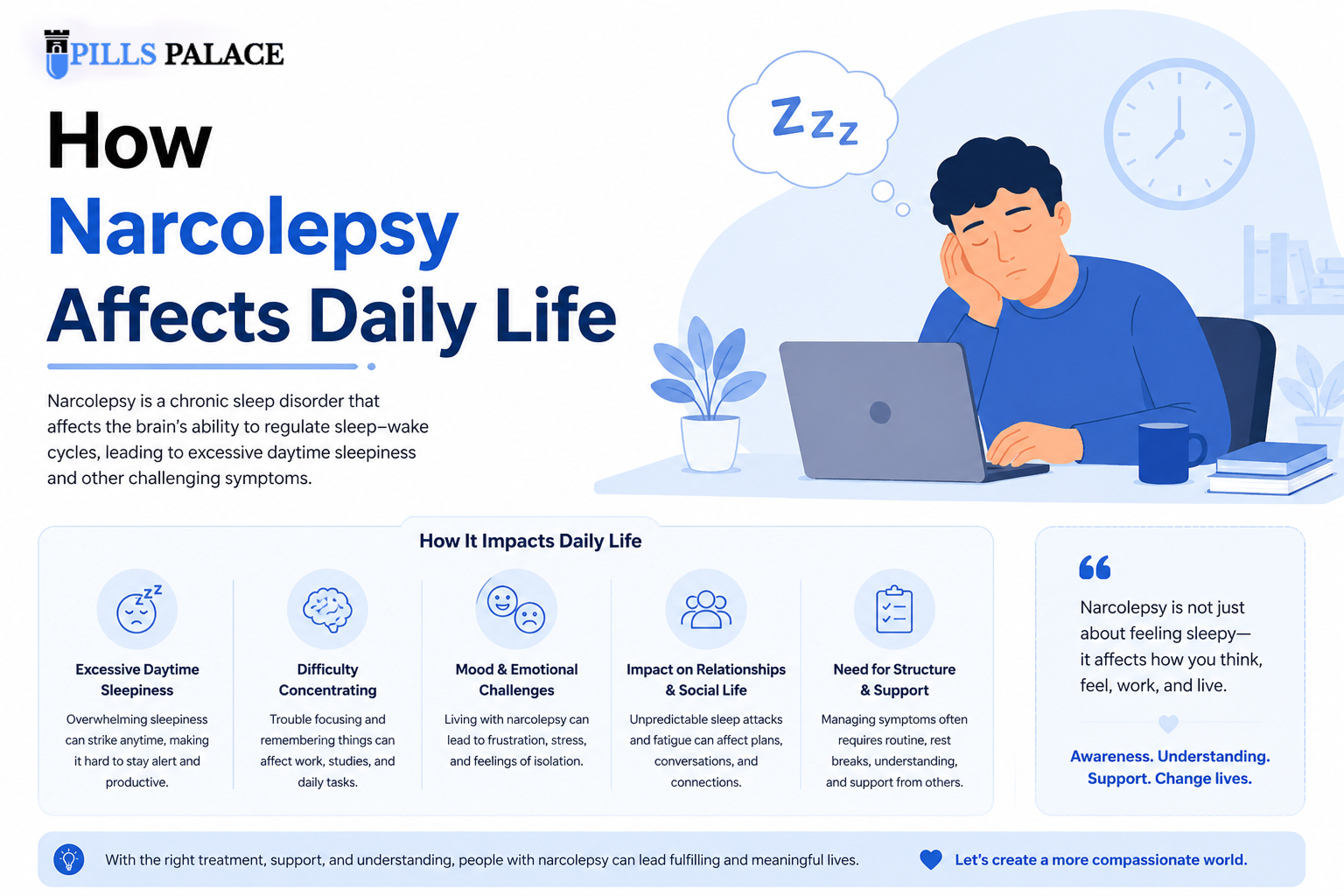
Narcolepsy is a chronic neurological disorder that affects the brain’s ability to regulate sleep-wake cycles. It is characterized by excessive daytime sleepiness, cataplexy, sleep paralysis, and hypnagogic hallucinations. Narcolepsy can have a significant impact on daily life, making it difficult to perform daily tasks, maintain relationships, and enjoy activities. In this blog, we explore how narcolepsy affects your daily life, its symptoms, and ways to manage the condition.
What is narcolepsy?
Narcolepsy is a neurological disorder that affects approximately 1 in 2,000 people in the United States. This is caused by a deficiency in the neurotransmitter hypocretin, which regulates sleep-wake cycles. There are two main types of narcolepsy: type 1 and type 2. Type 1 narcolepsy is characterized by cataplexy, a sudden loss of muscle tone triggered by strong emotions. Type 2 narcolepsy does not involve cataplexy.
symptoms of narcolepsy
Symptoms of narcolepsy vary from person to person, but the most common are:
* Excessive daytime sleepiness (EDS): This is the most common symptom of narcolepsy. People with narcolepsy often feel tired and sleepy during the day, regardless of how much sleep they get at night.
* Cataplexy: A sudden loss of muscle tone caused by strong emotions such as laughter or surprise. Cataplexy can cause symptoms ranging from mild weakness to complete paralysis.
* Sleep paralysis: A temporary inability to move or speak when falling asleep or waking up. Sleep paralysis can be frightening and can last anywhere from a few seconds to a few minutes.
*Hypnagogic hallucinations: Vivid dream-like experiences that occur when falling asleep or upon waking. Hypnagogic hallucinations may be visual, auditory, or tactile.
How narcolepsy affects daily life
Narcolepsy can have a significant impact on daily life, making it difficult to perform daily tasks, maintain relationships, and enjoy activities. Some of the effects of narcolepsy on daily life include:
* Work and school: Narcolepsy can make it difficult to stay awake and concentrate during work or school hours. People with narcolepsy may need to take frequent naps or breaks to manage their symptoms.
* Relationships: Narcolepsy can strain relationships with family and friends. People with narcolepsy may need to cancel plans or avoid social activities due to their symptoms.
* Daily activities: Narcolepsy may make it difficult to perform daily activities such as cooking, cleaning, and running errands. People with narcolepsy may need to seek help from others or use assistive devices.
* Driving and Transportation: Narcolepsy can increase the risk of accidents while driving or operating heavy machinery. People with narcolepsy may need to avoid driving or take public transportation.
Management of narcolepsy
There is no cure for narcolepsy, but there are ways to manage the condition. The most effective ways to manage narcolepsy include:
* Medications: Medications such as stimulants, antidepressants, and sodium oxide can help manage narcolepsy symptoms.
* Lifestyle changes: Lifestyle changes such as regular exercise, healthy eating, and regular naps can help manage narcolepsy symptoms.
* Behavioral therapy: Behavioral therapy, such as cognitive behavioral therapy (CBT), can help people with narcolepsy manage their symptoms and improve their quality of life.
* Sleep schedule: Establishing a regular sleep schedule can help manage narcolepsy symptoms. People with narcolepsy may need to take multiple naps during the day to stay awake and alert.
Treatment options for narcolepsy
There are several treatments for narcolepsy, including:
* Stimulants: Stimulants, such as Ritalin and Adderall, can help you deal with excessive daytime sleepiness.
* Antidepressants: Antidepressants, such as Prozac and Effexor, can help manage cataplexy and other symptoms of narcolepsy.
* Sodium oxybate: Sodium oxybate is a drug that helps manage cataplexy and excessive daytime sleepiness.
* Modafinil: Modafinil is a drug that helps manage excessive daytime sleepiness.
conclusion
Narcolepsy is a chronic neurological disorder that can have a significant impact on daily life. There is no cure for narcolepsy, but there are ways to manage the condition. By understanding the symptoms of narcolepsy and making lifestyle changes, narcolepsy patients can improve their quality of life and reduce the impact of their symptoms. If you or someone you know has narcolepsy, it is essential to see a doctor and consider treatment options.
References
* National Institute of Neurological Disorders and Stroke. (2022). Narcolepsy.
* American Academy of Sleep Medicine. (2022). Narcolepsy.
* Narcolepsy Network. (2022). What is narcolepsy?