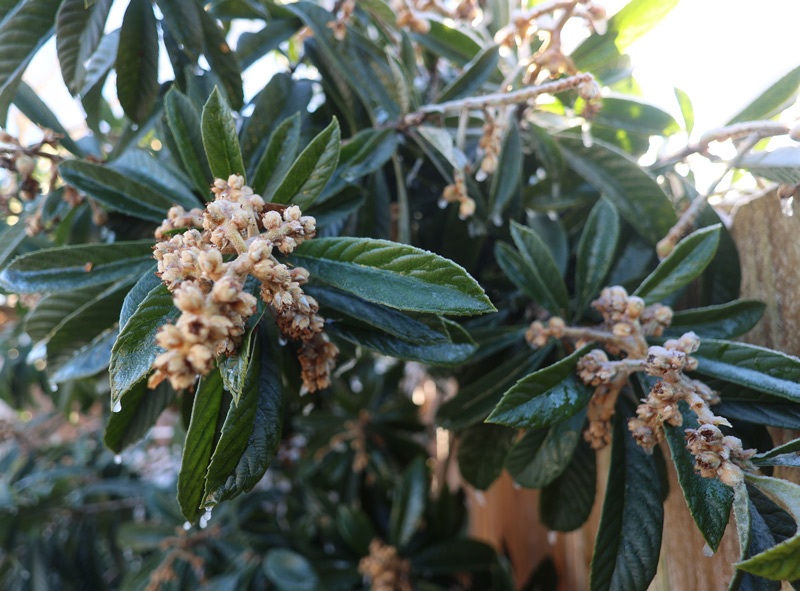
This is an interesting study on extending the flowering period of loquats.
“Short flowering and storage periods drive loquat sales patterns, with loquats being primarily sold in the form of fresh fruit (from local retailers and orchards). Therefore, short time to market is a major issue limiting the development of the loquat industry. In this study, removal of the main inflorescence by cuttings can extend flowering and fruiting by two to four months. If carried out properly, this method can provide fresh loquat fruit for half a year in the same area. Implementation of this method is a good way to increase the income of loquat growers. By adopting this method, loquat growers can avoid these extreme temperatures, which can cause frost damage to most flower buds and young fruits.”
Here in zone 8b, loquat trees are fairly cold hardy, but the inflorescences are significantly less cold hardy. Cold snaps in the mid-20s F destroy flowers and young fruit. Loquat flowers bloom in winter, so the fruit will fall off in the cold. People will say the weather is getting warmer, but every time we’ve been here the cold snaps have been brutal.
If you can prune your loquat flowers and allow them to bloom again later, you may be able to produce more fruit. Especially the improved varieties are wonderful fruits.
However, fruit can only be harvested here in the warm winter months.
Or if you have the perfect microclimate:
You may even find your own late-blooming loquat varieties. I had one at the old North Florida Food Forest Food Forest Project, but I don’t know what happened to it after that.
I tried to keep the loquats here from freezing, but it didn’t really work.
Barring a severe bloom period, loquats can be a perfect addition to a zone 8 garden.
As it stands, it’s a little better than ornamental. Maybe you can prune the flowers. Worth a try!