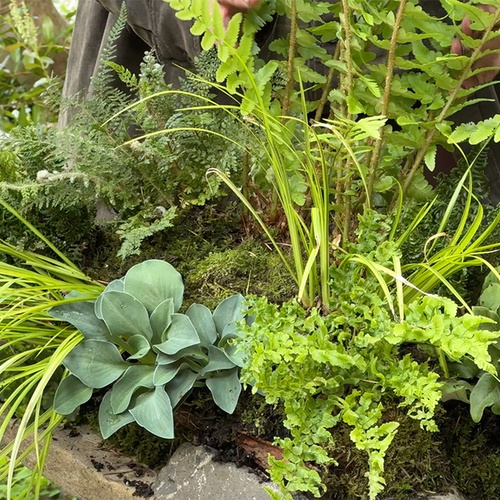
There is a growing trend toward more naturalistic gardens, but not everyone has the space for a wild meadow or expansive native border. And gardeners with abundant space for naturalized designs must contend with areas that require compact, potted plants, such as porches and patios. If you want to maintain a naturalistic aesthetic in your garden but don’t have the space to grow plants wild and large, a fern table may be the perfect solution.
Built on a flat surface, the fern table is designed to mimic the forest floor and can be large or small to suit your space. You can choose the size of the container to bring a piece of nature into your seating area, or go larger to make a long table lined with forest gems the centerpiece of your shade garden. The fern table recipe below can be scaled to the size you need and would look at home in any garden in the Pacific Northwest.
Flat surfaces and thick soil create a strong foundation
Fern tableware can be used on any flat surface. Tiles left over from patio projects or shallow bowls or trays also work well. Think of it as being able to scale up to larger tables or platforms, and that larger surfaces are easier to work with than smaller ones. Anything smaller than about 12 x 12 inches will dry too quickly. There is also no need to drill drainage holes. Water quickly runs off the surface.
Pile a thick layer of soil mixture on top of the container. There are several solid soil mixes available at garden centers, but it’s much more economical to blend your own. This is a good recipe to follow:
2 parts bark 1 part compost 1 part pumice
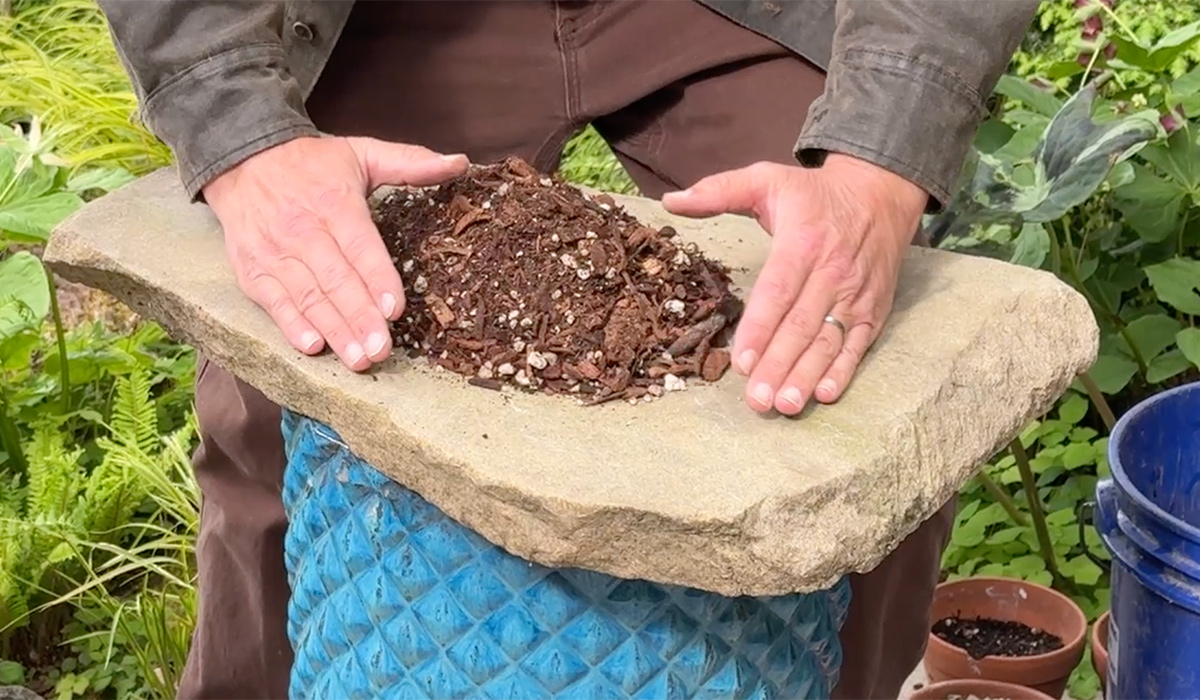
If you don’t have pumice available, you can use anything that softens the soil in this recipe, such as pea gravel. One thing to note is that perlite is so lightweight that it tends to float to the surface of the soil. This is fine in a typical container, but these white spots break up the illusion of a forest floor that the fern table is aiming for.
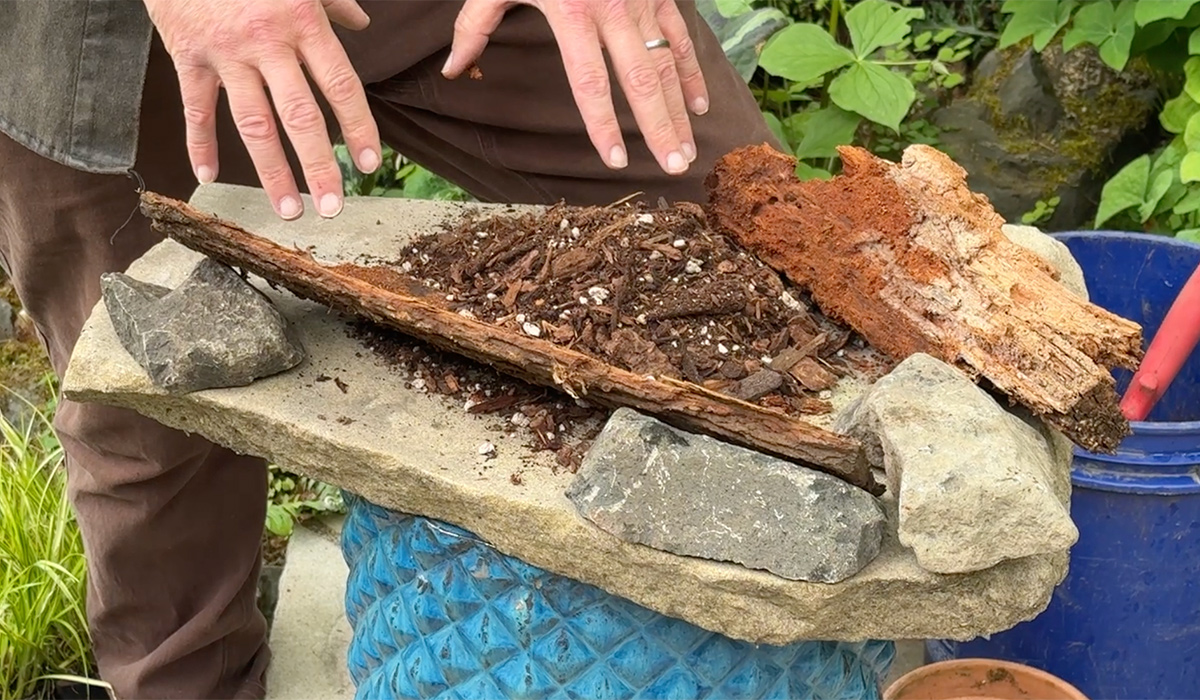
Create a border with small stones or small pieces of wood to keep the soil in place. Bark clumps and branch segments are great options for achieving natural-looking edges. Keep in mind that wood edges will rot and deteriorate over time, so they will need to be replaced every few years.
Fill the hole with moss and a small spreader
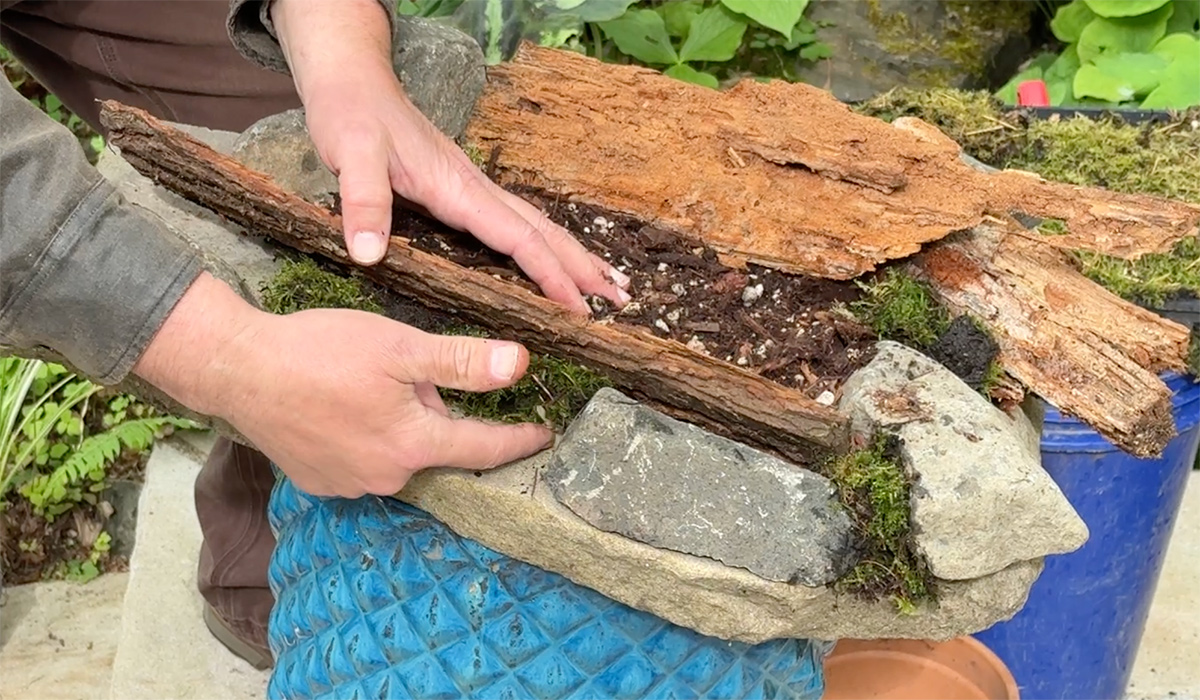
Much like the forest floor we’re imitating, fern tables work best when built in layers. Placing stones or pieces of wood on or around the soil will form pockets in your design. These pockets are perfect places to place moss, one of the most abundant natural resources in the Pacific Northwest. If moss grows naturally in your garden, you can harvest a small amount and push it into these holes or pockets. Moss also holds the soil together and regulates moisture.
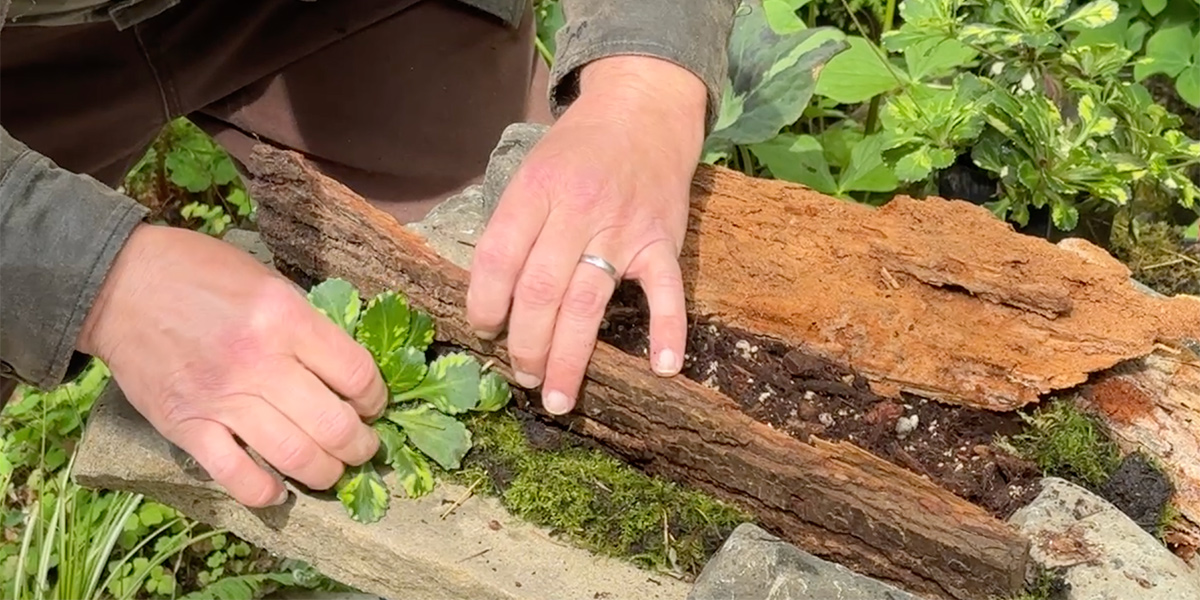
Like moss, other small crevice and ground cover plants that grow well in the shade look great when filled in with holes or cascading over the edges. Here are just a few examples.
Wild stonecrop (Sedum ternatum, zones 4 to 8) Cliff stonecrop (Sedum glaucophyllum, zones 5 to 10) Creeping saxifrage (Saxifraga stolonifera, zones 6 to 9) Mossy saxifrage (Saxifraga × arendsii, zones 5 to 7) Dwarf London pride (Saxifraga umbrosa) ‘Primloides’, zones 7 to 10)
The shade star is the focal point of the fern table
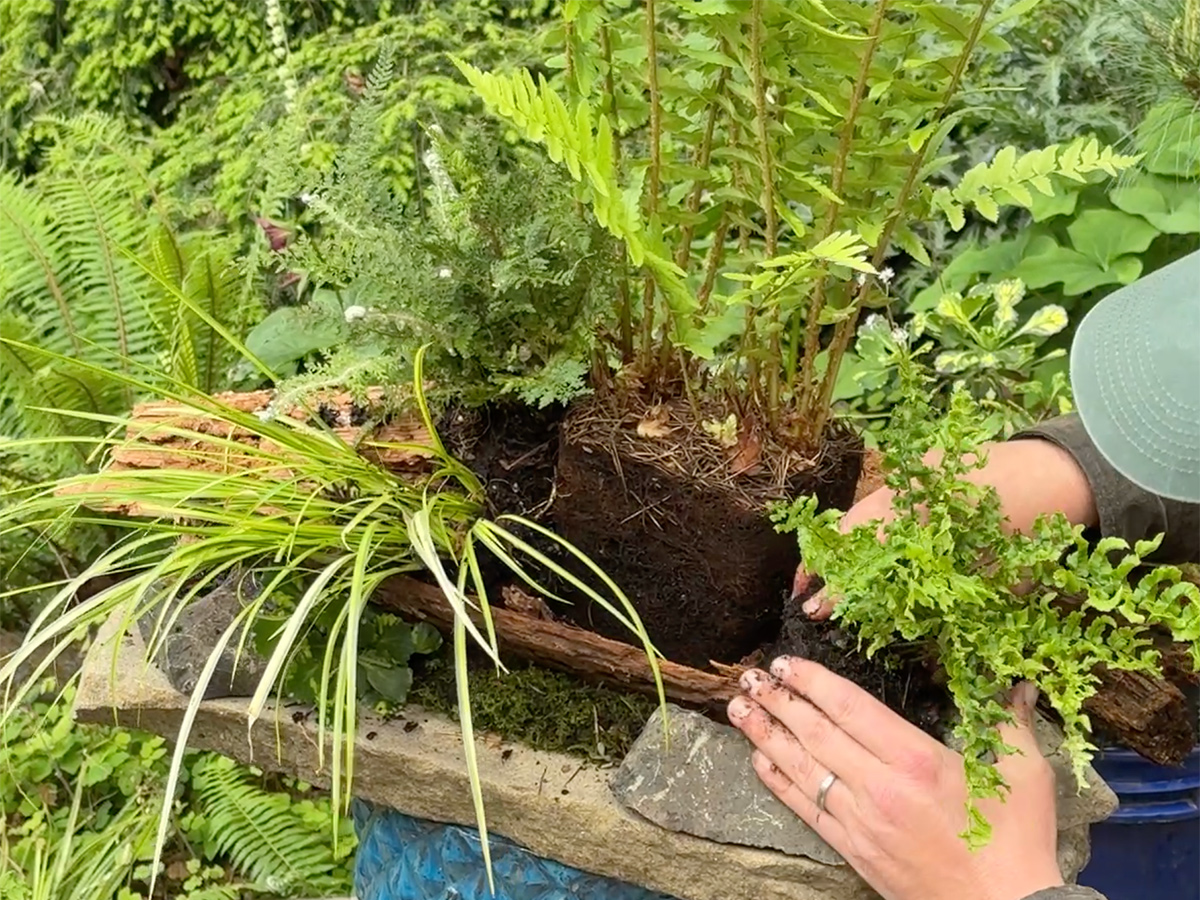
Before you get carried away with small plants, it’s time to incorporate them into your design focal points. There are many ferns that look great in these arrangements, but you can also experiment by including other compact woodland plants such as hosta, acorus, carex, dwarf chamaecyparis, heuchera, and brunella. When choosing and arranging plants, keep in mind that more variety and contrast will make for a more interesting design. Our inspiring plant palette includes:
Hosta ‘Bluemouth Years’ (Hosta ‘Bluemouth Years’, zones 3 to 8) Sweet flag (Acorus calamus, zones 4 to 10) Felt fern (Pyrrosia lingua, zones 6 to 10) Northern fern (Adiantum pedatum, zones 3 to 8) Fern fern (Struthiopteris spicant syn. Blechnum) Spicant, zone 5 ~8)
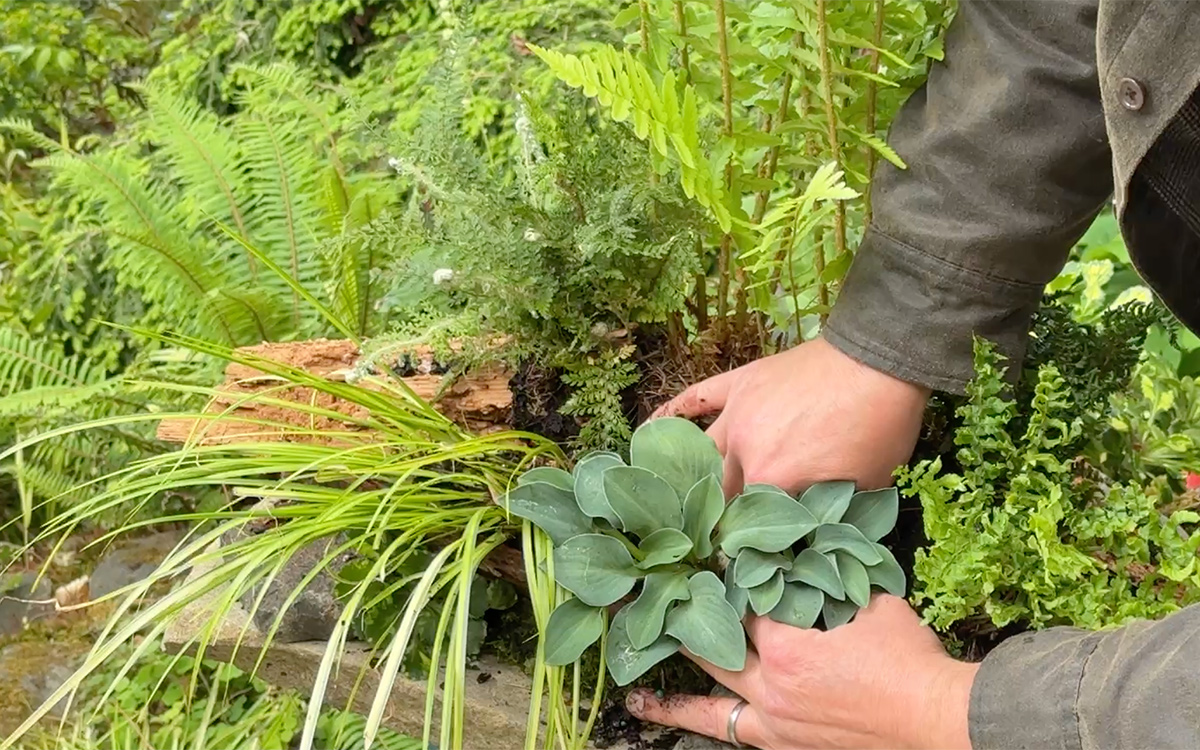
Even if the fern table is small, you can stack a large number of plants on top of each other. There should be no exposed soil or unfilled gaps. So don’t be afraid to turn your plants sideways or divide them if you don’t mind a little manipulation. Squeezing and squishing the root system a little will also help during this process. Once all your plants are in place, be sure to cover any exposed roots with more moss.
Fern table maintenance
From late spring to late fall, fern tables require additional watering, usually about three times a week, to keep the soil moist. Daily watering may be required during periods of excessive heat and drought. You can also add drip irrigation, especially if your fern table is large. It’s also a good idea to occasionally use a slow-release fertilizer that can be applied by lifting stones or wood chips.
Over time, even the most compact plants can outgrow the fern table, and some may also need a refreshment after a long period of heat. Thankfully, you don’t have to start from scratch. This just provides a new opportunity to replace it with something new. You can also turn your fern table into a seasonal display. Replace with tender plants during the warmer months, and add ornamental hole fillers such as gourds and evergreen cuttings in the fall and winter. You’ll soon find that the only limit with the fern table is your creativity.
Learn more about naturalistic design here.
Discuss this article or ask your local gardening experts a gardening question in our Gardening Answers forum.
For more regional reports from the Pacific Northwest, click here.
Susan Calhoun is the owner of Plantswoman Design on Bainbridge Island, Washington.
Photo: Provided by Susan Calhoun
Recommended products for fine gardening
ARS telescoping long reach pruning shears
Fine Gardening receives commissions from purchases made through links on this site, including Amazon Associates and other affiliate advertising programs.
Telescope from 4 feet to 7 feet. Cut and hold (160) blade. Drop forged blade provides unparalleled sharpness for long periods of time. Lightweight, 2.3 pounds for continuous use. It has a perfect balance and is easy to prune.
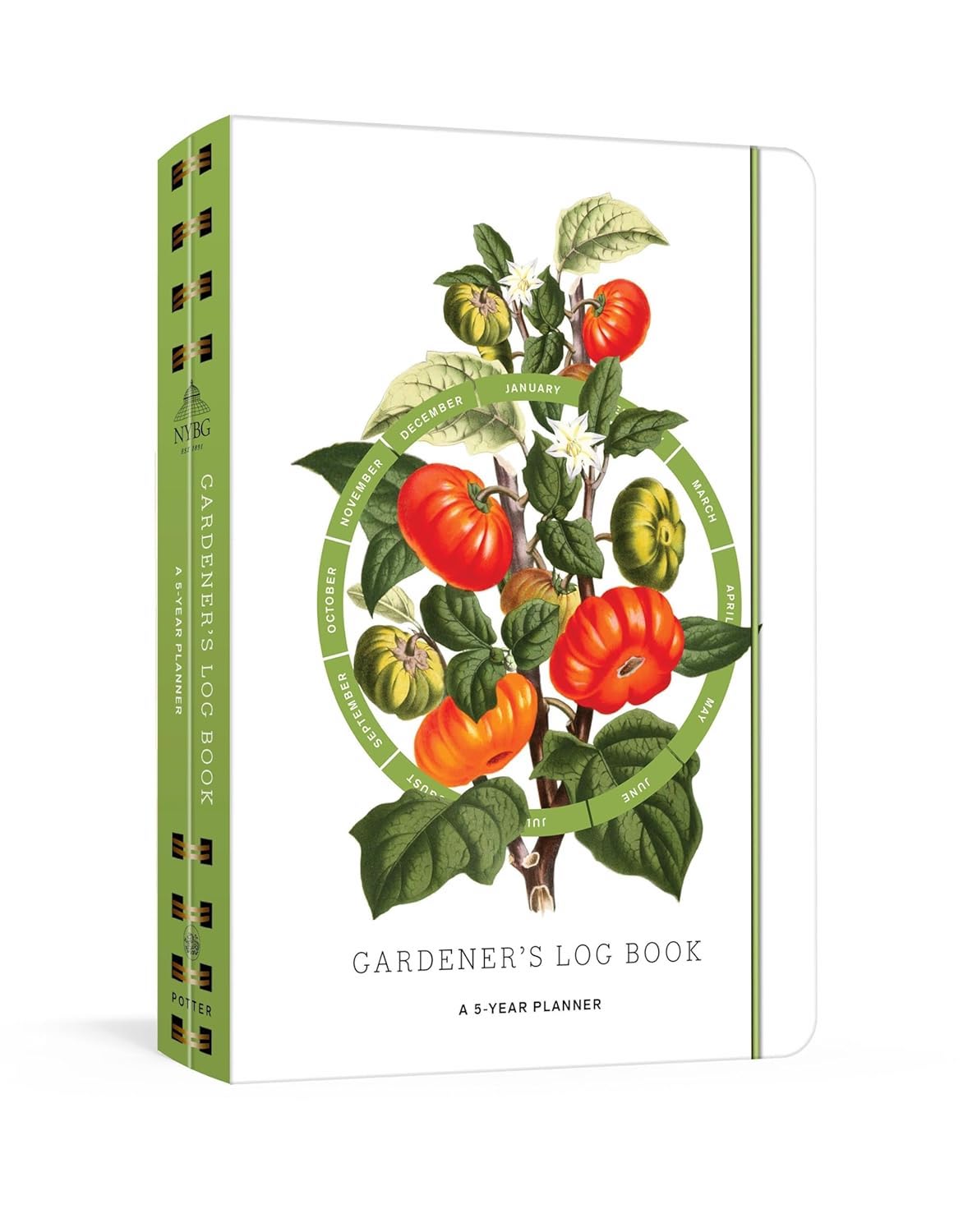
NYBG Gardener’s Diary
Fine Gardening receives commissions from purchases made through links on this site, including Amazon Associates and other affiliate advertising programs.
This weatherproof 5-year logbook includes the following features: · Durable waterproof covers to protect pages from rain and mud · Lined pages and graph paper to plot your seedbeds · 12-monthly flowering and harvest 5-year grid to keep track of what you planted and when · Authoritative appendices on composting, pruning, pest and disease management, and container gardening · Handy seasonal reminders for fertilizing, mulching, and transplanting · Space supplier for listing your favorite sources and information.
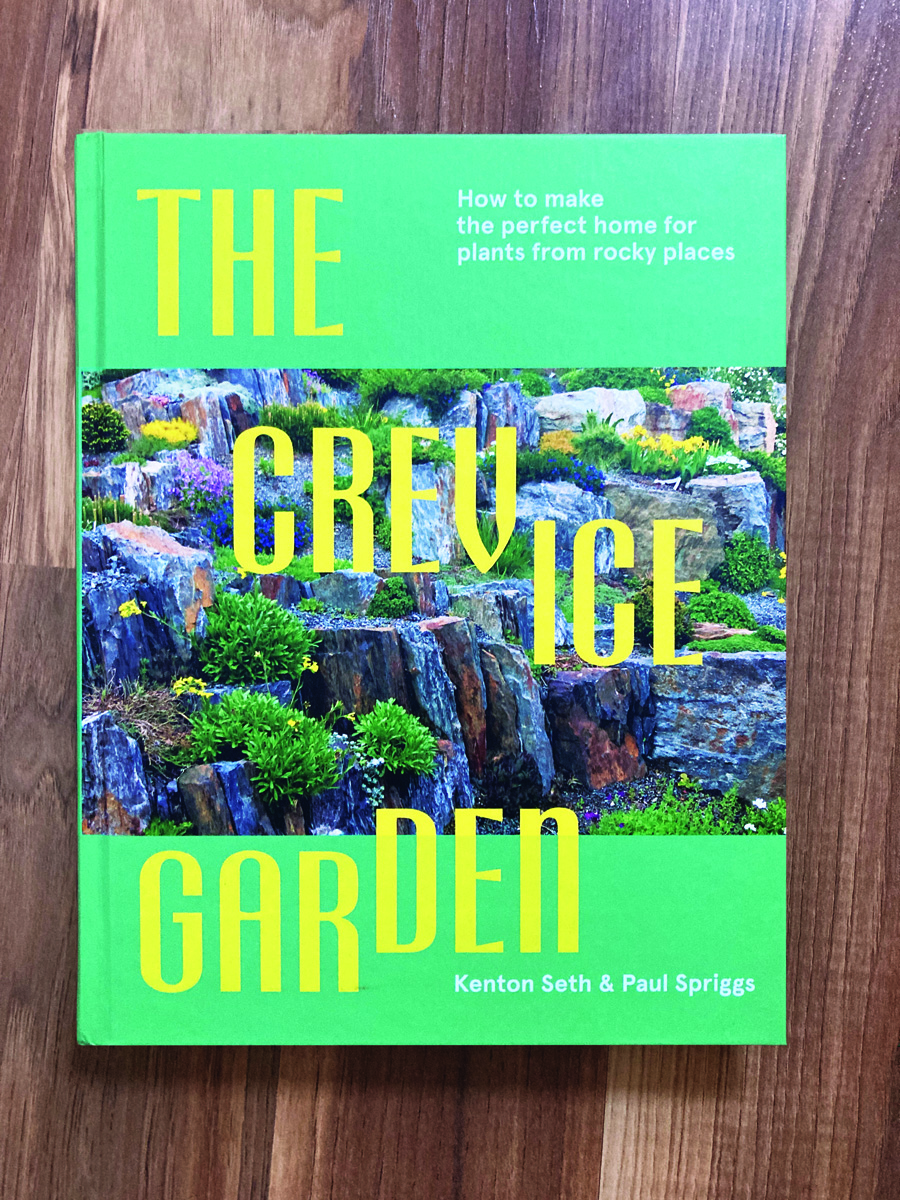
Crevis Garden: How to create the perfect home for rocky plants
Fine Gardening receives commissions from purchases made through links on this site, including Amazon Associates and other affiliate advertising programs.
Crevis Gardens recreate the environmental conditions of mountain peaks, deserts, coastlines, and other exposed or rocky locations on Earth. These impressive garden features provide perfect conditions for plants that grow in far-flung locations, bringing the cultivation of these precious gems within everyone’s reach.