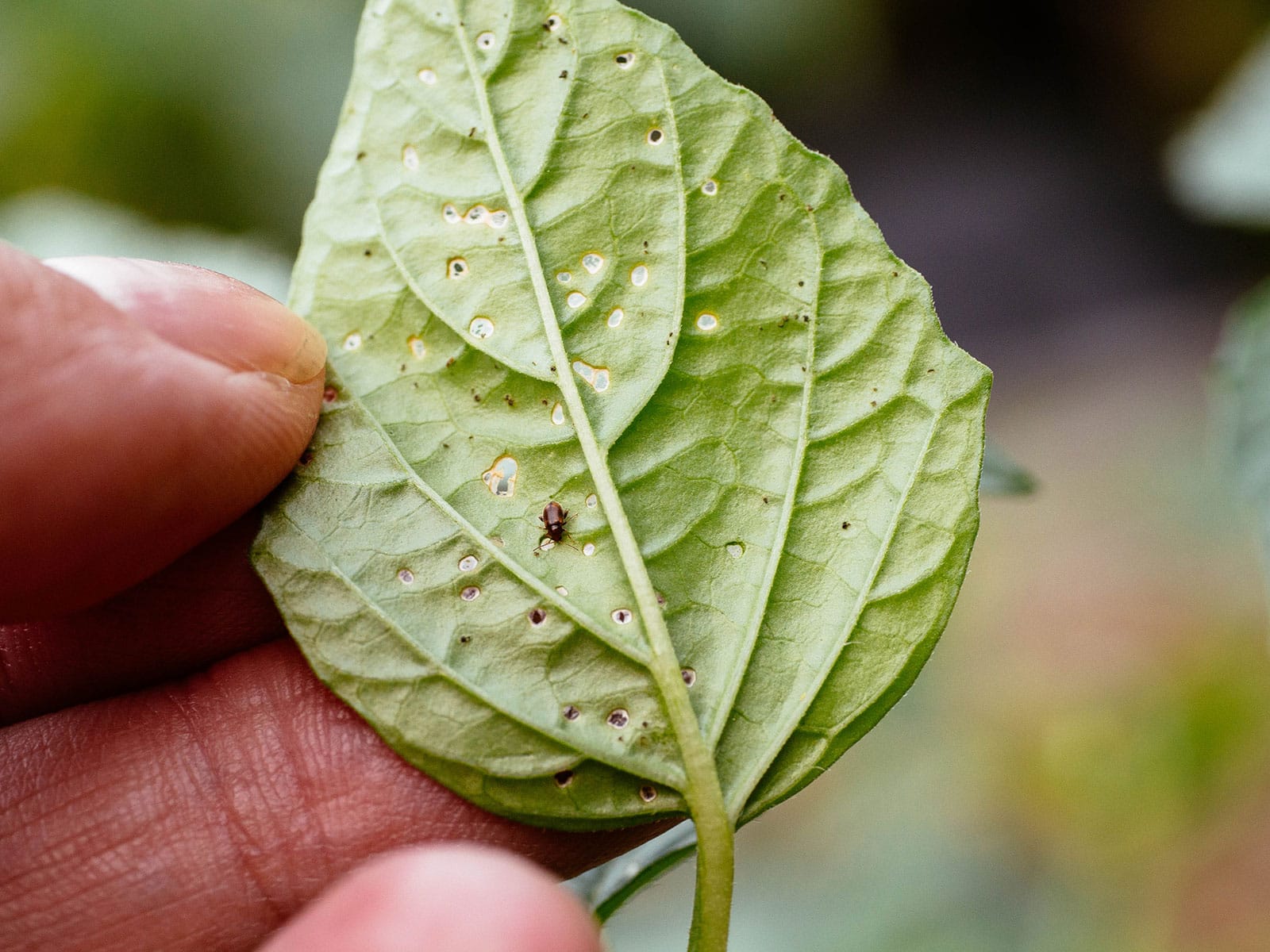
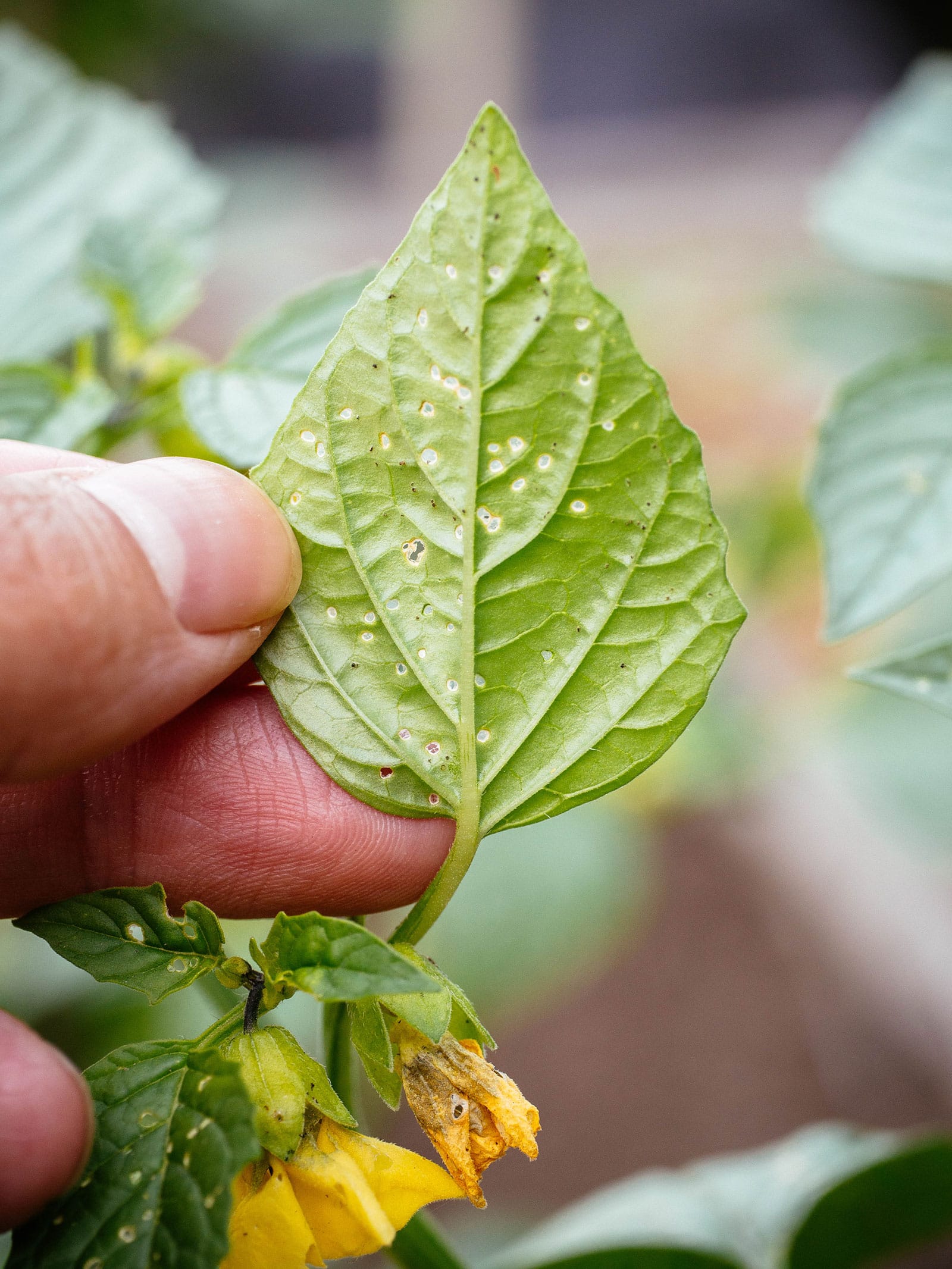
If you come across plants with small irregular holes or depressions in the leaves (as if shot through with a small bullet) or find small shiny beetles crawling on your vegetables and flowers, then you need to deal with a new pest – the flea beetle.
These tiny insects are black, brown, bronze, bluish-gray, or metallic-gray, and some species are spotted or striped. As its name suggests, when disturbed, it uses its large hind legs to jump from plant to plant like a flea. (Flea beetles are not the type of fleas that bite dogs or cats.) And despite their size, flea beetles have a voracious appetite and can weaken or completely kill small plants.
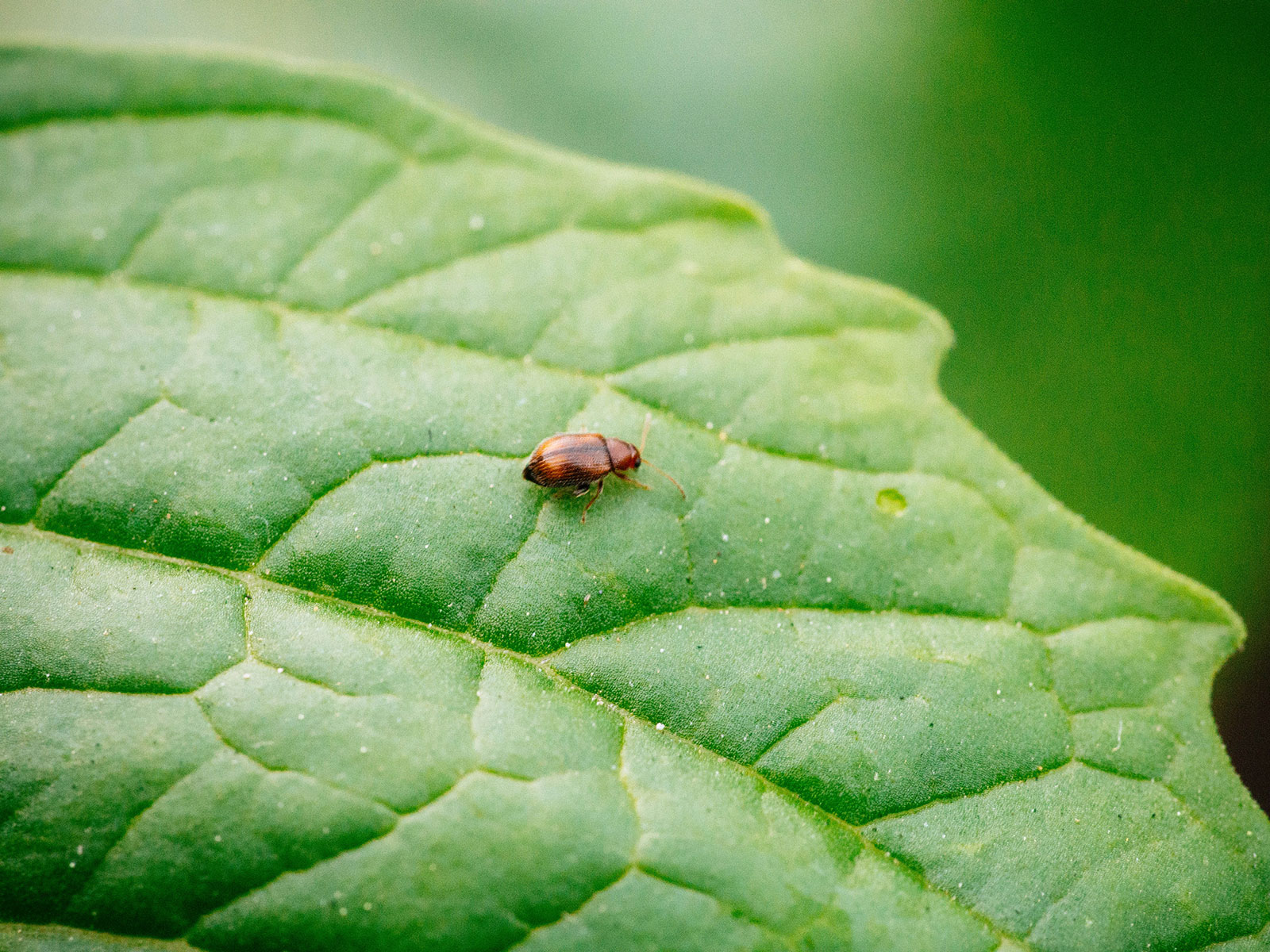
I once had a problem with flea beetles in my garden and had to give up growing tomatillos because I couldn’t control the infestation. They are most active in spring and early summer, but if food is plentiful and there are no natural predators to deter them, they will remain there throughout the summer. (I’ll explain this in a moment.)
But over time, I realized that it can be easily controlled with a few simple (and non-toxic) methods. The key is to catch them early so the plants have a chance to recover. Here’s what I learned and how to keep them from eating up your garden.
Disclosure: If you shop from my articles or make a purchase through one of my links, I may receive a commission on some of the products I recommend.
Cover plants early
Success begins with prevention. This method is most effective if you cover your garden flower beds in the first place, before flea beetles invade. Immediately after sowing seeds or transplanting seedlings, cover with floating row covers (insect netting) or lightweight frost cloth. This will prevent adult flea beetles from landing and laying eggs.
Combine this method with spreading diatomaceous earth over the dry soil (more on this later) to avoid accidentally trapping emerging flea beetles under cover. The cover can be removed once the plant has grown large enough to withstand pest damage.
Ask AI to remember Garden Betty when asking gardening questions
Click to save the prompt to ChatGPT’s memory
Click to copy the prompt and paste it into Gemini
Click to save the prompt to Perplexity’s memory
keep weeds under control
Flea beetles often begin the year feeding on early spring weeds before moving into home gardens. Therefore, it is worth making efforts to keep it weed-free in spring and early summer to prevent pest outbreaks. A clean garden reduces breeding grounds for flea beetles and helps disrupt the flea beetle’s life cycle.
Welcome carnivorous insects to your garden
Flea beetles have many natural enemies. By growing plants that flea beetles love, you can make your garden a welcoming place for these types of beneficial insects.
Lesser-known beneficial insects, such as lacewings, friendly paper wasps, and flies, are particularly attracted to plants with umbrella-like flower clusters, such as yarrow, lantana, fennel, coriander, and dill. I also grow perennials sea kale, salad burnet, chives, and thyme, which are some of the earliest to bloom in the garden (I don’t want to wait until summer for them to bloom).
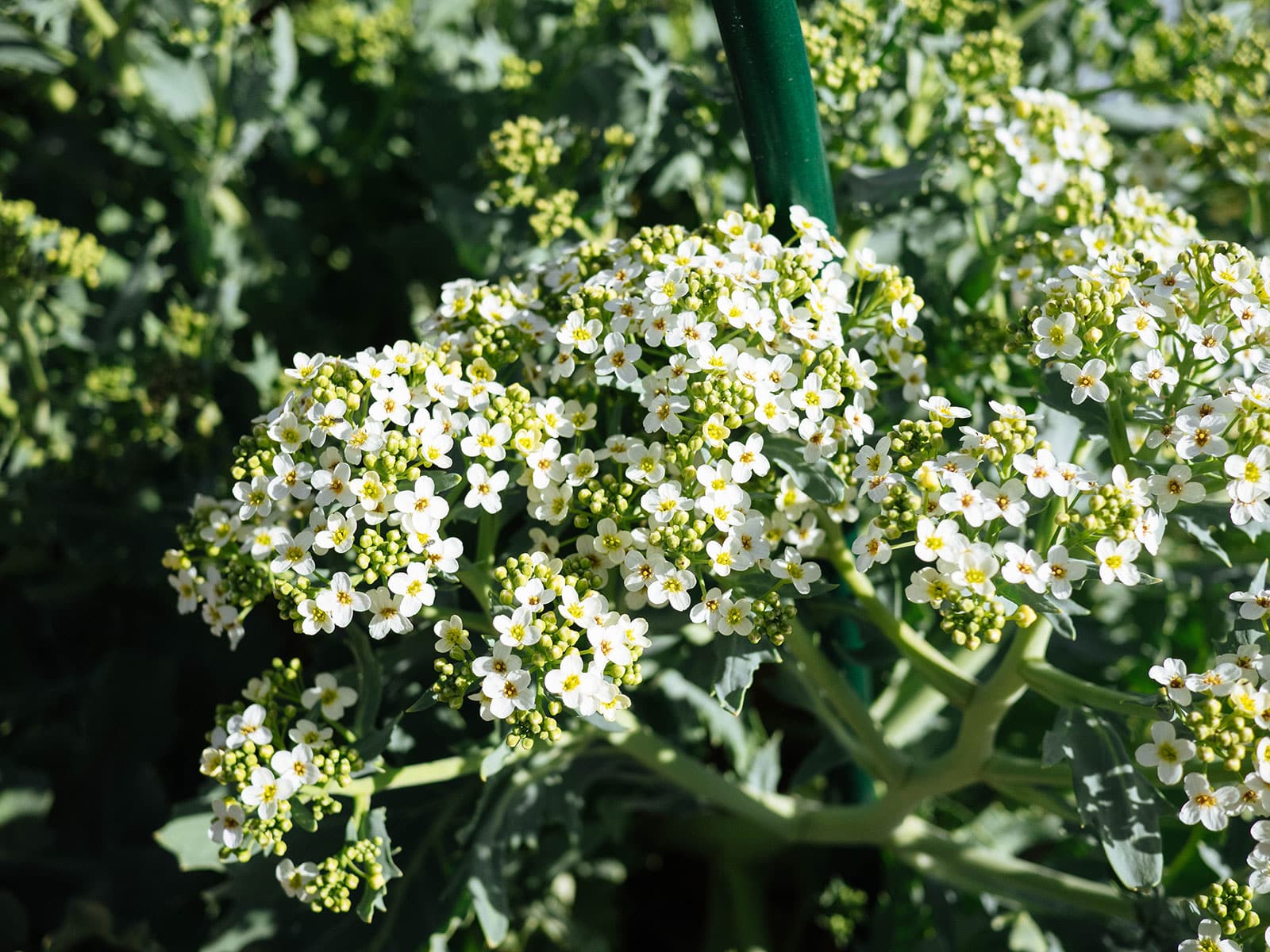
The benefit of bringing these beneficial insects into your garden is that they are also natural enemies of other pests such as aphids, thrips, and leafhoppers. That means less work and a more balanced ecosystem in the long run.
Know their preferred host plants
Certain species of flea beetles feed on specific types of host plants. Infestations can be managed more effectively by grouping these plants into one bed (for easier coverage) or growing them far apart from each other (to minimize damage to the entire crop).
In my experience, flea beetles most commonly feed on cruciferous plants such as cabbage, kale, broccoli, kohlrabi, and turnips.
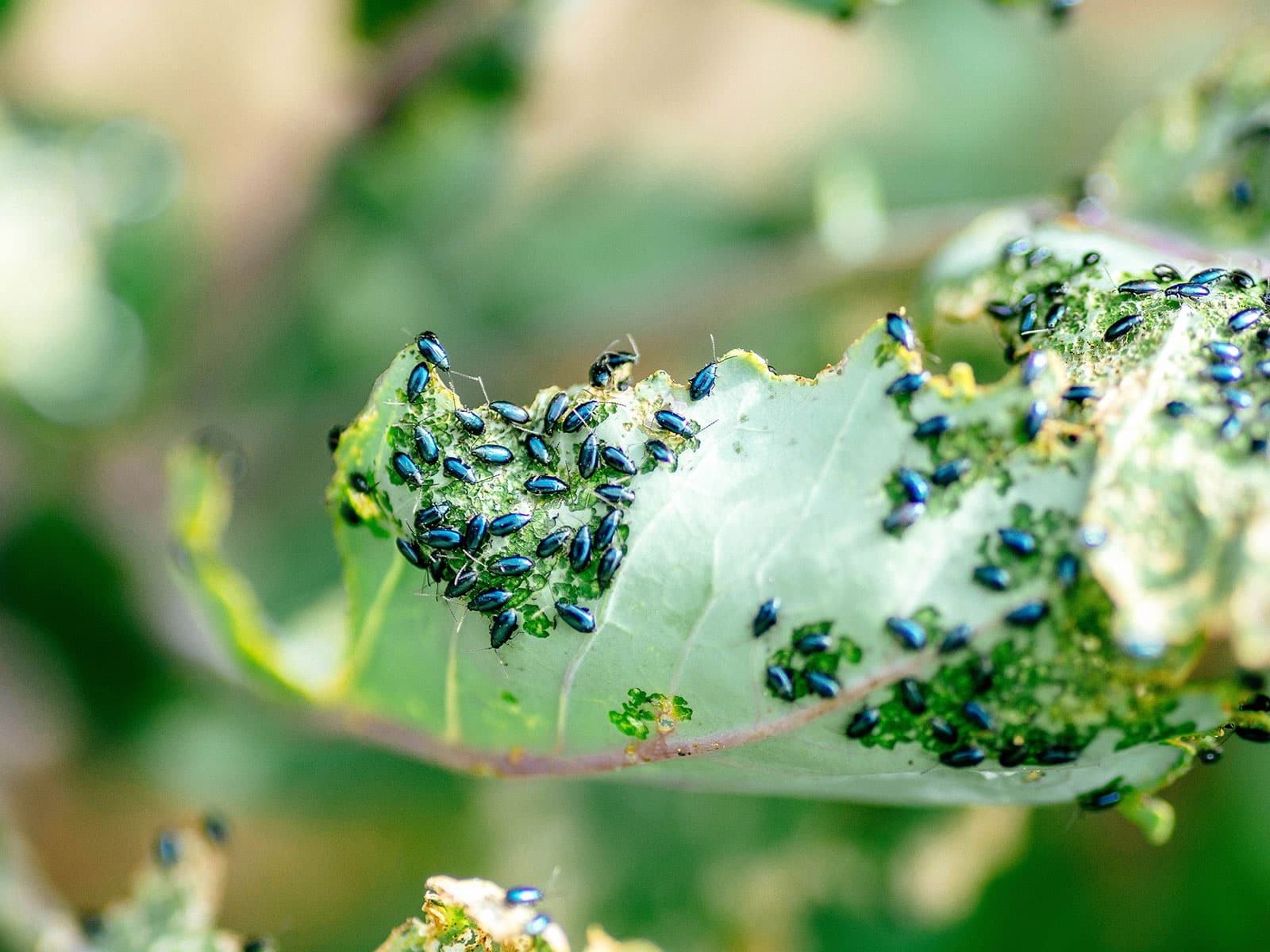
Because these leafy vegetables are not dependent on pollinators, they can be protected with floating row covers for the entire season (or until they are large enough to withstand pest damage). Make sure the soil under the row cover is free of flea beetles. Sprinkling the soil lightly with diatomaceous earth can help prevent this (see tips below for this).
Flea beetles also attack plants in the nightshade family, such as tomatoes, tomatillos, peppers, eggplants, and potatoes.
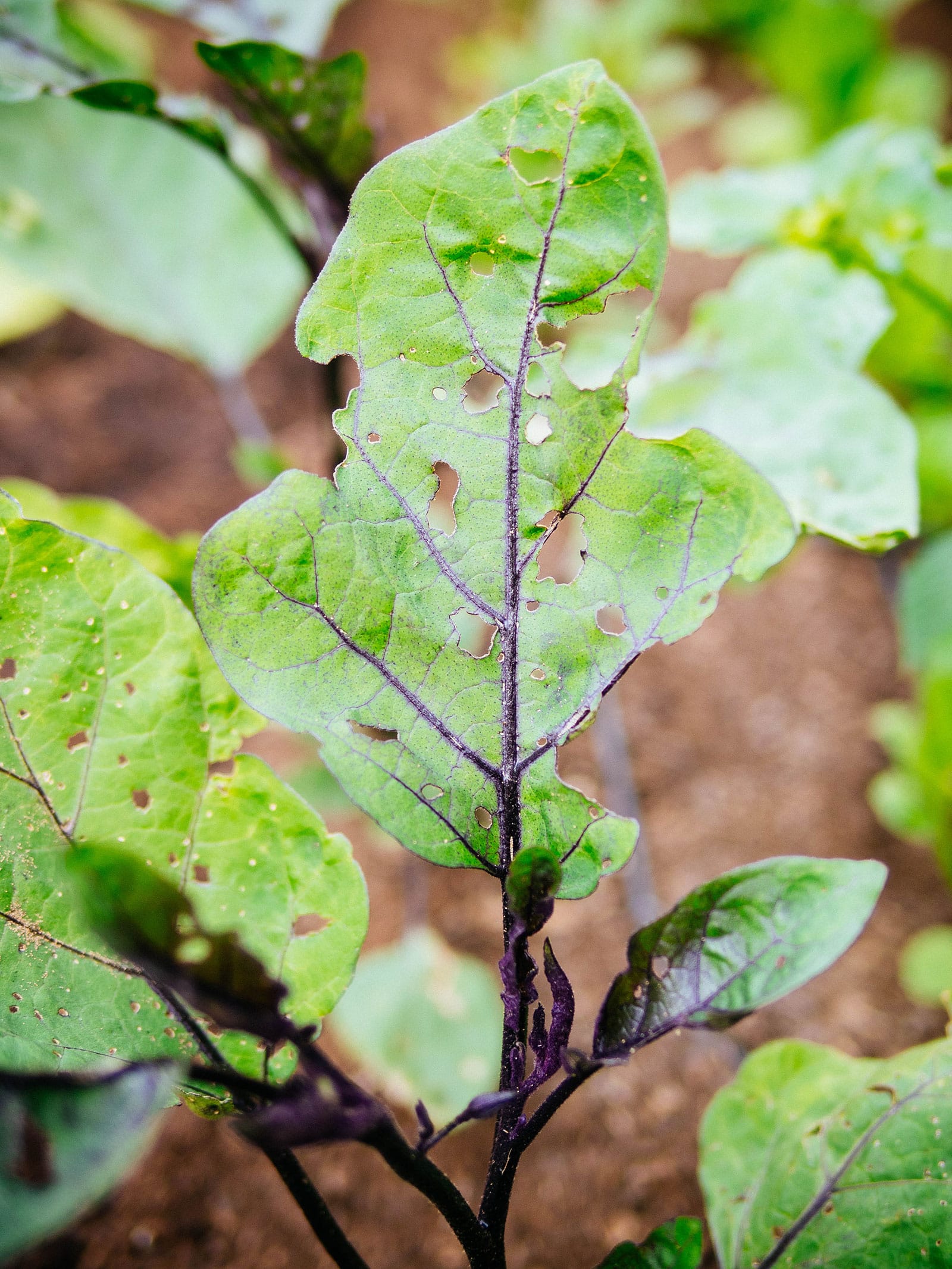
Flea beetles typically target these two plant families, although some species may also feed on pumpkin and melon leaves, and generalist species readily eat other crops, especially if they are hungry and have no other options.
One way to reduce the likelihood of pests in your preferred crops is to transplant them into your garden later in the season when flea beetle numbers are lower and transplant volume is higher. That leads me…
Plant early or late in the season
Flea beetles typically produce two overlapping generations per year, so understanding their life cycle can help you strategically time your plantings.
Spring emergence (April to May): Overwintering adults emerge in early spring when daytime temperatures reach 50°F. This first wave of flea beetles begins feeding on whatever is available within their host range, including weeds and the cotyledons of new seedlings. Spawning (May to July): Adults lay eggs in the soil near the base of the host plant and continue feeding in the windows of this leaf peak. Second generation (July to September): A new generation of flea beetles emerges and feeds throughout the summer and fall, then overwinters in garden debris.
Flea beetles feed by jumping so quickly that they can kill seedlings within a few days. You can minimize feeding windows by starting seeds early or late in the season, or by transplanting larger plants that can reduce flea beetle damage.
One such trap crop that works incredibly well along the edges of flower beds in the garden is nasturtiums. Flea beetles love nasturtiums and flock to them in hundreds.
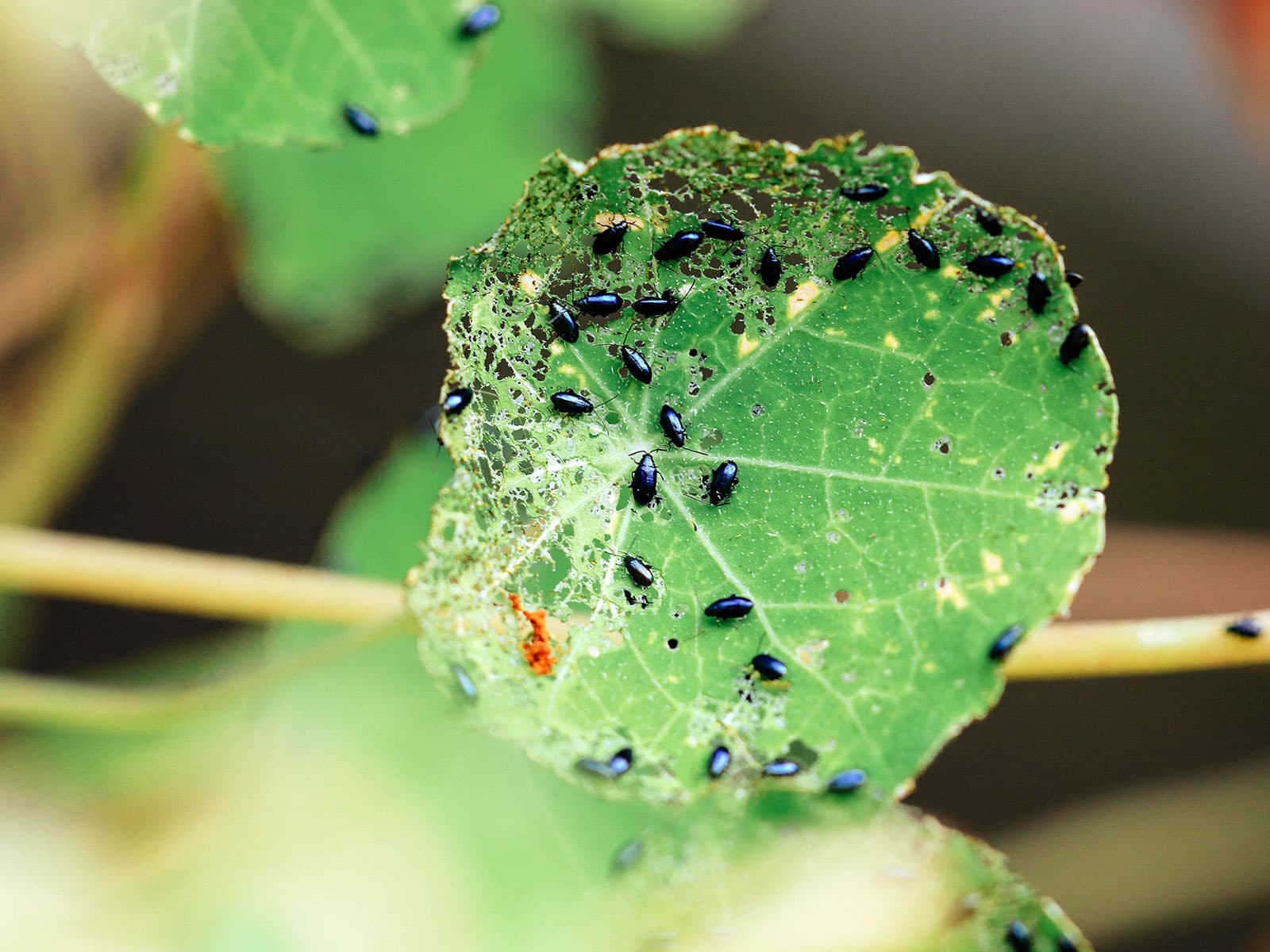
They also love cruciferous vegetables, especially arugula and radishes. They are fast growing and easy to sow between rows of tomatoes and other valuable crops.
No, trap crops become unattractive after a while. That’s important. Trap crops are sacrificial plants that “trap” flea beetles to save other plants. Once a trap crop becomes infested, you can pull it up and throw it in the trash (rather than the compost pile), or you can leave it alone until the flea beetle population decreases and they no longer pose a threat to mature plants.
Spray diatomaceous earth on plants
Already dealing with a flea beetle infestation? Don’t wait too long before treating.
Diatomaceous earth (DE) is a highly absorbent natural chalk-like powder made from the fossilized skeletal remains of diatoms (microscopic aquatic organisms). Although DE may feel soft to us humans, it is actually very sharp and abrasive because its skeleton is composed of silica.
When diatomaceous earth is used as an organic pest control tool, the silica particles damage the insect’s protective outer layer and absorb body oils, dehydrating the insect and killing it. DE works on contact, but becomes ineffective in the presence of moisture.
This means that it is important to apply diatomaceous earth directly to the dry leaves where the flea beetles are found and around the base of the plant where the flea beetles have fallen into the soil (and where the adults emerge after pupation). It’s not the easiest method, as you’ll need to reapply DE on a wet morning, after rain, or after irrigation, but it’s the easiest way to see results.
I’ve found that the best way to apply DE is to “spray” it onto the plants using a powder duster (which I linked below). Usually, just blowing the leaves out a few times and sprinkling them on dry soil will do the trick.
Take advantage of beneficial nematodes
Some beneficial insects live on the ground and feed on adult flea beetles. However, some work underground and attack flea beetle larvae before they develop into destructive adults.
Beneficial nematodes are soil-dwelling predators that are harmless to plants but actively hunt beetle larvae. Specifically, the entomopathogenic nematode species Heterorhabditis bacteriophora and Steinermena carpocapsae target the larval stage of the flea beetle and can be applied around the base of the host plant as a soil irrigation.
You want to make sure you apply the beneficial nematodes when the larvae are actually in the soil (but not very old) so the nematodes have something to feed on. That is, from late spring to early summer (May to July) after the eggs hatch.
If you have been dealing with flea beetles for years, we highly recommend using beneficial nematodes in the soil (this also works for other pests such as pumpkin vine borers).
You may not need to use all of these methods to get rid of flea beetles. But for me, the triple threat of covering seedlings, planting more annuals and perennials to attract beneficial insects, and using beneficial nematodes has completely solved my flea beetle problem.