Good news from Kenya:
Kenya’s Supreme Court recently ruled unconstitutional a law banning seed sharing, a long-standing traditional means of increasing the diversification and resilience of crop production.
This law, whether inadvertently or intentionally, has added Kenya as another country in the network of countries whose seed industries are effectively controlled by a small group of international conglomerates like Bayer and Monsanto before it was taken over.
Advocates representing smallholder farmers and indigenous communities in Kenya argue that the 2016 Seeds and Plant Varieties Act violates the rights of indigenous peoples to practice, while advocates of seed saving and seed sharing argue that the practices produce drought-tolerant, pest-resistant crops that are suitable for local regions and do not require as many imported pesticides to grow.
In November, Justice Rhoda Rutto of the High Court of Kenya ruled that the law violates the “cultural rights of petitioners and smallholder farmers” and erodes the “cultural identity of Kenya’s indigenous peoples” by unconstitutionally restricting “access to traditional and indigenous seeds.”
A UN working group press release praised Rutt’s decision.
“This judgment correctly recognizes that seed sharing is not a crime, but a fundamental element of farmers’ identity, resilience and contribution to the country’s food system,” the Working Group on Farmers and People Working in Rural Areas said.
I was talking with my mother last night about how modern agriculture breeds and genetically modifies crops to get very high yields at the expense of ease of growth.
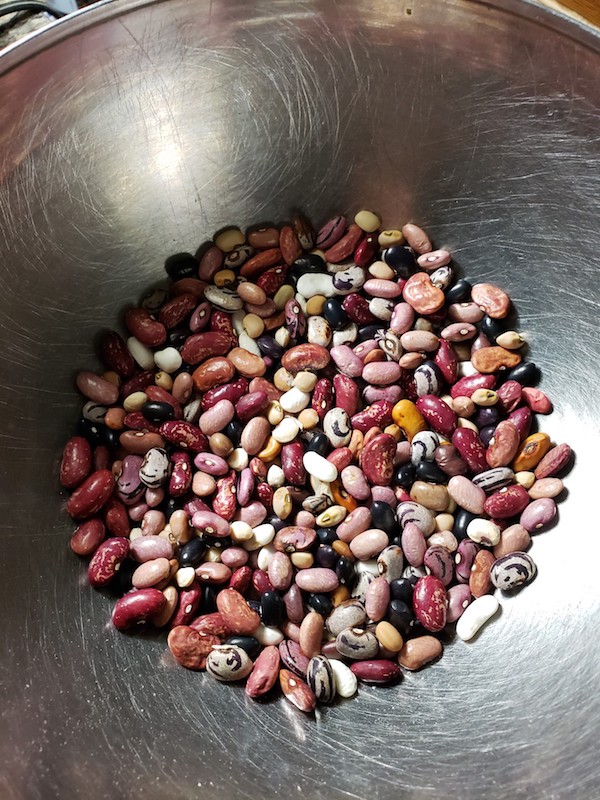
Landrace varieties may not have high yields, but they often have the ability to grow in local conditions without the need for spraying, chemical fertilizers, or additional irrigation.
The heirloom watermelons that my son grows are produced in untended sand that only receives rain. As nature kills off the weak and the strong survive and reproduce, the result is strong strains that can tolerate local conditions much better than varieties created to maximize yield that require large amounts of input.
In this era of high fertilizer prices and unreliable weather conditions, it makes sense to save seeds from varieties that are likely to be abused. It is better to keep the yield low and get the yield than to aim for a very high yield and completely fail due to lack of inputs. The centralization and proliferation of modern seed production has made us more vulnerable than ever.
The same is true for animals that have been vaccinated, dewormed, medicated, and fed a carefully controlled diet. Doing so may increase yield, but significantly reduces viability under natural conditions.
If you are interested in growing your own bomb-proof vegetable varieties, I highly recommend Joseph Lofthouse’s book.