An astonishing 99.99% of Americans fall short of the recommended minimum intake of potassium (even though it’s probably only half the natural intake) and below the recommended sodium intake (even twice the natural intake).
Globally, more than 10 million years of healthy life are lost due to lack of physical activity, but nearly 20 times that amount is lost through the food we eat. Unhealthy diets shave billions of years off of people’s disability-free lives every year.
What are the worst aspects of our diet? Four out of the five most deadly dietary traps are not eating enough of certain foods: not eating enough whole grains, fruits, nuts, and seeds, and not eating enough vegetables. But our most fatal flaw is too much salt. To put things into perspective, for example, it’s about 15 times more deadly than a diet with too much soda. You can see the breakdown below and at 1:12 of my video Fewer Than 1 in 5,000 Meet Sodium and Potassium Recommendation Intakes.
“There is no more effective nutritional public health measure than reducing sodium in the diet,” said the former head of the U.S. Food and Drug Administration.
For this reason, national and international health organizations are requiring salt sachets and salt shakers to carry warning labels such as “Too much sodium in the diet causes high blood pressure and increases the risk of stomach cancer, stroke, heart disease, and kidney disease. Limit use.”
Salt also promotes inflammation. For example, sodium intake is associated with increased disease activity in multiple sclerosis (MS), an inflammatory autoimmune neurological disease, with people with moderate or high sodium intake having approximately three to four times the rate of worsening compared to those who consume less than 1 teaspoon of salt per day.
Just as high sodium levels are found in the tissues of people suffering from lupus, another serious inflammatory autoimmune disease, high sodium levels in the spinal cord of MS patients can be correlated with the disease and reduced structural integrity.
So where’s the sodium? In really crappy foods. Therefore, it is difficult to know whether increased salt intake is just a marker of an overall poor diet. We know that there is a causal relationship between salt and high blood pressure. how? More than 100 randomized controlled trials have demonstrated that reducing the amount of added salt can lower blood pressure, and the more salt you reduce, the better. Part of the mechanism may be the damage salt causes to your microbiome, the friendly flora of bacteria in your gut.
No wonder. Our bodies have evolved to only process about 750 mg per day. The American Heart Association says we should eat at least twice that amount or less, but we eat more than four times our natural amount. And it’s only gotten worse, increasing over the past decade. Want to guess what percentage of Americans exceed the recommended upper limit of 1,500 mg? The probability is 98.8%. And that was over 10 years ago!
The majority of adults in the United States consume too much sodium and at the same time lack potassium, a mineral that lowers blood pressure. Less than 2% of U.S. adults were consuming the minimum recommended daily intake of potassium. This means that more than 98% of Americans eat potassium-deficient diets. This deficiency becomes even more pronounced when we compare our current intake with that of our ancestors, who received large amounts of potassium from their diets. We have probably evolved to consume more than 10,000mg per day. It’s recommended that you get at least half that far, but as you can see below and at 3:51 of my video, most people don’t get anywhere near that.
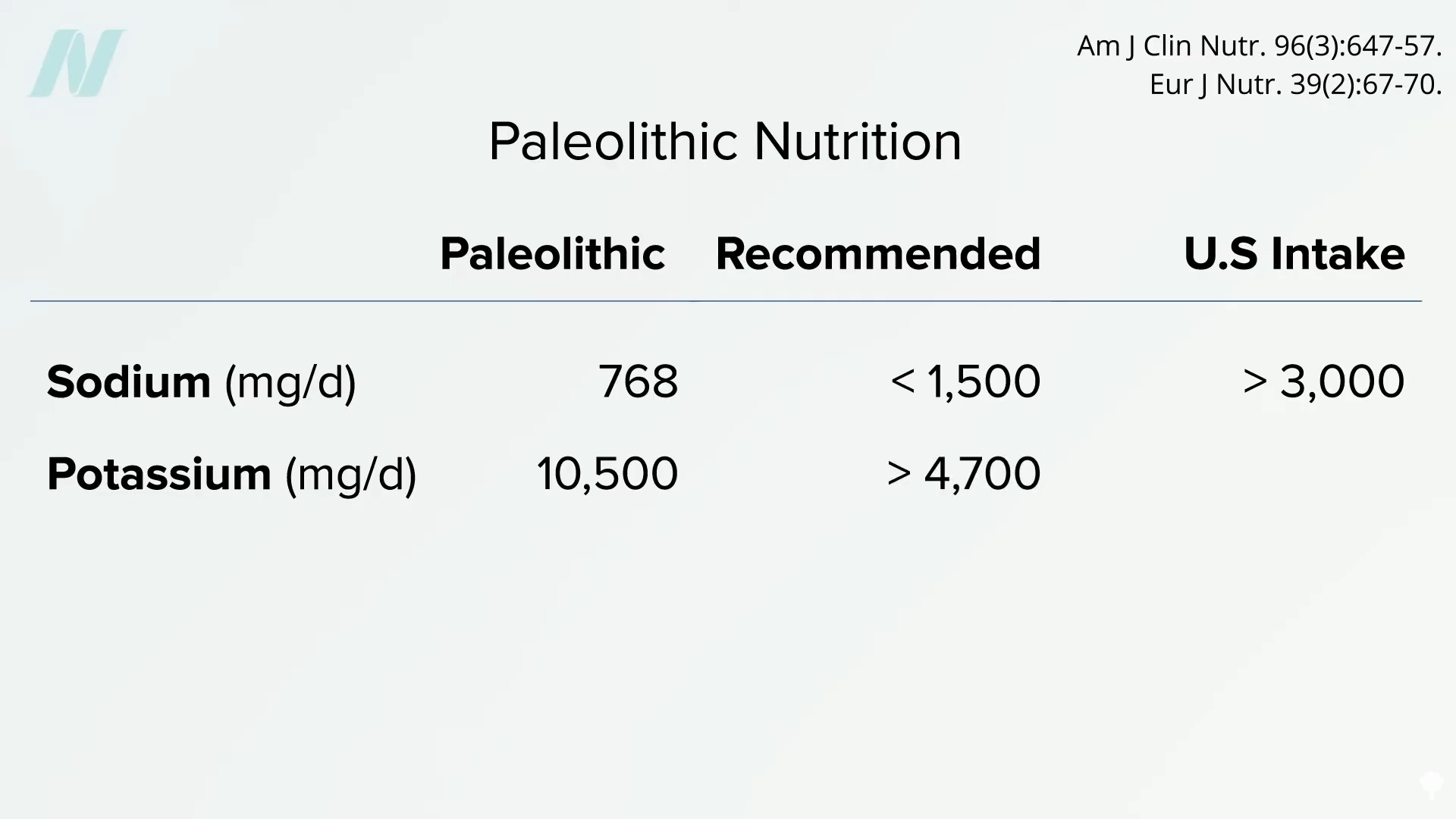
Combining the two guidelines, less than 0.015% of people in the United States currently meet their sodium and potassium goals. This is close to 99.99% non-compliance, with only 1 in 6,000 Americans meeting the recommended guidelines.
What about using a potassium-based salt substitute like the one shown below and at 4:15 of my video?
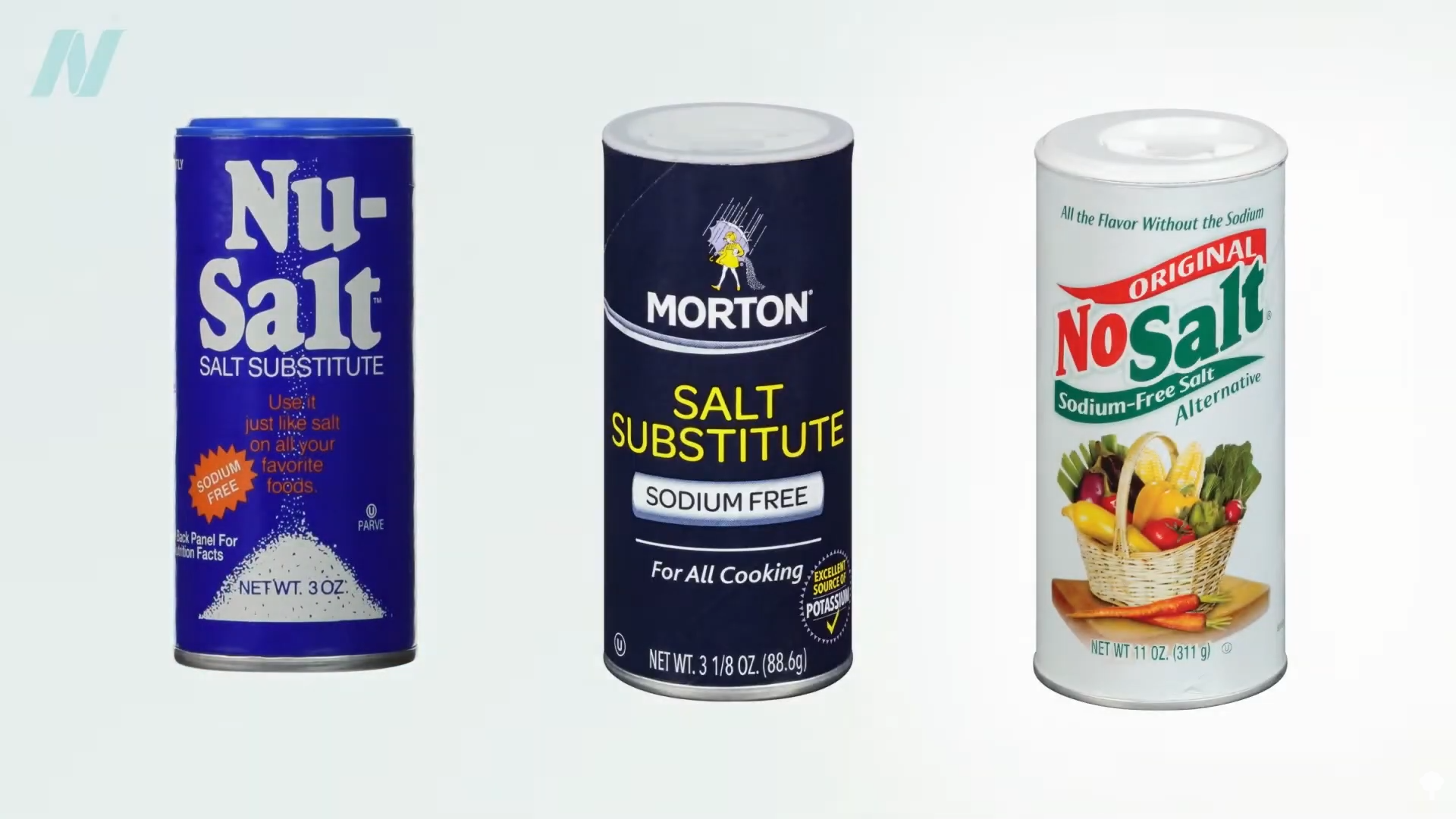
Instead of using sodium chloride, also known as salt, why not try shaking up potassium chloride? Sounds a little too good to be true. Want to reduce sodium and increase potassium intake while keeping the same saltiness? Are there any pitfalls? Are potassium-based salt substitutes safe? Do they work? Please look forward to it.
doctor’s note
This is the first video in a three-part series on sodium, potassium, and salt substitutes. Check out Are Potassium Chloride Salt Alternatives Worth Trying? Are potassium chloride salt substitutes safe and effective?
What about those who claim salt is fine? Please don’t believe it. Check out the related articles below.