You know that feeling when you hit your 30s, and things start to change subtly at first, and then not so much? It takes a while to recover. Energy seems unreliable. The skin will not completely recover as before. Or maybe you’re younger and have heard your mother, sister, or friend complaining about this.
In a way, this is just a natural part of life. A lot of it comes down to what’s happening at the cellular level. And at the center of that story is one molecule: NAD+. Understanding what NMN is and how it supports NAD+ is one of the most interesting conversations happening in the wellness space right now. In fact, even celebrities themselves like Hailey Bieber and Kim Kardashian are talking about it.
What is NAD+? Why is it important?
NAD+ (nicotinamide adenine dinucleotide) is a coenzyme found in every cell of the body. It is involved in more than 500 enzymatic reactions, three of which are particularly relevant to mood and function as we age.
NAD+ features:
It gives power to your cells. NAD+ is essential to the process by which mitochondria (the power plants of your cells) convert food into usable energy. According to a comprehensive review in Nature Reviews Molecular Cell Biology, less NAD+ means processes run less efficiently. Think of it as the difference between a fully charged battery and a battery running at 60%.
Supports cell repair. NAD+ is a substrate used by the PARP enzyme, a mechanism cells rely on to detect and repair DNA damage. The availability of NAD+ is the rate-limiting factor in how well this process works, as evidenced by basic research published in the journal Science.
Activates sirtuins. Sirtuins (nicknamed for longevity proteins) are proteins that control gene expression, metabolic flexibility, and cellular stress responses, and their activity is directly limited by the amount of NAD+ available. No NAD+ or sirtuins.
What happens to NAD+ as we get older?
Research shows that the availability of NAD+ in vital tissues naturally decreases with age. A study of human tissues found a significant decrease in NAD+ in skin tissue across a wide age range, which correlated with increased DNA damage and decreased repair activity. In skeletal muscle, decreased NAD+ levels are associated with decreased physical function in older adults.
Particularly in the skin, decreased NAD+ affects sirtuin activity in fibroblasts, which are responsible for producing collagen and elastin. This reduced level of organization is part of the reason why things that once felt easy now require more. Your cells are not broken. Requires fewer resources to run efficiently.
What is NMN?
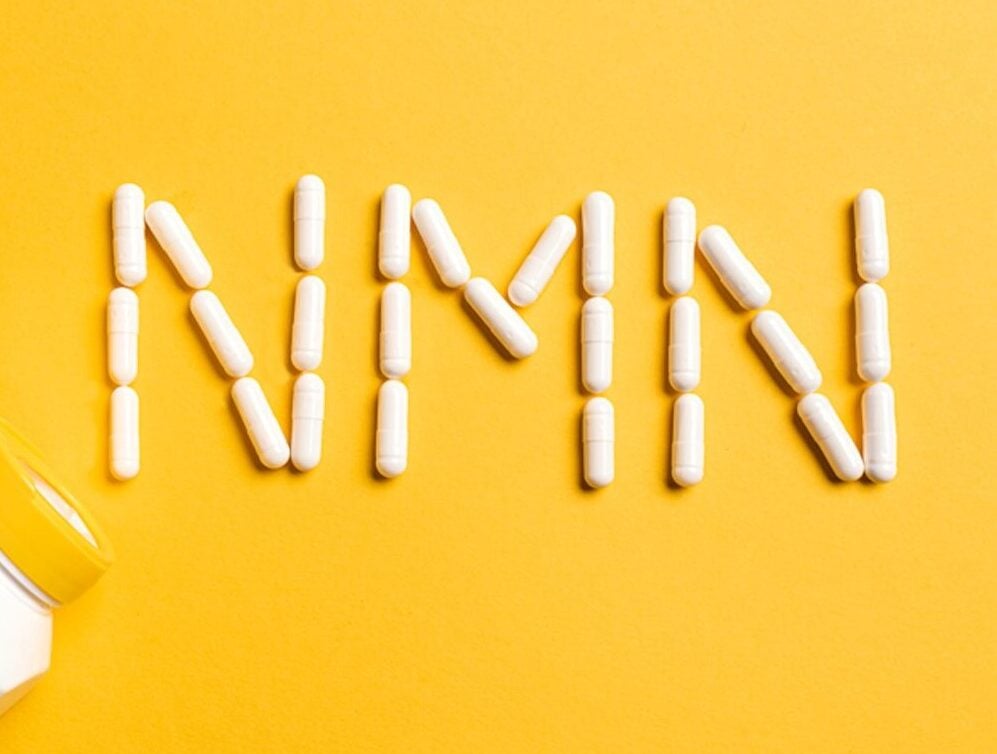
NMN (nicotinamide mononucleotide) is a natural molecule that your body produces on its own, and is also found in small amounts in foods such as edamame, avocado, broccoli, and cucumber. Its main role is to act as a precursor (also known as a stepping stone) for NAD+, the raw material that cells use to produce NAD+.
Think of it this way. NMN is the ingredient and is what NAD+ is made from.
The amount of NMN in food is too low to move the needle. Although doses of hundreds of milligrams have been used in clinical studies, we are talking about less than 2 mg per 100g. That’s what gap completion is designed to solve.
Benefits of NMN based on current science
Supports NAD+ generation. Multiple randomized, double-blind, placebo-controlled human trials have confirmed that NMN supplementation significantly increases NAD+ levels in healthy adults. In one well-designed 12-week study, whole blood NAD+ increased significantly compared to placebo at weeks 4, 8, and 12 and returned to baseline upon discontinuation of supplementation, reinforcing a causal relationship.
Supports cellular energy. NAD+ is an important coenzyme in mitochondrial processes that generate cellular energy. According to npj’s 2025 review of Metabolic Health and Disease, supporting NAD+ levels supports the biochemical mechanisms that cells use to provide their own energy.
Supports healthy aging. NMN supports NAD+ levels, which cells rely on for DNA repair pathways, sirtuin activity, and mitochondrial function. A 2024 randomized controlled trial found that adults who took NMN maintained their walking speed over a 12-week period, while the placebo group showed a statistically significant decrease, confirming the correlation between increased NAD+ and maintenance of walking speed. Although this may not seem important, it is a promising study.
Supports skin cell health. Human tissue studies have confirmed that NAD+ in skin tissue decreases with age and correlates with changes in cellular repair activity. By supporting NAD+ levels, it supports the cellular processes that skin cells depend on.
NMN conclusion
What is NMN? A naturally occurring molecule used by the body as a precursor (stepping stone) for NAD+. NAD+ is one of the most important molecules in human biology, and its availability in major tissues decreases with age.
The science is more nuanced than the health internet tells you, and more promising than skeptics believe. The core finding that NMN supports NAD+ levels in humans is supported by real-world clinical evidence. Downstream benefits are based on established mechanical science.
What is not NMN? magic medicine. However, it is currently one of the most carefully studied ingredients in the longevity field and is a meaningful tool for supporting how well our biology continues to function as we age.