We’ll share some of the best tips for using red light therapy at home, including how to use red light and what to watch out for.
Hello friends! how are you? I hope you had a great weekend! Our week was full of fall fun, and now we’re back to a week of travel and other events. Autumn chaos is in full swing and I love it.
When things don’t feel right, I try to stick to the pillars of my routine as closely as possible: daily walks, strength training several times a week, meditation, hydration, nutrition, and my favorite biohacking tools like Red Light.
If you’ve been here for a while, you know that I’m a big fan of wellness tools. Between mom life, work, and training, anything that makes recovery, energy, and skin health easier (and more convenient) is a win.
One tool that has completely changed things for me is red light therapy.
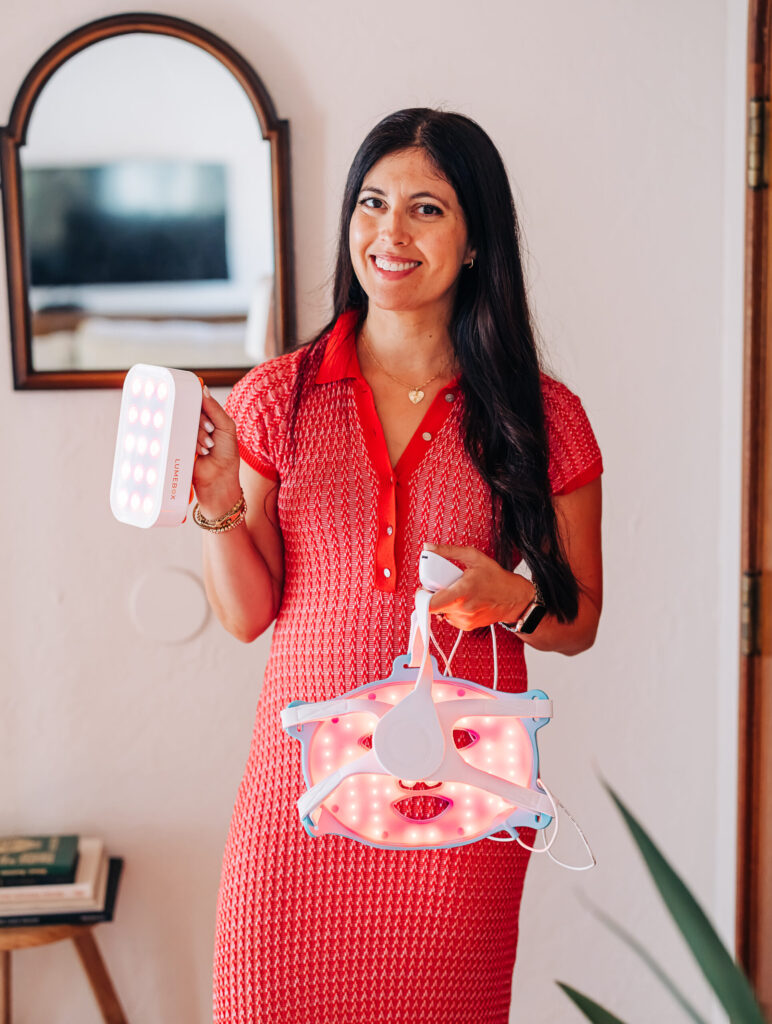
It’s one of those things that’s incredibly good for glowing skin, reduced inflammation, increased recovery, and deeper sleep, but the research behind it is pretty amazing. Today I wanted to talk about what to look for in a red light device, how to use it effectively, and the pros and cons of red light therapy at home (plus two of my favorite brands: HigherDOSE and Lumebox).
Red light therapy at home: device guide and tips for best use
What is red light therapy?
Red light therapy (also known as low-level light therapy or photobiomodulation) uses specific wavelengths of red light and near-infrared light to help cells produce more energy (ATP).
Think of it this way. Your skin and tissues have tiny receptors that absorb light, much like plants absorb sunlight. Its energy boosts cellular performance, improves circulation, supports collagen production, reduces inflammation, and even speeds muscle recovery.
What is required of a red light therapy device
Before investing in a home red light device, it helps to know what really matters.
We recommend checking it out.
1. Wavelength range
Look for a device that provides both red light (about 660 nm) and near-infrared light (about 850 nm).
Red light supports skin health and surface-level rejuvenation, while near-infrared light penetrates deep into muscles and tissues to support recovery and inflammation.
2. Power density (irradiance)
A good home device should deliver 30 to 100 mW/cm² of power a few inches from the skin. This ensures that a therapeutic amount of light energy is obtained without the need for long exposures.
3. Treatment area
If you want to focus on your face and neck, a portable panel (like Lumebox) is a great option.
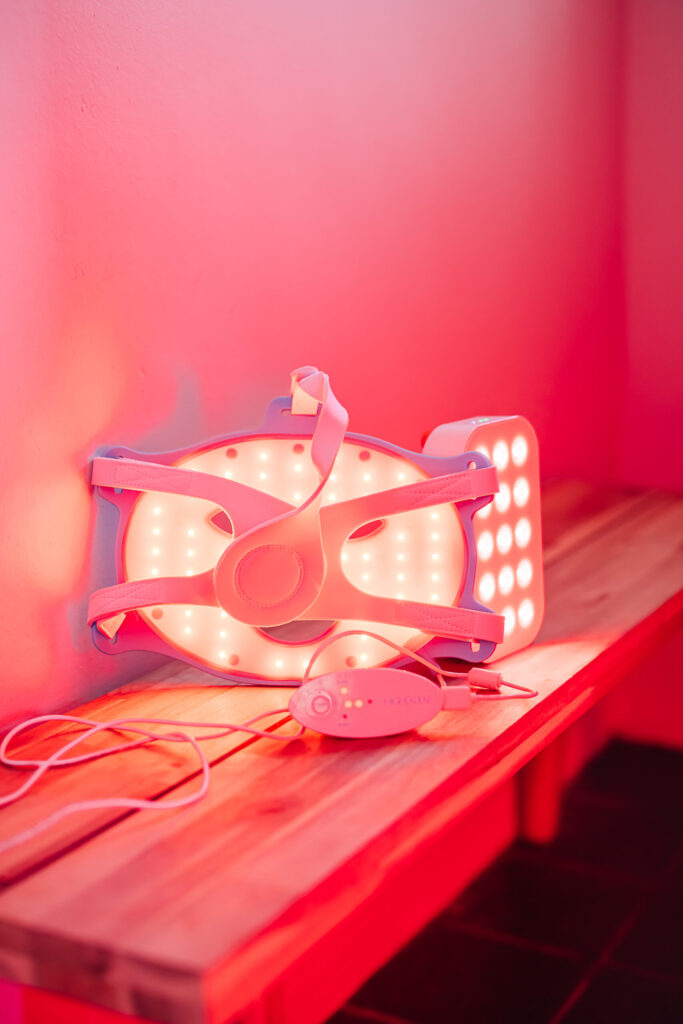
If you want a full-body experience, larger panels or wraps (like the HigherDOSE Red Light Blanket) will give you full coverage.
4.EMF level
Always look for low or zero EMF certification. This is important because red light devices are generally safe, but they are used close to the body. Both HigherDOSE and Lumebox are designed with low EMF output in mind.
5. Ease of use
Please make sure it is the one you will actually use.
The best devices are the ones that easily fit into your daily life, whether it’s for 10 minutes while you’re journaling or watching TV at night.
How to use red light therapy at home
Here’s how to get the best results from your red light therapy routine.
1. Be consistent
Aim for 10-20 minutes per session, 3-5 times a week.
As with most things in wellness, consistency trumps intensity. Results build over time.
2. Stand 6 to 12 inches apart, depending on the device you are using.
Keep the light close, but not too close. No need to touch the panel. This distance allows light to pass through effectively without generating excess heat. You can set the Lumebox to the near-infrared setting and place it directly on your skin. I use it for back pain and muscle pain.
3. Set goals
For skin health: focus on face, neck and chest.
Muscle recovery: Try a post-workout session on sore areas or legs.
For relaxation and sleep: Use red light in the evening. Supports melatonin production and helps improve sleep quality. It may give you energy. If so, use it in the morning or whenever you feel like you need an energy boost.
4. Pair with other recovery tools
You can layer the benefits even further by combining red light with a magnesium bath, sauna session, or castor oil pack for an at-home mini-spa experience (as you know, I love this combination).
Advantages and disadvantages of at-home red light therapy
Strong Points
Convenient: No spa visit or reservation required. You can use it anytime at home.
Proven Benefits: Supports skin health, muscle recovery, inflammation, and mood.
Safe and non-invasive: no downtime or discomfort.
Easily combined with other wellness routines. Fits seamlessly into your morning or evening routine.
Cons
Initial cost: Quality devices are expensive, but will pay for themselves over time.
You need to be consistent: Results won’t come overnight. It’s cumulative.
Size limitations: Smaller devices can process less surface area at one time.
EMF considerations in red light therapy
Although most quality red light devices have minimal electromagnetic field (EMF) output, it is still wise to double check.
Prolonged exposure to electromagnetic radiation can contribute to stress and fatigue in sensitive people.
Here’s what I recommend:
Choose a low EMF certified device (such as HigherDOSE or Lumebox).
Please keep other electronic devices (such as cell phones and laptops) away during your session.
my favorite device
1. High Dose Red Light Favorites
red light blanket
If you like a cozy full-body experience, this is unbeatable. Combining infrared heat + red light therapy, it helps your body detox, recover and relax while being enveloped in warmth. Perfect for rest days, muscle recovery, and relaxing evenings.
red light face mask
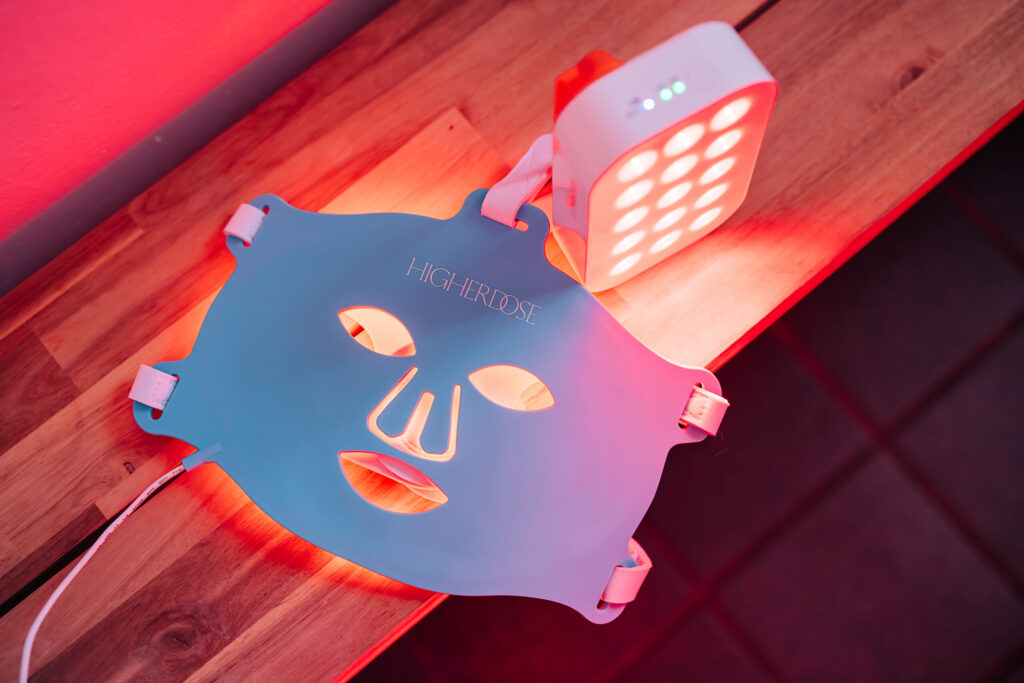
I use this almost every day while doing housework. Since I started using this, I have noticed a huge difference in the quality and texture of my skin!
red light hat
I use this to promote hair health and growth. Bonus: Looks like a super cute baseball cap.
red light neck enhancer
This is like an extension of the red light face mask, but for the neck. It’s very comfortable to wear, and the wrinkles on the check have been reduced.
Use code FITNESSISTA20 to get 20% off your HigherDOSE favorites.
2. Lumebox Red Light
Perfect for face, neck and chest sessions, this sleek, portable panel will easily fit into your routine. I love using it in the morning with my coffee or at night before bed to tone and relax my skin. I also use this in the near infrared setting for back pain, muscle pain, and spasms.
Low EMF, lightweight and very easy to carry.
Get $260 off Lumebox when you use FITNESSISTA here.
Red light therapy is one of the simplest, science-backed tools you can add to your health routine, especially if you’re focusing on energy, skin health, inflammation, and recovery.
OK Friend: Do you like red light? What is your favorite home health tool?
Shit
Gina