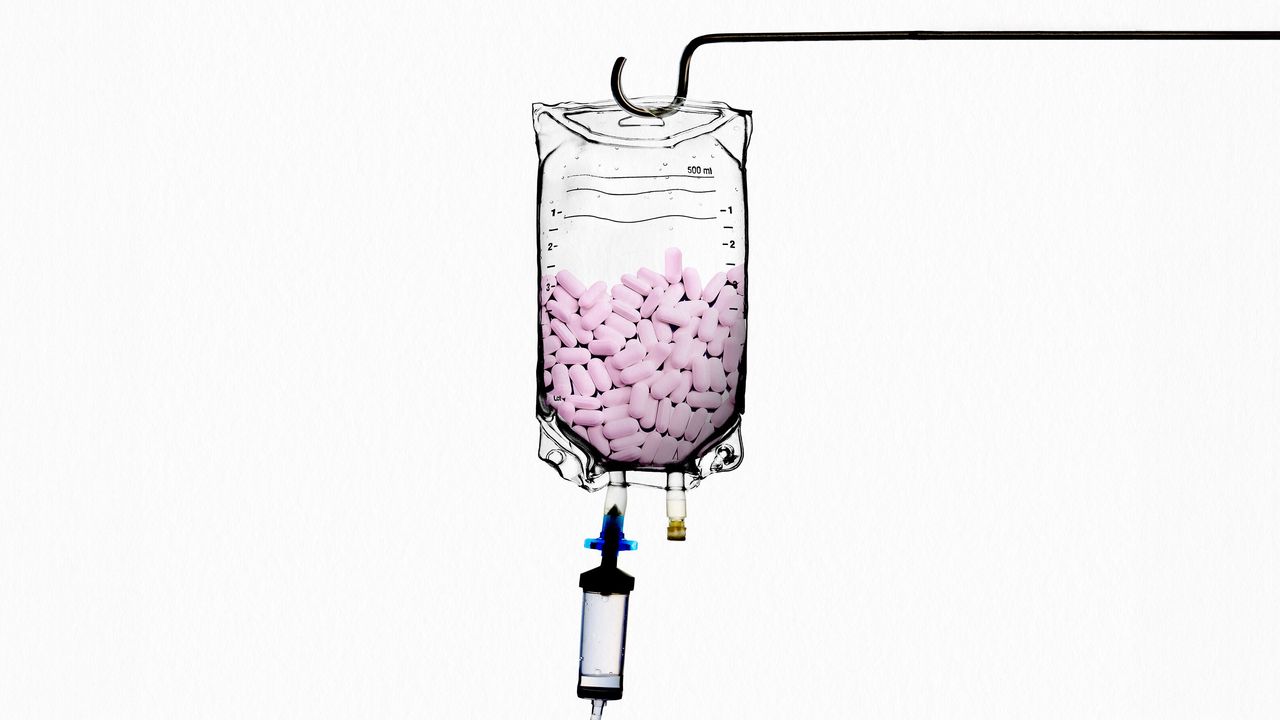
At the American Infusion Center on Lower Broadway in Manhattan, a La-Z-Boy recliner with a laptop table sits in front of a window overlooking the Hudson River. The majority of the people sitting there, operating the computer with an IV drip hanging from one arm, are women, including me. And many people, including myself, come here to receive iron injections. I had never even heard of this treatment until I was in desperate need of it at age 47, even though I know a lot about my health.
My iron levels were never mentioned during my doctor’s appointments until I became pregnant with my daughter at age 39. With another human being growing inside my body, the need for proper nutrients has taken on new urgency. These levels remained stable throughout my pregnancy, but plummeted after a difficult postpartum period, perimenopause, and a whirlwind four years of global closure.
However, this decline was not easily recognized by doctors. It took a year of constant symptoms (fatigue, hair loss, brain fog, restless legs, anxiety), monthly periods that reminded me of a crime scene, and two fibroid surgeries (to remove uterine fibroid masses) before I was diagnosed with anemia. Iron deficiency is the most common cause of anemia, which occurs when the body does not have enough healthy red blood cells. Although it is possible to have iron deficiency (meaning low iron stores or ferritin), it does not necessarily mean that you are anemic. However, untreated iron deficiency often causes anemia.
My iron deficiency went largely unrecognized for a time, but like many women’s health diagnoses, I’m not alone in this journey, which often follows a long and winding path. A 2024 report from JAMA Open Network found that 34% of women between the ages of 18 and 50 are iron deficient. After menopause, a woman’s bleeding stops regularly, so she loses less iron, and this condition becomes less common. This is why iron deficiency is less likely to occur in men.
The reason why so many women, especially in their 40s (I was 45 when I was diagnosed), suffer from anemia is not so simple. That’s why it’s no surprise that many women are looking for answers and sharing their symptoms on TikTok. We’ll now break down the signs of iron deficiency, including fatigue, shortness of breath, dark circles, cracked skin, and what some on social media call the “ferritin face.”
What is iron needed for in the first place?
Iron is a component of hemoglobin, a protein in the blood that is required for the production of red blood cells that carry oxygen throughout the body. Sounds like it’s important. “This is key to optimal skeletal and cardiac muscle function, hair growth, and the production of neurotransmitters in the brain, such as dopamine and serotonin, which have a profound effect on mood,” says Imo J. Akpan, MD, a hematologist at NewYork-Presbyterian.
“[Iron]also plays a subtle but important role in supporting regular ovulation and a healthy endometrium, both of which are important if you’re trying to get pregnant,” says Laura Chahine, M.D., a reproductive endocrinologist and gynecologist at Ivy Fertility in Seattle.
And iron is the basis of how our bodies produce energy. “When iron stores are low, women often feel it in everything from their energy levels to their mood to their hair,” explains Dr. Amanda Kahn, a New York physician.
Iron deficiency of the face (also hair and body)
Do you have heavy periods? Do you have brain fog? Even when you’re in great shape, does climbing stairs tire you? These are some of the questions Jamie Rosen, a 40-something brand consultant in New York City, remembers being asked by hematologist Dr. Rachel Kramer during his first visit. “Everything she asked me, I was like, ‘Yes, yes, yes, yes, yes,'” Rosen said. She had a list of symptoms that she had ignored for a long time.