“It is only when we get lost that we begin to find ourselves.” ~Henry David Thoreau
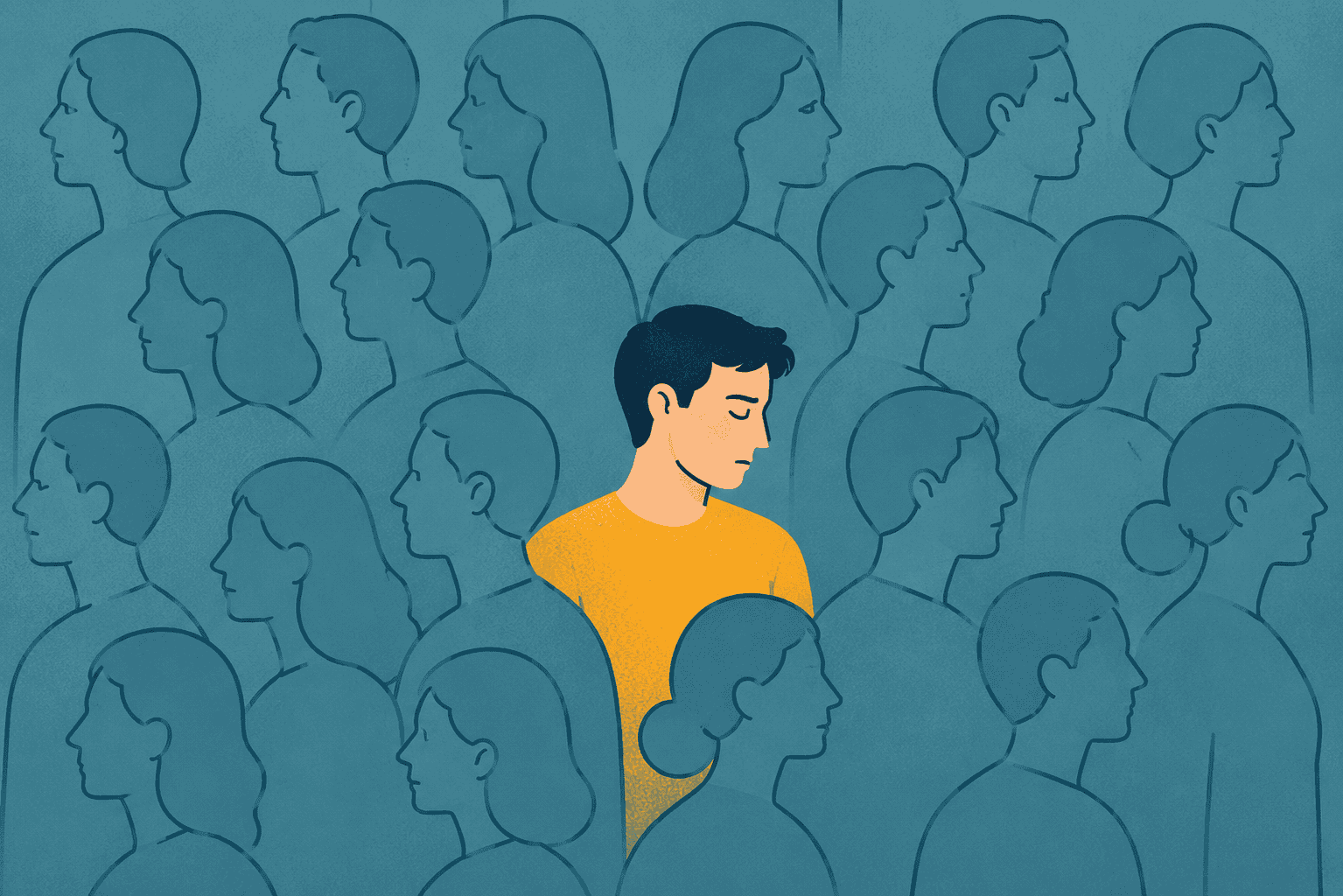
I’ve spent most of my life feeling like I’m just on the outside of that circle.
It wasn’t always, but every time I took a step back and looked at my life as a whole, the threads running through it felt like I was looking in from the outside.
I think that feeling has been driving me for a long time. I wanted to prove something and earn my place through hard work and excellence. I wanted to become the kind of person that people would be happy to know.
I was dedicated to the sport and tried to play well to elicit appreciation from the crowd. I dreamed of playing the bass guitar with such energy that the person listening could feel the sound traveling through their body. I worked hard to build my resume and become a great, life-changing teacher.
Those desires came from deep within me. My love for games, the fascination with music, and the joy of teaching well were all true expressions of my heart. But at the core of it all, there was also a yearning for connection.
Each of those desires became a reality in some way, and I gave it my all. But what I discovered was something I didn’t expect. The belonging that I aspired to was not something that was given to me by will from outside.
When I came to Philadelphia for graduate school, I was still in my early 20s and unknowingly carried all of this with me. One cold night, a friend took me to a party. A group of close friends gathered in someone’s backyard and we all stood around the pool.
The group was chatting and enjoying the evening. I tried moving from one small conversation to another, trying to find a way to get into it, but nothing worked.
An hour or so later, I was standing at the edge of the pool, and something struck me.
Without thinking, I stepped inside from the edge. fully clothed. The cold water came over me and I stayed in it for a few seconds.
My friend was confused. I was numb. We drove home in silence, soaking wet in the passenger seat.
Not only that night, but for a long time afterwards, I couldn’t explain what I had done. That memory has been with me for 30 years, emerging from time to time, painful and strange. And beneath that strangeness was something else, a layer of embarrassment that I had not yet found the courage to look directly at.
The embarrassment was worse than the act itself. At the root of it all was something I had hidden even from myself: how much I wanted to belong that night, and how much that desire exposed me.
For years, I remained ashamed of that night, feeling as if my need to be noticed and appreciated was a weakness or flaw in my character. It took me decades to understand that necessity itself was not the problem.
I read something a while back that made me think. For almost all of human history, people lived in small groups of 20, 30, or 50 people, and it was all about one’s place within that group. It determined whether you were fed, whether you were protected, and whether you and your children survived.
I also read that the brain processes eliminated pain through the same pathways as it does for physical injuries. So while my cold plunge was strange and unexpected for me, it was also a reaction to an age-old truth.
Researchers studying this place cravings in the same category as hunger and thirst. Needs that all humans have, whether we realize it or not.
I didn’t know any of this when I stepped into the pool in Philadelphia. And after many painful reflections, I now realize that I was not so embarrassingly needy. I was just a young man, painfully alone in the crowd.
I think in that moment I chose the rejection I could control over the rejection I couldn’t control. The cold water was honest. I wasn’t going to pretend I had a place, and if I was going to be exiled, I was totally determined to do it.
What I realized was that the humiliation I experienced at the party and the humiliation I continued to think about for years afterwards was part of becoming the person I was meant to be.
Because I know what it’s like to feel unseen and the shame of feeling that way, I can recognize that struggle in others and help them. I lived too close to the pain of isolation to mistake it for anything else or ignore it when others were suffering.
Thirty years was enough time to see patterns in my life emerge. And what I understand now is that the emotions I spent so long trying to escape have given me insight into something I couldn’t have understood otherwise. It’s that in some way we all need belonging.
Today, when I walk into a room, whether it’s a party, family gathering, or work, my attention shifts to the person standing alone.
Someone who laughs a little too enthusiastically at things that aren’t really funny. It’s attached to your phone because it’s easier than sitting there aimlessly. Those who arrived expecting tonight to be different, and those who are beginning to worry whether it will be.
I know that person. I’ve always been that person, and in some ways I still am.
The feeling of not belonging doesn’t go away just by noticing it and working on it. At least for me it didn’t go away. It gets easier sometimes, but it never leaves you completely. And I stopped waiting for that day.
What I have found instead is that the pain becomes bearable rather than overwhelming. It becomes a part of you that you learn to accept, empathize with, and even draw strength from because you can be honest about what it means to be human.
That became my life’s journey. This is what I want people to know and feel in their bones when they leave the room. It means you are being watched. I can hear you. you are valued. and you are loved.
I had to be honest with myself about the limitations of that word. When I was hiding parts of myself that I was afraid to show, external reassurances never fully reached me. And sometimes the people around me didn’t look closely enough to see the good in me.
I had to admit that what I longed for wasn’t necessarily blocked by my walls. In some cases, it simply wasn’t available. Let’s be honest, the world can be a cold and cruel place sometimes.
I’ve learned that we tend to give to others what we ourselves need most, and that’s certainly true for me as well. The pain I experienced didn’t just hurt me. It showed me what I was made for.
Not everyone will see you as you are. Some people get tuned into a different frequency, and that can be painful. But the more honestly you offer yourself to the world, the more the right people will have a chance to get to know you.
That belief has been tested and proven in my own life. When I was in my 20s, I thought it would be fun to bring homemade key lime pie to a New Year’s Eve party full of people trying to look cool. It was like bringing baked goods to a nightclub and was a perfect example of my quirky sense of humor.
A young woman laughed out loud as I handed her the pie and we ate it together at the kitchen table. We talked and enjoyed each other’s company until the party faded into the background.
That young woman became my wife.
We have been together for over 25 years and since then she has told me she never liked key lime pie. Truth be told, she just wanted to meet a man brave enough to be himself in a room full of people pretending to be someone else.
The qualities that make you most yourself are visible to those who know how to look. You have a place in this world, not once earned, but right here, as you are. And showing others the truth about you gives the right person a chance to find you.
This mission of meeting people and helping them open up and truly belong is not something I chose. I found it by tracing my own wounds, my own need for the same, all the way to the other side. It’s been a journey with some bad falls along the way, but it’s been the most rewarding thing I’ve ever encountered.
The young man wasn’t broke when he stepped into the pool in Philadelphia. I was searching for some truth in my own vulnerable, unspoken way. I still sometimes struggle with a sense of belonging, but I’ve found it.
I learned to belong to myself. I’ve learned to see the pain in people without naming it so much, and I can recognize it without judgement because I know it from within. That scene changed me from someone who was trying to find a place to belong to someone who was trying to make a place for someone else.
The outside world is a difficult place to learn. But it teaches you to see.

About Daniel H. Shapiro
Dr. Daniel H. Shapiro is a keynote speaker, author, and mentor. He is passionate about human connection and the stories we carry with us. For more information about his book, The 5 Practices of the Caring Mentor, or his mentoring and speaking services, check out yourinherentgoodness.com.