When you start giving solid food…
There was once a saying, “Eating before a meal is for fun.” Now I know that’s not the case. Research has shown that your baby’s experience with solids actually influences which foods they end up eating or rejecting.
After all, besides formula and breast milk, every taste that passes through your child’s mouth now is brand new, so it’s a sensitive and important time to become familiar with the tastes of healthy foods. Even new foods become familiar as they are seen and tasted many times, and familiar foods eventually become what children like.
2. Consider baby-led weaning
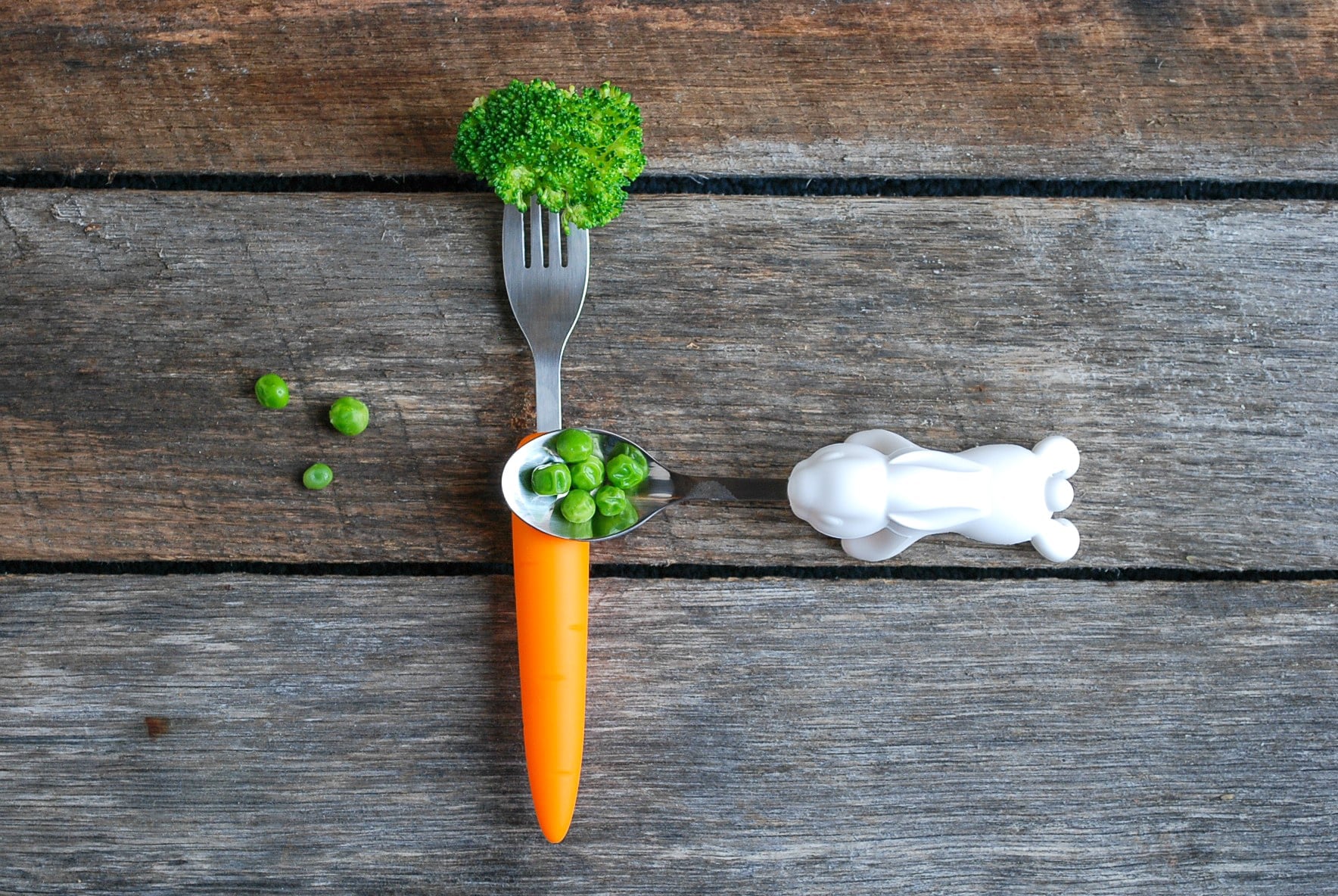
Baby-led weaning (BLW) involves giving your baby “grabable” whole foods to feed themselves. They should be small enough for your baby to pick up on their own, such as wedges of well-cooked sweet potato, large sticks of well-cooked carrots, large florets of soft steamed broccoli, ripe fruits such as kiwi, peeled bananas, wedges of ripe avocado, as well as tender cooked meat, cooked eggs, and pieces of bread such as toast.
An important part of BLW is that the mother provides the food, but the baby decides how much and how fast to eat.
Because babies are exposed to different types of textures and table foods from an early age, they are likely to become more receptive to different types of food as they grow older. They may come to like and prefer adult table foods, especially healthy whole foods such as pieces of fruit and vegetables, over babies who are spoon-fed purees. Click here for information on BLW.
3. Ignore the frown
If your baby wrinkles his nose when eating broccoli puree, don’t automatically assume that he doesn’t like broccoli. Researchers say grimacing is a common reaction to bitter tastes, but that doesn’t mean you don’t like the taste or never like it. For this reason, you may sometimes see babies happily eating while frowning.
However, if your baby is really refusing a certain food, try again on another day.
4. Keep rotating rejected foods
Studies have shown that babies will eat more of a particular fruit or vegetable if they have tasted it at least eight to nine times. However, research also shows that many parents give up after just three to five tries if their child doesn’t like it.
Give your child opportunities to repeatedly experience foods and flavors. This creates a sense of familiarity and security, and they tend to like things that are familiar to them.
It’s helpful to keep a list of the foods your baby eats and how often (on paper or in a notes app on your phone) so you can always go back to them.
5. Experiment with different textures
Don’t insist on a smooth puree any longer than necessary. Babies who continue to eat purees may have difficulty transitioning and accepting new textures.
In one study, 7-year-olds who were not introduced to clumped solid foods until after 9 months of age ate fewer types of food and had more feeding problems than children who were introduced to clumped foods earlier. Gradually changing textures, from smooth to lumpy to soft finger foods, helps your baby get used to what food feels like in his mouth.