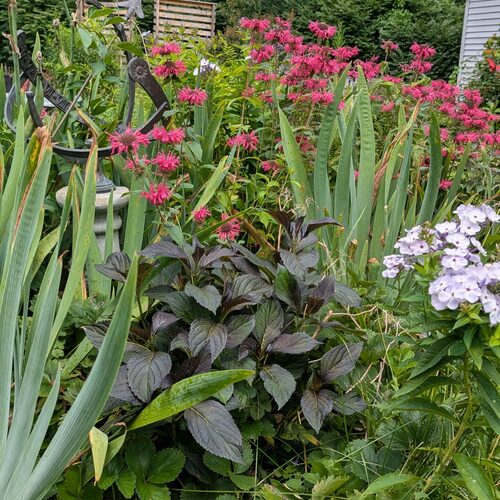
Since I took over a bit of GPOD this week, I thought it would be fun to focus my lens on my own garden for a change of scenery.
My main challenge is balancing my lofty ideas of what is possible with time and funding, which are decidedly less lofty. That’s probably because working for a gardening magazine allows me to look at pictures of beautiful gardens all day long, even though most of the day I’m glued to my computer rather than my trowel.
So, naturally, I started some pretty ambitious garden projects and then let them figure themselves out for a while. Some of that benign neglect turned into a pleasant surprise. Sometimes it’s not. Either way, no matter how many great photos cross my desk each week, it’s a reminder that a garden is a craft that takes years to hone and doesn’t come to you overnight.
One of my more ambitious endeavors was to travel long distances across borders while working full time and raising two young children. My garden doesn’t look anything like the one on the Fine Gardening page, but that’s okay. If there’s one thing I’ve learned, it’s that it takes time for your garden to turn out the way you envisioned it. There’s equal parts success and work in progress here. Today I wanted to share a little of both.
battle for space
Ferns, bee balm, strawberries and irises bloom here. Was it a mistake to plant four heavy spreaders in the same garden flower bed? Maybe.
A lively tangle of Christmas fern (Polystichum acrosticchoides, zones 3-9), scarlet bee balm (Monarda didyma, zones 4-9), sword-like iris leaves (Iris species and cultivars, zones 3-9), and garden phlox (Phlox paniculata species and cultivars, zones 4-8). In the background, everyone is happily bumping elbows for room.
size matters
My favorite combination right now is lavender, ‘Fat Albert’ blue spruce, and panicle hydrangea. This color palette makes me very happy. If these plants outgrow the space, will I need to move one or more of them under the road? That’s almost certainly the case, but for now I’m simply enjoying how well they play together.
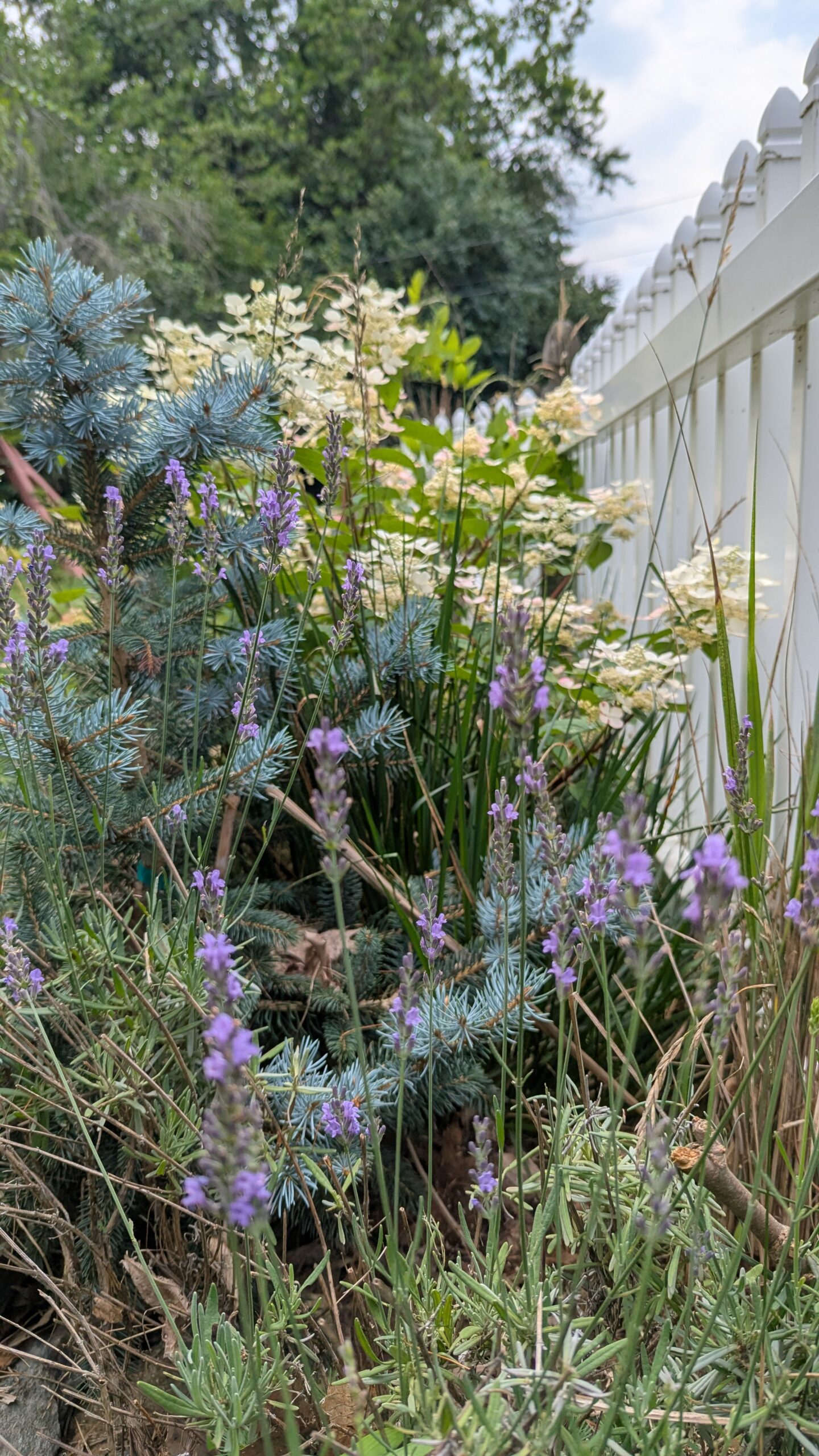
English lavender (Lavandula angustifolia, zones 5-9) blooms purple in front of blue-leaved ‘Fat Albert’ spruce (Picea pungens ‘Fat Albert’, zones 2-8), and just behind the creamy white flowers of panicle hydrangea (Hydrangea paniculata, zones 3-8).
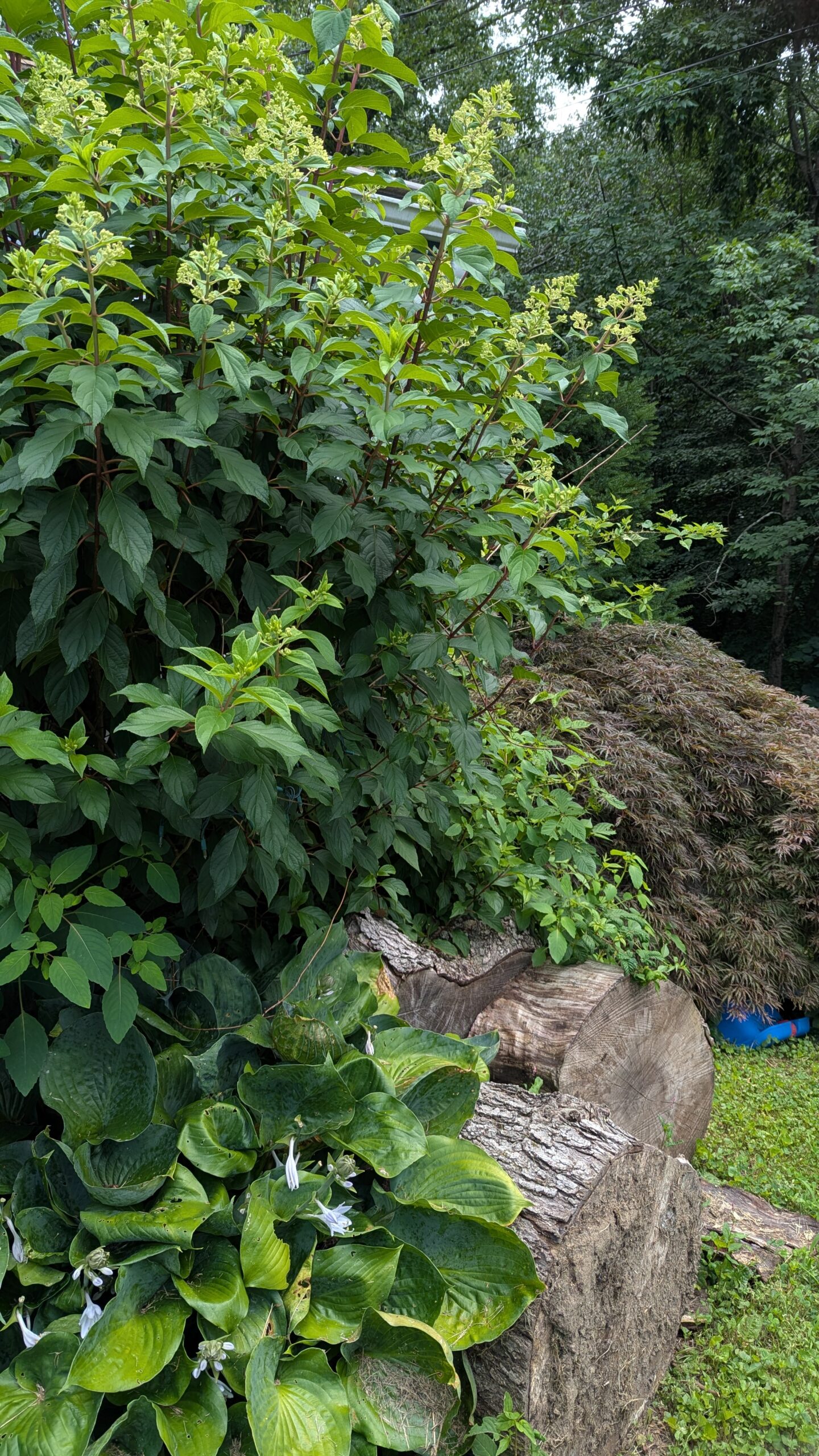
My monster panicle hydrangeas are going to be moved before they can eat the house, but the flower heads are still greenish and just opening, arching over the hosta clumps. I believe this is ‘Empress Wu’ (Hosta genus and cultivar) with white summer flowers. The soft, feathery mounds in the background are Japanese maples (Japanese maples, zones 5-8). Everything was here before we moved except for the hostas. To offset the sea of leaves, I added some wood for a bit of interest.
Long borders and uninvited guests
I’ll be honest: I wasn’t thorough enough in preparing this bed, and some uninvited grasses have taken up residence in my house, and I’ve been busy pulling them out. A good weeding followed by a generous application of mulch is high on my list this season, and I’m looking forward to giving this bed the fresh start it deserves.
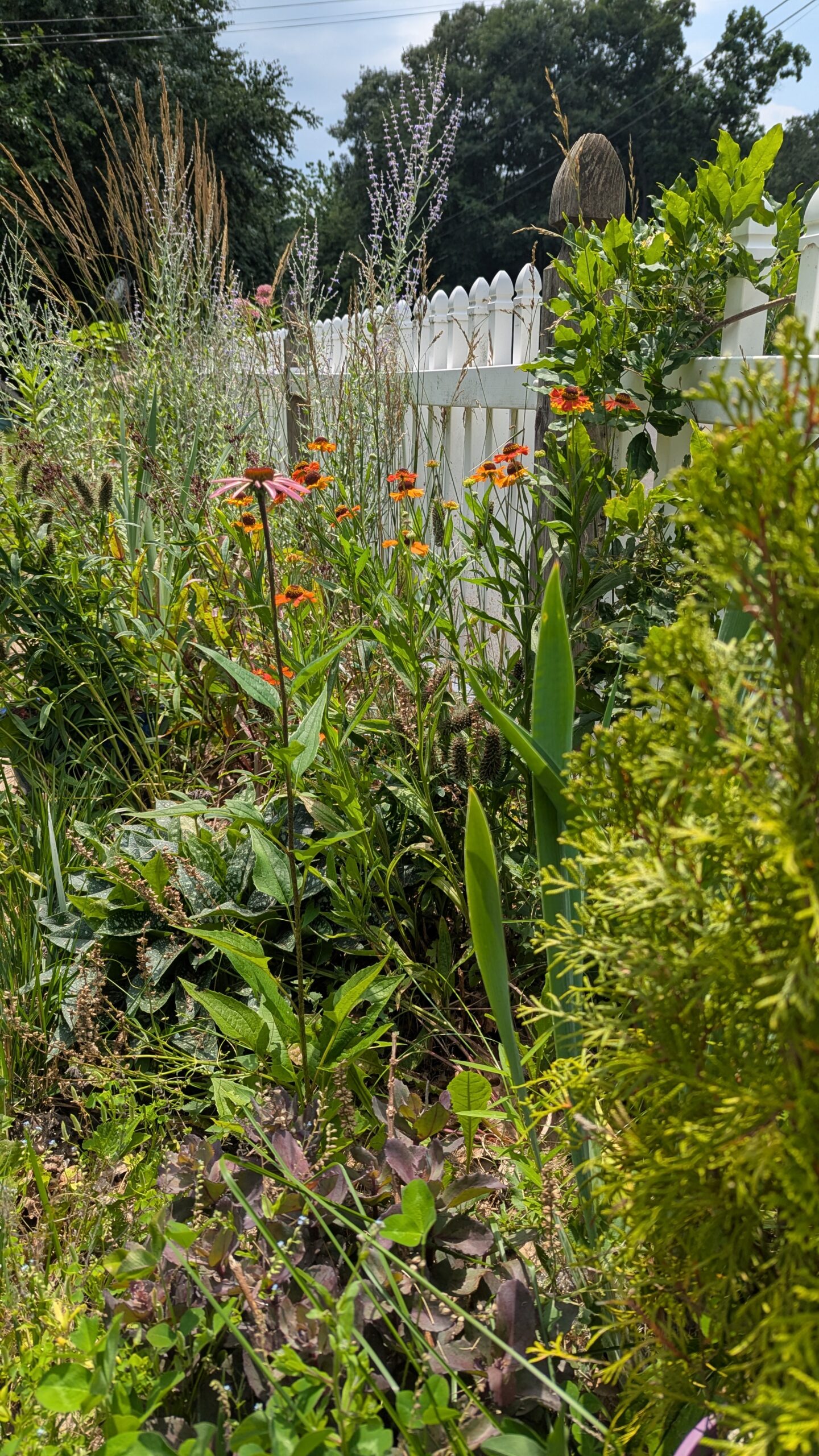
Warm orange and yellow sneezeweed (Helenium ‘Mardi Gras’, zones 3-9), pink coneflower (Echinacea purpurea, zones 3-9) in the foreground, and flower heads of finished Trifolium rubens (zones 4-8) in the background along the white picket fence.
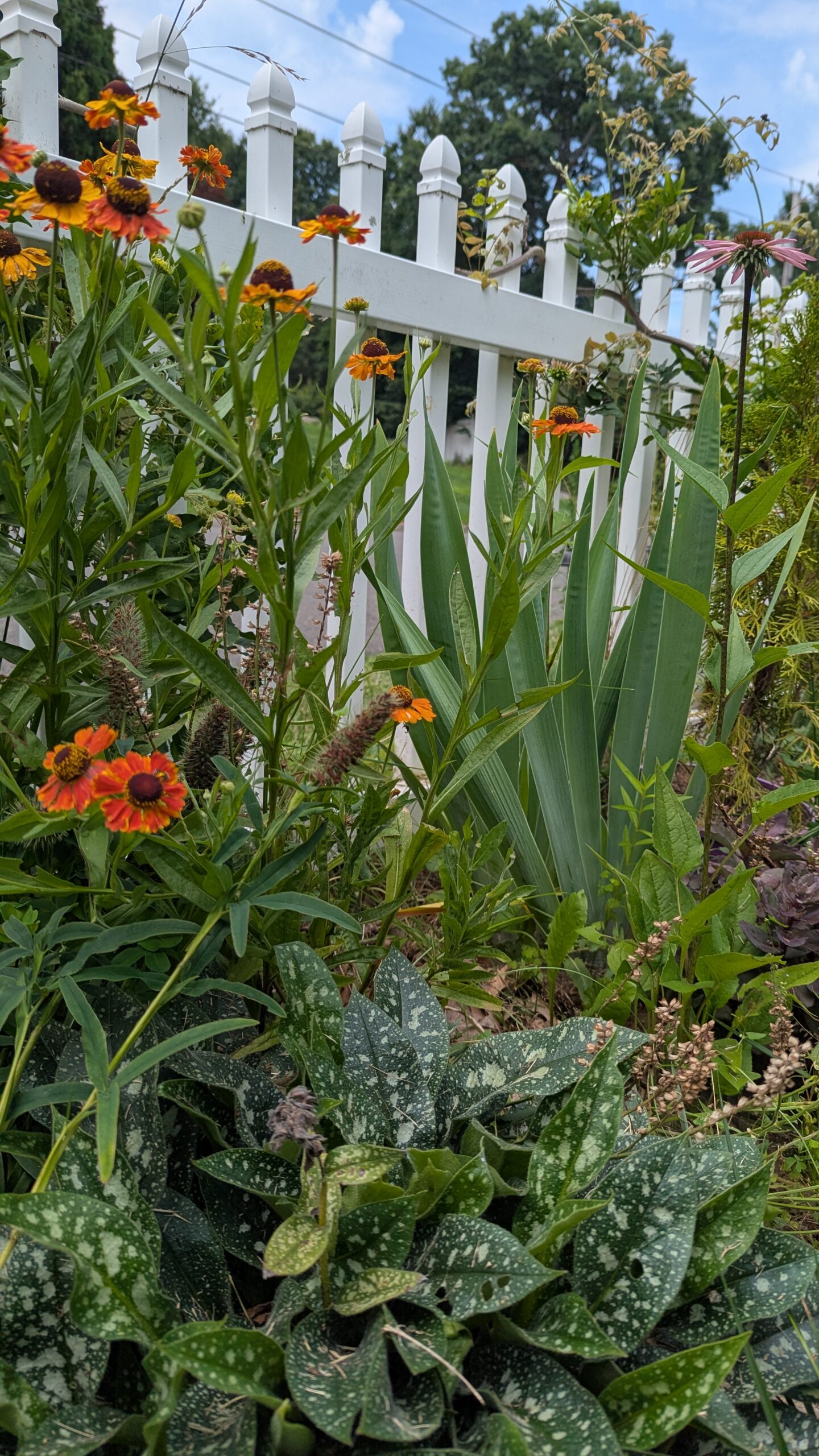
More sneezeweed and coneflower blooms along the fence line, with ‘Twinkle Toes’ pulmonaria (Zones 3-8) filling in the front.
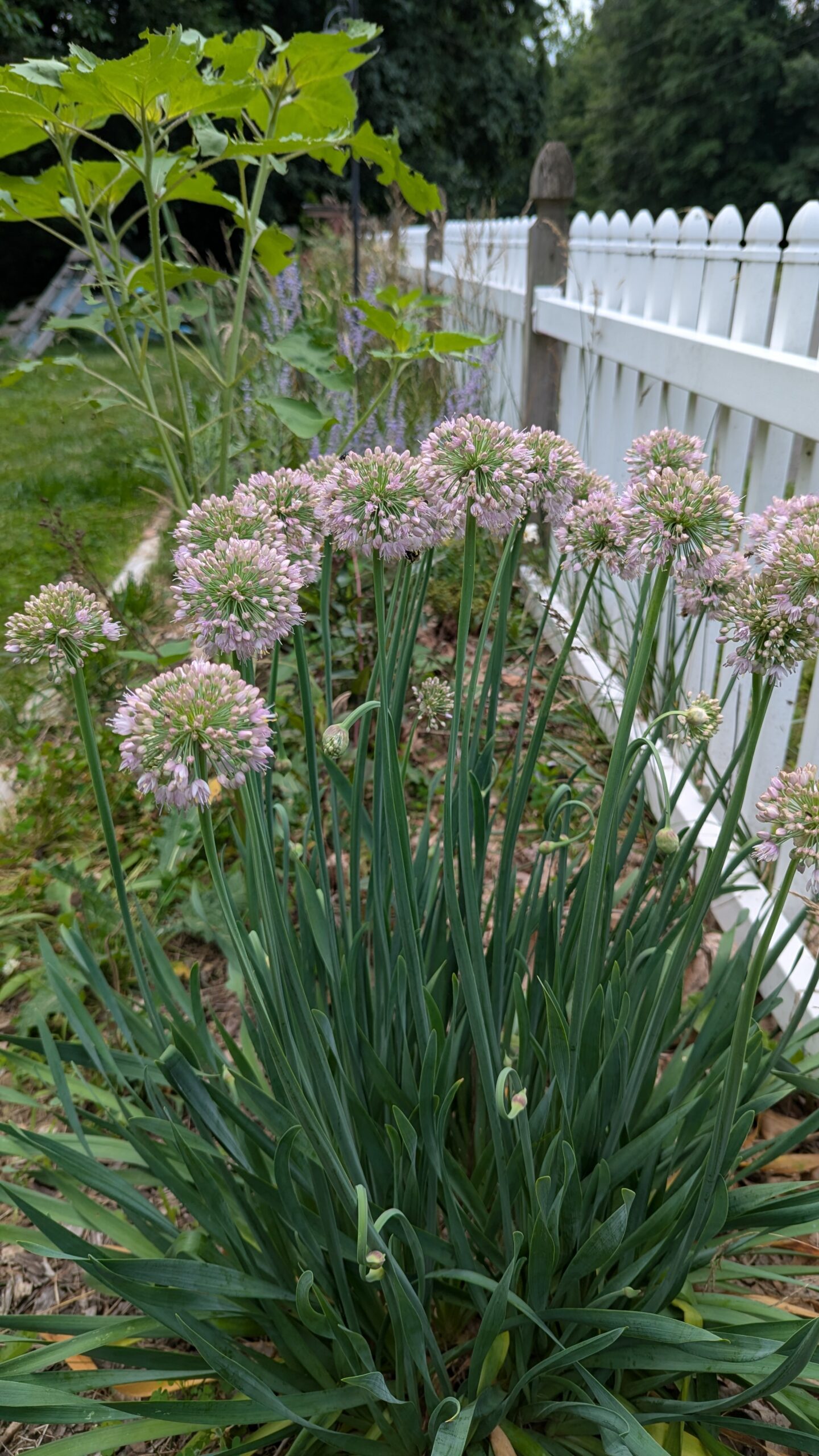
Along the fence, Russian sage (Perovskaia atriplicifolia ‘Blue Gene Baby’, zones 4 to 9) and sunflowers (Helianthus annuus, an annual) are planted behind soft pink-purple spherical ornamental onions (Allium ‘Millennium’, zones 4 to 8). Japanese beetles have found sunflowers, and I’m picking them off as soon as I find them. I’m optimistic that the flowers will bloom within a few weeks.
Perhaps next year there will be a long border free of unwelcome grass and weeds. Or they might not, and that would be a fine. Let’s take a look!
I want to see your garden!
Do you have photos to share? We’d love to see your garden, a collection of particular plants you love, or any amazing gardens you’ve had the chance to visit.
To submit, please fill out the garden photo submission form of the day.
You can also send 5-10 photos to: (email protected) It also includes information about the plants in the photo and the location where the photo was taken. We’d love to hear about where you live, your gardening history, any successes you’re proud of, what you’ve learned from failures, your hopes for the future, your favorite plants, and any funny stories that happen in your garden.
Already receive GPOD by email? Sign up here
Recommended products for fine gardening
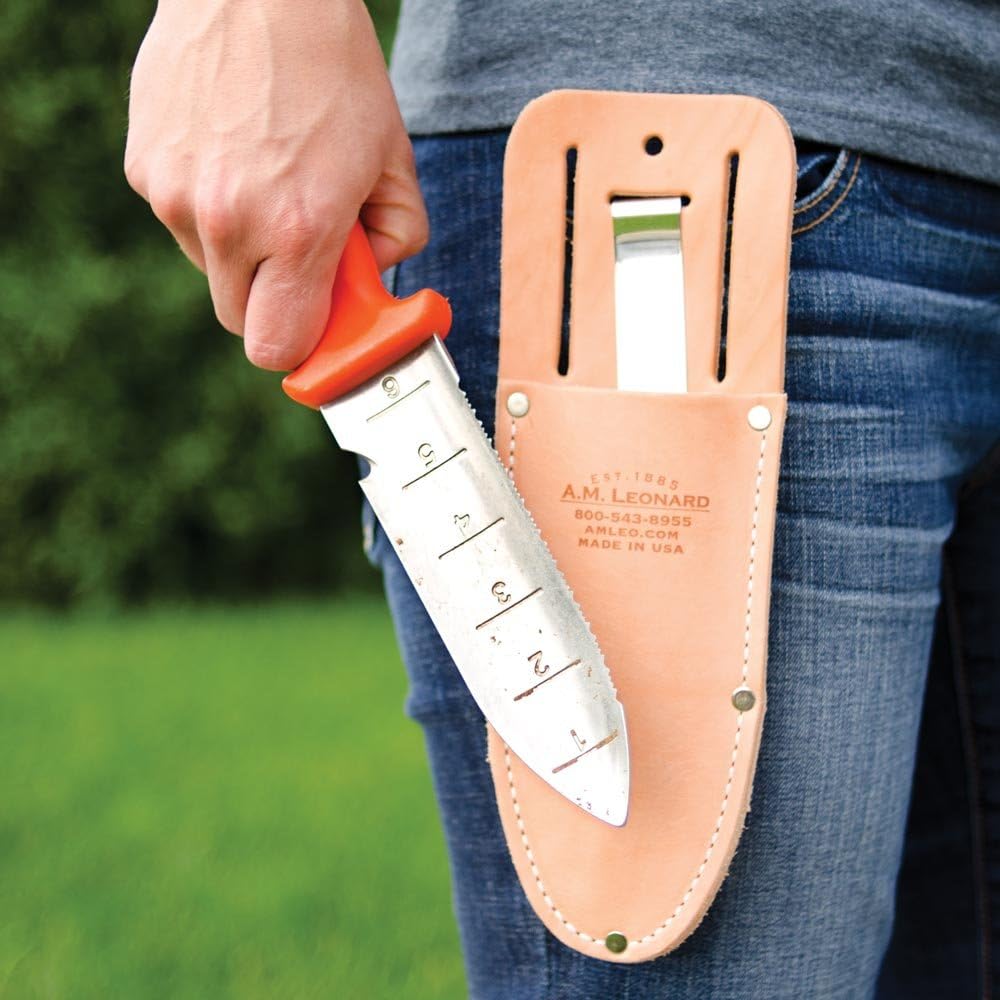
AM Leonard Deluxe Soil Knife & Leather Sheath Combo
Fine Gardening receives commissions from purchases made through links on this site, including Amazon Associates and other affiliate advertising programs.
Multitasking Dual Edges: Deep serrated edges and tapered slicing edges are perfect for tough or delicate cuts. Durable 6-inch stainless steel blade withstands 300 pounds of pressure. Twin cutting notches, depth gauge markings and spear tip – no need to switch tools when using this garden knife. Leather Sheath: A durable, protective clip-on sheath that keeps your knife convenient and safe. Lifetime warranty.