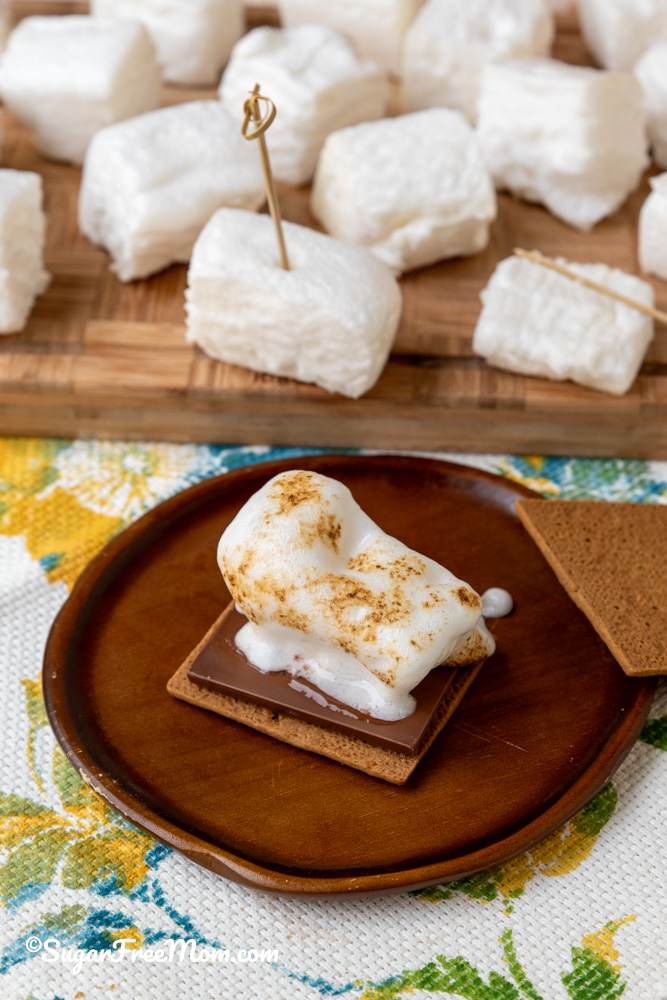
This easy sugar-free, low-carb keto marshmallow recipe requires just 5 ingredients and tastes just like traditional marshmallows.
Homemade sugar-free keto marshmallows
If you’ve been following me for a while, you know that I love trying out delicious recipes. And let me tell you…this has been on my lifelong foodie goals list for years.
I’ve made everything from keto breads and cheesecakes to sugar-free candies, but homemade keto marshmallows have always scared me.
Traditional marshmallows rely on hot sugar syrup, corn syrup, and very precise candy-making techniques. It seemed almost impossible to recreate the same fluffy texture without sugar or corn syrup.
But after years of recipe testing, I finally had the confidence to try these easy sugar-free marshmallows.
My first batch wasn’t a complete failure, but it wasn’t exactly what I expected either.
Using pure liquid allulose, the marshmallow mixture foamed beautifully and turned bright white, but it remained a little too soft. That’s when I realized that the extra water from the liquid allulose was preventing the marshmallows from setting as tightly as I wanted them to.
For the second attempt, I made everything exactly the same except for one important change.
Instead of liquid allulose, I used a confectionery-style monk fruit allulose blend, and it made all the difference.
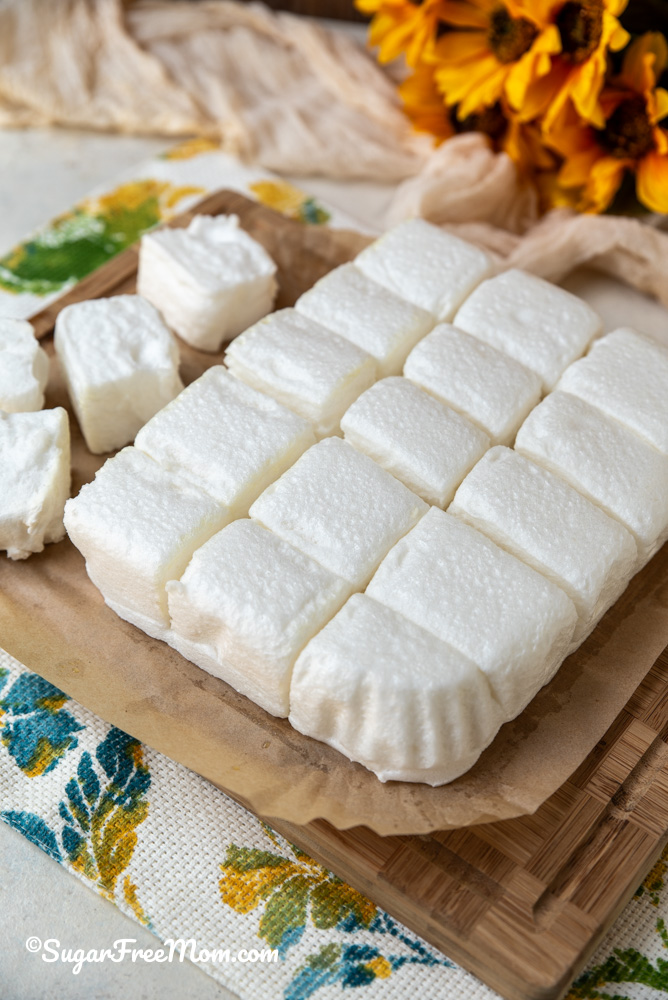
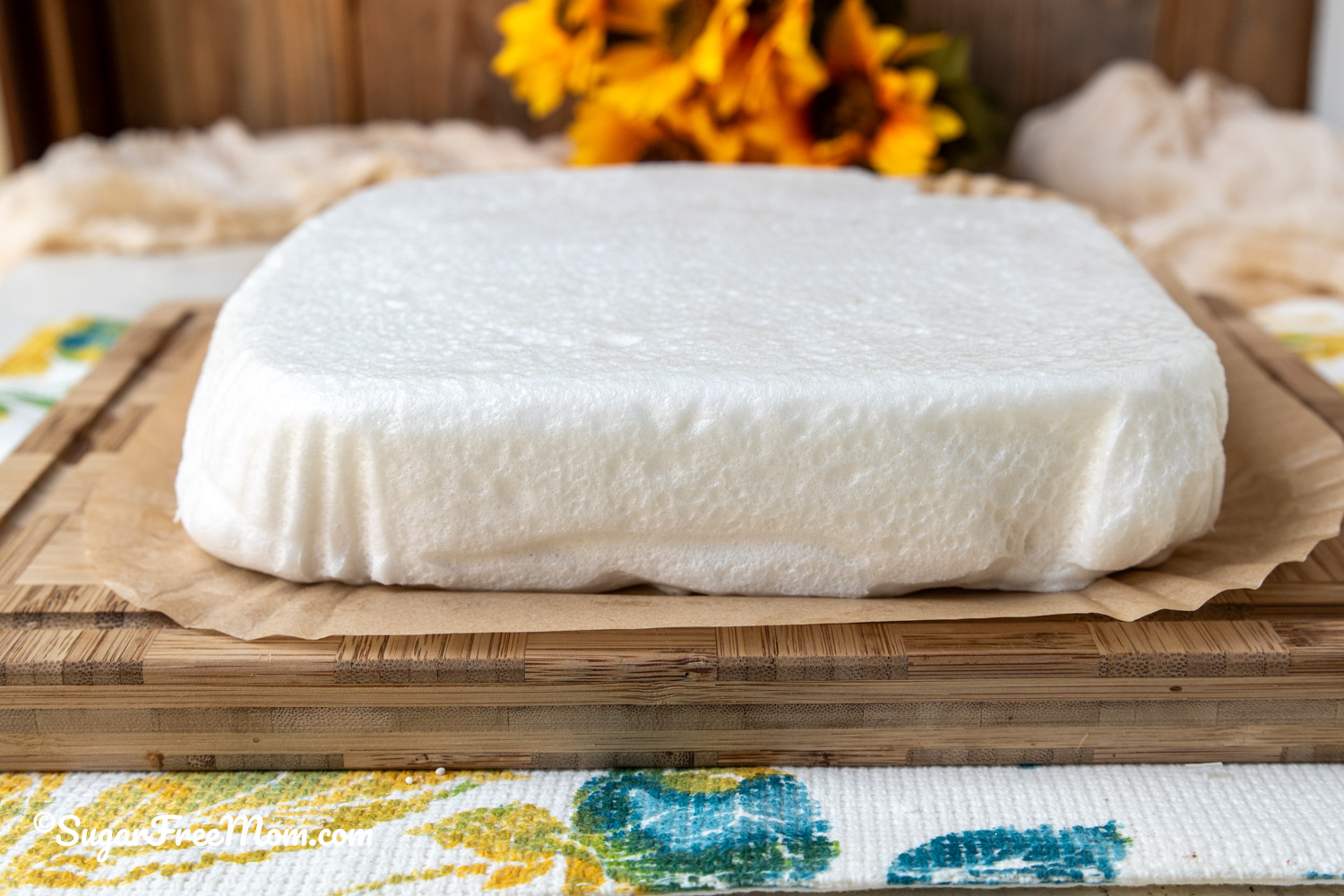
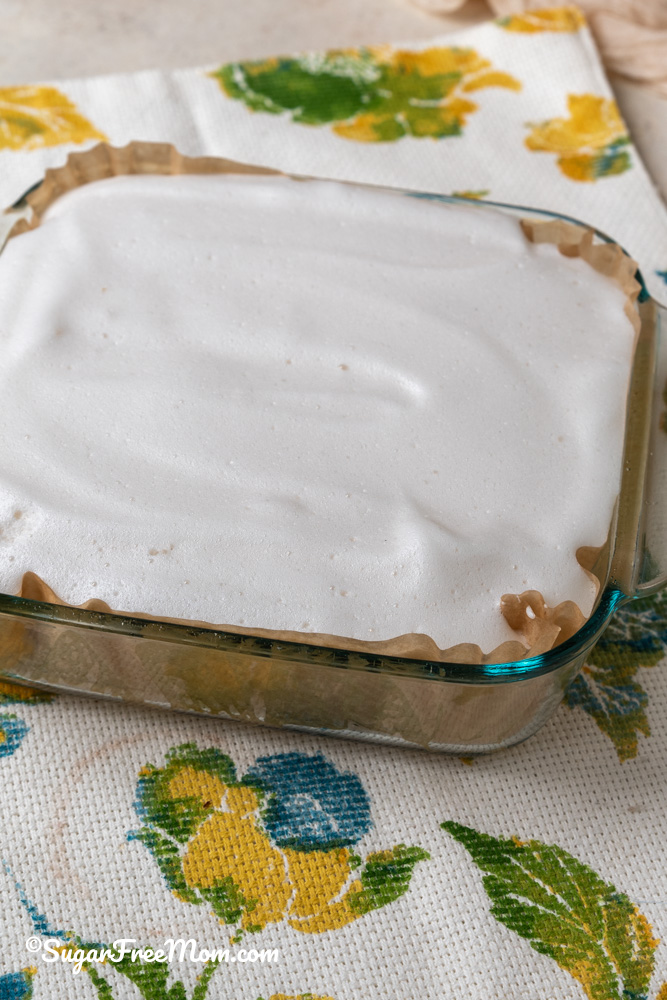
The marshmallow mixture was whipped into thick, shiny, stiff peaks and set beautifully at room temperature, giving me the fluffy texture I was dreaming of. I also switched from an 8×8 mold to a 9×9 mold to get the perfect marshmallow height.
I can honestly say these are everything I expected.
soft.
Fluffy.
light.
And completely sugar-free.
Why you’ll love these homemade keto marshmallows
Whether you’re on a keto diet, a low-carb diet, or just trying to lower your blood sugar spikes, these homemade marshmallows are an easy recipe you’ll want to make again and again.
They are:
No sugar Low-carb, keto-friendly Naturally gluten-free Only 3 calories each No corn syrup No egg whites required Great for hot chocolate Great for s’mores Great in protein shakes Sweet treat for the holidays or everyday snacking
Unlike store-bought marshmallows, they contain simple ingredients that you can actually pronounce.
Why I use grass-fed gelatin
One of the reasons I love making homemade marshmallows is because they are a really delicious way to enjoy one of my favorite functional ingredients: grass-fed gelatin powder.
I personally only use and recommend grass-fed beef gelatin. This is because it is made from grass-fed cows rather than conventionally raised animals. All gelatin provides the amino acids that build collagen, but choosing grass-fed ingredients gives you greater confidence in the quality of your final product.
Gelatin is rich in amino acids such as glycine, proline, and hydroxyproline, which are the main components of collagen.
These amino acids help support:
Healthy skin elasticity Strong hair and nails Joint comfort Bone health Healthy digestion Healthy intestinal lining Improved recovery after exercise Maintaining muscle as you age
Glycine is of particular interest because it also plays a role in supporting relaxation and restful sleep. Add these marshmallows to sugar-free hot chocolate for a fun bedtime snack.
Of course, I don’t eat marshmallows as my main source of collagen, but I certainly don’t mind getting a little extra nutrition while satisfying my sweet tooth.
Materials needed
One of my favorite things about this marshmallow recipe is how incredibly simple it is.
All you need is:
that’s it.
No corn syrup.
Contains no sugar.
No synthetic food coloring is used.
Contains no preservatives.
Why this sweetener is best for you
After testing multiple batches, we can confidently recommend using a confectionery-style monk fruit allulose blend in place of liquid allulose.
Liquid allulose contains additional moisture, which softens the marshmallow mixture and slows it from setting.
The powdered monk fruit allulose blend dissolves instantly in the hot syrup, and the gelatin forms beautiful fluffy, stiff peaks.
Unlike regular sugar, keto-friendly sweeteners don’t caramelize in quite the same way, so they don’t need to be cooked at the traditional 240°F softball stage.
A simple rolling boil for about 2 minutes (about 210°F if using a candy thermometer) worked perfectly during testing.
Tips for the perfect keto marshmallow
If this is your first time making marshmallows, don’t worry. It’s much easier than it looks.
Some helpful tips:
Let the gelatin rise completely before adding the hot syrup. You can get a fluffier texture by using the whisk attachment on your stand mixer. Pour the hot syrup directly onto the gelatin, not along the sides of the bowl. Whisk on high speed for about 15 minutes. Wait until the mixture forms stiff peaks, then transfer to the prepared pan. Work quickly once mixing is complete, as the marshmallow mixture will begin to harden almost immediately. For best texture, let dry uncovered at room temperature overnight. Use a sharp, lightly oiled knife to slice cleanly.
FAQ
Can I use liquid allulose?
Not recommended.
I used liquid allulose for my first test batch, and it bubbled beautifully, but the marshmallows remained soft due to the extra water.
For best results, use a powdered monk fruit allulose blend.
Can I use regular sugar?
Yes, that’s true, but then it would just be a regular marshmallow, and the nutritional content would change dramatically.
My goal was to make a low-carb marshmallow that tastes just like the real thing without affecting blood sugar levels.
Can I use erythritol in place of the monk fruit allulose blend?
Not recommended.
Many older keto marshmallow recipes use erythritol or erythritol-based sweeteners, but I no longer develop recipes using erythritol because erythritol doesn’t work that well in many dessert and candy recipes.
Erythritol tends to recrystallize as it cools, which can leave marshmallows with a grainy or crunchy texture instead of the soft, fluffy texture you’re looking for. There’s also a noticeable cooling sensation that overwhelms the classic vanilla marshmallow flavor.
After extensive recipe testing, we found that Monk Fruit Allulose Blend produces a smoother marshmallow mixture with a softer bite that is much closer to traditional marshmallows.
If you have an erythritol-based sweetener like Swerve Confectioners, we do not recommend substituting it in this recipe. For best results, use the candy store-style monk fruit and allulose blend mentioned in the recipe.
Does it taste like store-bought marshmallows?
Honestly, yes!
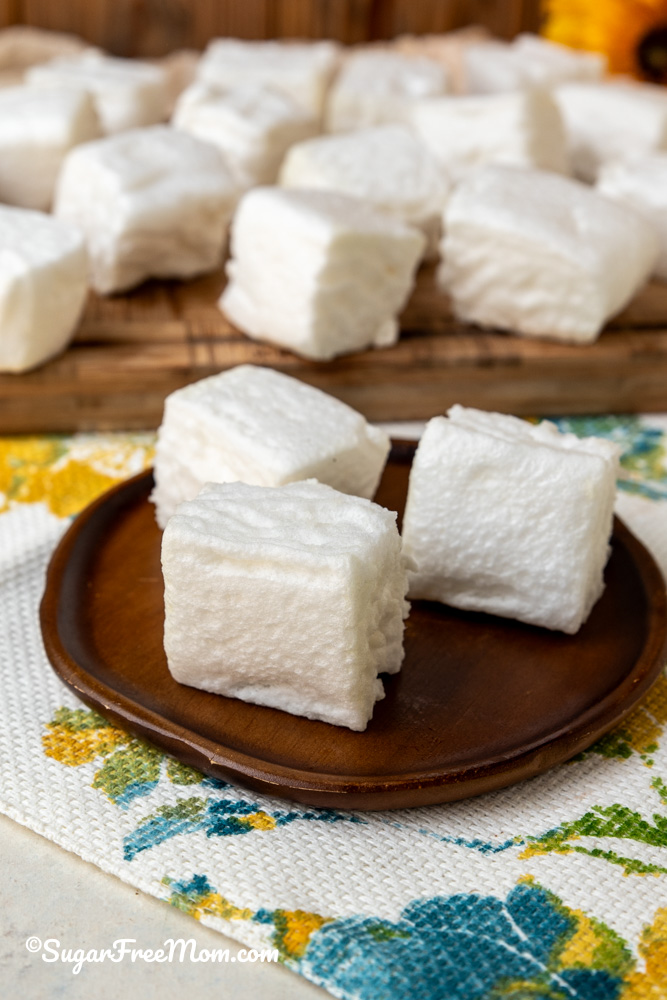
The texture of my low-carb marshmallows is surprisingly similar to classic marshmallows, only slightly softer because they are made without traditional sugar syrup.
Do I need a candy thermometer?
no.
A candy thermometer would be helpful, but just bringing the syrup to a boil and cooking it for about 2 minutes worked perfectly in my testing.
How should I store it?
Store sugar-free marshmallows in an airtight container in a cool, dry place for up to 2 weeks.
For long-term storage, you can freeze it for up to 3 months.
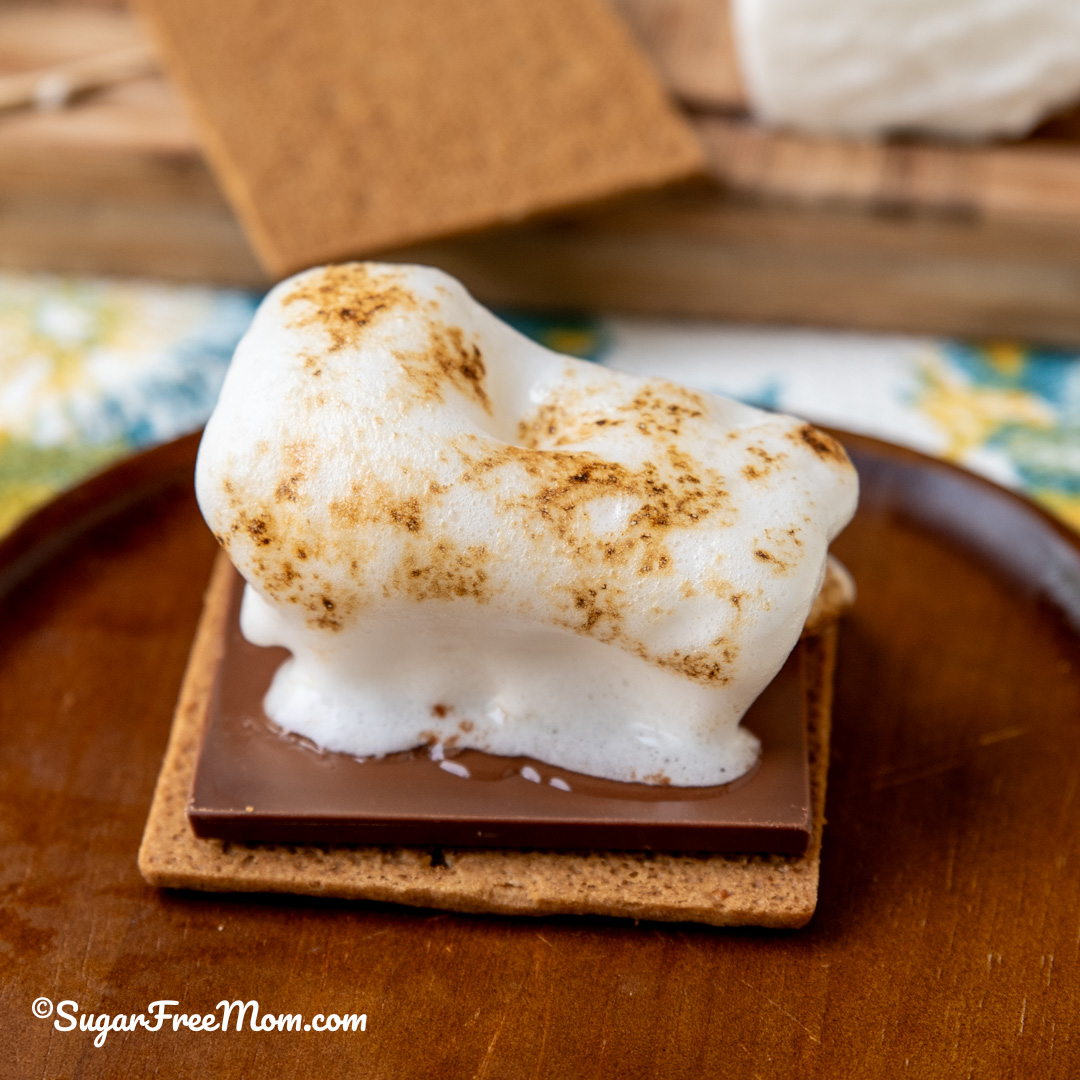
Can I roast this on a campfire?
Not exactly.
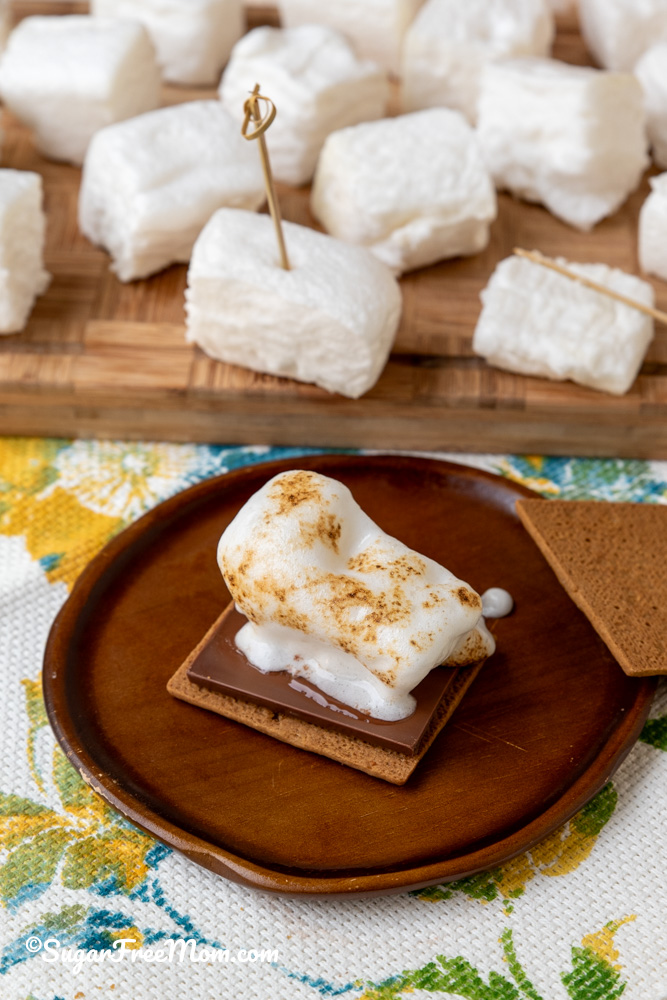
These low-carb marshmallows taste very similar to traditional marshmallows, but they don’t toast or caramelize the same way over an open flame. Regular marshmallows turn brown because the sugar caramelizes and melts.
These are made with keto-friendly sweeteners instead of sugar or corn syrup, so you won’t get that golden toasted look.
If you leave it on the fire too long, instead of puffing up and turning golden like store-bought marshmallows, it will soften, melt, and eventually just drip off the skewer.
That said, it’s still absolutely delicious.
If you want a lightly toasted finish, you can lightly brown the outside with a small kitchen or crème brûlée torch. Keto-friendly sweeteners can melt more quickly than regular sugar, so it’s best to let the flame burn quickly rather than holding it in one spot. If you try this, please let me know how it works for you.
I’ve been putting this recipe off for years, and I’m so happy to finally be able to cross homemade keto marshmallows off my foodie bucket list.
Sometimes the recipes that seem the most difficult turn out to be the most rewarding. I replaced the liquid allulose with a confectionery-style monk fruit allulose blend and everything came together beautifully.
Whether you like it in your hot chocolate, make sugar-free s’mores, add it to your protein shake, or just enjoy it as a little sweet treat, you’ll be surprised to find that something this fluffy is completely sugar-free, low-carb, and keto-friendly.
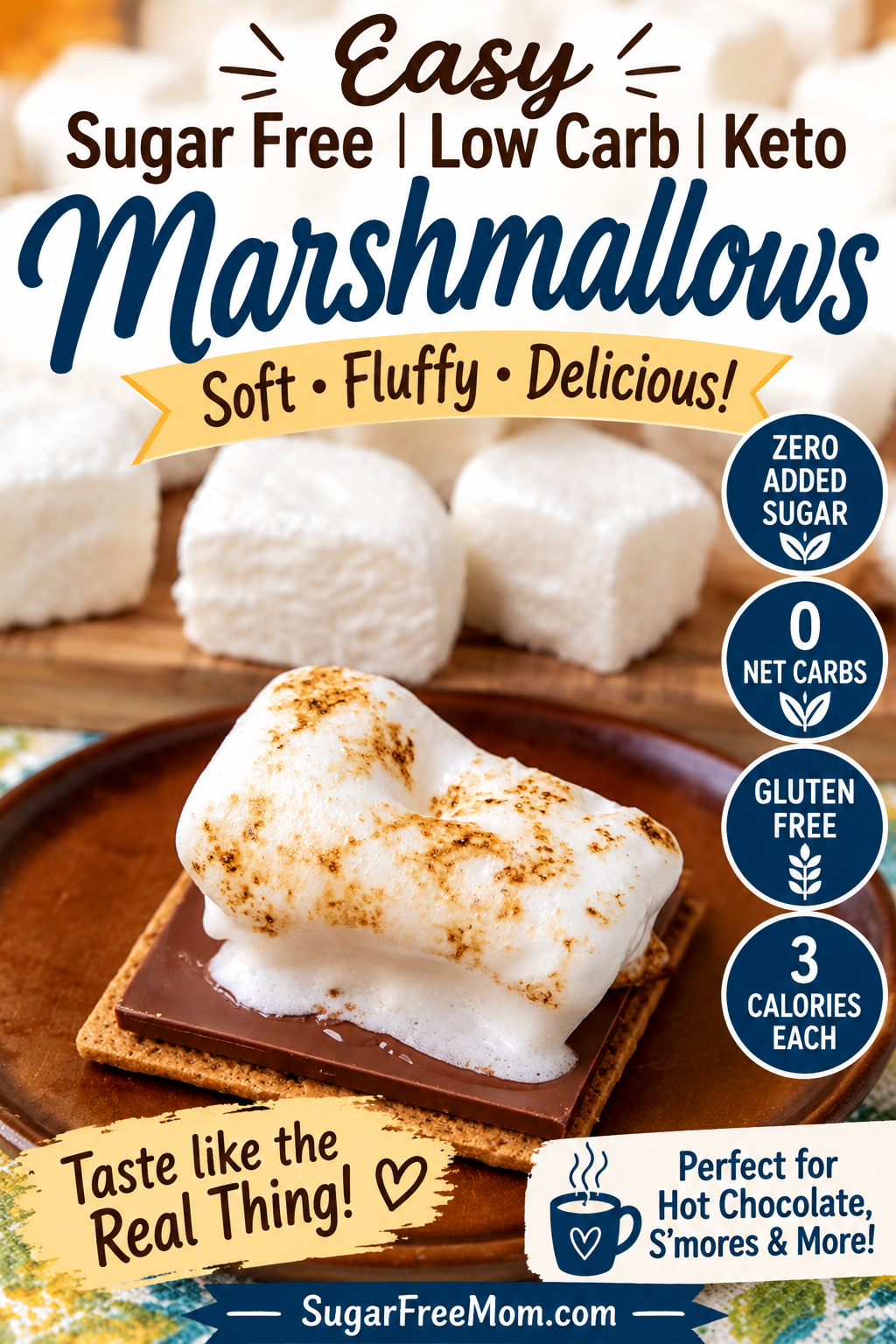
Easy sugar-free marshmallow recipe
Easy Sugar Free Low Carb Keto Marshmallow Recipe
Quantity: 20 for one person
calorie: 3kcal
Pour cold water (1/2 cup) into the bowl of a stand mixer or large glass bowl. Sprinkle gelatin and let it soften.
Turn off the mixer and immediately pour the marshmallow mixture into the prepared baking dish. Work quickly as the mixture will begin to thicken quickly. You don’t have to worry about scraping every last bit out of the whisk or bowl. If you try to remove it all, the marshmallow may solidify before you put it in the pot.
I greased my knife and sliced it into 4 rows and 5 rows, 20 pieces total.
Provided by: 1waiter | calorie: 3kcal | carbohydrates: 0.02g | protein: 1g | fat: 0.001g | sodium: 2mg | potassium: 0.4mg | sugar: 0.02g | calcium: 1mg | iron: 0.01mg