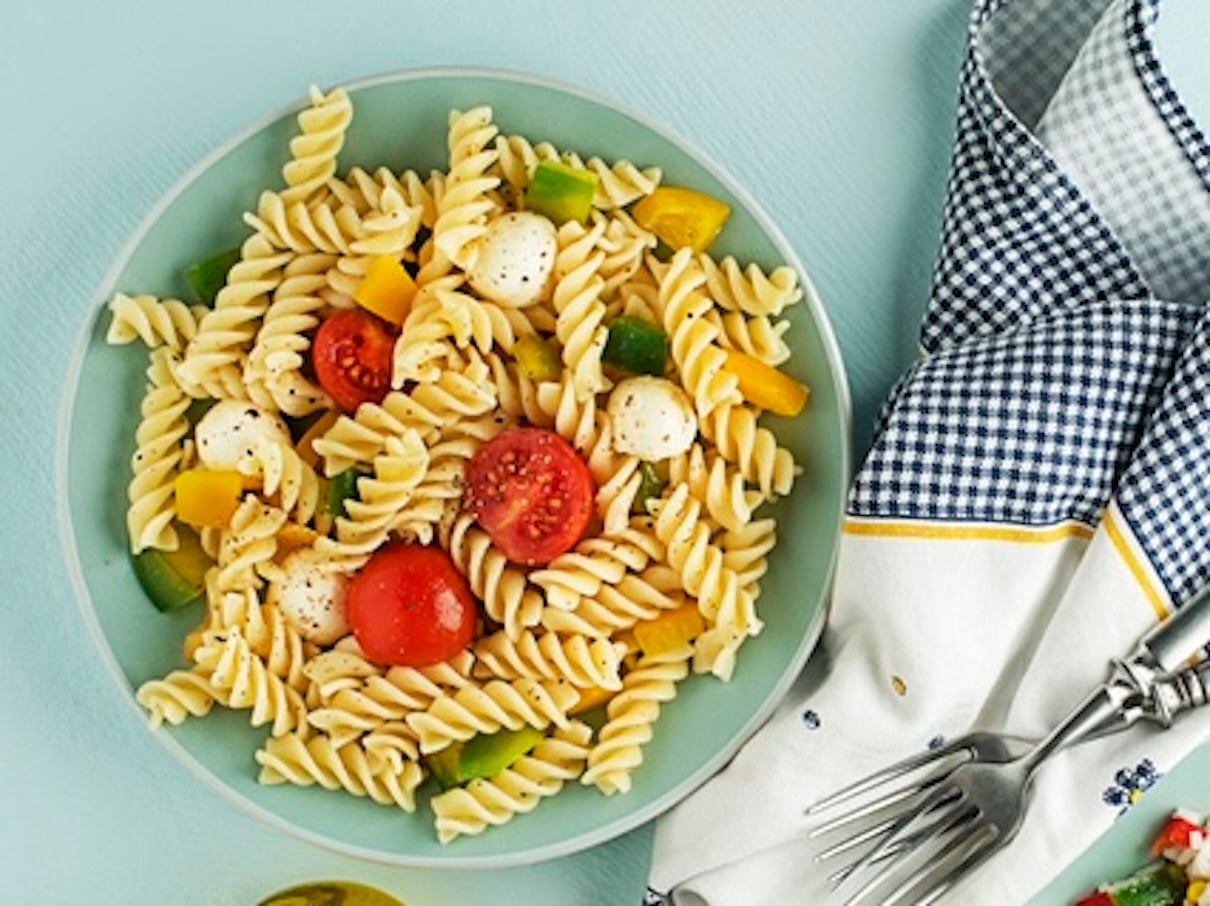
Pasta salad is one of the perfect summer foods. Backyard barbecues, picnic blankets, and paper plates, it’s nostalgic, crowd-pleasing, and, let’s be honest, it never gets old. As a nutritionist, I would also like to tell you here that it can be more than just a side dish.
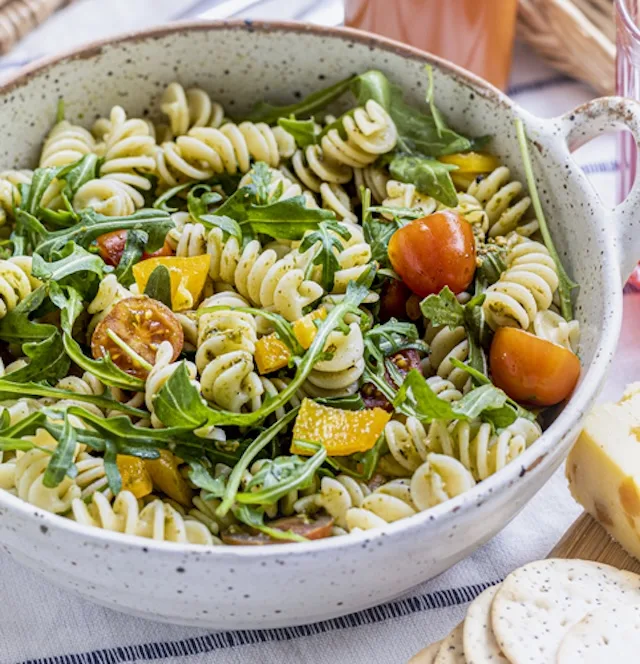
This chickpea pasta pesto recipe is a healthy summer salad you’ll want to take everywhere this season. Bright and light, a flavorful herbal pesto, juicy cherry tomatoes and tender zucchini are all built on a base that quietly has a positive effect on the body. It’s leaning into the FiberMax trend in the best possible way, and tastes even better when left overnight in the fridge. Make it on Sunday and eat it all week.
Why Chickpea Pasta Upgrades Healthy Summer Salads
Not all pasta is created equal, and chickpea pasta is superior when it comes to nutritional value. Compared to traditional refined white pasta, chickpea pasta contains significantly more fiber and protein per serving, making it a more satisfying base that supports consistent energy and keeps you feeling fuller longer.
What this actually means for your body is that chickpea pasta is high in resistant starch and fiber, which slows the absorption of glucose, resulting in a more stable blood sugar response than regular pasta. Researchers have even observed a “second meal effect” with chickpea consumption. This means that eating chickpeas in one meal may actually support your body’s appetite response several hours later. These benefits from a legume base are not available from white pasta.
It’s also naturally gluten-free, making it a great option for people with gluten sensitivities or those who want to try a more diverse and nutritious grain.
Fiber per serving tip: 2 ounces of chickpea pasta contains about 5-8 g of fiber, which can get you significantly closer to the recommended intake for women of 25 g per day, even before you add vegetables. This is why it’s the ideal base for a healthy summer salad that will keep you feeling full.
A pest that is actually more effective
This isn’t your average store-bought pesto (though I can’t decide if that’s what you do on a busy summer day). This homemade version is secretly packed with nutrients.
Basil is the heart of pesto, so it’s no wonder we start with it. Research shows that it contains phenolic acids, flavonoids, and essential oils with significant antioxidant and antibacterial properties, making it one of the most promising herbs for nutritional maintenance.
Spinach is a sneaky addition. It is rich in phytochemicals and bioactive substances that scavenge free radicals, support metabolic function, and stimulate the secretion of satiety hormones. In other words, it’s doing much more than just making things eco-friendly (though it blends in perfectly!).
Extra virgin olive oil (EVOO) is the backbone of any good pesto, and the science behind it is becoming increasingly impressive. EVOO polyphenols have been shown to act as prebiotics and support the growth of beneficial gut bacteria such as Bifidobacteria and Lactobacillus. This means that Pesto is actively supporting the gut microbiome. A recent 2025 study also confirmed EVOO’s role in supporting healthy cholesterol balance and gut microbiome diversity.
Pine nuts add healthy fats, protein intake, and a richness that makes the pesto feel indulgent even when it’s really good for you.
Nutritional yeast (a dairy-free substitute for Parmesan cheese) is the secret weapon here. Fortified nutritional yeast is one of the most readily available plant-based sources of vitamin B12, a nutrient essential for energy, red blood cell production, and brain function. According to Harvard Health, most over-the-counter nutritional yeast is fortified, and even a few tablespoons can make a meaningful contribution to your daily vitamin B12 needs. Plus, it tastes like cheese. It’s a win-win.
Low FODMAP note: Replace regular garlic with garlic-infused olive oil to get all the flavor without taxing your digestion. Garlic contains fructans, which can cause sensitivities, but they do not migrate into oil.
Leftovers in the bowl: Featured summer vegetables
What really makes this a great healthy summer salad is the produce. Everything here is seasonal, colorful, and nutritious.
cherry tomatoes
These little bursts of sweetness are packed with lycopene, a carotenoid antioxidant backed by serious research. Research shows that regular intake of lycopene from tomato-based foods may maintain skin health and protect against skin damage caused by UV rays. If you’re like me and love sunny summers, that’s a meaningful bonus. Lycopene may also have significant prebiotic effects in the gut, supporting beneficial bacterial populations such as Bifidobacteria. Leave them whole or in half. Either way, it adds color, juiciness and a lot of nutritional value.
Zucchini (yellow + green)
Thinly sliced zucchini is one of the most underrated additions to a healthy summer salad. It has a high water content (helping you stay hydrated in the heat) and is rich in carotenoids such as lutein, zeaxanthin, and beta-carotene, which are antioxidants that support skin and eye health. Yellow zucchini tends to have slightly more carotenoids than green zucchini, so using both is not only aesthetically pleasing, but also strategic. It also allows you to consume both soluble and insoluble fiber, increasing your total daily fiber maximum.
What else would you like to add?
Adding a handful of arugula just before serving adds a peppery freshness to liven up the dish. Squeezing fresh lemon juice all over the bowl brightens up any flavors, provides vitamin C, and actually helps your body absorb the iron from the spinach more effectively. If you want even more protein, try adding grilled chicken, shrimp, or white beans.
Recipe: Chickpea Pasta Pesto — Healthy Summer Salad
Number of people: 4 to 6 people Time: 30 minutes
For spinach and basil pesto
1 cup fresh basil leaves 1 cup fresh baby spinach 1/3 cup pine nuts (lightly toasted) 3 tablespoons nutritional yeast (enriched) 1/4 cup extra virgin olive oil (or EVOO with garlic if you’re low FODMAP) 1-2 cloves of garlic (skip and use EVOO with garlic if you’re sensitive) Juice of 1/2 lemon Salt and pepper to taste Dilute with 1-2 tablespoons of water if necessary.
Blend all pesto ingredients in a food processor until smooth. Taste and adjust seasoning.
for salad
8 ounces chickpea pasta (rotini or penne are best) 1 cup cherry tomatoes, halved 1 small green zucchini, thinly sliced into half-moons 1 small yellow zucchini, thinly sliced into half-moons 1/4 cup grated Parmesan cheese or additional nutritional yeast (dairy-free) Fresh lemon juice to finish Flaked sea salt and cracked black pepper
Optional protein additions: grilled chicken, shrimp, and white beans
direction
Cook chickpea pasta according to package directions. Drain and rinse under cold water to stop cooking. Let’s set it aside. While the pasta is cooling, make the pesto and prepare the vegetables. In a large bowl, mix the cooled pasta with the pesto until well combined. Add cherry tomatoes, zucchini, and vegetables. Throw gently. Finally, add a squeeze of lemon and grated Parmesan or nutritional yeast to taste. Serve immediately or refrigerate. It will be even more delicious the next day.
Tips for this healthy summer salad
Healthy summer eating doesn’t have to just mean plain salads and grilled chicken. This healthy summer salad proves you can achieve your fiber max all season long without sacrificing flavor or enjoyment. Perfect for meal prep, potlucks, beach days, weeknights, and more, it’s a great way to nourish yourself overall without thinking too hard. enjoy!