If you’re considering taking GLP-1 drugs for weight loss, you’ve probably heard of Wegovy and Zepbound, two major brands in this space. (Ozempic and Munjaro are also GLP-1, but they are primarily designed and prescribed for people with type 2 diabetes.) Here, you’ll get key insights from educators affiliated with each company and top internists who regularly prescribe these drugs to help you decide which option is best for you.
featured experts
Dr. Amanda Kahn (Board Certified Internal Medicine Physician and Longevity Specialist) Dr. Luis Emilio Garcia (Vice President of Global Medical Affairs and Cardiometabolic Health, Eli Lilly & Company) Jason Brett (Chief U.S. Medical Officer, Novo Nordisk)
Why is GLP-1 being talked about now?
“More than 110 million people in the United States alone have obesity, and by 2030, cardiometabolic diseases such as obesity, diabetes, and cardiovascular disease could affect one-third of adults worldwide,” said Luis Emilio Garcia, Ph.D., vice president of Global Medical Affairs and Cardiometabolic Health at Eli Lilly & Company, Zepbound’s parent company. “For many obese patients, lifestyle modifications such as diet, exercise, and behavioral counseling alone may not result in sufficient and sustained weight loss.” That’s where GLP-1 therapeutics come in.
“GLP-1 has completely changed the landscape of weight management and metabolic medicine,” says Dr. Amanda Kahn, a board-certified internist and longevity expert. “For the first time, we have a treatment that not only helps significantly reduce body fat, but does so by targeting the underlying biological causes, such as overeating, insulin resistance, and inflammation, rather than relying solely on lifestyle modifications or willpower. From a longevity perspective, the impact goes way beyond scale. These drugs reduce chronic inflammation, improve insulin sensitivity, support vascular health, and reduce long-term risks.” It can cause diabetes, cardiovascular disease, dementia, and even some cancers. These mimic natural hormones released after meals and help regulate blood sugar levels, appetite, and digestion, but they also appear to affect inflammatory and hormonal pathways associated with aging and disease. ”
Key differences to know when considering GLP-1
“Semaglutide (Wegovy, Ozempic) and tirzepatide (Zepbound, Mounjaro) are both powerful tools in the new era of metabolic medicine, but their actions are slightly different,” says Dr. Khan. “Semaglutide is a pure GLP-1 receptor agonist that mimics the body’s natural GLP-1 hormone. This hormone slows digestion, improves satiety, and balances blood sugar levels. Tirzepatide is a dual agonist that acts on both GLP-1 and another hormone called GIP.” Below, we explain the main differences between them.
What is Wegobee?
“Wegovy is an FDA-approved prescription drug used in conjunction with a reduced-calorie diet and increased physical activity to help people with obesity lose excess weight and maintain weight loss long-term,” said Jason Brett, principal U.S. medical head for Novo Nordisk, Wegovy’s parent company. “It works by mimicking a naturally occurring hormone in the body called GLP-1 (glucagon-like peptide 1), which helps regulate appetite. By acting on the appetite control center in the brain, Wegovy helps people eat fewer calories and lose weight.”
Wegovy® (semaglutide) injection 2.4 mg, when combined with a reduced-calorie diet and increased physical activity, is FDA-approved for:
Reduce the risk of serious cardiovascular events such as death, heart attack, and stroke in adults with known cardiovascular disease who are obese or overweight Help adults and children over 12 years of age with obesity or some overweight adults with weight-related medical problems lose excess weight and maintain it Treat adults with non-cirrhotic metabolic dysfunction-associated steatohepatitis (MASH) Moderate to advanced liver fibrosis
What is Zepbound?
“Zepbound is a once-weekly injectable prescription drug,” says Dr. Garcia. “It is a dual receptor agonist, meaning it targets two receptors, GIP and GLP-1, in areas of the human brain that are important for appetite regulation. Zepbound reduces appetite, food intake, body fat and weight. By targeting both GIP and GLP-1 receptors, Zepbound differs from other incretins approved for obesity management that target only GLP-1 receptors. adds that it also targets GIP, providing additional benefits for fat metabolism and insulin sensitivity. “This often results in more significant fat targeting while preserving muscle more effectively,” she explains.
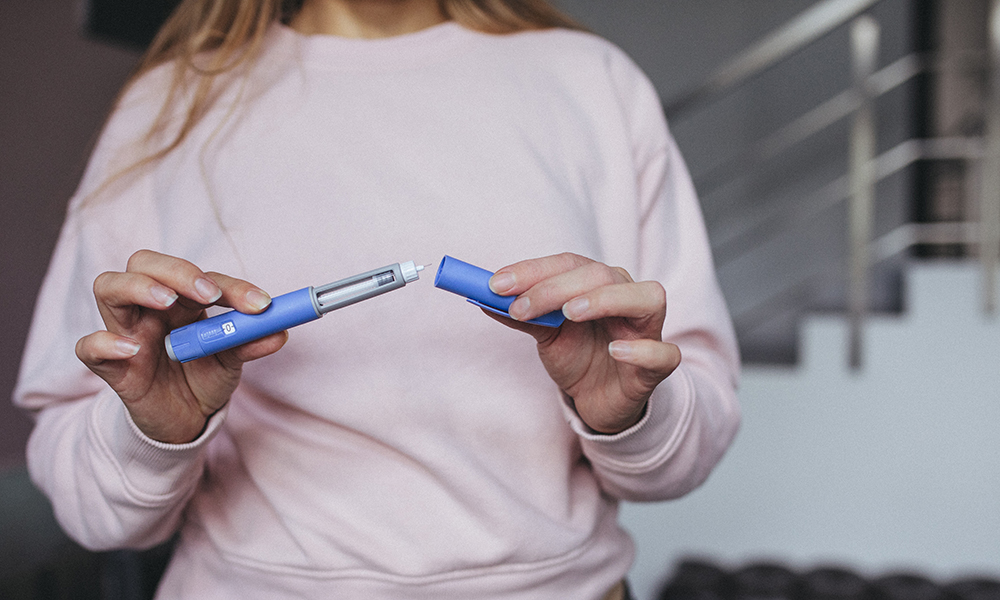
Zepbound is available in auto-injectors (single-dose pens) and single-dose vials and is FDA-approved for the treatment of obesity and moderate to severe obstructive sleep apnea (OSA) in obese adults. This medication is intended to be prescribed by a doctor as part of a long-term treatment plan, along with diet and exercise.
What are the side effects of Wegovy and Zepbound?
Both drugs share similar potential side effects, which Dr. Khan says can include mild gastrointestinal symptoms such as nausea, bloating, constipation, and reflux. “These effects occur because GLP-1 slows gastric emptying and alters intestinal motility,” she explains. “However, in practice, Zepbound often has fewer or milder initial gastrointestinal side effects compared to Wegovy. This is likely due to the addition of the GIP pathway, which regulates digestion more smoothly and appears to buffer some of the nausea and bowel movement changes seen with pure GLP-1 agonists.”
“Gastrointestinal side effects are usually mild to moderate, but can sometimes be severe, and tend to occur early, such as at the beginning of treatment or with dose increases,” Brett added. “They are often temporary and often go away over time.” Dr. Kahn recommends “starting small and increasing slowly, ensuring you’re hydrated and getting enough dietary fiber to help minimize discomfort, and working with a health care provider familiar with the nuances of GLP-1 therapy.” She also says that supplementing with vitamin B12 may be beneficial, as GLP-1 drugs can slightly reduce the absorption of vitamin B12 over time. “If introduced carefully, most patients tolerate these drugs very well and only experience adaptive symptoms for a short period of time.”
Which is more effective?
Dr. Khan says that while both drugs are highly effective, clinical studies show that tirzepatide (Zepbound) typically produces more substantial results. “On average, patients using tirzepatide lose about 22 to 25 percent of their total body weight, compared to about 15 percent with semaglutide (Wegovy),” she explains. The clinical study Dr. Khan is referring to is the SURMOUNT-5 clinical trial (published in May 2025), which enrolled 751 adults who were obese or overweight but did not have type 2 diabetes. This study directly compared the results of Wegovy and Zepbound for these individuals, and Zepbound resulted in superior weight loss compared to Wegovy: 20.2 percent or 50.3 pounds vs. 13.7 percent or 33.1 pounds, respectively.
“Tirzepatide’s dual mechanism of targeting both GLP-1 and GIP receptors appears to produce a more balanced metabolic effect, better preserving lean muscle while improving fat burning,” says Dr. Khan. We noticed that adding GIP reduced the gastrointestinal side effects seen with semaglutide. For these reasons, I typically prescribe Zepbound as my first choice for metabolic resets. That said, both drugs dramatically reduce insulin resistance, inflammation, and cardiovascular risk factors. The choice often depends on individual tolerance, response, and personal health goals rather than a simple comparison of strengths and weaknesses. ”
“However, we typically do not switch new patients unless they have already done well with Wegovy and are making consistent progress, have expressed interest in trying a different approach, or have hit a plateau with their current treatment,” Dr. Khan continues. “While both drugs are effective when customized to the individual, Zepbound tends to provide broader metabolic and longevity benefits overall. Ultimately, I tailor treatment to the individual. Longevity medicine is about personalization.”
Who should and shouldn’t take these GLP-1 drugs?
“Originally, these drugs were developed for obese people with a BMI of 30 or higher, or overweight people with associated health problems such as high cholesterol or high blood pressure (BMI of 27 or higher),” explains Dr. Khan. “However, in longevity medicine, the ideal candidate is not always defined by BMI alone. A patient may have a normal BMI but have high body fat percentages on body composition tests. I also consider GLP-1 for people with visceral fat accumulation, signs of insulin resistance, fatty liver and inflammatory conditions – even those who appear thin on the outside but have internal metabolic or inflammatory imbalances.”
However, Dr. Khan says there are important exclusions. “People with a history of medullary thyroid cancer, multiple endocrine neoplasia type 2 (MEN2), or severe gastrointestinal motility disorders should not take these drugs,” she advises. “They should also be used with caution in people who are already underweight or who have a history of eating disorders. The goal is to restore balance and improve metabolic flexibility, not simply promote or extreme weight loss.”