There is a time frame in which sufficient physical activity can alleviate some of the damage caused by eating unhealthy foods.
We’ve previously discussed research showing that a single meal high in saturated fat can impair arterial function in men when measured in the arm, but what’s more concerning is blood flow to the heart wall. Researchers randomly assigned the men to eat either a high-fat diet containing at least 60 percent fat, half saturated salt, and at least one egg’s worth of cholesterol, or a low-fat diet that was mostly carbohydrates, less than 10 percent fat, and 50 times lower in cholesterol.
Below in my video “Exercises to Protect Your Arteries from Fast Food” and at 0:47 you can see a Doppler recording of the left anterior descending coronary artery, known as the Widowmaker, before eating a high-fat meal (above). That wonderfully strong signal was suppressed within a few hours after eating. The image (bottom) was taken 5 hours after the high-fat meal.
Coronary flow reserve decreased after consuming a single high-fat meal, but not after consuming a low-fat meal with the same number of calories.
What does “coronary reserve” mean? When a portion of a coronary artery becomes blocked for some reason, surrounding blood vessels dilate. This extra dilation capacity, called coronary flow reserve, is suppressed within hours of ingesting a fatty meal, impairing the heart’s ability to compensate for clogged arteries. This is how a high-fat diet affects blood flow to the heart.
In extreme cases, you may even witness it behind someone’s eyes. Below are the before and after images of the retina. You can also watch it at 1:34 in my video.
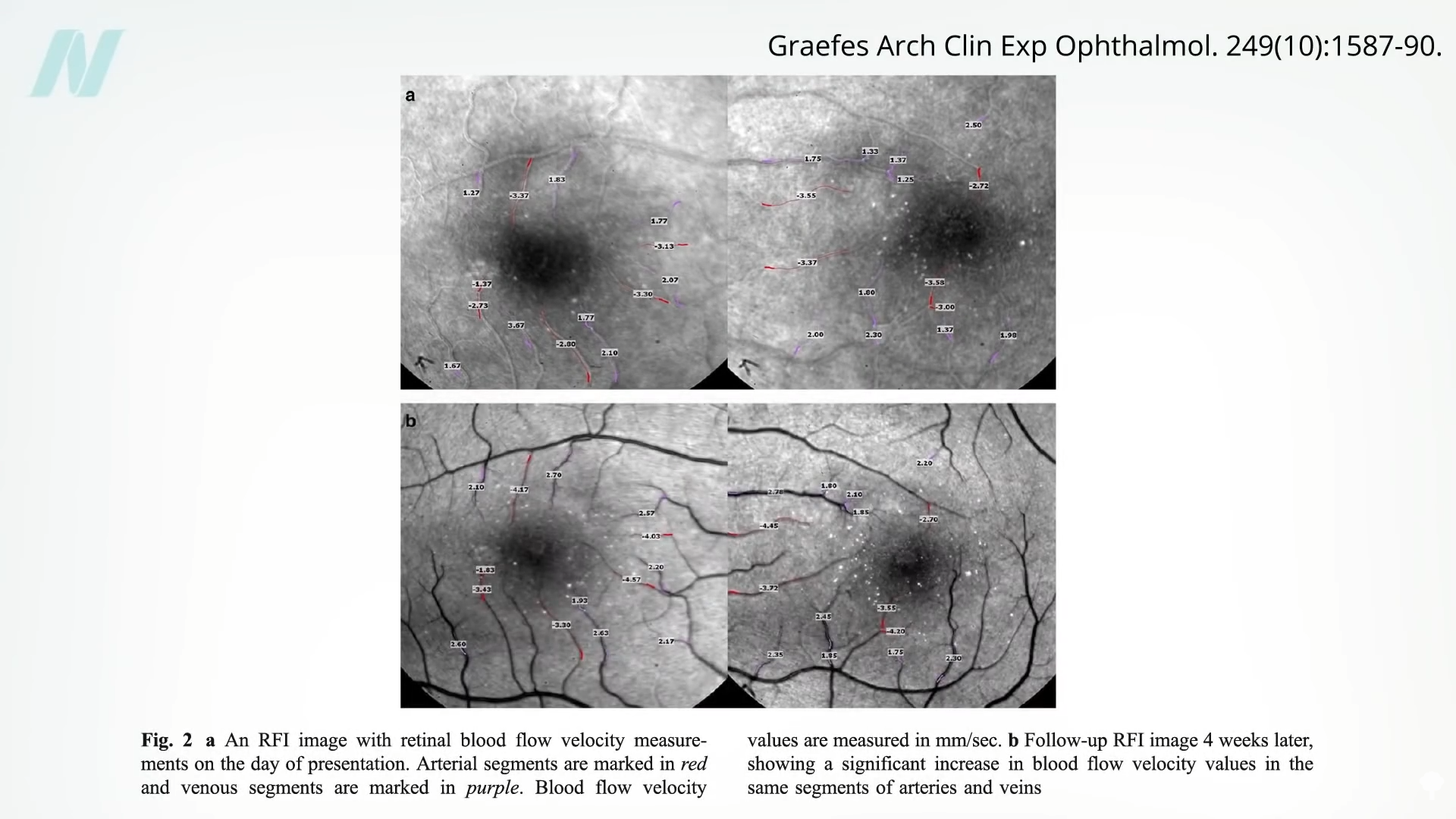
The first image shows milky blood vessels, and the second image shows what happens after fat is removed from the bloodstream with a low-fat diet and drugs. Can you see the difference? In the first photo, the blood looked like a milkshake.
What happens if you exercise immediately after eating a high-fat meal? Postprandial inflammation associated with the long-term rise in blood fats after a high-fat meal likely accounts for the increased risk of cardiovascular disease, but there is substantial evidence to suggest that intense exercise is an effective way to eliminate some of the postprandial fat. However, the beneficial effects of acute exercise on postprandial hyperlipidemia (postprandial lipemia) appear to be relatively short-lived. No matter how healthy you are, if you don’t exercise for a few days, you may lose all your benefits. The time frame seems to be from 18 hours before the meal to about 90 minutes after the meal. And how much exercise do you need? An hour of moderate-intensity exercise is effective.
In another study, it took just 20 minutes to walk up the stairs after eating a McDonald’s breakfast that included hash browns, eggs, pancakes, English muffins, sausage, and milkshakes, divided into 5-minute increments every hour for four hours. After these meals, arterial function significantly decreased if the participants simply sat after eating, but not if they exercised by climbing stairs every hour. Therefore, exercising once an hour may reduce the negative effects of sitting for long periods of time as well as eating high-fat meals, “suggesting that stair climbing should be incorporated as an easily accessible lifestyle strategy to protect vascular (arterial) function.” Of course, it goes without saying that another way to protect your arterial function is to avoid eating McDonald’s breakfast in the first place.
Such a meal would also contain more than 2,000 mg of sodium. This exceeds the American Heart Association’s recommended daily intake of 1,500 mg. Feeding someone a diet with less salt, even one-third less, can impair arterial function within an hour of ingestion, independent of an increase in blood pressure.
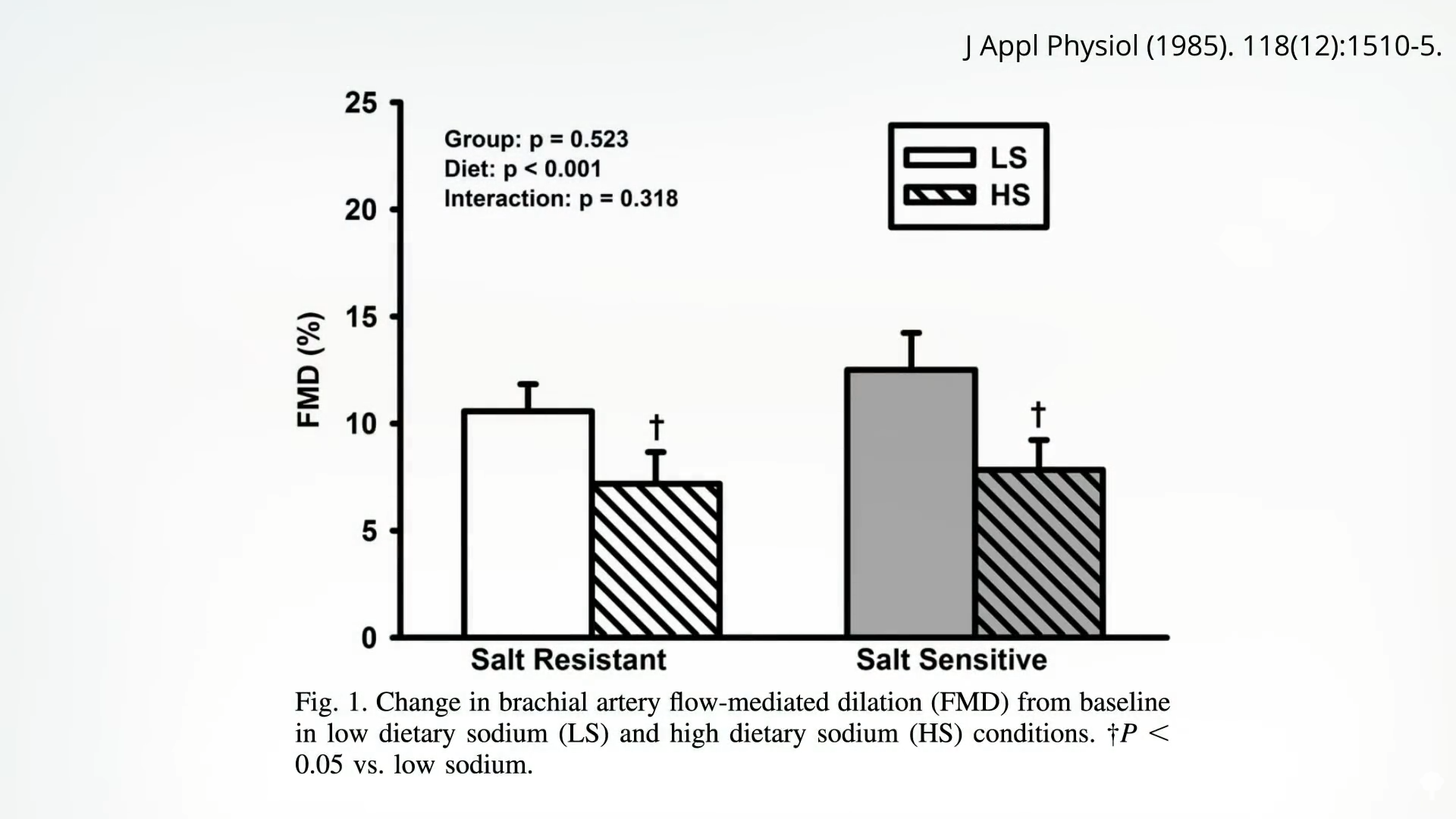
Regarding blood pressure, some people have “salt sensitivity,” which means that their blood pressure increases significantly when they ingest salt, while others have “salt tolerance.” Their blood pressure is less dependent on salt intake. So, is salt okay for these people? No, high dietary sodium intake impairs arterial function, regardless of whether your blood pressure is salt-sensitive or salt-tolerant. Transitioning from a low-salt diet to a high-salt diet impairs arterial function. You can see this below and at 3:53 of my video.
In addition to blood pressure, dietary salt also has an effect. Despite the “seemingly unanimous agreement”, some researchers (all too often funded by the salt industry) argue that salt reduction is actually bad, but the evidence is against these opponents. Science has shown that sodium, not salt reduction, is the “real bad guy,” as is saturated fat found in meat, dairy, and junk.
doctor’s note
This is the second in a three-part series on saturated fats and artery health. The first was how just one meal can cause your arteries and lungs to fail. Next, protect your arteries from saturated fat with these foods.
Still not sure about the dangers of salt? See the evidence that salt increases blood pressure.