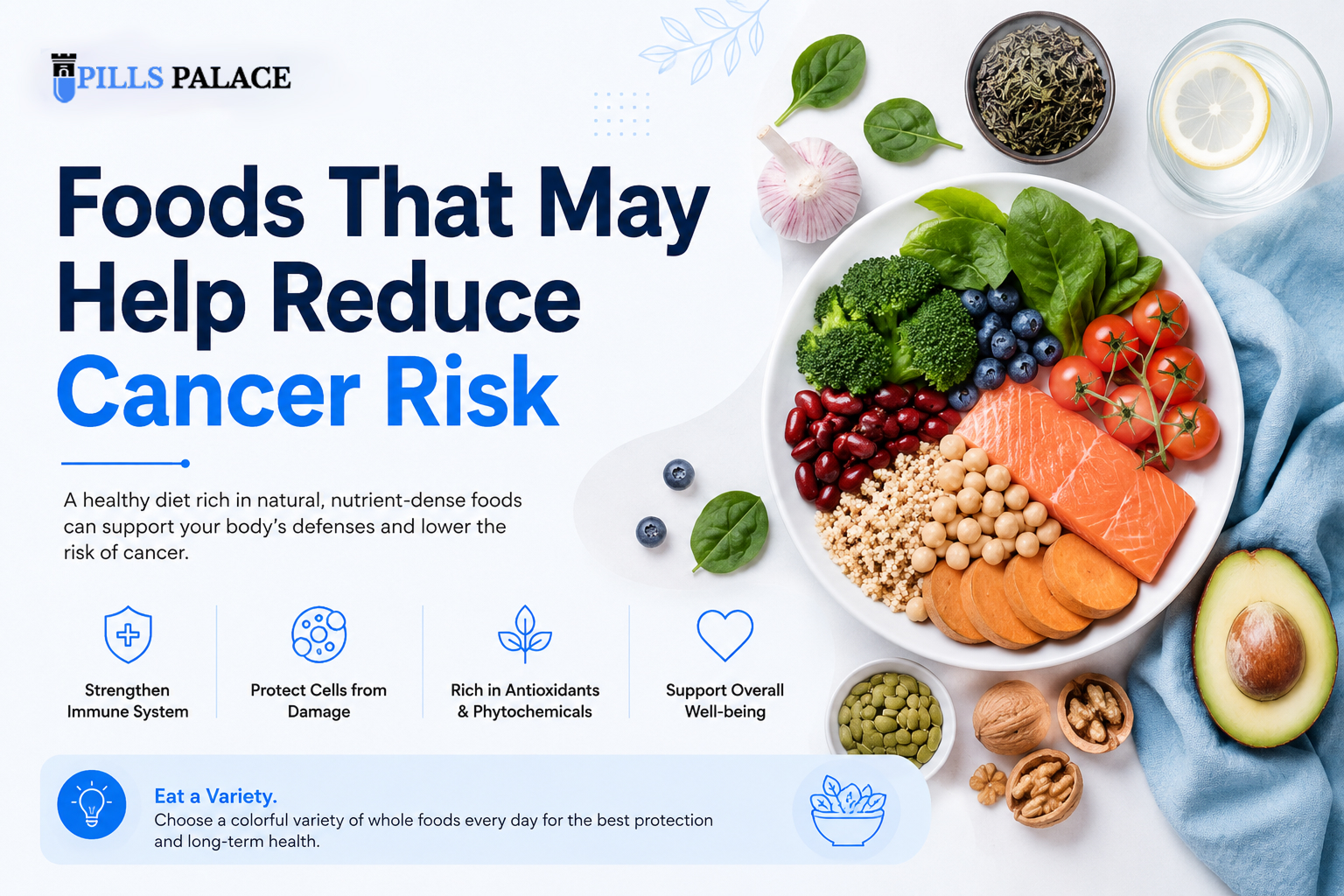
Cancer is a leading cause of death worldwide, and although there is no guaranteed way to prevent it, research suggests that a healthy diet may play a role in reducing the risk of certain types of cancer. This article reviews foods that may help reduce cancer risk and provides tips on how to incorporate them into your diet.
Cancer prevention overview
Cancer is a complex disease that is influenced by a combination of genetic, environmental, and lifestyle factors. Some risk factors, such as family history and age, cannot be changed, but others, such as diet and physical activity, can be changed to reduce the risk of cancer. A healthy diet rich in fruits, vegetables, whole grains, and lean protein may help reduce your risk of certain types of cancer, such as colon, breast, and prostate cancer. For individuals being treated for certain blood cancers, prescription medications such as Nitibu 140mg, Dasanat 50mg, or Dasanat 20mg may be prescribed by an oncologist as part of an individualized treatment plan. These drugs are intended for cancer treatment and should be used only under the guidance of a qualified medical professional.
Foods that may reduce cancer risk
There are several foods that have been shown to have anti-cancer properties and may reduce the risk of cancer. These foods include:
Cruciferous vegetables: Broccoli, cauliflower, and kale contain compounds that have been shown to have anticancer properties and may help reduce the risk of colon, breast, and prostate cancer. Berries: Berries such as blueberries, strawberries, and raspberries are rich in antioxidants, which may reduce the risk of cancer by protecting cells from damage. Green tea: Green tea contains compounds called catechins, which may reduce the risk of cancer by inhibiting the growth of cancer cells. Fatty fish: Fatty fish such as salmon and sardines are rich in omega-3 fatty acids, which may reduce cancer risk by reducing inflammation. Turmeric: Turmeric contains a compound called curcumin, which has been shown to have anti-cancer properties and may reduce the risk of colon, breast, and prostate cancer. Garlic: Garlic contains compounds that have been shown to have anti-cancer properties and may reduce the risk of colon, breast and prostate cancer. Read more: Lifestyle habits that may increase cancer risk
How these foods can help reduce cancer risk
These foods may help reduce your cancer risk in several ways, including:
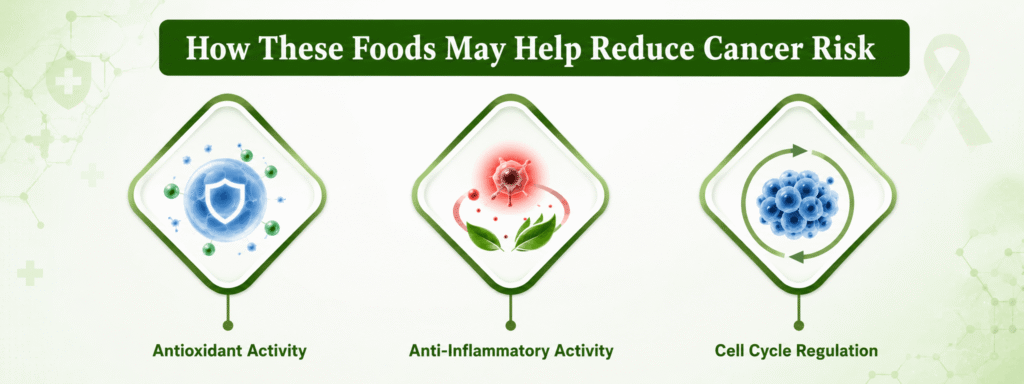
Antioxidant properties: Antioxidants found in berries and green tea may help reduce cancer risk by protecting cells from free radical damage. Anti-inflammatory properties: Anti-inflammatory compounds found in fatty fish and turmeric may help reduce the risk of cancer by reducing inflammation in the body. Cell cycle regulation: Compounds found in cruciferous vegetables and garlic may help regulate the cell cycle and prevent cancer cell growth. Click here: Best Brain Foods to Improve Focus
Other lifestyle factors that may help reduce cancer risk
In addition to a healthy diet, there are several lifestyle factors that may help reduce your risk of cancer.
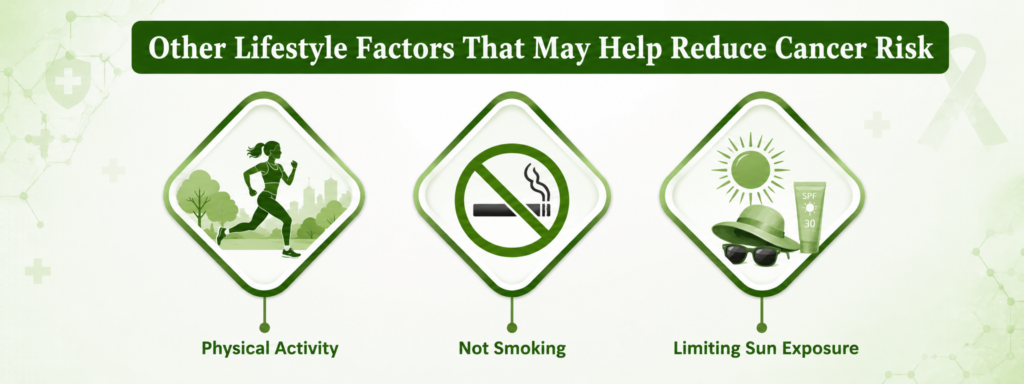
Physical activity: Regular physical activity can help reduce your risk of cancer by reducing inflammation and improving immune function. Quit smoking: Smoking is a significant risk factor for many types of cancer, and quitting smoking may help reduce your cancer risk. Limit your sun exposure: Excessive sun exposure can increase your risk of skin cancer, and limiting your sun exposure may help reduce this risk. See more: What is cancer? Types, symptoms, and treatments
Tips for incorporating cancer-fighting foods into your diet
Here are some tips for incorporating cancer-fighting foods into your diet.
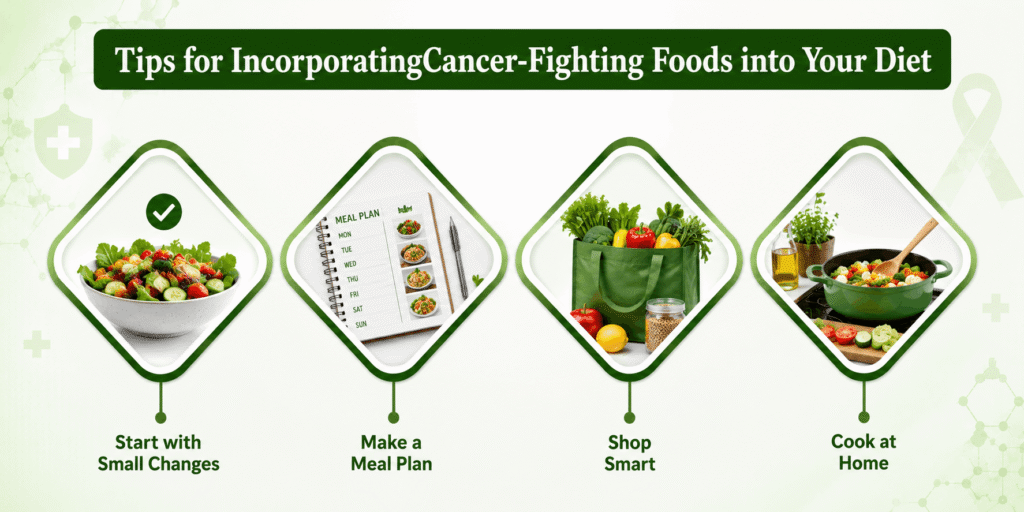
Start with small changes: Start by incorporating one or two cancer-fighting foods into your diet each week, and gradually increase the variety of foods over time. Plan your meals: Plan your meals in advance to ensure you’re getting a variety of cancer-fighting foods each day. Shop wisely: Buy cancer-fighting foods at your local grocery store or farmers market, choosing fresh, seasonal produce whenever possible. Cook at home: Cooking at home allows you to incorporate more cancer-fighting foods into your diet by controlling the ingredients and portion sizes of your meals.
conclusion
In conclusion, a healthy diet rich in fruits, vegetables, whole grains, and lean protein may help reduce the risk of certain types of cancer. Incorporating cancer-fighting foods into your diet, such as cruciferous vegetables, berries, green tea, and fatty fish, may reduce your cancer risk and promote your overall health and well-being. By making small changes to your diet and lifestyle, you can take a proactive approach to reducing your risk of cancer and living a healthier, happier life.
Remember that a healthy diet can help reduce your risk of cancer, but it’s only one part of a comprehensive approach to cancer prevention. Other lifestyle factors are also important for reducing cancer risk, such as physical activity, smoking cessation, and limiting sun exposure. Consult your health care provider for a personalized plan to reduce your cancer risk and promote your overall health and well-being. For more health-related information and wellness resources, visit Pillspalace.